



3D Cell Cultures Market
3D Cell Cultures Market Insights, Competitive Landscape, and Market Forecast - 2033
Global 3D Cell Cultures Market Forecast
The 3D Cell Cultures Market is valued at USD 1.2 billion in 2026 and is projected to reach USD 2.3 billion, growing at a CAGR of 10% by 2033.
3D Cell Cultures Market Insights
A Look Back and a Look Forward - Comparative Analysis
The 3D cell cultures market experienced significant growth during the historical period from 2020 to 2025, driven by the increasing demand for more physiologically relevant models in drug discovery and development.
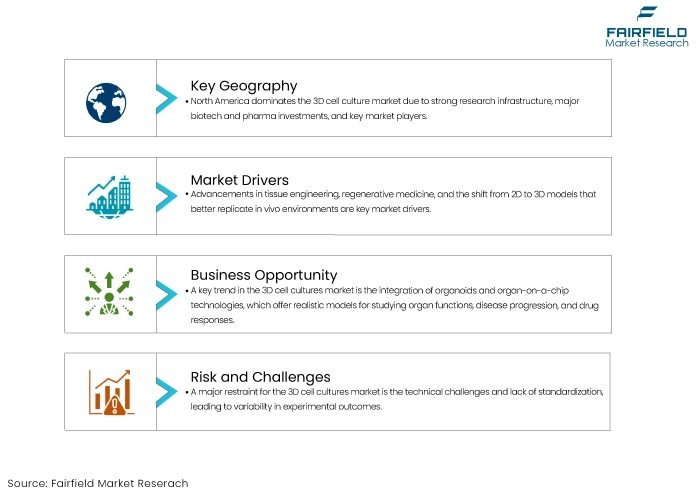
Key drivers included advancements in tissue engineering, regenerative medicine, and the shift from traditional 2D cultures to more sophisticated 3D models that better mimic in vivo environments.
Post-2024, the market for 3D cell cultures is expected to accelerate, with an anticipated CAGR of over 7.6%. Ongoing innovations in bio printing, organ-on-a-chip technologies, and the increasing adoption of 3D cultures in cancer research, personalized medicine, and toxicology testing will fuel this growth.
The market could also see expanded use in drug and high-throughput screening applications, supported by regulatory bodies’ increasing recognition of 3D models as more reliable predictors of human responses.
Collaborations between academic institutions and biopharmaceutical companies are likely to drive further advancements and market penetration. The Asia-Pacific region is expected to witness the highest growth due to rising research activities and government funding.
Key Growth Determinants
- Advancements in Tissue Engineering and Regenerative Medicine
One of the primary growth drivers for the 3D cell cultures market is the rapid progress in tissue engineering and regenerative medicine.
Traditional 2D cell cultures often fail to replicate the complex, three-dimensional architecture of human tissues, which limits their utility in developing effective treatments.
3D cell cultures provide a more accurate representation of human organs and tissues, enabling researchers to create more realistic models of disease states. This has opened new avenues for developing advanced therapies, including tissue grafts, organoids, and regenerative treatments that can be tailored to individual patients.
As the demand for personalized medicine continues to rise, the need for sophisticated 3D culture systems that can mimic the in vivo environment will drive further market growth.
- Increased Use in Drug Discovery and Development
Another significant growth driver is the expanding application of 3D cell cultures in drug discovery and development. Pharmaceutical companies are increasingly adopting 3D cell culture technologies to improve the predictability and efficiency of their drug screening processes.
Unlike 2D cultures, which often fail to predict the toxicity and efficacy of drugs accurately, 3D models offer a more reliable platform for testing potential therapeutics. This significantly reduces the likelihood of late-stage drug failures, thereby reassuring the industry about the efficiency of the drug development pipeline.
As regulatory agencies like the FDA begin to recognize the superiority of 3D cultures over traditional methods, their adoption in preclinical testing is expected to increase, further propelling 3D cell cultures market growth.
- Growing Demand for Cancer Research Applications
The rising prevalence of cancer and the need for more effective treatments have also fuelled the demand for 3D cell cultures. Cancer is a highly complex disease that involves multiple cell types and interactions within a 3D microenvironment.
Traditional 2D cultures often fail to replicate these complexities, leading to less effective research outcomes. 3D cell cultures, on the other hand, provide a more accurate model for studying tumour biology, metastasis, and drug resistance.
As cancer research continues to be a priority for healthcare systems worldwide, the potential of 3D cell culture models to revolutionize our understanding of cancer biology is expected to drive further 3D cell cultures market expansion.
Key Growth Barriers
- Technical Challenges and Standardization Issues
One of the significant restraints for the 3D cell cultures market is the technical challenges and need for standardization in 3D cell culture methods.
While 3D cultures offer a more accurate representation of in vivo conditions, they also introduce greater variability in experimental outcomes due to differences in culture techniques, materials, and conditions.
Such variability can complicate data interpretation and reduce the reproducibility of results, making it difficult for researchers to draw consistent conclusions across studies.
The lack of standardized protocols and guidelines for 3D cell culture practices can lead to inconsistencies in how experiments are conducted and reported, which hinders the ability to compare data across different studies and limits the broader adoption of 3D cell culture technologies in research and industry settings.
- High Cost and Complex Implementation
One of the primary restraints for the growth of the 3D cell cultures market is the high cost associated with developing and maintaining these systems.
Compared to traditional 2D cultures, 3D cell culture systems require specialized equipment, materials, and expertise, leading to higher operational costs.
The complexity of setting up and maintaining 3D cultures, particularly in scaling them for large-scale experiments, can be challenging for many laboratories, especially smaller research institutions with limited budgets.
The cost of acquiring and training personnel skilled in 3D cell culture techniques further adds to the overall expenses. These financial and logistical barriers can deter widespread adoption, particularly in emerging markets with more pronounced budget constraints.
3D Cell Cultures Market Trends and Opportunities
- Integration of Organoids and Organ-on-a-Chip Technologies
A significant trend in the 3D cell cultures market is the integration of organoids and organ-on-a-chip technologies.
Organoids are miniaturized, three-dimensional structures that mimic the organization and function of human organs. These models provide a more realistic environment for studying complex biological processes, such as organ development, disease progression, and drug responses.
The convergence of organoids with organ-on-a-chip technologies, which incorporate microfluidic systems to simulate blood flow and other physiological conditions, is revolutionizing biomedical research. This trend is particularly impactful in personalized medicine, where patient-derived organoids can test drug responses and tailor treatments to individual patients.
The ability to model human organs with high fidelity in a controlled environment also accelerates drug discovery, reduces reliance on animal testing, and enhances preclinical studies' predictive power.
As these technologies advance, they are expected to become a cornerstone of the 3D cell cultures market, driving innovation and expanding applications across various fields, including oncology, neurology, and toxicology.
- Expansion in Regenerative Medicine and Transplantation
The growing field of regenerative medicine presents a significant opportunity for the 3D cell cultures market. Regenerative medicine focuses on repairing or replacing damaged tissues and organs through the use of stem cells, tissue engineering, and other advanced techniques.
3D cell cultures play a crucial role in this field by providing a platform for developing and testing new therapies. 3D cultures can be used to create tissue grafts or organoids that replicate human organs’ structure and function, offering potential solutions for conditions that currently lack effective treatments.
3D cell cultures can be instrumental in transplantation research, where they can be used to grow organ-like structures that could one day be transplanted into patients. As the demand for organ transplants continues to outpace supply, the ability to engineer functional tissues and organs in the lab represents a transformative opportunity.
The above said potential, coupled with advances in stem cell research and bio printing technologies, positions the 3D cell cultures market to make significant contributions to the future of medicine, particularly in areas where traditional treatments have been insufficient.
As research progresses, the commercial applications of 3D cultures in regenerative medicine are likely to expand, offering substantial market growth opportunities.
How Does Regulatory Scenario Shape this Industry?
The regulatory scenario is increasingly shaping the 3D cell cultures market by providing frameworks that recognize the superiority of 3D models over traditional 2D cultures in preclinical testing and drug development. Regulatory agencies, such as the U.S.
Food and Drug Administration (FDA) and the European Medicines Agency (EMA) are beginning to acknowledge 3D cell cultures, including organoids and organ-on-a-chip systems, as more accurate and reliable models for predicting human drug responses.
The push for more ethical research practices and the demand for alternative methods to animal testing are driving regulatory bodies to support the adoption of 3D cell cultures. As these models gain regulatory endorsement, they are likely to become a standard part of the drug approval process, encouraging pharmaceutical companies to invest more in 3D culture technologies.
The evolving regulatory landscape is expected to accelerate innovation and market growth by facilitating faster and more cost-effective drug development.
Fairfield’s Ranking Board
Segments Covered in the Report
- Scaffold-Based Technology Dominates the Market Accounting for 48% Of The Total Market Share
Based on technology, the 3D cell cultures market is further classified into Scaffold-Based, Scaffold-Free, Bioreactors, and Microfluidics, where the scaffold-based technology segment dominates the market.
The segment is subdivided into hydrogels, polymeric scaffolds, micro patterned surface microplates, and nanofiber-based scaffolds.
The expansion of this segment is expected to be driven by factors such as the growing use of scaffold-based cultures in tissue engineering and regenerative medicine applications, advancements in scaffold materials and construction techniques, and increased research funding and collaboration.
Hydrogels are employed as scaffolds in 3D cell culture model studies to include pharmacological and mechanical cues that mimic the natural extracellular matrix.
- Stem Cell Research and Tissue Engineering Segment Leads the Market with 32% of the Market Share
Based on application, the 3D cell cultures market is further segmented into cancer research, stem cell research and tissue engineering, and drug development and toxicity testing. The stem cell research and tissue engineering segment held the largest market share, a testament to the industry's innovative spirit.
The segment's growth is primarily driven by the rising demand for biopharmaceuticals, which may be attributed to the effectiveness of therapies such as cell and gene therapy, as well as the increase in approvals resulting from innovation. This emphasis on innovation should inspire confidence in the industry's future.
The cancer research segment is projected to have the highest Compound Annual Growth Rate (CAGR) over the forecast period. The increasing occurrence of cancer and the advantages provided by 3D culture models in cancer research are anticipated to propel the growth of this segment.
The benefits of 3D media in modifying cell proliferation and morphology, capturing phenotypic heterogeneity and providing flexibility further strengthen the case for expanding this market.
Regional Analysis
- North America Takes the Charge in the 3D Cell Cultures Market
North America is the dominant regional market for 3D cell cultures, driven by a combination of robust research infrastructure, significant investments in the biotechnology and pharmaceutical sectors, and a strong presence of leading market players.
The United States, in particular, is at the forefront of adopting advanced 3D cell culture technologies, fueled by extensive funding from government agencies such as the National Institutes of Health (NIH) and private sector investments.
The region's strong focus on innovative research, particularly in drug discovery, cancer research, and regenerative medicine, has created a thriving market for 3D cell cultures. North America benefits from a favourable regulatory environment that supports the adoption of 3D cell cultures in preclinical testing and drug development.
Regulatory agencies like the FDA are increasingly recognizing 3D models as superior alternatives to traditional 2D cultures, further boosting market growth. The presence of well-established academic institutions and research centers accelerates the development and commercialization of 3D culture technologies, solidifying North America's leadership position in the global market.
Fairfield’s Competitive Landscape Analysis
The presence of several key players, including Thermo Fisher Scientific, Corning Incorporated, Merck KGaA, and Lonza Group characterizes the competitive landscape of the 3D cell cultures market. The market is also witnessing increasing competition from emerging players and startups focusing on niche applications like organoids and organ-on-a-chip technologies.
Strategic mergers, acquisitions, and partnerships are expected as companies seek to expand their technological capabilities and market reach. Investments in research and development are high, with companies striving to introduce advanced 3D culture platforms that offer enhanced accuracy and scalability, thus intensifying the market's competitive dynamics.
Key Market Companies
- Thermo Fisher Scientific, Inc.
- Merck KGaA
- PromoCell GmbH
- Lonza
- Corning Incorporated
- Avantor, Inc.
- Tecan Trading AG
- REPROCELL Inc.
- CN Bio Innovations Ltd
- Lena Biosciences
An Expert’s Eye
- The growing acceptance of 3D cultures by regulatory bodies is seen as a game-changer, likely to accelerate their adoption in drug discovery and preclinical testing.
- 3D cell cultures are praised for reducing the need for animal testing, aligning with the global shift towards more ethical research practices.
- Experts believe that 3D cell cultures represent the future of in vitro research, offering more accurate models for studying human diseases and drug responses.
- High costs and technical complexities remain significant barriers, though advancements in automation and standardization are expected to address these issues.
Global 3D Cell Cultures Market is Segmented as-
By Technology
- Scaffold Based
- Scaffold Free
- Microfluidics
By Application
- Cancer Research
- Stem Cell Research & Tissue Engineering
- Drug Development & Toxicity Testing
By End-use Industry
- Biotechnology and Pharmaceutical Companies
- Academic & Research Institutes
- Hospitals
By Region
- North America
- Latin America
- Europe
- Asia Pacific
- South Asia & Oceania
- Executive Summary
- Global 3D Cell Cultures Market Snapshot
- Future Projections
- Key Market Trends
- Regional Snapshot, by Value, 2026
- Analyst Recommendations
- Market Overview
- Market Definitions and Segmentations
- Market Dynamics
- Drivers
- Restraints
- Market Opportunities
- Value Chain Analysis
- COVID-19 Impact Analysis
- Porter's Five Forces Analysis
- Impact of Russia-Ukraine Conflict
- PESTLE Analysis
- Regulatory Analysis
- Price Trend Analysis
- Current Prices and Future Projections, 2025-2033
- Price Impact Factors
- Global 3D Cell Cultures Market Outlook, 2020 - 2033
- Global 3D Cell Cultures Market Outlook, by Technology, Value (US$ Bn), 2020-2033
- Scaffold Based
- Scaffold Free
- Microfluidics
- Global 3D Cell Cultures Market Outlook, by Application, Value (US$ Bn), 2020-2033
- Cancer Research
- Stem Cell Research & Tissue Engineering
- Drug Development & Toxicity Testing
- Global 3D Cell Cultures Market Outlook, by End-use Industry, Value (US$ Bn), 2020-2033
- Biotechnology and Pharmaceutical Companies
- Academic & Research Institutes
- Hospitals
- Global 3D Cell Cultures Market Outlook, by Region, Value (US$ Bn), 2020-2033
- North America
- Europe
- Asia Pacific
- Latin America
- Middle East & Africa
- Global 3D Cell Cultures Market Outlook, by Technology, Value (US$ Bn), 2020-2033
- North America 3D Cell Cultures Market Outlook, 2020 - 2033
- North America 3D Cell Cultures Market Outlook, by Technology, Value (US$ Bn), 2020-2033
- Scaffold Based
- Scaffold Free
- Microfluidics
- North America 3D Cell Cultures Market Outlook, by Application, Value (US$ Bn), 2020-2033
- Cancer Research
- Stem Cell Research & Tissue Engineering
- Drug Development & Toxicity Testing
- North America 3D Cell Cultures Market Outlook, by End-use Industry, Value (US$ Bn), 2020-2033
- Biotechnology and Pharmaceutical Companies
- Academic & Research Institutes
- Hospitals
- North America 3D Cell Cultures Market Outlook, by Country, Value (US$ Bn), 2020-2033
- U.S. 3D Cell Cultures Market Outlook, by Technology, 2020-2033
- U.S. 3D Cell Cultures Market Outlook, by Application, 2020-2033
- U.S. 3D Cell Cultures Market Outlook, by End-use Industry, 2020-2033
- Canada 3D Cell Cultures Market Outlook, by Technology, 2020-2033
- Canada 3D Cell Cultures Market Outlook, by Application, 2020-2033
- Canada 3D Cell Cultures Market Outlook, by End-use Industry, 2020-2033
- BPS Analysis/Market Attractiveness Analysis
- North America 3D Cell Cultures Market Outlook, by Technology, Value (US$ Bn), 2020-2033
- Europe 3D Cell Cultures Market Outlook, 2020 - 2033
- Europe 3D Cell Cultures Market Outlook, by Technology, Value (US$ Bn), 2020-2033
- Scaffold Based
- Scaffold Free
- Microfluidics
- Europe 3D Cell Cultures Market Outlook, by Application, Value (US$ Bn), 2020-2033
- Cancer Research
- Stem Cell Research & Tissue Engineering
- Drug Development & Toxicity Testing
- Europe 3D Cell Cultures Market Outlook, by End-use Industry, Value (US$ Bn), 2020-2033
- Biotechnology and Pharmaceutical Companies
- Academic & Research Institutes
- Hospitals
- Europe 3D Cell Cultures Market Outlook, by Country, Value (US$ Bn), 2020-2033
- Germany 3D Cell Cultures Market Outlook, by Technology, 2020-2033
- Germany 3D Cell Cultures Market Outlook, by Application, 2020-2033
- Germany 3D Cell Cultures Market Outlook, by End-use Industry, 2020-2033
- Italy 3D Cell Cultures Market Outlook, by Technology, 2020-2033
- Italy 3D Cell Cultures Market Outlook, by Application, 2020-2033
- Italy 3D Cell Cultures Market Outlook, by End-use Industry, 2020-2033
- France 3D Cell Cultures Market Outlook, by Technology, 2020-2033
- France 3D Cell Cultures Market Outlook, by Application, 2020-2033
- France 3D Cell Cultures Market Outlook, by End-use Industry, 2020-2033
- U.K. 3D Cell Cultures Market Outlook, by Technology, 2020-2033
- U.K. 3D Cell Cultures Market Outlook, by Application, 2020-2033
- U.K. 3D Cell Cultures Market Outlook, by End-use Industry, 2020-2033
- Spain 3D Cell Cultures Market Outlook, by Technology, 2020-2033
- Spain 3D Cell Cultures Market Outlook, by Application, 2020-2033
- Spain 3D Cell Cultures Market Outlook, by End-use Industry, 2020-2033
- Russia 3D Cell Cultures Market Outlook, by Technology, 2020-2033
- Russia 3D Cell Cultures Market Outlook, by Application, 2020-2033
- Russia 3D Cell Cultures Market Outlook, by End-use Industry, 2020-2033
- Rest of Europe 3D Cell Cultures Market Outlook, by Technology, 2020-2033
- Rest of Europe 3D Cell Cultures Market Outlook, by Application, 2020-2033
- Rest of Europe 3D Cell Cultures Market Outlook, by End-use Industry, 2020-2033
- BPS Analysis/Market Attractiveness Analysis
- Europe 3D Cell Cultures Market Outlook, by Technology, Value (US$ Bn), 2020-2033
- Asia Pacific 3D Cell Cultures Market Outlook, 2020 - 2033
- Asia Pacific 3D Cell Cultures Market Outlook, by Technology, Value (US$ Bn), 2020-2033
- Scaffold Based
- Scaffold Free
- Microfluidics
- Asia Pacific 3D Cell Cultures Market Outlook, by Application, Value (US$ Bn), 2020-2033
- Cancer Research
- Stem Cell Research & Tissue Engineering
- Drug Development & Toxicity Testing
- Asia Pacific 3D Cell Cultures Market Outlook, by End-use Industry, Value (US$ Bn), 2020-2033
- Biotechnology and Pharmaceutical Companies
- Academic & Research Institutes
- Hospitals
- Asia Pacific 3D Cell Cultures Market Outlook, by Country, Value (US$ Bn), 2020-2033
- China 3D Cell Cultures Market Outlook, by Technology, 2020-2033
- China 3D Cell Cultures Market Outlook, by Application, 2020-2033
- China 3D Cell Cultures Market Outlook, by End-use Industry, 2020-2033
- Japan 3D Cell Cultures Market Outlook, by Technology, 2020-2033
- Japan 3D Cell Cultures Market Outlook, by Application, 2020-2033
- Japan 3D Cell Cultures Market Outlook, by End-use Industry, 2020-2033
- South Korea 3D Cell Cultures Market Outlook, by Technology, 2020-2033
- South Korea 3D Cell Cultures Market Outlook, by Application, 2020-2033
- South Korea 3D Cell Cultures Market Outlook, by End-use Industry, 2020-2033
- India 3D Cell Cultures Market Outlook, by Technology, 2020-2033
- India 3D Cell Cultures Market Outlook, by Application, 2020-2033
- India 3D Cell Cultures Market Outlook, by End-use Industry, 2020-2033
- Southeast Asia 3D Cell Cultures Market Outlook, by Technology, 2020-2033
- Southeast Asia 3D Cell Cultures Market Outlook, by Application, 2020-2033
- Southeast Asia 3D Cell Cultures Market Outlook, by End-use Industry, 2020-2033
- Rest of SAO 3D Cell Cultures Market Outlook, by Technology, 2020-2033
- Rest of SAO 3D Cell Cultures Market Outlook, by Application, 2020-2033
- Rest of SAO 3D Cell Cultures Market Outlook, by End-use Industry, 2020-2033
- BPS Analysis/Market Attractiveness Analysis
- Asia Pacific 3D Cell Cultures Market Outlook, by Technology, Value (US$ Bn), 2020-2033
- Latin America 3D Cell Cultures Market Outlook, 2020 - 2033
- Latin America 3D Cell Cultures Market Outlook, by Technology, Value (US$ Bn), 2020-2033
- Scaffold Based
- Scaffold Free
- Microfluidics
- Latin America 3D Cell Cultures Market Outlook, by Application, Value (US$ Bn), 2020-2033
- Cancer Research
- Stem Cell Research & Tissue Engineering
- Drug Development & Toxicity Testing
- Latin America 3D Cell Cultures Market Outlook, by End-use Industry, Value (US$ Bn), 2020-2033
- Biotechnology and Pharmaceutical Companies
- Academic & Research Institutes
- Hospitals
- Latin America 3D Cell Cultures Market Outlook, by Country, Value (US$ Bn), 2020-2033
- Brazil 3D Cell Cultures Market Outlook, by Technology, 2020-2033
- Brazil 3D Cell Cultures Market Outlook, by Application, 2020-2033
- Brazil 3D Cell Cultures Market Outlook, by End-use Industry, 2020-2033
- Mexico 3D Cell Cultures Market Outlook, by Technology, 2020-2033
- Mexico 3D Cell Cultures Market Outlook, by Application, 2020-2033
- Mexico 3D Cell Cultures Market Outlook, by End-use Industry, 2020-2033
- Argentina 3D Cell Cultures Market Outlook, by Technology, 2020-2033
- Argentina 3D Cell Cultures Market Outlook, by Application, 2020-2033
- Argentina 3D Cell Cultures Market Outlook, by End-use Industry, 2020-2033
- Rest of LATAM 3D Cell Cultures Market Outlook, by Technology, 2020-2033
- Rest of LATAM 3D Cell Cultures Market Outlook, by Application, 2020-2033
- Rest of LATAM 3D Cell Cultures Market Outlook, by End-use Industry, 2020-2033
- BPS Analysis/Market Attractiveness Analysis
- Latin America 3D Cell Cultures Market Outlook, by Technology, Value (US$ Bn), 2020-2033
- Middle East & Africa 3D Cell Cultures Market Outlook, 2020 - 2033
- Middle East & Africa 3D Cell Cultures Market Outlook, by Technology, Value (US$ Bn), 2020-2033
- Scaffold Based
- Scaffold Free
- Microfluidics
- Middle East & Africa 3D Cell Cultures Market Outlook, by Application, Value (US$ Bn), 2020-2033
- Cancer Research
- Stem Cell Research & Tissue Engineering
- Drug Development & Toxicity Testing
- Middle East & Africa 3D Cell Cultures Market Outlook, by End-use Industry, Value (US$ Bn), 2020-2033
- Biotechnology and Pharmaceutical Companies
- Academic & Research Institutes
- Hospitals
- Middle East & Africa 3D Cell Cultures Market Outlook, by Country, Value (US$ Bn), 2020-2033
- GCC 3D Cell Cultures Market Outlook, by Technology, 2020-2033
- GCC 3D Cell Cultures Market Outlook, by Application, 2020-2033
- GCC 3D Cell Cultures Market Outlook, by End-use Industry, 2020-2033
- South Africa 3D Cell Cultures Market Outlook, by Technology, 2020-2033
- South Africa 3D Cell Cultures Market Outlook, by Application, 2020-2033
- South Africa 3D Cell Cultures Market Outlook, by End-use Industry, 2020-2033
- Egypt 3D Cell Cultures Market Outlook, by Technology, 2020-2033
- Egypt 3D Cell Cultures Market Outlook, by Application, 2020-2033
- Egypt 3D Cell Cultures Market Outlook, by End-use Industry, 2020-2033
- Nigeria 3D Cell Cultures Market Outlook, by Technology, 2020-2033
- Nigeria 3D Cell Cultures Market Outlook, by Application, 2020-2033
- Nigeria 3D Cell Cultures Market Outlook, by End-use Industry, 2020-2033
- Rest of Middle East 3D Cell Cultures Market Outlook, by Technology, 2020-2033
- Rest of Middle East 3D Cell Cultures Market Outlook, by Application, 2020-2033
- Rest of Middle East 3D Cell Cultures Market Outlook, by End-use Industry, 2020-2033
- BPS Analysis/Market Attractiveness Analysis
- Middle East & Africa 3D Cell Cultures Market Outlook, by Technology, Value (US$ Bn), 2020-2033
- Competitive Landscape
- Company Vs Segment Heatmap
- Company Market Share Analysis, 2025
- Competitive Dashboard
- Company Profiles
- Thermo Fisher Scientific, Inc.
- Company Overview
- Product Portfolio
- Financial Overview
- Business Strategies and Developments
- Merck KGaA
- PromoCell GmbH
- Lonza
- Corning Incorporated
- Avantor, Inc.
- Tecan Trading AG
- REPROCELL Inc.
- CN Bio Innovations Ltd
- Lena Biosciences
- Thermo Fisher Scientific, Inc.
- Appendix
- Research Methodology
- Report Assumptions
- Acronyms and Abbreviations
|
BASE YEAR |
HISTORICAL DATA |
FORECAST PERIOD |
UNITS |
|||
 |
2025 |
 |
2020 - 2025 |
 |
2026 - 2033 |
Value: US$ Billion |
|
REPORT FEATURES |
DETAILS |
|
Technology Coverage |
|
|
Application Coverage |
|
|
End-use Industry Coverage |
|
|
Geographical Coverage |
|
|
Leading Companies |
|
|
Report Highlights |
Key Market Indicators, Macro-micro economic impact analysis, Technological Roadmap, Key Trends, Driver, Restraints, and Future Opportunities & Revenue Pockets, Porter’s 5 Forces Analysis, Historical Trend (2019-2021), Market Estimates and Forecast, Market Dynamics, Industry Trends, Competition Landscape, Category, Region, Country-wise Trends & Analysis, COVID-19 Impact Analysis (Demand and Supply Chain) |
Our Research Methodology
Considering the volatility of business today, traditional approaches to strategizing a game plan can be unfruitful if not detrimental. True ambiguity is no way to determine a forecast. A myriad of predetermined factors must be accounted for such as the degree of risk involved, the magnitude of circumstances, as well as conditions or consequences that are not known or unpredictable. To circumvent binary views that cast uncertainty, the application of market research intelligence to strategically posture, move, and enable actionable outcomes is necessary.
View Methodology
Quality Assured
Rigorous Validation Process

Confidentiality Assured
End-to-end Data Security

Custom Research Services
Tailored To Your Objectives
FAQs
The 3D Cell Cultures market value is expected to be valued USD 1.2 Bn in 2026.
The 3D cell cultures market is estimated to exhibit a growth rate 10% over the forecast period.
Thermo Fisher Scientific, Inc., Merck KGaA, PromoCell GmbH, Lonza, Corning Incorporated, are some of the key industry players.
North America is the dominant regional market for 3D cell cultures.
Related Reports
Oral Care Market Insights, Competitive Landscape, and Market Forecast 2033
The oral care market is forecast to reach US$49.32 Bn by 2033 from US$36.00 Bn in 2026 at a 4.6% CAGR, driven by persistent oral health needs worldwide.
Veterinary Eye Care Market Insights, Competitive Landscape, and Market Forecast 2033
The veterinary eye care market will grow from US$8.70 Bn in 2026 to US$12.66 Bn by 2033 at a 5.5% CAGR, driven by premium veterinary & ophthalmic care.
Healthcare Gamification Market Insights, Competitive Landscape, and Market Forecast 2033
Healthcare Gamification Market is projected to reach US$29.39 billion by 2033, driven by digital health adoption and patient engagement.
Veterinary Telehealth Market Insights, Competitive Landscape, and Market Forecast 2026–2033
Veterinary Telehealth Market is projected to reach US$1.67 billion by 2033, driven by pet humanization, vet shortages, and growing demand for remote care.
Pet Insurance Market Insights, Competitive Landscape, and Market Forecast 2033
Pet Insurance Market to reach US$28.68 Bn by 2033, driven by rising veterinary costs, pet humanization, comprehensive coverage, and embedded insurance.
Digital Health Market Insights, Competitive Landscape, and Market Forecast 2033
Digital Health Market to reach US$372.44 Bn by 2033, driven by telehealth, AI analytics, remote monitoring, and connected healthcare infrastructure.