



Ceramic Tiles Market
Ceramic Tiles Market Insights, Competitive Landscape, and Market Forecast - 2033
Global Ceramic Tiles Market Forecast
The Ceramic Tiles Market is valued at USD 199.9 Bn in 2026 and is projected to reach USD 247.5 Bn, growing at a CAGR of 3% by 2033.
Quick Report Digest
A Look Back and a Look Forward - Comparative Analysis
The market for ceramic tiles has grown in popularity due to factors such as construction and infrastructure development, which are the main factors driving the ceramic tile market. Ceramic tiles are widely used in the flooring, wall cladding, and other interior and exterior applications of the construction industry, which includes residential, commercial, and industrial projects.
Globally, urbanisation and construction activity are on the rise, and ceramic tile demand is rising along with it. The market witnessed staggered growth during the historical period 2019 – 2025. Both the phenomena are occurring simultaneously as the world's population continues to rise. This urbanisation trend increases demand for homes and businesses, raising the need for ceramic tiles for interior and exterior applications.
Ceramic tile remodelling and renovation projects are also driven by urbanisation. Disposable incomes are rising, especially in emerging markets, as the world's economies mature. Ceramic tiles are a popular choice for enhancing the aesthetics and functionality of living spaces. Higher disposable incomes result in more lavish home improvement and interior decor spending.
Key Growth Determinants
- Growing Demand for Eco-friendly Products
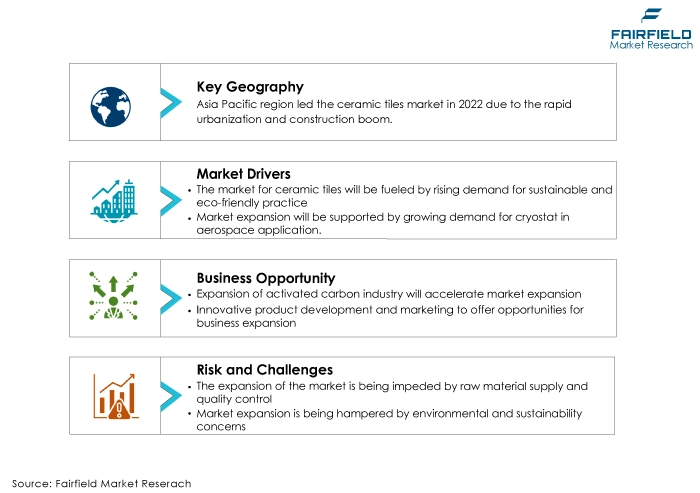
Concerns about the environment have sparked a demand for eco-friendly building materials, including ceramic tiles. As a response, producers are creating recycled material tiles, implementing eco-friendly production techniques, and employing sustainable sourcing methods. Environmentally conscious buyers and builders favour eco-friendly tiles.
- Rapid Technological Advances, and Innovations
Rapid technological advancements have enabled the innovation in ceramic tiles in terms of designs, sizes, and durability. The use of intricate, scalable designs on tiles is made possible by digital printing technology, improving their aesthetic appeal.
The expansion of ceramic tile markets is a result of trade and globalisation. Because of the wide range of consumer preferences and rising global demand, manufacturers are exporting their goods to numerous regions.
- Renovation and Remodelling Projects Across Industries
A significant market driver for ceramic tiles is the renovation and remodelling sector. Ceramic tiles are frequently chosen because of their adaptability and aesthetic potential when homeowners and businesses want to renovate or upgrade their spaces.
A sizable portion of the consumption of ceramic tile comes from renovation projects. Healthcare facilities, kitchens, and bathrooms prefer ceramic tiles, especially those with antimicrobial qualities. These tiles contribute to keeping a more sanitary environment, which is a big motivator in some industries.
Major Growth Barriers
- High Energy Consumption
The processes of glazing and firing ceramic tiles both require significant energy inputs. Rising energy prices may threaten the sustainability, and profitability of the ceramic tile industry, and worries about their effects on the environment.
Strict environmental regulations may have an impact on the production of ceramic tiles. Emissions regulations and waste disposal guidelines must be followed by manufacturers, which can raise production costs and influence the selection of raw materials.
- Availability of Numerous Manufacturers
Due to the numerous manufacturers that operate on a global scale, the ceramic tile market is very competitive. Price pressure and smaller profit margins for manufacturers are frequently effects of fierce competition.
Global supply chains are connected to the ceramic tile market for raw materials and distribution. These supply chains can be disrupted by natural disasters, trade disputes, or geopolitical tensions, resulting in delays and higher production costs.
Key Trends and Opportunities to Look at
The design and appearance of ceramic tiles have been revolutionised by digital printing technology. It can accommodate a variety of architectural and interior design preferences and offers intricate patterns, textures, and unique designs.
Ceramic tile's artistic potential has increased thanks to this technology. Large-format ceramic tiles, also called slab tiles, are becoming increasingly well-liked. These large tiles, up to 5 feet long, have fewer grout lines and a sleeker, more contemporary appearance.
- Wood-Look and Stone-Look Tiles
- Smart Tiles
Ceramic tiles that resemble wood and natural stone have grown in popularity. Despite having the durability and low maintenance requirements of ceramic tiles, they offer the aesthetic appeal of natural materials. These tiles are frequently used in residential and commercial spaces as wall and floor coverings.
A developing trend in ceramic tile design is the incorporation of technology. Bright tiles can incorporate features like embedded LEDs, heating elements, or even connectivity for home automation systems. Beyond just being attractive, these tiles can also serve additional purposes.
Customers are increasingly looking for distinctive designs and personalised tiles. Customers can now design their tile patterns, colours, and shapes due to customisation services provided by manufacturers. This fashion appeals to those looking for a distinctive style.
How Does the Regulatory Scenario Shape this Industry?
The airborne particles that are suspended but do not become dust are this. The SPM released, also known as SPM-10, has a diameter of less than 10 m. The comminution, sizing, classification, handling, transfer, and storage of ceramic products all produce these suspended particulate matter emissions.
Filterable and condensible SPM, which may also contain inorganic pollutants, are released by calciners. In addition to volatile organic compounds (VOC), nitrogen oxides (NOx), sulfur oxides (SOx), carbon dioxide (CO2), and carbon monoxide (CO), calciners also release other byproducts of combustion.
Fairfield’s Ranking Board
Top Segments
Ceramic tiles are highly resistant to water and stains thanks to the protective layer created by the glaze applied to them. Due to this characteristic, glazed ceramic tiles are the best choice for bathrooms, kitchens, and other spill-prone areas.
Furthermore, the porcelain tiles category is projected to experience the fastest market growth. Industries that prioritise product security, aesthetics, and efficiency in packaging can benefit from porcelain ceramic tiles. This allows them to be used inside and outside without losing their colour.
- Floor will Surge Ahead Throughout the Forecast Period
- Commercial Sector Leads the Way
In 2025, the floor category dominated the industry. Living rooms can benefit from the elegance and durability of ceramic tiles. Tiles that resemble wood or stone are among the many styles and designs available.
The wall category is anticipated to grow substantially throughout the projected period. Office spaces with ceramic tiles exude professionalism, and sophistication. They are strong and offer a tidy, low-maintenance solution.
The commercial segment dominated the market in 2025. Due to their aesthetic appeal and ease of cleaning, hotels frequently use ceramic tiles in their lobbies, hallways, and guest rooms.
In educational settings, ceramic tiles are preferred because of their durability and low maintenance requirements. They can withstand heavily used spaces like hallways and cafeterias.
The residential category is expected to experience the fastest growth within the forecast time frame. In educational settings, ceramic tiles are preferred because of their durability and low maintenance requirements. They can withstand heavily used spaces like hallways and cafeterias.
Regional Frontrunners
Asia Pacific Remains in the Bandwagon
China, and India are experiencing rapid economic growth. Due to increasing disposable incomes, the demand for ceramic tiles in these markets is rising as more people can afford home ownership and home improvement projects.
Asia Pacific countries are making significant investments in the construction of transportation, healthcare, and educational infrastructure. Due to their strength, beauty, and ease of maintenance, ceramic tiles are frequently used in these projects.
Both residential and commercial properties are in high demand in Asia Pacific. Ceramic tiles are a popular option for flooring and interior design as developers try to make their projects look more appealing.
North America Jumps on an Ascending Trajectory
The construction industry significantly influences the market for ceramic tiles in North America. For flooring, backsplashes, and bathroom surfaces, ceramic tiles are frequently used in construction and renovation projects in both residential and commercial settings.
The construction industry significantly influences the market for ceramic tiles in North America. For flooring, backsplashes, and bathroom surfaces, ceramic tiles are frequently used in construction and renovation projects in both residential and commercial settings.
Fairfield’s Competitive Landscape Analysis
The global ceramic tiles market is a consolidated market with fewer major players present across the globe. The key players are introducing new products and working on the distribution channels to enhance their worldwide presence. Moreover, Fairfield Market Research expects more consolidation over the coming years.
Who are the Leaders in Global Ceramic tiles Space?
An Expert’s Eye
Demand and Future Growth
China is the world's largest ceramic tile producer. Like Foshan, cities in the Guangdong province are renowned as manufacturing centres for ceramic tiles. The nation's vast construction sector, quick urbanisation, and export-oriented economy all contribute to its enormous production.
India is a significant ceramic tile producer, with essential manufacturing hubs in places like Morbi in Gujarat, and Sikandrabad in Uttar Pradesh. The domestic market, expanding economy, and export opportunities all favour the ceramic tile sector in India.
Various types of clay serve as the primary raw material for ceramic tiles. This includes feldspar, kaolin, and ball clay. The body of the tile is made from these clays.
Supply Side of the Market
Prominent clay suppliers include businesses like Imerys, Sibelco, and Quarzwerke Group. These businesses provide a variety of clay types used to manufacture ceramic tiles. Companies like Ferro Corporation, and Zircar Ceramics provide colourants, glazes, and other additives used in the production of ceramic tiles.
Many ceramic tile producers in countries like China, and India, where the ceramic tile industry is well-established, rely on local or regional suppliers for their raw materials. Businesses like Ferro Corporation, and Zircar Ceramics provide colourants, glazes, and other additives used in the production of ceramic tiles.
The Global Ceramic Tile Market is Segmented as Below:
By Product:
- Glazed Ceramic Tiles
- Porcelain Tiles
- Scratch-free Ceramic Tiles
- Others
By Application:
- Wall Tiles
- Floor Tiles
By End-use Sector:
- Residential
- Commercial
By Geographic Coverage:
- North America
- Europe
- Asia Pacific
- Latin America
- Middle East & Africa
- Executive Summary
- Global Ceramic Tiles Market Snapshot
- Future Projections
- Key Market Trends
- Regional Snapshot, by Value, 2026
- Analyst Recommendations
- Market Overview
- Market Definitions and Segmentations
- Market Dynamics
- Drivers
- Restraints
- Market Opportunities
- Value Chain Analysis
- COVID-19 Impact Analysis
- Porter's Five Forces Analysis
- Impact of Russia-Ukraine Conflict
- PESTLE Analysis
- Regulatory Analysis
- Price Trend Analysis
- Current Prices and Future Projections, 2025-2033
- Price Impact Factors
- Global Ceramic Tiles Market Outlook, 2020 - 2033
- Global Ceramic Tiles Market Outlook, by Product, Value (US$ Bn), 2020-2033
- Glazed Ceramic Tiles
- Porcelain Tiles
- Scratch-free Ceramic Tiles
- Others
- Global Ceramic Tiles Market Outlook, by Application, Value (US$ Bn), 2020-2033
- Wall Tiles
- Floor Tiles
- Global Ceramic Tiles Market Outlook, by End-use Sector, Value (US$ Bn), 2020-2033
- Residential
- Commercial
- Global Ceramic Tiles Market Outlook, by Region, Value (US$ Bn), 2020-2033
- North America
- Europe
- Asia Pacific
- Latin America
- Middle East & Africa
- Global Ceramic Tiles Market Outlook, by Product, Value (US$ Bn), 2020-2033
- North America Ceramic Tiles Market Outlook, 2020 - 2033
- North America Ceramic Tiles Market Outlook, by Product, Value (US$ Bn), 2020-2033
- Glazed Ceramic Tiles
- Porcelain Tiles
- Scratch-free Ceramic Tiles
- Others
- North America Ceramic Tiles Market Outlook, by Application, Value (US$ Bn), 2020-2033
- Wall Tiles
- Floor Tiles
- North America Ceramic Tiles Market Outlook, by End-use Sector, Value (US$ Bn), 2020-2033
- Residential
- Commercial
- North America Ceramic Tiles Market Outlook, by Country, Value (US$ Bn), 2020-2033
- U.S. Ceramic Tiles Market Outlook, by Product, 2020-2033
- U.S. Ceramic Tiles Market Outlook, by Application, 2020-2033
- U.S. Ceramic Tiles Market Outlook, by End-use Sector, 2020-2033
- Canada Ceramic Tiles Market Outlook, by Product, 2020-2033
- Canada Ceramic Tiles Market Outlook, by Application, 2020-2033
- Canada Ceramic Tiles Market Outlook, by End-use Sector, 2020-2033
- BPS Analysis/Market Attractiveness Analysis
- North America Ceramic Tiles Market Outlook, by Product, Value (US$ Bn), 2020-2033
- Europe Ceramic Tiles Market Outlook, 2020 - 2033
- Europe Ceramic Tiles Market Outlook, by Product, Value (US$ Bn), 2020-2033
- Glazed Ceramic Tiles
- Porcelain Tiles
- Scratch-free Ceramic Tiles
- Others
- Europe Ceramic Tiles Market Outlook, by Application, Value (US$ Bn), 2020-2033
- Wall Tiles
- Floor Tiles
- Europe Ceramic Tiles Market Outlook, by End-use Sector, Value (US$ Bn), 2020-2033
- Residential
- Commercial
- Europe Ceramic Tiles Market Outlook, by Country, Value (US$ Bn), 2020-2033
- Germany Ceramic Tiles Market Outlook, by Product, 2020-2033
- Germany Ceramic Tiles Market Outlook, by Application, 2020-2033
- Germany Ceramic Tiles Market Outlook, by End-use Sector, 2020-2033
- Italy Ceramic Tiles Market Outlook, by Product, 2020-2033
- Italy Ceramic Tiles Market Outlook, by Application, 2020-2033
- Italy Ceramic Tiles Market Outlook, by End-use Sector, 2020-2033
- France Ceramic Tiles Market Outlook, by Product, 2020-2033
- France Ceramic Tiles Market Outlook, by Application, 2020-2033
- France Ceramic Tiles Market Outlook, by End-use Sector, 2020-2033
- U.K. Ceramic Tiles Market Outlook, by Product, 2020-2033
- U.K. Ceramic Tiles Market Outlook, by Application, 2020-2033
- U.K. Ceramic Tiles Market Outlook, by End-use Sector, 2020-2033
- Spain Ceramic Tiles Market Outlook, by Product, 2020-2033
- Spain Ceramic Tiles Market Outlook, by Application, 2020-2033
- Spain Ceramic Tiles Market Outlook, by End-use Sector, 2020-2033
- Russia Ceramic Tiles Market Outlook, by Product, 2020-2033
- Russia Ceramic Tiles Market Outlook, by Application, 2020-2033
- Russia Ceramic Tiles Market Outlook, by End-use Sector, 2020-2033
- Rest of Europe Ceramic Tiles Market Outlook, by Product, 2020-2033
- Rest of Europe Ceramic Tiles Market Outlook, by Application, 2020-2033
- Rest of Europe Ceramic Tiles Market Outlook, by End-use Sector, 2020-2033
- BPS Analysis/Market Attractiveness Analysis
- Europe Ceramic Tiles Market Outlook, by Product, Value (US$ Bn), 2020-2033
- Asia Pacific Ceramic Tiles Market Outlook, 2020 - 2033
- Asia Pacific Ceramic Tiles Market Outlook, by Product, Value (US$ Bn), 2020-2033
- Glazed Ceramic Tiles
- Porcelain Tiles
- Scratch-free Ceramic Tiles
- Others
- Asia Pacific Ceramic Tiles Market Outlook, by Application, Value (US$ Bn), 2020-2033
- Wall Tiles
- Floor Tiles
- Asia Pacific Ceramic Tiles Market Outlook, by End-use Sector, Value (US$ Bn), 2020-2033
- Residential
- Commercial
- Asia Pacific Ceramic Tiles Market Outlook, by Country, Value (US$ Bn), 2020-2033
- China Ceramic Tiles Market Outlook, by Product, 2020-2033
- China Ceramic Tiles Market Outlook, by Application, 2020-2033
- China Ceramic Tiles Market Outlook, by End-use Sector, 2020-2033
- Japan Ceramic Tiles Market Outlook, by Product, 2020-2033
- Japan Ceramic Tiles Market Outlook, by Application, 2020-2033
- Japan Ceramic Tiles Market Outlook, by End-use Sector, 2020-2033
- South Korea Ceramic Tiles Market Outlook, by Product, 2020-2033
- South Korea Ceramic Tiles Market Outlook, by Application, 2020-2033
- South Korea Ceramic Tiles Market Outlook, by End-use Sector, 2020-2033
- India Ceramic Tiles Market Outlook, by Product, 2020-2033
- India Ceramic Tiles Market Outlook, by Application, 2020-2033
- India Ceramic Tiles Market Outlook, by End-use Sector, 2020-2033
- Southeast Asia Ceramic Tiles Market Outlook, by Product, 2020-2033
- Southeast Asia Ceramic Tiles Market Outlook, by Application, 2020-2033
- Southeast Asia Ceramic Tiles Market Outlook, by End-use Sector, 2020-2033
- Rest of SAO Ceramic Tiles Market Outlook, by Product, 2020-2033
- Rest of SAO Ceramic Tiles Market Outlook, by Application, 2020-2033
- Rest of SAO Ceramic Tiles Market Outlook, by End-use Sector, 2020-2033
- BPS Analysis/Market Attractiveness Analysis
- Asia Pacific Ceramic Tiles Market Outlook, by Product, Value (US$ Bn), 2020-2033
- Latin America Ceramic Tiles Market Outlook, 2020 - 2033
- Latin America Ceramic Tiles Market Outlook, by Product, Value (US$ Bn), 2020-2033
- Glazed Ceramic Tiles
- Porcelain Tiles
- Scratch-free Ceramic Tiles
- Others
- Latin America Ceramic Tiles Market Outlook, by Application, Value (US$ Bn), 2020-2033
- Wall Tiles
- Floor Tiles
- Latin America Ceramic Tiles Market Outlook, by End-use Sector, Value (US$ Bn), 2020-2033
- Residential
- Commercial
- Latin America Ceramic Tiles Market Outlook, by Country, Value (US$ Bn), 2020-2033
- Brazil Ceramic Tiles Market Outlook, by Product, 2020-2033
- Brazil Ceramic Tiles Market Outlook, by Application, 2020-2033
- Brazil Ceramic Tiles Market Outlook, by End-use Sector, 2020-2033
- Mexico Ceramic Tiles Market Outlook, by Product, 2020-2033
- Mexico Ceramic Tiles Market Outlook, by Application, 2020-2033
- Mexico Ceramic Tiles Market Outlook, by End-use Sector, 2020-2033
- Argentina Ceramic Tiles Market Outlook, by Product, 2020-2033
- Argentina Ceramic Tiles Market Outlook, by Application, 2020-2033
- Argentina Ceramic Tiles Market Outlook, by End-use Sector, 2020-2033
- Rest of LATAM Ceramic Tiles Market Outlook, by Product, 2020-2033
- Rest of LATAM Ceramic Tiles Market Outlook, by Application, 2020-2033
- Rest of LATAM Ceramic Tiles Market Outlook, by End-use Sector, 2020-2033
- BPS Analysis/Market Attractiveness Analysis
- Latin America Ceramic Tiles Market Outlook, by Product, Value (US$ Bn), 2020-2033
- Middle East & Africa Ceramic Tiles Market Outlook, 2020 - 2033
- Middle East & Africa Ceramic Tiles Market Outlook, by Product, Value (US$ Bn), 2020-2033
- Glazed Ceramic Tiles
- Porcelain Tiles
- Scratch-free Ceramic Tiles
- Others
- Middle East & Africa Ceramic Tiles Market Outlook, by Application, Value (US$ Bn), 2020-2033
- Wall Tiles
- Floor Tiles
- Middle East & Africa Ceramic Tiles Market Outlook, by End-use Sector, Value (US$ Bn), 2020-2033
- Residential
- Commercial
- Middle East & Africa Ceramic Tiles Market Outlook, by Country, Value (US$ Bn), 2020-2033
- GCC Ceramic Tiles Market Outlook, by Product, 2020-2033
- GCC Ceramic Tiles Market Outlook, by Application, 2020-2033
- GCC Ceramic Tiles Market Outlook, by End-use Sector, 2020-2033
- South Africa Ceramic Tiles Market Outlook, by Product, 2020-2033
- South Africa Ceramic Tiles Market Outlook, by Application, 2020-2033
- South Africa Ceramic Tiles Market Outlook, by End-use Sector, 2020-2033
- Egypt Ceramic Tiles Market Outlook, by Product, 2020-2033
- Egypt Ceramic Tiles Market Outlook, by Application, 2020-2033
- Egypt Ceramic Tiles Market Outlook, by End-use Sector, 2020-2033
- Nigeria Ceramic Tiles Market Outlook, by Product, 2020-2033
- Nigeria Ceramic Tiles Market Outlook, by Application, 2020-2033
- Nigeria Ceramic Tiles Market Outlook, by End-use Sector, 2020-2033
- Rest of Middle East Ceramic Tiles Market Outlook, by Product, 2020-2033
- Rest of Middle East Ceramic Tiles Market Outlook, by Application, 2020-2033
- Rest of Middle East Ceramic Tiles Market Outlook, by End-use Sector, 2020-2033
- BPS Analysis/Market Attractiveness Analysis
- Middle East & Africa Ceramic Tiles Market Outlook, by Product, Value (US$ Bn), 2020-2033
- Competitive Landscape
- Company Vs Segment Heatmap
- Company Market Share Analysis, 2025
- Competitive Dashboard
- Company Profiles
- Shiv Kripa
- Company Overview
- Product Portfolio
- Financial Overview
- Business Strategies and Developments
- Sri Srinivasa
- Johnson
- Kajaria
- Oriental
- Bajaj Tiles
- Somany Ceramics
- Cera Sanitaryware Ltd.
- Nitco
- Asian Granito India Ltd
- Simpolo
- H & R Johnson India Limited
- Accord Vitrified Private Limited
- Specto Ceramics (Noble Wall Tiles)
- Lavish Granito Private Limited
- Shiv Kripa
- Appendix
- Research Methodology
- Report Assumptions
- Acronyms and Abbreviations
|
BASE YEAR |
HISTORICAL DATA |
FORECAST PERIOD |
UNITS |
|||
 |
2025 |
 |
2019 - 2025 |
 |
2026 - 2033 |
Value: US$ Billion |
|
REPORT FEATURES |
DETAILS |
|
Product Coverage |
|
|
Application Coverage |
|
|
End-use Sector Coverage |
|
|
Geographical Coverage |
|
|
Leading Companies |
|
|
Report Highlights |
Key Market Indicators, Macro-micro economic impact analysis, Technological Roadmap, Key Trends, Driver, Restraints, and Future Opportunities & Revenue Pockets, Porter’s 5 Forces Analysis, Historical Trend (2019-2021), Market Estimates and Forecast, Market Dynamics, Industry Trends, Competition Landscape, Category, Region, Country-wise Trends & Analysis, COVID-19 Impact Analysis (Demand and Supply Chain) |
Our Research Methodology
Considering the volatility of business today, traditional approaches to strategizing a game plan can be unfruitful if not detrimental. True ambiguity is no way to determine a forecast. A myriad of predetermined factors must be accounted for such as the degree of risk involved, the magnitude of circumstances, as well as conditions or consequences that are not known or unpredictable. To circumvent binary views that cast uncertainty, the application of market research intelligence to strategically posture, move, and enable actionable outcomes is necessary.
View Methodology
Quality Assured
Rigorous Validation Process

Confidentiality Assured
End-to-end Data Security

Custom Research Services
Tailored To Your Objectives
FAQs
The global ceramic tiles market is fueled by increasing construction activities, rising urbanization, and a growing focus on aesthetics in both residential and commercial spaces.
Technological innovations, such as digital printing on tiles and advanced manufacturing processes, contribute to enhanced design possibilities, customisation, and improved product durability, influencing the market positively.
Asia Pacific dominates the ceramic tiles market, driven by robust construction activities in countries like China, and India. Additionally, the Middle East, and Latin America show promising growth due to expanding infrastructural projects.
Growing environmental consciousness has led to increased demand for eco-friendly and recycled materials in ceramic tile production. Manufacturers are adopting sustainable practices, such as reduced energy consumption and waste recycling, to align with market preferences.
Intense market competition, fluctuations in raw material costs, and price sensitivity among consumers pose challenges. Companies strive to differentiate through innovative products, efficient supply chain management, and strategic pricing strategies.
Related Reports
Pyrogel Insulation Insights, Competitive Landscape, and Market Forecast 2026 to 2033
Pyrogel Insulation Market is valued at US$1.02 billion in 2026 and projected to reach US$2.23 billion by 2033, growing at 11.8% CAGR.
High-Speed Separators Insights, Competitive Landscape, and Market Forecast 2026 to 2033
The global High-Speed Separators Market is projected to grow from US$2.90 billion in 2026 to US$4.30 billion by 2033, at a CAGR of 5.8%.
Space Materials Insights, Competitive Landscape, and Market Forecast 2026 to 2033
The global space materials market is valued at US$4.5 billion in 2026 and is projected to reach US$8.4 billion by 2033, growing at 9.3% CAGR
Recyclable Polyolefin Impact Modifiers Market Insights, Competitive Landscape, and Market Forecast 2033
Recyclable Polyolefin Impact Modifiers Market to reach USD 2.81 Bn by 2033, growing at 8.4% CAGR, driven by recycling, and sustainability demand.
Zero-Waste Beauty Market Insights, Competitive Landscape, and Market Forecast 2033
Zero-Waste Beauty Market to reach USD 5.97 Bn by 2033, growing at 14.6% CAGR, driven by packaging, waterless formulations, and consumer demand.
Dispersible Bio Films Market Insights, Competitive Landscape, and Market Forecast 2033
Dispersible Bio Films Market to reach USD 829.66 Mn by 2033, growing at 16.2% CAGR, driven by pharma delivery, nutraceuticals, and convenient dosing.