



Epilepsy Treatment Market
Epilepsy Treatment Market Insights, Competitive Landscape, and Market Forecast - 2033
Global Epilepsy Treatment Market Forecast
- Market for epilepsy treatment expected to rise high up to USD 12.9 Bn in 2033, up from USD 7.82 Bn attained in 2026
- Epilepsy treatment market size poised for expansion at a CAGR of 7% during 2026-2033
Quick Report Digest
A Look Back and a Look Forward - Comparative Analysis
The epilepsy treatment market exhibited consistent growth in the years leading up to 2023. This can be attributed to two main factors: a rise in diagnosed epilepsy cases due to better diagnostic tools and growing public awareness, and a subsequent increase in the adoption of antiepileptic drugs (AEDs) as the primary treatment method.
However, the market is poised for a significant growth acceleration in the coming years. This is fueled by a confluence of factors, including the approval of new drugs targeting a wider range of seizure types, a growing geriatric population more susceptible to epilepsy, and rising public awareness campaigns that are encouraging earlier diagnosis and treatment initiation.
Epilepsy treatment demand has seen some shifts post-COVID, with potential for both increased demand and new considerations. Studies suggest a slight increase in new epilepsy diagnoses, particularly in non-hospitalized COVID-19 cases, compared to influenza. This could lead to a rise in demand for treatment, especially medications, for newly diagnosed patients.
Children seem to be at a higher risk of developing epilepsy after COVID-19. This might necessitate tailoring treatment approaches for this age group. The long-term impact of COVID-19 on epilepsy risk and treatment needs is still under investigation. More research is needed to fully understand the mechanisms at play and develop targeted treatment strategies for post-COVID epilepsy.
Key Growth Determinants
Expanding Treatment Options
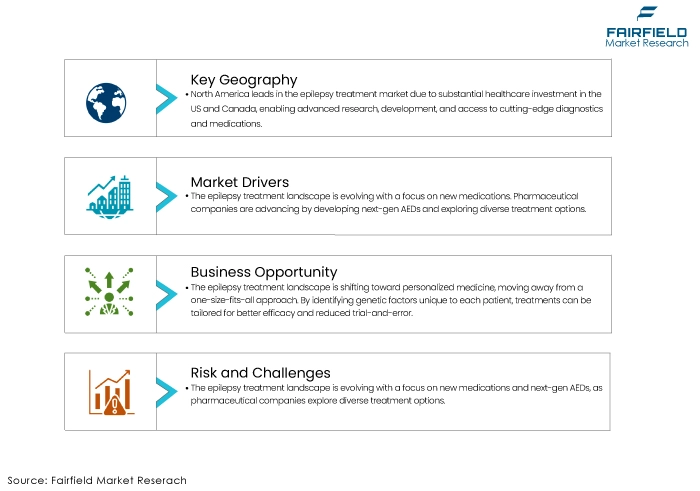
The epilepsy treatment landscape is constantly evolving, with a growing focus on developing new and improved medications. Pharmaceutical companies are actively pushing the boundaries by introducing next-gen AEDs, and exploring diverse treatment modalities.
The new medications aim to offer better efficacy against various seizure types compared to existing options. Additionally, they aim to minimize side effects, a major concern for patients on long-term treatment. Beyond medications, advancements in neuromodulation devices and surgical techniques are providing more targeted treatment options.
Neuromodulation devices like vagus nerve stimulators offer non-invasive seizure control, while surgical procedures can be highly effective for drug-resistant epilepsy. This broader treatment armamentarium empowers physicians to tailor therapy based on individual patient needs.
Rising Public Awareness About Early Diagnosis
Traditionally, epilepsy has been shrouded in stigma, discouraging individuals from seeking help. However, increased public awareness campaigns and educational initiatives are chipping away at this stigma. This empowers individuals to recognize symptoms and seek timely diagnosis. Early diagnosis is crucial for effective treatment and improved quality of life for patients.
Furthermore, advancements in diagnostic tools are enabling more accurate and efficient epilepsy detection. This allows for earlier intervention and potentially prevents the progression of the condition. Early diagnosis also opens a window for exploring preventive measures and minimizing the long-term impact of epilepsy on patients' lives.
Growing Geriatric Population, and Increasing Healthcare Expenditure
The global population is aging, with a significant rise in the geriatric demographic. This age group is more susceptible to epilepsy due to factors like increased stroke risk and neurodegenerative diseases. This growing patient population translates to an expanding demand for epilepsy treatment solutions.
Additionally, developing countries are witnessing a rise in healthcare expenditure. As these economies grow, there's a greater focus on improving healthcare infrastructure and access to treatment. This trend creates new opportunities for epilepsy treatment providers to expand their reach and cater to a broader patient base.
Key Growth Barriers
Affordability Hurdles, and Limited Access
Despite advancements in treatment options, the high cost of epilepsy treatment remains a significant barrier to access, particularly in developing countries. Newer and more specialized medications can be exorbitantly expensive, putting a strain on healthcare budgets and limiting treatment options for patients. Similarly, the cost of surgical procedures and neuromodulation devices can be prohibitive for many patients.
Limited access to healthcare infrastructure further exacerbates this issue. In resource-constrained settings, patients might lack access to specialists for diagnosis and treatment. Additionally, a lack of proper insurance coverage can make epilepsy treatment financially burdensome for patients and families. Addressing these affordability concerns and ensuring equitable access to healthcare will be crucial for sustained market growth.
Incomplete Treatment Efficacy, and Side Effect Challenges
While new medications are being developed, achieving complete seizure control remains a challenge for many patients. Existing medications may not be effective for all seizure types, and some patients experience drug resistance. Additionally, even effective medications can come with a range of side effects, such as drowsiness, cognitive impairment, and mood swings. These side effects can lead to patient non-adherence, hindering treatment success and impacting quality of life.
Continuous research and development are essential to overcome these limitations. Efforts are ongoing to create medications with broader efficacy and improved tolerability profiles. Additionally, personalized medicine approaches that tailor treatment plans based on individual patient characteristics hold promise for improving treatment outcomes and reducing side effects.
Key Opportunities and Trends to Look at
Personalized Medicine Revolutionizes Treatment
An influential shift toward personalized medicine remains a prominent market trend in the years to come. The epilepsy treatment landscape is undergoing a paradigm shift towards personalized medicine. This approach moves away from a one-size-fits-all strategy and focuses on tailoring treatment plans to individual patient needs. Identifying the underlying genetic factors contributing to an individual's epilepsy can guide the selection of the most effective medications. This approach has the potential to improve treatment efficacy and minimize unnecessary trial-and-error approaches.
Utilizing advanced brain imaging and monitoring techniques allows for a deeper understanding of individual seizure patterns. This information can be used to personalize medication dosages, select optimal neurostimulation targets, or even identify patients who might benefit most from surgical intervention. This emerging field explores how an individual's genetic makeup influences their response to medications. By analysing a patient's genetic profile, doctors can predict their response to specific AEDs, minimizing the risk of adverse reactions and maximizing treatment effectiveness.
Personalized medicine holds immense promise for the epilepsy treatment market. By offering a more targeted and tailored approach, it can improve treatment outcomes, reduce side effects, and ultimately enhance patient quality of life.
Untapped Potential in Developing Regions
Developing countries with growing economies and a rising middle class present a significant untapped opportunity for the epilepsy treatment market. As these economies grow, there's a rising focus on improving healthcare infrastructure and access to treatment. This translates to a larger patient population with greater demand for effective epilepsy treatments.
Factors like improved diagnostics and increased awareness are leading to a rise in diagnosed epilepsy cases in developing countries. This creates a need for readily available and affordable treatment options. Digital health solutions, including telemedicine and mobile health apps, have the potential to overcome geographical barriers and provide epilepsy patients with better access to specialists and treatment advice.
However, for this opportunity to be fully realized, certain challenges need to be addressed. Ensuring affordability of treatments, establishing robust healthcare infrastructure, and educating healthcare professionals about epilepsy management are crucial steps towards unlocking the full potential of emerging markets in the epilepsy treatment landscape.
How Does Regulatory Scenario Shape this Industry?
The regulatory landscape plays a critical role in shaping the epilepsy treatment industry, acting as a double-edged sword. On one hand, stringent regulations enforced by bodies like the FDA ensure the safety and efficacy of new drugs entering the market. This protects patients from potentially harmful medications. However, these same regulations can also create hurdles for innovation. Lengthy approval processes can delay the availability of potentially life-changing treatments for patients.
Despite this delay, regulatory bodies play a vital role in fostering innovation within a safe framework. They encourage research and development of new epilepsy treatments by providing clear guidelines and pathways for drug approval. Additionally, regulations can promote competition by ensuring a level playing field for different pharmaceutical companies, ultimately benefiting patients with a wider range of treatment options.
The future of the regulatory scenario may involve a focus on streamlining approval processes while maintaining strict safety standards. This could involve utilizing innovative clinical trial designs or leveraging real-world data to expedite drug approvals for promising epilepsy treatments.
Fairfield’s Ranking Board
Top Segments
Second-Generation AEDs Reign Supreme in Drug Class
Within the drug class segment, second-generation antiepileptic drugs (AEDs) currently hold the dominant position. This dominance can be attributed to several key factors. Compared to first-generation AEDs, second-generation drugs generally exhibit fewer and less severe side effects. This translates to better tolerability for patients, leading to improved treatment adherence and overall quality of life.
While some second-generation AEDs excel against specific seizure types, many offer a wider range of efficacy compared to their predecessors. This allows physicians greater flexibility in tailoring treatment plans for patients with diverse epilepsy presentations.
However, the market for newer generation drugs is expected to experience significant growth. These next-generation AEDs aim to address some of the limitations of existing options, offering potentially even better efficacy and tolerability profiles. Additionally, they might target specific seizure types that haven't been effectively managed with traditional medications.
Medication Remains King by Treatment Type
Medication remains the dominant treatment type for epilepsy due to several reasons. Compared to surgery or neuromodulation devices, medications offer a less invasive approach to managing epilepsy. This makes them a preferred option for many patients, especially those with milder forms of the condition. Medications, particularly oral formulations, are convenient and easy to administer. Patients can often self-manage their medication regimens, increasing treatment adherence and improving long-term outcomes.
Over decades, various medications have proven effective in managing different types of seizures. This established track record fosters trust among both patients and physicians. However, surgery and neuromodulation devices are gaining traction as viable treatment options for patients with drug-resistant epilepsy. These advancements offer hope for improved seizure control and a better quality of life for patients who haven't responded well to medication.
Regional Frontrunners
North America Remains the Global Leader
North America holds the largest market share in the epilepsy treatment landscape. This dominance can be attributed to several factors. Developed economies like the US, and Canada allocate significant budgetary resources towards healthcare. This allows for greater investment in research and development of new epilepsy treatments and facilitates access to advanced diagnostic tools and medications.
North America boasts a well-developed healthcare infrastructure with a high concentration of neurologists and epilepsy specialists. This ensures patients have access to timely diagnosis, expert treatment, and comprehensive epilepsy care. Public awareness campaigns in North America have been successful in destigmatizing epilepsy and encouraging earlier diagnosis. This early intervention allows for prompt treatment initiation, potentially improving long-term outcomes for patients. However, the growth rate in North America is expected to be surpassed by other regions in the coming years.
Asia Pacific Holds Massive Untapped Potential
The Asia Pacific region is poised for the fastest growth in the epilepsy treatment market. This rapid expansion can be attributed to several key factors. Improved diagnostics and increased awareness are leading to a surge in diagnosed epilepsy cases across Asia. This growing patient population creates a significant demand for effective treatment solutions. As economies in this region develop, there's a growing focus on improving healthcare infrastructure and access to treatment. This translates to increased healthcare spending, creating opportunities for market expansion.
Compared to North America, access to epilepsy specialists and advanced treatment options remains limited in many parts of Asia. This presents an opportunity for market players to expand their reach and cater to this underserved patient population. While the Asia Pacific region holds immense potential, challenges like ensuring affordability of treatments and improving healthcare infrastructure need to be addressed to fully tap into this growing market.
Fairfield’s Competitive Landscape Analysis
The epilepsy treatment market brims with moderate competition, featuring a blend of established pharmaceutical giants and emerging players driving innovation. Key participants include household names like Pfizer, and Abbott Laboratories, alongside innovators like UCB focusing on niche therapies. This mix fosters a dynamic environment with established players leveraging their resources for research and established distribution channels, while nimble start-ups bring fresh perspectives and specialized treatments.
Who are Leading Companies in Epilepsy Treatment Space?
- Pfizer
- Abbott Laboratories
- Johnson & Johnson
- Eisai
- GlaxoSmithKline
- Novartis
- Sanofi
- Sunovion Pharmaceuticals
- UCB
- Livanova
- Medtronic
- Boston Scientific
Global Epilepsy Treatment Market is Segmented as-
By Diagnosis & Treatment Type
- Diagnosis
- Inpatient
- Outpatient
- Treatment Type
- Drugs
- Lamotrigine
- Phenytoin
- Carbamazepine
- Valproic Acid
- Others
- Surgery Treatment
- Other Treatments
- Devices
- Monitoring Devices
- Electrocorticography (ECoG) Electrodes
- Intraoperative Patient Monitoring Devices
- Neurostimulation Devices
- Responsive Neurostimulation
- Deep Brain Stimulation
- Vagus Nerve Stimulation
By Seizure Type
- Generalized Seizures
- Focal Seizures
- Both
By Distribution Channel
- Hospital Pharmacies
- Retail Pharmacies
- Drug Stores
- Online Pharmacies
By Service Provider
- Hospitals
- Ambulatory Surgical Centers
- Diagnostic Centers
- Specialty Clinics
By Region
- North America
- Europe
- Asia Pacific
- Latin America
- Middle East & Africa
- Executive Summary
- Global Epilepsy Treatment Market Snapshot
- Future Projections
- Key Market Trends
- Regional Snapshot, by Value, 2026
- Analyst Recommendations
- Market Overview
- Market Definitions and Segmentations
- Market Dynamics
- Drivers
- Restraints
- Market Opportunities
- Value Chain Analysis
- COVID-19 Impact Analysis
- Porter's Five Forces Analysis
- Impact of Russia-Ukraine Conflict
- PESTLE Analysis
- Regulatory Analysis
- Price Trend Analysis
- Current Prices and Future Projections, 2025-2033
- Price Impact Factors
- Global Epilepsy Treatment Market Outlook, 2020 - 2033
- Global Epilepsy Treatment Market Outlook, by Diagnosis & Treatment Type, Value (US$ Bn), 2020-2033
- Diagnosis
- Inpatient
- Outpatient
- Treatment Type
- Drugs
- Surgery Treatment
- Other Treatments
- Devices
- Monitoring Devices
- Neurostimulation Devices
- Global Epilepsy Treatment Market Outlook, by Seizure Type, Value (US$ Bn), 2020-2033
- Generalized Seizures
- Focal Seizures
- Both
- Global Epilepsy Treatment Market Outlook, by Distribution Channel, Value (US$ Bn), 2020-2033
- Hospital Pharmacies
- Retail Pharmacies
- Drug Stores
- Online Pharmacies
- Global Epilepsy Treatment Market Outlook, by Service Provider, Value (US$ Bn), 2020-2033
- Hospitals
- Ambulatory Surgical Centers
- Diagnostic Centers
- Specialty Clinics
- Global Epilepsy Treatment Market Outlook, by Region, Value (US$ Bn), 2020-2033
- North America
- Europe
- Asia Pacific
- Latin America
- Middle East & Africa
- Diagnosis
- Global Epilepsy Treatment Market Outlook, by Diagnosis & Treatment Type, Value (US$ Bn), 2020-2033
- North America Epilepsy Treatment Market Outlook, 2020 - 2033
- North America Epilepsy Treatment Market Outlook, by Diagnosis & Treatment Type, Value (US$ Bn), 2020-2033
- Diagnosis
- Inpatient
- Outpatient
- Treatment Type
- Drugs
- Surgery Treatment
- Other Treatments
- Devices
- Monitoring Devices
- Neurostimulation Devices
- North America Epilepsy Treatment Market Outlook, by Seizure Type, Value (US$ Bn), 2020-2033
- Generalized Seizures
- Focal Seizures
- Both
- North America Epilepsy Treatment Market Outlook, by Distribution Channel, Value (US$ Bn), 2020-2033
- Hospital Pharmacies
- Retail Pharmacies
- Drug Stores
- Online Pharmacies
- North America Epilepsy Treatment Market Outlook, by Service Provider, Value (US$ Bn), 2020-2033
- Hospitals
- Ambulatory Surgical Centers
- Diagnostic Centers
- Specialty Clinics
- North America Epilepsy Treatment Market Outlook, by Country, Value (US$ Bn), 2020-2033
- U.S. Epilepsy Treatment Market Outlook, by Diagnosis & Treatment Type, 2020-2033
- U.S. Epilepsy Treatment Market Outlook, by Seizure Type, 2020-2033
- U.S. Epilepsy Treatment Market Outlook, by Distribution Channel, 2020-2033
- U.S. Epilepsy Treatment Market Outlook, by Service Provider, 2020-2033
- Canada Epilepsy Treatment Market Outlook, by Diagnosis & Treatment Type, 2020-2033
- Canada Epilepsy Treatment Market Outlook, by Seizure Type, 2020-2033
- Canada Epilepsy Treatment Market Outlook, by Distribution Channel, 2020-2033
- Canada Epilepsy Treatment Market Outlook, by Service Provider, 2020-2033
- BPS Analysis/Market Attractiveness Analysis
- Diagnosis
- North America Epilepsy Treatment Market Outlook, by Diagnosis & Treatment Type, Value (US$ Bn), 2020-2033
- Europe Epilepsy Treatment Market Outlook, 2020 - 2033
- Europe Epilepsy Treatment Market Outlook, by Diagnosis & Treatment Type, Value (US$ Bn), 2020-2033
- Diagnosis
- Inpatient
- Outpatient
- Treatment Type
- Drugs
- Surgery Treatment
- Other Treatments
- Devices
- Monitoring Devices
- Neurostimulation Devices
- Europe Epilepsy Treatment Market Outlook, by Seizure Type, Value (US$ Bn), 2020-2033
- Generalized Seizures
- Focal Seizures
- Both
- Europe Epilepsy Treatment Market Outlook, by Distribution Channel, Value (US$ Bn), 2020-2033
- Hospital Pharmacies
- Retail Pharmacies
- Drug Stores
- Online Pharmacies
- Europe Epilepsy Treatment Market Outlook, by Service Provider, Value (US$ Bn), 2020-2033
- Hospitals
- Ambulatory Surgical Centers
- Diagnostic Centers
- Specialty Clinics
- Europe Epilepsy Treatment Market Outlook, by Country, Value (US$ Bn), 2020-2033
- Germany Epilepsy Treatment Market Outlook, by Diagnosis & Treatment Type, 2020-2033
- Germany Epilepsy Treatment Market Outlook, by Seizure Type, 2020-2033
- Germany Epilepsy Treatment Market Outlook, by Distribution Channel, 2020-2033
- Germany Epilepsy Treatment Market Outlook, by Service Provider, 2020-2033
- Italy Epilepsy Treatment Market Outlook, by Diagnosis & Treatment Type, 2020-2033
- Italy Epilepsy Treatment Market Outlook, by Seizure Type, 2020-2033
- Italy Epilepsy Treatment Market Outlook, by Distribution Channel, 2020-2033
- Italy Epilepsy Treatment Market Outlook, by Service Provider, 2020-2033
- France Epilepsy Treatment Market Outlook, by Diagnosis & Treatment Type, 2020-2033
- France Epilepsy Treatment Market Outlook, by Seizure Type, 2020-2033
- France Epilepsy Treatment Market Outlook, by Distribution Channel, 2020-2033
- France Epilepsy Treatment Market Outlook, by Service Provider, 2020-2033
- U.K. Epilepsy Treatment Market Outlook, by Diagnosis & Treatment Type, 2020-2033
- U.K. Epilepsy Treatment Market Outlook, by Seizure Type, 2020-2033
- U.K. Epilepsy Treatment Market Outlook, by Distribution Channel, 2020-2033
- U.K. Epilepsy Treatment Market Outlook, by Service Provider, 2020-2033
- Spain Epilepsy Treatment Market Outlook, by Diagnosis & Treatment Type, 2020-2033
- Spain Epilepsy Treatment Market Outlook, by Seizure Type, 2020-2033
- Spain Epilepsy Treatment Market Outlook, by Distribution Channel, 2020-2033
- Spain Epilepsy Treatment Market Outlook, by Service Provider, 2020-2033
- Russia Epilepsy Treatment Market Outlook, by Diagnosis & Treatment Type, 2020-2033
- Russia Epilepsy Treatment Market Outlook, by Seizure Type, 2020-2033
- Russia Epilepsy Treatment Market Outlook, by Distribution Channel, 2020-2033
- Russia Epilepsy Treatment Market Outlook, by Service Provider, 2020-2033
- Rest of Europe Epilepsy Treatment Market Outlook, by Diagnosis & Treatment Type, 2020-2033
- Rest of Europe Epilepsy Treatment Market Outlook, by Seizure Type, 2020-2033
- Rest of Europe Epilepsy Treatment Market Outlook, by Distribution Channel, 2020-2033
- Rest of Europe Epilepsy Treatment Market Outlook, by Service Provider, 2020-2033
- BPS Analysis/Market Attractiveness Analysis
- Diagnosis
- Europe Epilepsy Treatment Market Outlook, by Diagnosis & Treatment Type, Value (US$ Bn), 2020-2033
- Asia Pacific Epilepsy Treatment Market Outlook, 2020 - 2033
- Asia Pacific Epilepsy Treatment Market Outlook, by Diagnosis & Treatment Type, Value (US$ Bn), 2020-2033
- Diagnosis
- Inpatient
- Outpatient
- Treatment Type
- Drugs
- Surgery Treatment
- Other Treatments
- Devices
- Monitoring Devices
- Neurostimulation Devices
- Asia Pacific Epilepsy Treatment Market Outlook, by Seizure Type, Value (US$ Bn), 2020-2033
- Generalized Seizures
- Focal Seizures
- Both
- Asia Pacific Epilepsy Treatment Market Outlook, by Distribution Channel, Value (US$ Bn), 2020-2033
- Hospital Pharmacies
- Retail Pharmacies
- Drug Stores
- Online Pharmacies
- Asia Pacific Epilepsy Treatment Market Outlook, by Service Provider, Value (US$ Bn), 2020-2033
- Hospitals
- Ambulatory Surgical Centers
- Diagnostic Centers
- Specialty Clinics
- Asia Pacific Epilepsy Treatment Market Outlook, by Country, Value (US$ Bn), 2020-2033
- China Epilepsy Treatment Market Outlook, by Diagnosis & Treatment Type, 2020-2033
- China Epilepsy Treatment Market Outlook, by Seizure Type, 2020-2033
- China Epilepsy Treatment Market Outlook, by Distribution Channel, 2020-2033
- China Epilepsy Treatment Market Outlook, by Service Provider, 2020-2033
- Japan Epilepsy Treatment Market Outlook, by Diagnosis & Treatment Type, 2020-2033
- Japan Epilepsy Treatment Market Outlook, by Seizure Type, 2020-2033
- Japan Epilepsy Treatment Market Outlook, by Distribution Channel, 2020-2033
- Japan Epilepsy Treatment Market Outlook, by Service Provider, 2020-2033
- South Korea Epilepsy Treatment Market Outlook, by Diagnosis & Treatment Type, 2020-2033
- South Korea Epilepsy Treatment Market Outlook, by Seizure Type, 2020-2033
- South Korea Epilepsy Treatment Market Outlook, by Distribution Channel, 2020-2033
- South Korea Epilepsy Treatment Market Outlook, by Service Provider, 2020-2033
- India Epilepsy Treatment Market Outlook, by Diagnosis & Treatment Type, 2020-2033
- India Epilepsy Treatment Market Outlook, by Seizure Type, 2020-2033
- India Epilepsy Treatment Market Outlook, by Distribution Channel, 2020-2033
- India Epilepsy Treatment Market Outlook, by Service Provider, 2020-2033
- Southeast Asia Epilepsy Treatment Market Outlook, by Diagnosis & Treatment Type, 2020-2033
- Southeast Asia Epilepsy Treatment Market Outlook, by Seizure Type, 2020-2033
- Southeast Asia Epilepsy Treatment Market Outlook, by Distribution Channel, 2020-2033
- Southeast Asia Epilepsy Treatment Market Outlook, by Service Provider, 2020-2033
- Rest of SAO Epilepsy Treatment Market Outlook, by Diagnosis & Treatment Type, 2020-2033
- Rest of SAO Epilepsy Treatment Market Outlook, by Seizure Type, 2020-
- Rest of SAO Epilepsy Treatment Market Outlook, by Distribution Channel, 2020-2033
- Rest of SAO Epilepsy Treatment Market Outlook, by Service Provider, 2020-2033
- BPS Analysis/Market Attractiveness Analysis
- Diagnosis
- Asia Pacific Epilepsy Treatment Market Outlook, by Diagnosis & Treatment Type, Value (US$ Bn), 2020-2033
- Latin America Epilepsy Treatment Market Outlook, 2020 - 2033
- Latin America Epilepsy Treatment Market Outlook, by Diagnosis & Treatment Type, Value (US$ Bn), 2020-2033
- Diagnosis
- Inpatient
- Outpatient
- Treatment Type
- Drugs
- Surgery Treatment
- Other Treatments
- Devices
- Monitoring Devices
- Neurostimulation Devices
- Latin America Epilepsy Treatment Market Outlook, by Seizure Type, Value (US$ Bn), 2020-2033
- Generalized Seizures
- Focal Seizures
- Both
- Latin America Epilepsy Treatment Market Outlook, by Distribution Channel, Value (US$ Bn), 2020-2033
- Hospital Pharmacies
- Retail Pharmacies
- Drug Stores
- Online Pharmacies
- Latin America Epilepsy Treatment Market Outlook, by Service Provider, Value (US$ Bn), 2020-2033
- Hospitals
- Ambulatory Surgical Centers
- Diagnostic Centers
- Specialty Clinics
- Latin America Epilepsy Treatment Market Outlook, by Country, Value (US$ Bn), 2020-2033
- Brazil Epilepsy Treatment Market Outlook, by Diagnosis & Treatment Type, 2020-2033
- Brazil Epilepsy Treatment Market Outlook, by Seizure Type, 2020-2033
- Brazil Epilepsy Treatment Market Outlook, by Distribution Channel, 2020-2033
- Brazil Epilepsy Treatment Market Outlook, by Service Provider, 2020-2033
- Mexico Epilepsy Treatment Market Outlook, by Diagnosis & Treatment Type, 2020-2033
- Mexico Epilepsy Treatment Market Outlook, by Seizure Type, 2020-2033
- Mexico Epilepsy Treatment Market Outlook, by Distribution Channel, 2020-2033
- Mexico Epilepsy Treatment Market Outlook, by Service Provider, 2020-2033
- Argentina Epilepsy Treatment Market Outlook, by Diagnosis & Treatment Type, 2020-2033
- Argentina Epilepsy Treatment Market Outlook, by Seizure Type, 2020-2033
- Argentina Epilepsy Treatment Market Outlook, by Distribution Channel, 2020-2033
- Argentina Epilepsy Treatment Market Outlook, by Service Provider, 2020-2033
- Rest of LATAM Epilepsy Treatment Market Outlook, by Diagnosis & Treatment Type, 2020-2033
- Rest of LATAM Epilepsy Treatment Market Outlook, by Seizure Type, 2020-2033
- Rest of LATAM Epilepsy Treatment Market Outlook, by Distribution Channel, 2020-2033
- Rest of LATAM Epilepsy Treatment Market Outlook, by Service Provider, 2020-2033
- BPS Analysis/Market Attractiveness Analysis
- Diagnosis
- Latin America Epilepsy Treatment Market Outlook, by Diagnosis & Treatment Type, Value (US$ Bn), 2020-2033
- Middle East & Africa Epilepsy Treatment Market Outlook, 2020 - 2033
- Middle East & Africa Epilepsy Treatment Market Outlook, by Diagnosis & Treatment Type, Value (US$ Bn), 2020-2033
- Diagnosis
- Inpatient
- Outpatient
- Treatment Type
- Drugs
- Surgery Treatment
- Other Treatments
- Devices
- Monitoring Devices
- Neurostimulation Devices
- Middle East & Africa Epilepsy Treatment Market Outlook, by Seizure Type, Value (US$ Bn), 2020-2033
- Generalized Seizures
- Focal Seizures
- Both
- Middle East & Africa Epilepsy Treatment Market Outlook, by Distribution Channel, Value (US$ Bn), 2020-2033
- Hospital Pharmacies
- Retail Pharmacies
- Drug Stores
- Online Pharmacies
- Middle East & Africa Epilepsy Treatment Market Outlook, by Service Provider, Value (US$ Bn), 2020-2033
- Hospitals
- Ambulatory Surgical Centers
- Diagnostic Centers
- Specialty Clinics
- Middle East & Africa Epilepsy Treatment Market Outlook, by Country, Value (US$ Bn), 2020-2033
- GCC Epilepsy Treatment Market Outlook, by Diagnosis & Treatment Type, 2020-2033
- GCC Epilepsy Treatment Market Outlook, by Seizure Type, 2020-2033
- GCC Epilepsy Treatment Market Outlook, by Distribution Channel, 2020-2033
- GCC Epilepsy Treatment Market Outlook, by Service Provider, 2020-2033
- South Africa Epilepsy Treatment Market Outlook, by Diagnosis & Treatment Type, 2020-2033
- South Africa Epilepsy Treatment Market Outlook, by Seizure Type, 2020-2033
- South Africa Epilepsy Treatment Market Outlook, by Distribution Channel, 2020-2033
- South Africa Epilepsy Treatment Market Outlook, by Service Provider, 2020-2033
- Egypt Epilepsy Treatment Market Outlook, by Diagnosis & Treatment Type, 2020-2033
- Egypt Epilepsy Treatment Market Outlook, by Seizure Type, 2020-2033
- Egypt Epilepsy Treatment Market Outlook, by Distribution Channel, 2020-2033
- Egypt Epilepsy Treatment Market Outlook, by Service Provider, 2020-2033
- Nigeria Epilepsy Treatment Market Outlook, by Diagnosis & Treatment Type, 2020-2033
- Nigeria Epilepsy Treatment Market Outlook, by Seizure Type, 2020-2033
- Nigeria Epilepsy Treatment Market Outlook, by Distribution Channel, 2020-2033
- Nigeria Epilepsy Treatment Market Outlook, by Service Provider, 2020-2033
- Rest of Middle East Epilepsy Treatment Market Outlook, by Diagnosis & Treatment Type, 2020-2033
- Rest of Middle East Epilepsy Treatment Market Outlook, by Seizure Type, 2020-2033
- Rest of Middle East Epilepsy Treatment Market Outlook, by Distribution Channel, 2020-2033
- Rest of Middle East Epilepsy Treatment Market Outlook, by Service Provider, 2020-2033
- BPS Analysis/Market Attractiveness Analysis
- Diagnosis
- Middle East & Africa Epilepsy Treatment Market Outlook, by Diagnosis & Treatment Type, Value (US$ Bn), 2020-2033
- Competitive Landscape
- Company Vs Segment Heatmap
- Company Market Share Analysis, 2025
- Competitive Dashboard
- Company Profiles
- Pfizer
- Company Overview
- Product Portfolio
- Financial Overview
- Business Strategies and Developments
- Abbott Laboratories
- Johnson & Johnson
- Eisai
- GlaxoSmithKline
- Novartis
- Sanofi
- Sunovion Pharmaceuticals
- UCB
- Livanova
- Pfizer
- Appendix
- Research Methodology
- Report Assumptions
- Acronyms and Abbreviation
|
BASE YEAR |
HISTORICAL DATA |
FORECAST PERIOD |
UNITS |
|||
 |
2025 |
 |
2020 - 2025 |
 |
2026 - 2033 |
Value: US$ Billion |
|
REPORT FEATURES |
DETAILS |
|
Diagnosis & Treatment Type Coverage |
|
|
Seizure Type Coverage |
|
|
Distribution Channel Coverage |
|
|
Service Provider Coverage |
|
|
Geographical Coverage |
|
|
Leading Companies |
|
|
Report Highlights |
Key Market Indicators, Macro-micro economic impact analysis, Technological Roadmap, Key Trends, Driver, Restraints, and Future Opportunities & Revenue Pockets, Porter’s 5 Forces Analysis, Historical Trend (2019-2021), Market Estimates and Forecast, Market Dynamics, Industry Trends, Competition Landscape, Category, Region, Country-wise Trends & Analysis, COVID-19 Impact Analysis (Demand and Supply Chain) |
Our Research Methodology
Considering the volatility of business today, traditional approaches to strategizing a game plan can be unfruitful if not detrimental. True ambiguity is no way to determine a forecast. A myriad of predetermined factors must be accounted for such as the degree of risk involved, the magnitude of circumstances, as well as conditions or consequences that are not known or unpredictable. To circumvent binary views that cast uncertainty, the application of market research intelligence to strategically posture, move, and enable actionable outcomes is necessary.
View Methodology
Quality Assured
Rigorous Validation Process

Confidentiality Assured
End-to-end Data Security

Custom Research Services
Tailored To Your Objectives
FAQs
It refers to the industry focused on developing and selling medications and therapies for managing epilepsy.
Key drugs include anti-epileptic drugs (AEDs) like levetiracetam, valproate, and lamotrigine.
Factors include increasing prevalence of epilepsy, advances in drug development, and rising awareness.
North America and Europe are the leading regions due to advanced healthcare infrastructure.
Emerging trends include personalized medicine and development of novel therapeutics.
Related Reports
Oral Care Market Insights, Competitive Landscape, and Market Forecast 2033
The oral care market is forecast to reach US$49.32 Bn by 2033 from US$36.00 Bn in 2026 at a 4.6% CAGR, driven by persistent oral health needs worldwide.
Veterinary Eye Care Market Insights, Competitive Landscape, and Market Forecast 2033
The veterinary eye care market will grow from US$8.70 Bn in 2026 to US$12.66 Bn by 2033 at a 5.5% CAGR, driven by premium veterinary & ophthalmic care.
Healthcare Gamification Market Insights, Competitive Landscape, and Market Forecast 2033
Healthcare Gamification Market is projected to reach US$29.39 billion by 2033, driven by digital health adoption and patient engagement.
Veterinary Telehealth Market Insights, Competitive Landscape, and Market Forecast 2026–2033
Veterinary Telehealth Market is projected to reach US$1.67 billion by 2033, driven by pet humanization, vet shortages, and growing demand for remote care.
Pet Insurance Market Insights, Competitive Landscape, and Market Forecast 2033
Pet Insurance Market to reach US$28.68 Bn by 2033, driven by rising veterinary costs, pet humanization, comprehensive coverage, and embedded insurance.
Digital Health Market Insights, Competitive Landscape, and Market Forecast 2033
Digital Health Market to reach US$372.44 Bn by 2033, driven by telehealth, AI analytics, remote monitoring, and connected healthcare infrastructure.