



Europe Building & Industrial Insulation Material M
Europe Building & Industrial Insulation Material Market Insights, Competitive Landscape, and Market Forecast - 2033
The Europe Building & Industrial Insulation Material Market is valued at USD 22.3 Bn in 2026 and is projected to reach USD 27.6 Bn, growing at a CAGR of 3% by 2033.
Europe Building & Industrial Insulation Material Market Insights
Key Growth Determinants
- Rising Building Renovation Activities and Infrastructure Development
The surge in building renovation activities and ongoing infrastructure development is a pivotal factor propelling the Europe building and industrial insulation material market growth across Europe. Urbanization and population growth are creating an urgent need for modern housing, commercial spaces, and improved infrastructure leading to increased renovation and construction efforts.
According to data from the European Union, the construction sector has faced challenges, with a projected contraction of 2.3% in 2026. However, certain countries are experiencing growth, such as Greece, which recorded a 21.2% increase in 2025 due to its Recovery and Resilience Plan. As old buildings are upgraded to meet contemporary energy efficiency standards, the demand for high-performance insulation solutions that enhance energy efficiency and indoor comfort is rising.
- Stringent Energy Efficiency Regulations Remains a Key Driver
Stringent energy efficiency regulations are a driving force for the Europe building and industrial insulation material market growth. The European Union (EU) has established ambitious targets to reduce greenhouse gas emissions and enhance energy security, positioning energy efficiency as a key strategy. Central to these efforts are comprehensive regulations like the Energy Performance of Buildings Directive (EPBD) and the Nearly Zero-Energy Buildings (NZEB) standards, which mandate significant improvements in the energy performance of buildings and industrial facilities.
Enhancing insulation is critical to achieving these objectives with buildings accounting for about 40% of the EU's energy consumption and 36% of greenhouse gas emissions. As compliance with these stringent regulations becomes mandatory, builders, developers, and facility managers are increasingly required to incorporate high-performance insulation materials in their projects. This regulatory pressure is fostering innovation within the sector, prompting manufacturers to invest in research and development for advanced insulation solutions that meet enhanced thermal performance and sustainability criteria.
Products such as aerogel insulation, vacuum insulation panels (VIPs), and phase change materials (PCMs) are emerging as competitive alternatives to traditional insulation materials. The adoption of these high-performance solutions not only aligns with regulatory requirements but also offers substantial economic benefits including reduced energy costs and improved returns on investment for building owners.
The drive for energy efficiency is not just reshaping building practices but also contributing significantly to the EU's goal of transitioning to a low-carbon and resource-efficient economy.
Key Growth Barriers
- Availability of Alternative Insulation Solutions
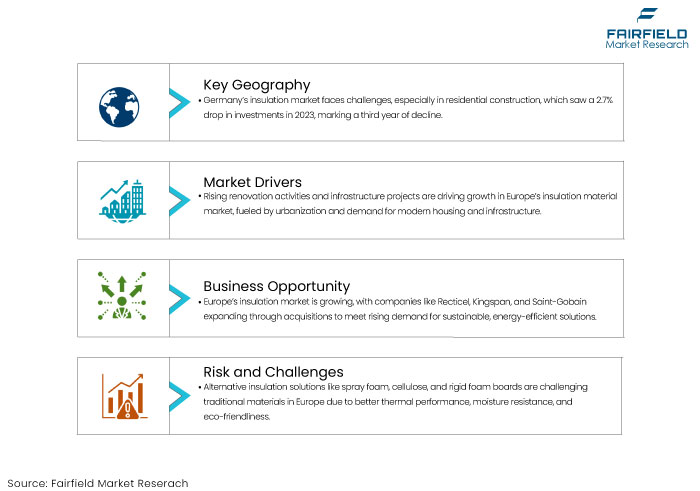
The increasing presence of alternative insulation solutions is creating challenges for traditional materials in the Europe building and industrial insulation material market. Options like spray foam, cellulose, and rigid foam boards are gaining favor due to their superior thermal performance, moisture resistance, and eco-friendly properties.
Spray foam, for instance, offers excellent air-sealing capabilities and a higher R-value, making it more effective in preventing energy loss, while cellulose insulation appeals to sustainability-focused builders with its recycled content and fire-resistant treatment. As these alternatives grow in popularity, conventional insulation materials like fiberglass and mineral wool are facing competitive pressure.
Builders and consumers are drawn to the versatility and energy efficiency that newer solutions provide particularly in meeting modern energy codes and environmental standards. This shift is pushing traditional insulation manufacturers to either innovate or risk losing market share in an industry that increasingly prioritizes sustainability and high-performance solutions.
- Impact of Geopolitical Tensions and Economic Slowdown
Geopolitical tensions, such as trade disputes and sanctions, pose a significant challenge to the Europe building and industrial insulation material market. These tensions disrupt global supply chains, increasing costs and creating material shortages that hinder production and availability of insulation products.
Political instability and volatile business environments further discourage investments, impacting construction and industrial activities that drive demand for insulation solutions. Economic slowdowns exacerbate these challenges by reducing construction activity, industrial output, and infrastructure investments.
Market Trends and Opportunities
- Strategic Acquisitions Fuel Innovation and Sustainability in Insulation Materials
Europe building and industrial insulation material market is witnessing significant growth opportunities driven by strategic acquisitions and portfolio expansions. Companies like Recticel, Kingspan, and Saint-Gobain are making moves to enhance their market positions and meet the growing demand for sustainable and energy-efficient solutions.
Recticel's acquisition of REX Panels & Profiles in December 2023 and Trimo in March 2022 strengthens its foothold in the insulated panels segment, allowing the company to innovate and offer more sustainable products. By divesting its Engineered Foams division to Carpenter Co., Recticel can now focus exclusively on its core insulation operations, aligning itself with the market’s shift toward eco-friendly and high-performance materials. These developments underscore the opportunity for companies to leverage acquisitions to streamline operations and accelerate their growth in the insulation sector.
- Products Launch Activities Shape Insulation Trends
Europe building and industrial insulation material market is experiencing a transformative wave of innovation largely fueled by strategic product launches that prioritize sustainability and performance. A notable example is Knauf Insulation’s introduction of its Performance+™ portfolio at the 2024 ICAA Convention, which includes products such as EcoBatt®, EcoRoll®, and Jet Stream Max. These offerings come with asthma & allergy-friendly® and Verified Healthier Air™ certifications, setting a new standard for indoor air quality in insulation solutions.
The market is witnessing the emergence of low-carbon footprint insulation products from companies like Energystore and KORE, which utilize BASF’s innovative Neopor® BMB technology. Energystore's launch of the energystore+ range reflects a commitment to sustainability and effective insulation, while KORE’s selection for a significant housing project underscores the increasing preference for environmentally responsible building materials.
How Does Regulatory Scenario Shape this Industry?
The regulatory scenario in Europe significantly shapes the Europe building & industrial insulation material market by enforcing stringent energy efficiency standards, sustainability mandates, and fire safety regulations. Initiatives like the EU’s Energy Performance of Buildings Directive drive demand for high-performance insulation, while environmental regulations encourage the use of eco-friendly materials.
Compliance with chemical regulations such as REACH affects production processes and material availability. Additionally, government incentives for energy-efficient projects boost market growth, and waste management laws promote the development of recyclable insulation products. Collectively, these regulations guide innovation, material selection, and market dynamics
Segments Covered in the Report
- Dominance of Foamed Plastic in Insulation
The foamed plastic segment holds the largest share in the Europe building and industrial insulation material market, driven by its exceptional thermal performance, lightweight properties, and versatility in applications.
Materials such as polyurethane and polystyrene foams are particularly favored for their excellent insulation properties, making them ideal for residential, commercial, and industrial applications. Their resistance to moisture and ease of installation further enhances their appeal to builders and contractors.
Advancements in manufacturing techniques have improved the sustainability of foamed plastic products, aligning with the growing demand for eco-friendly construction materials. As energy efficiency regulations tighten, the reliance on foamed plastics is expected to continue, solidifying its position as a key player in the insulation market.
- Residential Segment Takes the Lead
The residential segment holds the highest share in the Europe building and industrial insulation material market, driven by increasing demand for energy-efficient homes and government initiatives promoting sustainable building practices. According to the European Union, residential buildings account for nearly 40% of total energy consumption in Europe, highlighting the need for effective insulation solutions.
Manufacturers such as Kingspan and Rockwool have been at the forefront, providing innovative insulation products designed to enhance thermal performance and reduce energy costs.
Countries like Germany and the United Kingdom are witnessing significant investments in residential insulation projects, propelled by the growing awareness of energy efficiency and climate change. This trend is expected to continue as homeowners seek to improve comfort while reducing their carbon footprints.
Country wise Analysis
- Infrastructure Developments Reshape Germany Insulation Landscape
The building and industrial insulation market in Germany is currently navigating a challenging landscape, particularly within the residential construction sector, which accounts for 61% of total construction investments. According to the European Construction Industry Federation, in 2023, this sector experienced its third consecutive year of decline, with construction investments falling by 2.7% on a price-adjusted basis.
The drop in new residential construction permits down by 27% highlights the adverse conditions impacting this segment. Rising mortgage interest rates, which surged from 1.3% to over 4% in two years, combined with increased construction material prices have made housing investments less affordable for both private households and commercial investors.
Several factors are poised to drive the market forward despite these challenges. The German government has set ambitious targets for achieving a carbon-neutral building stock by 2045, necessitating significant investments in energy-efficient renovations. This focus on sustainability is likely to boost demand for high-performance insulation solutions that enhance energy efficiency and align with climate objectives.
- Ongoing Push for Energy Efficiency Drives the U.K. Market Forward
The building and industrial insulation market in the United Kingdom is influenced by a combination of factors including the ongoing push for energy efficiency, sustainability, and legislative changes.
As of December 2023, Saint-Gobain's agreement to sell a majority stake in its polyisocyanurate insulation (PIR) activity under the Celotex brand to SOPREMA exemplifies a strategic shift toward refining product offerings and enhancing market focus. This move underscores the increasing demand for specialized insulation solutions that meet stringent energy performance regulations and align with evolving consumer preferences for sustainable building materials.
As the UK government continues to implement policies aimed at reducing carbon emissions and enhancing energy efficiency, the insulation market is poised for growth, particularly in the residential and commercial sectors where energy retrofitting initiatives are prioritized.
Rising awareness around climate change and energy conservation is driving innovations in insulation technologies, with manufacturers investing in research and development to produce Eco- friendly materials. The UK market is seeing a growing preference for advanced insulation solutions, such as spray foam, mineral wool, and sustainable wood fiber insulation, which are designed to meet the increasing demand for higher thermal performance and energy efficiency.
Fairfield’s Competitive Landscape Analysis
The competitive landscape of the Europe building and industrial insulation material market is characterized by strategic mergers, acquisitions, and technological advancements among key players. For instance, Saint-Gobain S.A recently entered an agreement to sell a majority stake in its polyisocyanurate insulation activity to SOPREMA, allowing it to streamline its product portfolio.
Kingspan Group Plc is focusing on expanding its sustainable insulation solutions, reinforcing its commitment to energy efficiency in the residential sector. Dow Inc. continues to innovate with new product launches aimed at enhancing thermal performance, while Rockwool International A/S is investing in the development of eco-friendly insulation materials.
Key Market Companies
- Dow Inc.
- Saint-Gobain S.A
- Rockwool International A/S
- Knauf Insulation
- Owens Corning Inc.
- BASF SE
- Recticel Group
- Cabot Corporation
- Covestro AG
- Kingspan Group Plc.
- Armacell
- KCC Corporation
- Aspen Aerogels Inc.
- CNBM Group Co. Ltd.
- Huntsman International LLC
An Expert’s Eye
- Continued investment in energy-efficient insulation technologies will be crucial to meet growing environmental regulations and consumer demand for sustainable building materials.
- Emphasizing research and development in eco-friendly materials such as wood-based insulation products, can capture emerging trends in the Europe building and industrial insulation material market toward sustainability.
- Strengthening collaborations and partnerships among manufacturers can enhance innovation and expand market reach, particularly in underpenetrated regions.
- Monitoring government policies and incentives in key markets of Europe will provide opportunities for manufacturers to align their product offerings with funding programs aimed at energy efficiency.
- Focusing on the residential construction segment will yield significant returns, especially as renovation activities continue to rise in response to aging building stocks.
- Addressing skilled labor shortages through training programs and partnerships with educational institutions will help sustain growth in the construction and insulation sectors.
Europe Building & Industrial Insulation Material Market is Segmented as-
By Product Type
- Building Insulation
- Foamed Plastics
- Expanded Polystyrene (EPS)
- Polyurethane and Polyisocyanurate
- Extruded Polystyrene (xps)
- Other Foamed Plastics
- Fiberglass
- Batts & Blankets
- Loose Fill
- Roof Deck Board
- Pipe & Duct Wrap
- Mineral or Stone Wool
- Batts & Blankets
- Board
- Loose Fill
- Biobased Materials
- Wood
- Denim
- Sheep Wool
- Hemp
- Straw
- Other Materials
- Aerogels
- Cellulose
- Reflective Insulation & Radiant Barriers
- Perlite
- Vermiculite
- Foamed Plastics
- Industrial Insulation
- Fiberglass Insulation
- Foamed Plastics
- Mineral Wool
By End Use
- Building
- Residential
- Commercial
- Industrial
- HVAC
- OEMs
- Marine
- Oil & Gas
- Power Plants
By Country
- Germany
- Italy
- France
- The United Kingdom
- Spain
- Russia
- Rest of Europe
1. Executive Summary
1.1. Europe Building & Industrial Insulation Material Market Snapshot
1.2. Future Projections
1.3. Key Market Trends
1.4. Regional Snapshot, by Value, 2023
1.5. Analyst Recommendations
2. Market Overview
2.1. Market Definitions and Segmentations
2.2. Market Dynamics
2.2.1. Drivers
2.2.2. Restraints
2.2.3. Market Opportunity
2.3. Value Chain Analysis
2.4. Porter’s Five Forces Analysis
2.5. COVID-19 Impact Analysis
2.5.1. Supply
2.5.2. Demand
2.6. Impact of Ukraine-Russia Conflict
2.7. Economic Overview
2.7.1. World Economic Projections
2.8. PESTLE Analysis
3. Europe Building & Industrial Insulation Material Market Outlook, 2019 - 2031
3.1. Europe Building & Industrial Insulation Material Market Outlook, by Product Type, Value (US$ Bn) and Volume (Tons), 2019 - 2031
3.1.1. Key Highlights
3.1.1.1. Building Insulation
3.1.1.1.1. Foamed Plastics
3.1.1.1.1.1. Expanded Polystyrene (EPS)
3.1.1.1.1.2. Polyurethane and Polyisocyanurate
3.1.1.1.1.3. Extruded Polystyrene (xps)
3.1.1.1.1.4. Other Foamed Plastics
3.1.1.1.2. Fiberglass
3.1.1.1.2.1. Batts & Blankets
3.1.1.1.2.2. Loose Fill
3.1.1.1.2.3. Roof Deck Board
3.1.1.1.2.4. Pipe & Duct Wrap
3.1.1.2. Mineral or Stone Wool
3.1.1.2.1. Batts & Blankets
3.1.1.2.2. Board
3.1.1.2.3. Loose Fill
3.1.1.3. Biobased Materials
3.1.1.3.1. Wood
3.1.1.3.2. Denim
3.1.1.3.3. Sheep Wool
3.1.1.3.4. Hemp
3.1.1.3.5. Straw
3.1.1.4. Other Materials
3.1.1.4.1. Aerogels
3.1.1.4.2. Cellulose
3.1.1.4.3. Reflective Insulation & Radiant Barriers
3.1.1.4.4. Perlite
3.1.1.4.5. Vermiculite
3.1.2. Industrial Insulation
3.1.2.1. Fiberglass Insulation
3.1.2.2. Foamed Plastics
3.1.2.3. Mineral Wool
3.1.2.4. Misc.
3.2. Europe Building & Industrial Insulation Material Market Outlook, by End Use, Value (US$ Bn) and Volume (Tons), 2019 - 2031
3.2.1. Key Highlights
3.2.1.1. Building
3.2.1.1.1. Residential
3.2.1.1.2. Commercial
3.2.1.2. Industrial
3.2.1.2.1. HVAC
3.2.1.2.2. OEMs
3.2.1.2.3. Marine
3.2.1.2.4. Oil & Gas
3.2.1.2.5. Power Plants
3.2.1.2.6. Misc.
3.3. Europe Building & Industrial Insulation Material Market Outlook, by Region, Value (US$ Bn) and Volume (Tons), 2019 - 2031
3.3.1. Key Highlights
3.3.1.1. Germany
3.3.1.2. Italy
3.3.1.3. France
3.3.1.4. U.K.
3.3.1.5. Spain
3.3.1.6. Russia
3.3.1.7. Rest of Europe
4. Germany Building & Industrial Insulation Material Market Outlook, 2019 - 2031
4.1. Germany Building & Industrial Insulation Material Market Outlook, by Product Type, Value (US$ Bn) and Volume (Tons), 2019 - 2031
4.1.1. Key Highlights
4.1.1.1. Building Insulation
4.1.1.1.1. Foamed Plastics
4.1.1.1.1.1. Expanded Polystyrene (EPS)
4.1.1.1.1.2. Polyurethane and Polyisocyanurate
4.1.1.1.1.3. Extruded Polystyrene (xps)
4.1.1.1.1.4. Other Foamed Plastics
4.1.1.1.2. Fiberglass
4.1.1.1.2.1. Batts & Blankets
4.1.1.1.2.2. Loose Fill
4.1.1.1.2.3. Roof Deck Board
4.1.1.1.2.4. Pipe & Duct Wrap
4.1.1.2. Mineral or Stone Wool
4.1.1.2.1. Batts & Blankets
4.1.1.2.2. Board
4.1.1.2.3. Loose Fill
4.1.1.3. Biobased Materials
4.1.1.3.1. Wood
4.1.1.3.2. Denim
4.1.1.3.3. Sheep Wool
4.1.1.3.4. Hemp
4.1.1.3.5. Straw
4.1.1.4. Other Materials
4.1.1.4.1. Aerogels
4.1.1.4.2. Cellulose
4.1.1.4.3. Reflective Insulation & Radiant Barriers
4.1.1.4.4. Perlite
4.1.1.4.5. Vermiculite
4.1.1.5. Industrial Insulation
4.1.1.5.1. Fiberglass Insulation
4.1.1.5.2. Foamed Plastics
4.1.1.5.3. Mineral Wool
4.1.1.5.4. Misc.
4.2. Germany Building & Industrial Insulation Material Market Outlook, by End Use, Value (US$ Bn) and Volume (Tons), 2019 - 2031
4.2.1. Key Highlights
4.2.1.1. Building
4.2.1.1.1. Residential
4.2.1.1.2. Commercial
4.2.1.2. Industrial
4.2.1.2.1. HVAC
4.2.1.2.2. OEMs
4.2.1.2.3. Marine
4.2.1.2.4. Oil & Gas
4.2.1.2.5. Power Plants
4.2.1.2.6. Misc.
4.2.2. BPS Analysis/Market Attractiveness Analysis
5. Italy Building & Industrial Insulation Material Market Outlook, 2019 - 2031
5.1. Italy Building & Industrial Insulation Material Market Outlook, by Product Type, Value (US$ Bn) and Volume (Tons), 2019 - 2031
5.1.1. Key Highlights
5.1.1.1. Building Insulation
5.1.1.1.1. Foamed Plastics
5.1.1.1.1.1. Expanded Polystyrene (EPS)
5.1.1.1.1.2. Polyurethane and Polyisocyanurate
5.1.1.1.1.3. Extruded Polystyrene (xps)
5.1.1.1.1.4. Other Foamed Plastics
5.1.1.1.2. Fiberglass
5.1.1.1.2.1. Batts & Blankets
5.1.1.1.2.2. Loose Fill
5.1.1.1.2.3. Roof Deck Board
5.1.1.1.2.4. Pipe & Duct Wrap
5.1.1.2. Mineral or Stone Wool
5.1.1.2.1.1. Batts & Blankets
5.1.1.2.1.2. Board
5.1.1.2.1.3. Loose Fill
5.1.1.3. Biobased Materials
5.1.1.3.1.1. Wood
5.1.1.3.1.2. Denim
5.1.1.3.1.3. Sheep Wool
5.1.1.3.1.4. Hemp
5.1.1.3.1.5. Straw
5.1.1.4. Other Materials
5.1.1.4.1.1. Aerogels
5.1.1.4.1.2. Cellulose
5.1.1.4.1.3. Reflective Insulation & Radiant Barriers
5.1.1.4.1.4. Perlite
5.1.1.4.1.5. Vermiculite
5.1.2. Industrial Insulation
5.1.2.1. Fiberglass Insulation
5.1.2.2. Foamed Plastics
5.1.2.3. Mineral Wool
5.1.2.4. Misc.
5.2. Italy Building & Industrial Insulation Material Market Outlook, by End Use, Value (US$ Bn) and Volume (Tons), 2019 - 2031
5.2.1. Key Highlights
5.2.1.1. Building
5.2.1.1.1. Residential
5.2.1.1.2. Commercial
5.2.1.2. Industrial
5.2.1.2.1. HVAC
5.2.1.2.2. OEMs
5.2.1.2.3. Marine
5.2.1.2.4. Oil & Gas
5.2.1.2.5. Power Plants
5.2.1.2.6. Misc.
5.2.2. BPS Analysis/Market Attractiveness Analysis
6. France Building & Industrial Insulation Material Market Outlook, 2019 - 2031
6.1. France Building & Industrial Insulation Material Market Outlook, by Product Type, Value (US$ Bn) and Volume (Tons), 2019 - 2031
6.1.1. Key Highlights
6.1.1.1. Building Insulation
6.1.1.1.1. Foamed Plastics
6.1.1.1.1.1. Expanded Polystyrene (EPS)
6.1.1.1.1.2. Polyurethane and Polyisocyanurate
6.1.1.1.1.3. Extruded Polystyrene (xps)
6.1.1.1.1.4. Other Foamed Plastics
6.1.1.1.2. Fiberglass
6.1.1.1.2.1. Batts & Blankets
6.1.1.1.2.2. Loose Fill
6.1.1.1.2.3. Roof Deck Board
6.1.1.1.2.4. Pipe & Duct Wrap
6.1.1.2. Mineral or Stone Wool
6.1.1.2.1.1. Batts & Blankets
6.1.1.2.1.2. Board
6.1.1.2.1.3. Loose Fill
6.1.1.3. Biobased Materials
6.1.1.3.1.1. Wood
6.1.1.3.1.2. Denim
6.1.1.3.1.3. Sheep Wool
6.1.1.3.1.4. Hemp
6.1.1.3.1.5. Straw
6.1.1.4. Other Materials
6.1.1.4.1.1. Aerogels
6.1.1.4.1.2. Cellulose
6.1.1.4.1.3. Reflective Insulation & Radiant Barriers
6.1.1.4.1.4. Perlite
6.1.1.4.1.5. Vermiculite
6.1.2. Industrial Insulation
6.1.2.1. Fiberglass Insulation
6.1.2.2. Foamed Plastics
6.1.2.3. Mineral Wool
6.1.2.4. Misc.
6.2. France Building & Industrial Insulation Material Market Outlook, by End Use, Value (US$ Bn) and Volume (Tons), 2019 - 2031
6.2.1. Key Highlights
6.2.1.1. Building
6.2.1.1.1. Residential
6.2.1.1.2. Commercial
6.2.1.2. Industrial
6.2.1.2.1. HVAC
6.2.1.2.2. OEMs
6.2.1.2.3. Marine
6.2.1.2.4. Oil & Gas
6.2.1.2.5. Power Plants
6.2.1.2.6. Misc.
6.2.2. BPS Analysis/Market Attractiveness Analysis
7. U.K. Building & Industrial Insulation Material Market Outlook, 2019 - 2031
7.1. U.K. Building & Industrial Insulation Material Market Outlook, by Product Type, Value (US$ Bn) and Volume (Tons), 2019 - 2031
7.1.1. Key Highlights
7.1.1.1. Building Insulation
7.1.1.1.1. Foamed Plastics
7.1.1.1.1.1. Expanded Polystyrene (EPS)
7.1.1.1.1.2. Polyurethane and Polyisocyanurate
7.1.1.1.1.3. Extruded Polystyrene (xps)
7.1.1.1.1.4. Other Foamed Plastics
7.1.1.1.2. Fiberglass
7.1.1.1.2.1. Batts & Blankets
7.1.1.1.2.2. Loose Fill
7.1.1.1.2.3. Roof Deck Board
7.1.1.1.2.4. Pipe & Duct Wrap
7.1.1.2. Mineral or Stone Wool
7.1.1.2.1.1. Batts & Blankets
7.1.1.2.1.2. Board
7.1.1.2.1.3. Loose Fill
7.1.1.3. Biobased Materials
7.1.1.3.1.1. Wood
7.1.1.3.1.2. Denim
7.1.1.3.1.3. Sheep Wool
7.1.1.3.1.4. Hemp
7.1.1.3.1.5. Straw
7.1.1.4. Other Materials
7.1.1.4.1.1. Aerogels
7.1.1.4.1.2. Cellulose
7.1.1.4.1.3. Reflective Insulation & Radiant Barriers
7.1.1.4.1.4. Perlite
7.1.1.4.1.5. Vermiculite
7.1.2. Industrial Insulation
7.1.2.1. Fiberglass Insulation
7.1.2.2. Foamed Plastics
7.1.2.3. Mineral Wool
7.1.2.4. Misc.
7.2. U.K. Building & Industrial Insulation Material Market Outlook, by End Use, Value (US$ Bn) and Volume (Tons), 2019 - 2031
7.2.1. Key Highlights
7.2.1.1. Building
7.2.1.1.1. Residential
7.2.1.1.2. Commercial
7.2.1.2. Industrial
7.2.1.2.1. HVAC
7.2.1.2.2. OEMs
7.2.1.2.3. Marine
7.2.1.2.4. Oil & Gas
7.2.1.2.5. Power Plants
7.2.1.2.6. Misc.
7.2.2. BPS Analysis/Market Attractiveness Analysis
8. Spain Building & Industrial Insulation Material Market Outlook, 2019 - 2031
8.1. Spain Building & Industrial Insulation Material Market Outlook, by Product Type, Value (US$ Bn) and Volume (Tons), 2019 - 2031
8.1.1. Key Highlights
8.1.1.1. Building Insulation
8.1.1.1.1. Foamed Plastics
8.1.1.1.1.1. Expanded Polystyrene (EPS)
8.1.1.1.1.2. Polyurethane and Polyisocyanurate
8.1.1.1.1.3. Extruded Polystyrene (xps)
8.1.1.1.1.4. Other Foamed Plastics
8.1.1.1.2. Fiberglass
8.1.1.1.2.1. Batts & Blankets
8.1.1.1.2.2. Loose Fill
8.1.1.1.2.3. Roof Deck Board
8.1.1.1.2.4. Pipe & Duct Wrap
8.1.1.2. Mineral or Stone Wool
8.1.1.2.1.1. Batts & Blankets
8.1.1.2.1.2. Board
8.1.1.2.1.3. Loose Fill
8.1.1.3. Biobased Materials
8.1.1.3.1.1. Wood
8.1.1.3.1.2. Denim
8.1.1.3.1.3. Sheep Wool
8.1.1.3.1.4. Hemp
8.1.1.3.1.5. Straw
8.1.1.4. Other Materials
8.1.1.4.1.1. Aerogels
8.1.1.4.1.2. Cellulose
8.1.1.4.1.3. Reflective Insulation & Radiant Barriers
8.1.1.4.1.4. Perlite
8.1.1.4.1.5. Vermiculite
8.1.2. Industrial Insulation
8.1.2.1. Fiberglass Insulation
8.1.2.2. Foamed Plastics
8.1.2.3. Mineral Wool
8.1.2.4. Misc.
8.2. Spain Building & Industrial Insulation Material Market Outlook, by End Use, Value (US$ Bn) and Volume (Tons), 2019 - 2031
8.2.1. Key Highlights
8.2.1.1. Building
8.2.1.1.1. Residential
8.2.1.1.2. Commercial
8.2.1.2. Industrial
8.2.1.2.1. HVAC
8.2.1.2.2. OEMs
8.2.1.2.3. Marine
8.2.1.2.4. Oil & Gas
8.2.1.2.5. Power Plants
8.2.1.2.6. Misc.
8.2.2. BPS Analysis/Market Attractiveness Analysis
9. Russia Building & Industrial Insulation Material Market Outlook, 2019 - 2031
9.1. Russia Building & Industrial Insulation Material Market Outlook, by Product Type, Value (US$ Bn) and Volume (Tons), 2019 - 2031
9.1.1. Key Highlights
9.1.1.1. Building Insulation
9.1.1.1.1. Foamed Plastics
9.1.1.1.1.1. Expanded Polystyrene (EPS)
9.1.1.1.1.2. Polyurethane and Polyisocyanurate
9.1.1.1.1.3. Extruded Polystyrene (xps)
9.1.1.1.1.4. Other Foamed Plastics
9.1.1.1.2. Fiberglass
9.1.1.1.2.1. Batts & Blankets
9.1.1.1.2.2. Loose Fill
9.1.1.1.2.3. Roof Deck Board
9.1.1.1.2.4. Pipe & Duct Wrap
9.1.1.2. Mineral or Stone Wool
9.1.1.2.1.1. Batts & Blankets
9.1.1.2.1.2. Board
9.1.1.2.1.3. Loose Fill
9.1.1.3. Biobased Materials
9.1.1.3.1.1. Wood
9.1.1.3.1.2. Denim
9.1.1.3.1.3. Sheep Wool
9.1.1.3.1.4. Hemp
9.1.1.3.1.5. Straw
9.1.1.4. Other Materials
9.1.1.4.1.1. Aerogels
9.1.1.4.1.2. Cellulose
9.1.1.4.1.3. Reflective Insulation & Radiant Barriers
9.1.1.4.1.4. Perlite
9.1.1.4.1.5. Vermiculite
9.1.2. Industrial Insulation
9.1.2.1. Fiberglass Insulation
9.1.2.2. Foamed Plastics
9.1.2.3. Mineral Wool
9.1.2.4. Misc.
9.2. Russia Building & Industrial Insulation Material Market Outlook, by End Use, Value (US$ Bn) and Volume (Tons), 2019 - 2031
9.2.1. Key Highlights
9.2.1.1. Building
9.2.1.1.1. Residential
9.2.1.1.2. Commercial
9.2.1.2. Industrial
9.2.1.2.1. HVAC
9.2.1.2.2. OEMs
9.2.1.2.3. Marine
9.2.1.2.4. Oil & Gas
9.2.1.2.5. Power Plants
9.2.1.2.6. Misc.
9.2.2. BPS Analysis/Market Attractiveness Analysis
10. Rest of Europe Building & Industrial Insulation Material Market Outlook, 2019 - 2031
10.1. Rest of Europe Building & Industrial Insulation Material Market Outlook, by Product Type, Value (US$ Bn) and Volume (Tons), 2019 - 2031
10.1.1. Key Highlights
10.1.2. Building Insulation
10.1.2.1.1. Foamed Plastics
10.1.2.1.1.1. Expanded Polystyrene (EPS)
10.1.2.1.1.2. Polyurethane and Polyisocyanurate
10.1.2.1.1.3. Extruded Polystyrene (xps)
10.1.2.1.1.4. Other Foamed Plastics
10.1.2.1.2. Fiberglass
10.1.2.1.2.1. Batts & Blankets
10.1.2.1.2.2. Loose Fill
10.1.2.1.2.3. Roof Deck Board
10.1.2.1.2.4. Pipe & Duct Wrap
10.1.2.1.3. Mineral or Stone Wool
10.1.2.1.3.1. Batts & Blankets
10.1.2.1.3.2. Board
10.1.2.1.3.3. Loose Fill
10.1.2.1.4. Biobased Materials
10.1.2.1.4.1. Wood
10.1.2.1.4.2. Denim
10.1.2.1.4.3. Sheep Wool
10.1.2.1.4.4. Hemp
10.1.2.1.4.5. Straw
10.1.2.1.5. Other Materials
10.1.2.1.5.1. Aerogels
10.1.2.1.5.2. Cellulose
10.1.2.1.5.3. Reflective Insulation & Radiant Barriers
10.1.2.1.5.4. Perlite
10.1.2.1.5.5. Vermiculite
10.1.3. Industrial Insulation
10.1.3.1. Fiberglass Insulation
10.1.3.2. Foamed Plastics
10.1.3.3. Mineral Wool
10.1.3.4. Misc.
10.2. Rest of Europe Building & Industrial Insulation Material Market Outlook, by End Use, Value (US$ Bn) and Volume (Tons), 2019 - 2031
10.2.1. Key Highlights
10.2.1.1. Building
10.2.1.1.1. Residential
10.2.1.1.2. Commercial
10.2.1.2. Industrial
10.2.1.2.1. HVAC
10.2.1.2.2. OEMs
10.2.1.2.3. Marine
10.2.1.2.4. Oil & Gas
10.2.1.2.5. Power Plants
10.2.1.2.6. Misc.
10.2.2. BPS Analysis/Market Attractiveness Analysis
11. Competitive Landscape
11.1. Manufacturer vs by End Use Heatmap
11.2. Company Market Share Analysis, 2023
11.3. Competitive Dashboard
11.4. Company Profiles
11.4.1. Dow Inc.
11.4.1.1. Company Overview
11.4.1.2. Product Portfolio
11.4.1.3. Financial Overview
11.4.1.4. Business Strategies and Development
11.4.2. Saint-Gobain S.A
11.4.3. Rockwool International A/S
11.4.4. Knauf Insulation
11.4.5. Owens Corning Inc.
11.4.6. BASF SE
11.4.7. Recticel Group
11.4.8. Cabot Corporation
11.4.9. Covestro AG
11.4.10. Kingspan Group Plc.
11.4.11. Armacell
11.4.12. KCC Corporation
11.4.13. Aspen Aerogels Inc.
11.4.14. CNBM Group Co. Ltd.
11.4.15. Huntsman International LLC
12. Appendix
12.1. Research Methodology
12.2. Report Assumptions
12.3. Acronyms and Abbreviations
|
BASE YEAR |
HISTORICAL DATA |
FORECAST PERIOD |
UNITS |
|||
 |
2025 |
 |
2019 - 2024 |
 |
2026 - 2033 |
Value: US$ Million |
|
REPORT FEATURES |
DETAILS |
|
Product Type Coverage |
|
|
End Use Coverage |
|
|
Geographical Coverage |
|
|
Leading Companies |
|
|
Report Highlights |
Key Market Indicators, Macro-micro economic impact analysis, Technological Roadmap, Key Trends, Driver, Restraints, and Future Opportunities & Revenue Pockets, Porter’s 5 Forces Analysis, Historical Trend (2019-2021), Market Estimates and Forecast, Market Dynamics, Industry Trends, Competition Landscape, Category, Region, Country-wise Trends & Analysis, COVID-19 Impact Analysis (Demand and Supply Chain) |
Our Research Methodology
Considering the volatility of business today, traditional approaches to strategizing a game plan can be unfruitful if not detrimental. True ambiguity is no way to determine a forecast. A myriad of predetermined factors must be accounted for such as the degree of risk involved, the magnitude of circumstances, as well as conditions or consequences that are not known or unpredictable. To circumvent binary views that cast uncertainty, the application of market research intelligence to strategically posture, move, and enable actionable outcomes is necessary.
View Methodology
Quality Assured
Rigorous Validation Process

Confidentiality Assured
End-to-end Data Security

Custom Research Services
Tailored To Your Objectives
FAQs
The market is expected to be valued at USD 22.3 Bn in 2026.
The market is projected to exhibit a CAGR of 3% over the forecast period.
A few of the prominent industry players in the market are BASF SE, Dow Inc., Saint-Gobain S.A, and Owens Corning Inc.
Germany dominates the market for building & industrial insulation material.
Building segment stands out by end use and accounts for significant market share.
Related Reports
Medium Density Fiberboard Market Insights, Competitive Landscape, and Market Forecast 2026–2033
Medium Density Fiberboard Market to reach US$84.75 Bn by 2033, growing at 8.3% CAGR, driven by furniture, construction, and sustainable MDF demand.
Hazardous Waste Management Market Insights, Competitive Landscape, and Market Forecast 2026–2033
Hazardous Waste Management Market to reach US$88.22 Bn by 2033, growing at 6.6% CAGR, driven by regulations, industrial waste, and ESG commitments.
Firestopping Sealants Market Insights, Competitive Landscape, and Market Forecast 2026–2033
Firestopping Sealants Market to reach US$872.32 Mn by 2033, growing at 8.3% CAGR, driven by fire safety regulations, construction, and building retrofits.
Reusable Packaging Market Insights, Competitive Landscape, and Market Forecast 2026–2033
Reusable Packaging Market is projected to reach US$227.35 Billion by 2033, driven by sustainable packaging adoption,and RFID-enabled tracking.
Polybenzimidazole Market Insights, Competitive Landscape, and Market Forecast 2026–2033
Polybenzimidazole Market is projected to reach US$70.61 Mn by 2033, driven by aerospace, semiconductor, and high-performance protective applications.
Breathable Films Market Insights, Competitive Landscape, and Market Forecast 2026–2033
Breathable Films Market to reach US$32.87 billion by 2033, growing at 5.7% CAGR, driven by hygiene demand, healthcare applications, and sustainable innovations.