



Food Thickening Agents Market
Food Thickening Agents Market Insights, Competitive Landscape, and Market Forecast - 2033
Food Thickening Agents Market Forecast
The Food Thickening Agents Market is valued at USD 2.9 Bn in 2026 and is projected to reach USD 4.8 Bn, growing at a CAGR of 5% by 2033.
Food Thickening Agents Market Insights
Key Growth Determinants
- Increasing Demand for Convenience Food
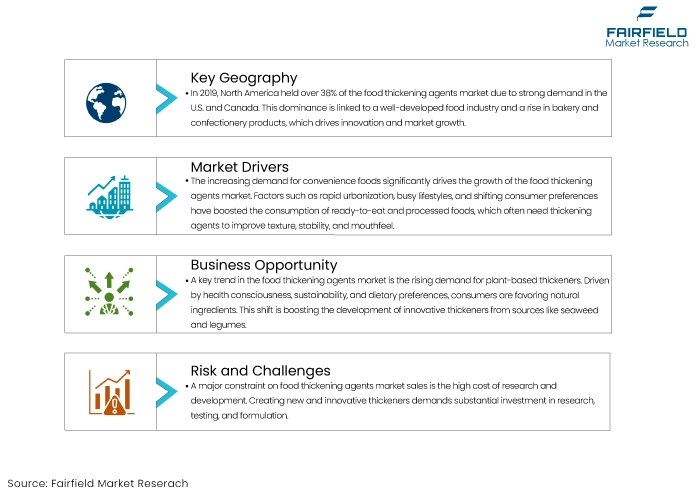
The growing demand for convenience foods is a major driver for the food thickening agents market growth. Rapid urbanization, hectic lifestyles, and changing consumer preferences have led to a rise in the consumption of ready-to-eat and processed foods. These convenience foods often require thickening agents to enhance texture, stability, and mouthfeel. As the demand for convenience foods continues to rise globally, the market is expected to witness substantial growth.
- Expanding Food and Beverage Industry
The expanding food and beverage industry is another significant growth driver for the food thickening agents market demand. The industry is constantly evolving, with new products and flavors being introduced to meet the changing tastes and preferences of consumers.
Thickening agents are widely utilized in various food and beverage applications, including bakery, confectionery, beverages, dairy products, and sauces. As the food and beverage industry continues to grow and diversify, the demand for food thickeners is expected to increase, driving market growth.
- Growing Health Consciousness
The growing focus on health and wellness is driving the demand for food products that are not only tasty but also nutritious. Many consumers are now opting for food products that are low in fat, sugar, and calories, while still providing a satisfying eating experience.
Food thickeners offer a solution by improving the texture and mouthfeel of reduced-fat or reduced-calorie food products. As the demand for healthy food options continues to rise, the food thickening agents market shares are expected to grow.
Key Growth Barriers
- High Research and Development Costs
One of the key restraints for the food thickening agents market sales is the high research and development costs associated with the development and manufacturing of food thickeners. Developing new and innovative food thickening agents requires significant investment in research, testing, and formulation.
Manufacturers need to comply with regulatory requirements and ensure the safety and quality of their products. These research and development costs can be a barrier for small companies or new entrants in the market limiting their ability to compete and innovate.
- Fluctuations in Raw Material Prices
Another growth restraint for the food thickening agents market revenue is the fluctuations in raw material prices, particularly for hydrocolloids. Hydrocolloids, such as starches and gums, are commonly used as food thickeners.
Fluctuating raw material prices can impact the production costs for food thickening agents, which may then be passed on to consumers. This can affect the affordability and profitability of food thickening agents, potentially limiting industry demand.
Food Thickening Agents Market Trends and Opportunities
- Increasing Demand for Plant-Based Food Thickeners
One prominent trend in the food thickening agents market is the increasing demand for plant-based food thickeners. Consumers are showing a growing preference for natural and plant-based ingredients in their food products, driven by factors such as health consciousness, sustainability concerns, and dietary preferences like veganism and vegetarianism. This trend has created an opportunity for the development of innovative food-thickening agents derived from plant sources, such as seaweed, legumes, and other plant-based ingredients. As the demand for plant-based food products continues to grow, several industry players exist to expand their offerings.
- Rise in Demand for Processed and Convenience Foods
Another significant opportunity for the food thickeners lies in the rise in demand for processed and convenience foods. The busy lifestyles of consumers, coupled with the need for quick and easy meal solutions, have led to an increased consumption of processed and convenience foods. These food products often require the use of food thickeners to enhance texture, stability, and overall quality.
The demand for processed and convenience foods is particularly high in developing nations like Asia-Pacific and Latin America. To cater to consumer preference, food thickening agents market companies offer innovative and high-quality solutions, fueling strong presence in the market.
How Does Regulatory Scenario Shape this Industry?
The regulatory scenario plays a significant role in shaping the food thickening agents market expansion. According to Fairfield’s industry assessment, several regulatory bodies, such as the Food and Drugs Organization (FDA), the European Commission (EU), the European Food Safety Authority (EFSA), Health Canada, and Food Standards Australia New Zealand (FSANZ), have implemented stringent regulations for the usage of thickeners in food products. For example,
FDA (Food and Drug Administration) in the United States ensure the safety and proper use of food thickeners in various food products. The FDA evaluates the safety of food additives based on scientific evidence and sets regulations that specify the conditions of use for each approved additive.
Regulatory bodies have set guidelines and restrictions on using thickeners to ensure food safety and quality. Compliance with these regulations is essential for food thickening agent market manufacturers. The regulations cover food safety, labeling requirements, and permissible ingredients.
Fairfield’s Ranking Board
Segments Covered in the Report
- Hydrocolloids Dominated the Market with Wide Applications
As per food thickening agents market forecast, Hydrocolloids accounted for over 41.0% of global revenue in 2019. These versatile thickeners find extensive use in various food applications, serving as sugar substitutes, wheat flour alternatives, coating materials, stabilizers, bulking agents, and starch dispersants.
Starch, valued at more than US$3.2 Bn in 2019 is expected to witness a 5.5% CAGR from 2020 to 2027. Factors such as high viscosity, stability, low cost, and the increasing demand for gluten-free products drive the continued use of starch as a food thickener.
- Plant-Based Food Thickeners Lead the Market with Growing Demand for Sustainable and Vegan Options
Plant-based food thickeners commanded over 66.0% of the global revenue in 2019, finding widespread use in bakery, confectionery, and ready-to-eat meals. Their popularity is attributed to their effectiveness and competitive pricing.
With the rising trend of veganism and vegetarian diets, the demand for sustainable plant-based thickeners is expected to drive this segment's growth. Fairfield’s food thickening agents market update shows that the animal-based segment generated over USD 2.8 billion in 2019. It is estimated to witness a CAGR of 5.8% from 2020 to 2027 due to their unique thickening properties in various food applications.
- Bakery Drives the Growth with Rising Demand for Organic and Healthy Snacks
The bakery segment holds the largest market share of over 24% in the food thickeners market, and it is expected to maintain its dominance in the forecast period. The increasing demand for organic and natural baked goods, as well as the trend of healthy snacks, are key factors driving the food thickening agents market.
The rising consumer awareness and changing lifestyles are fueling the growth of the market. Also, the increasing demand for processed food products also drive the industry expansion.
Regional Analysis
- North America Leads Market with Thriving Food and Beverage Industry
As per food thickening agents market overview, in 2019, North America held over 38.0% market share, driven by strong demand from various industries in the United States and Canada. The region's dominance is attributed to its highly developed food and beverage industry, as well as the presence of multinational food processing and manufacturing companies.
North America has experienced a growing appetite for pastries, muffins, and cupcakes, prompting innovation in the bakery and confectionery sector through the use of diverse thickeners. The region witnesses the rising demand for bakery and confectionery products, further boosting market growth.
- Europe is Set to Rise with Strong Bakery and Confectionery Industry
Europe's food thickeners market is expected to experience growth due to the presence of a robust bakery and confectionery industry, along with increasing consumer demand. The region is witnessing rising demand for packaged juices and energy drinks, further propelling market growth.
Exporters in Europe offer value-added products, including blends of different thickeners and flavor ingredients. Western Europe is a hub for exporters, while manufacturers are expanding their businesses in Eastern Europe.
The food thickening agents market value growth is driven by the popularity of products like pastries, muffins, and cupcakes, with players in the bakery and confectionery industry incorporating innovation through the use of various thickeners.
Fairfield’s Competitive Landscape Analysis
The competitive landscape of the food thickening agents market is influenced by various factors, including market dynamics, industry trends, and the strategies adopted by key players. Competitive analysis helps businesses understand their competitors, identify market trends, and develop competitive advantage strategies. It involves researching competitors, market trends, and customer behavior to make informed decisions and strategic plans.
Key Market Companies
An Expert’s Eye
- The expanding food and beverage industry is another significant growth driver for the demand for food thickening agents.
- The growing focus on health and wellness is driving the demand for food products that are not only tasty but also nutritious.
- The development and manufacturing of food thickeners require significant investment in research, testing, and formulation.
- Consumers are showing a growing preference for natural and plant-based ingredients in their food products.
- The demand for processed and convenience foods is particularly high in developing nations like Asia-Pacific and Latin America.
Food Thickening Agents Market is Segmented as-
By Type
- Protein
- Starch
- Hydrocolloids
By Source
- Animal
- Plant
- Microbial
By Application
- Bakery
- Confectionery
- Sauces & Dips
- Beverages
- Convenience & Processed Food
- Others
By Region
- North America
- Latin America
- Europe
- East Asia
- South Asia & Oceania
- Executive Summary
- Global Food Thickening Agents Market Snapshot
- Future Projections
- Key Market Trends
- Regional Snapshot, by Value, 2026
- Analyst Recommendations
- Market Overview
- Market Definitions and Segmentations
- Market Dynamics
- Drivers
- Restraints
- Market Opportunities
- Value Chain Analysis
- COVID-19 Impact Analysis
- Porter's Five Forces Analysis
- Impact of Russia-Ukraine Conflict
- PESTLE Analysis
- Regulatory Analysis
- Price Trend Analysis
- Current Prices and Future Projections, 2025-2033
- Price Impact Factors
- Global Food Thickening Agents Market Outlook, 2020 - 2033
- Global Food Thickening Agents Market Outlook, by Type, Value (US$ Mn), 2020-2033
- Protein
- Starch
- Hydrocolloids
- Global Food Thickening Agents Market Outlook, by Source, Value (US$ Mn), 2020-2033
- Animal
- Plant
- Microbial
- Global Food Thickening Agents Market Outlook, by Application, Value (US$ Mn), 2020-2033
- Bakery
- Confectionery
- Sauces & Dips
- Beverages
- Convenience & Processed Food
- Others
- Global Food Thickening Agents Market Outlook, by Region, Value (US$ Mn), 2020-2033
- North America
- Europe
- Asia Pacific
- Latin America
- Middle East & Africa
- Global Food Thickening Agents Market Outlook, by Type, Value (US$ Mn), 2020-2033
- North America Food Thickening Agents Market Outlook, 2020 - 2033
- North America Food Thickening Agents Market Outlook, by Type, Value (US$ Mn), 2020-2033
- Protein
- Starch
- Hydrocolloids
- North America Food Thickening Agents Market Outlook, by Source, Value (US$ Mn), 2020-2033
- Animal
- Plant
- Microbial
- North America Food Thickening Agents Market Outlook, by Application, Value (US$ Mn), 2020-2033
- Bakery
- Confectionery
- Sauces & Dips
- Beverages
- Convenience & Processed Food
- Others
- North America Food Thickening Agents Market Outlook, by Country, Value (US$ Mn), 2020-2033
- U.S. Food Thickening Agents Market Outlook, by Type, 2020-2033
- U.S. Food Thickening Agents Market Outlook, by Source, 2020-2033
- U.S. Food Thickening Agents Market Outlook, by Application, 2020-2033
- Canada Food Thickening Agents Market Outlook, by Type, 2020-2033
- Canada Food Thickening Agents Market Outlook, by Source, 2020-2033
- Canada Food Thickening Agents Market Outlook, by Application, 2020-2033
- BPS Analysis/Market Attractiveness Analysis
- North America Food Thickening Agents Market Outlook, by Type, Value (US$ Mn), 2020-2033
- Europe Food Thickening Agents Market Outlook, 2020 - 2033
- Europe Food Thickening Agents Market Outlook, by Type, Value (US$ Mn), 2020-2033
- Protein
- Starch
- Hydrocolloids
- Europe Food Thickening Agents Market Outlook, by Source, Value (US$ Mn), 2020-2033
- Animal
- Plant
- Microbial
- Europe Food Thickening Agents Market Outlook, by Application, Value (US$ Mn), 2020-2033
- Bakery
- Confectionery
- Sauces & Dips
- Beverages
- Convenience & Processed Food
- Others
- Europe Food Thickening Agents Market Outlook, by Country, Value (US$ Mn), 2020-2033
- Germany Food Thickening Agents Market Outlook, by Type, 2020-2033
- Germany Food Thickening Agents Market Outlook, by Source, 2020-2033
- Germany Food Thickening Agents Market Outlook, by Application, 2020-2033
- Italy Food Thickening Agents Market Outlook, by Type, 2020-2033
- Italy Food Thickening Agents Market Outlook, by Source, 2020-2033
- Italy Food Thickening Agents Market Outlook, by Application, 2020-2033
- France Food Thickening Agents Market Outlook, by Type, 2020-2033
- France Food Thickening Agents Market Outlook, by Source, 2020-2033
- France Food Thickening Agents Market Outlook, by Application, 2020-2033
- U.K. Food Thickening Agents Market Outlook, by Type, 2020-2033
- U.K. Food Thickening Agents Market Outlook, by Source, 2020-2033
- U.K. Food Thickening Agents Market Outlook, by Application, 2020-2033
- Spain Food Thickening Agents Market Outlook, by Type, 2020-2033
- Spain Food Thickening Agents Market Outlook, by Source, 2020-2033
- Spain Food Thickening Agents Market Outlook, by Application, 2020-2033
- Russia Food Thickening Agents Market Outlook, by Type, 2020-2033
- Russia Food Thickening Agents Market Outlook, by Source, 2020-2033
- Russia Food Thickening Agents Market Outlook, by Application, 2020-2033
- Rest of Europe Food Thickening Agents Market Outlook, by Type, 2020-2033
- Rest of Europe Food Thickening Agents Market Outlook, by Source, 2020-2033
- Rest of Europe Food Thickening Agents Market Outlook, by Application, 2020-2033
- BPS Analysis/Market Attractiveness Analysis
- Europe Food Thickening Agents Market Outlook, by Type, Value (US$ Mn), 2020-2033
- Asia Pacific Food Thickening Agents Market Outlook, 2020 - 2033
- Asia Pacific Food Thickening Agents Market Outlook, by Type, Value (US$ Mn), 2020-2033
- Protein
- Starch
- Hydrocolloids
- Asia Pacific Food Thickening Agents Market Outlook, by Source, Value (US$ Mn), 2020-2033
- Animal
- Plant
- Microbial
- Asia Pacific Food Thickening Agents Market Outlook, by Application, Value (US$ Mn), 2020-2033
- Bakery
- Confectionery
- Sauces & Dips
- Beverages
- Convenience & Processed Food
- Others
- Asia Pacific Food Thickening Agents Market Outlook, by Country, Value (US$ Mn), 2020-2033
- China Food Thickening Agents Market Outlook, by Type, 2020-2033
- China Food Thickening Agents Market Outlook, by Source, 2020-2033
- China Food Thickening Agents Market Outlook, by Application, 2020-2033
- Japan Food Thickening Agents Market Outlook, by Type, 2020-2033
- Japan Food Thickening Agents Market Outlook, by Source, 2020-2033
- Japan Food Thickening Agents Market Outlook, by Application, 2020-2033
- South Korea Food Thickening Agents Market Outlook, by Type, 2020-2033
- South Korea Food Thickening Agents Market Outlook, by Source, 2020-2033
- South Korea Food Thickening Agents Market Outlook, by Application, 2020-2033
- India Food Thickening Agents Market Outlook, by Type, 2020-2033
- India Food Thickening Agents Market Outlook, by Source, 2020-2033
- India Food Thickening Agents Market Outlook, by Application, 2020-2033
- Southeast Asia Food Thickening Agents Market Outlook, by Type, 2020-2033
- Southeast Asia Food Thickening Agents Market Outlook, by Source, 2020-2033
- Southeast Asia Food Thickening Agents Market Outlook, by Application, 2020-2033
- Rest of SAO Food Thickening Agents Market Outlook, by Type, 2020-2033
- Rest of SAO Food Thickening Agents Market Outlook, by Source, 2020-2033
- Rest of SAO Food Thickening Agents Market Outlook, by Application, 2020-2033
- BPS Analysis/Market Attractiveness Analysis
- Asia Pacific Food Thickening Agents Market Outlook, by Type, Value (US$ Mn), 2020-2033
- Latin America Food Thickening Agents Market Outlook, 2020 - 2033
- Latin America Food Thickening Agents Market Outlook, by Type, Value (US$ Mn), 2020-2033
- Protein
- Starch
- Hydrocolloids
- Latin America Food Thickening Agents Market Outlook, by Source, Value (US$ Mn), 2020-2033
- Animal
- Plant
- Microbial
- Latin America Food Thickening Agents Market Outlook, by Application, Value (US$ Mn), 2020-2033
- Bakery
- Confectionery
- Sauces & Dips
- Beverages
- Convenience & Processed Food
- Others
- Latin America Food Thickening Agents Market Outlook, by Country, Value (US$ Mn), 2020-2033
- Brazil Food Thickening Agents Market Outlook, by Type, 2020-2033
- Brazil Food Thickening Agents Market Outlook, by Source, 2020-2033
- Brazil Food Thickening Agents Market Outlook, by Application, 2020-2033
- Mexico Food Thickening Agents Market Outlook, by Type, 2020-2033
- Mexico Food Thickening Agents Market Outlook, by Source, 2020-2033
- Mexico Food Thickening Agents Market Outlook, by Application, 2020-2033
- Argentina Food Thickening Agents Market Outlook, by Type, 2020-2033
- Argentina Food Thickening Agents Market Outlook, by Source, 2020-2033
- Argentina Food Thickening Agents Market Outlook, by Application, 2020-2033
- Rest of LATAM Food Thickening Agents Market Outlook, by Type, 2020-2033
- Rest of LATAM Food Thickening Agents Market Outlook, by Source, 2020-2033
- Rest of LATAM Food Thickening Agents Market Outlook, by Application, 2020-2033
- BPS Analysis/Market Attractiveness Analysis
- Latin America Food Thickening Agents Market Outlook, by Type, Value (US$ Mn), 2020-2033
- Middle East & Africa Food Thickening Agents Market Outlook, 2020 - 2033
- Middle East & Africa Food Thickening Agents Market Outlook, by Type, Value (US$ Mn), 2020-2033
- Protein
- Starch
- Hydrocolloids
- Middle East & Africa Food Thickening Agents Market Outlook, by Source, Value (US$ Mn), 2020-2033
- Animal
- Plant
- Microbial
- Middle East & Africa Food Thickening Agents Market Outlook, by Application, Value (US$ Mn), 2020-2033
- Bakery
- Confectionery
- Sauces & Dips
- Beverages
- Convenience & Processed Food
- Others
- Middle East & Africa Food Thickening Agents Market Outlook, by Country, Value (US$ Mn), 2020-2033
- GCC Food Thickening Agents Market Outlook, by Type, 2020-2033
- GCC Food Thickening Agents Market Outlook, by Source, 2020-2033
- GCC Food Thickening Agents Market Outlook, by Application, 2020-2033
- South Africa Food Thickening Agents Market Outlook, by Type, 2020-2033
- South Africa Food Thickening Agents Market Outlook, by Source, 2020-2033
- South Africa Food Thickening Agents Market Outlook, by Application, 2020-2033
- Egypt Food Thickening Agents Market Outlook, by Type, 2020-2033
- Egypt Food Thickening Agents Market Outlook, by Source, 2020-2033
- Egypt Food Thickening Agents Market Outlook, by Application, 2020-2033
- Nigeria Food Thickening Agents Market Outlook, by Type, 2020-2033
- Nigeria Food Thickening Agents Market Outlook, by Source, 2020-2033
- Nigeria Food Thickening Agents Market Outlook, by Application, 2020-2033
- Rest of Middle East Food Thickening Agents Market Outlook, by Type, 2020-2033
- Rest of Middle East Food Thickening Agents Market Outlook, by Source, 2020-2033
- Rest of Middle East Food Thickening Agents Market Outlook, by Application, 2020-2033
- BPS Analysis/Market Attractiveness Analysis
- Middle East & Africa Food Thickening Agents Market Outlook, by Type, Value (US$ Mn), 2020-2033
- Competitive Landscape
- Company Vs Segment Heatmap
- Company Market Share Analysis, 2025
- Competitive Dashboard
- Company Profiles
- Cargill Inc.
- Company Overview
- Product Portfolio
- Financial Overview
- Business Strategies and Developments
- Kerry Group PLC
- Tate & Lyle PLC
- Archer Daniels Midland Company (ADM)
- DowDuPont Inc.
- CP Kelco U.S. Inc
- Fuerst Day Lawson Limited
- Ashland Inc.
- Ingredion Inc.
- Koninklijke DSM N.V.
- Cargill Inc.
- Appendix
- Research Methodology
- Report Assumptions
- Acronyms and Abbreviations
|
BASE YEAR |
HISTORICAL DATA |
FORECAST PERIOD |
UNITS |
|||
 |
2025 |
 |
2019 - 2025 |
 |
2026 - 2033 |
Value: US$ Billion |
|
REPORT FEATURES |
DETAILS |
|
Type Coverage |
|
|
Source Coverage |
|
|
Application Coverage |
|
|
Geographical Coverage |
|
|
Leading Companies |
|
|
Report Highlights |
Key Market Indicators, Macro-micro economic impact analysis, Technological Roadmap, Key Trends, Driver, Restraints, and Future Opportunities & Revenue Pockets, Porter’s 5 Forces Analysis, Historical Trend (2019-2021), Market Estimates and Forecast, Market Dynamics, Industry Trends, Competition Landscape, Category, Region, Country-wise Trends & Analysis, COVID-19 Impact Analysis (Demand and Supply Chain) |
Our Research Methodology
Considering the volatility of business today, traditional approaches to strategizing a game plan can be unfruitful if not detrimental. True ambiguity is no way to determine a forecast. A myriad of predetermined factors must be accounted for such as the degree of risk involved, the magnitude of circumstances, as well as conditions or consequences that are not known or unpredictable. To circumvent binary views that cast uncertainty, the application of market research intelligence to strategically posture, move, and enable actionable outcomes is necessary.
View Methodology
Quality Assured
Rigorous Validation Process

Confidentiality Assured
End-to-end Data Security

Custom Research Services
Tailored To Your Objectives
FAQs
The market is predicted to rise from USD 2.9 Bn in 2026 to USD 4.8 Bn by 2033.
Market expansion is propelled due to product innovation, customer preferences, stricter government regulations, and economic growth.
Cargill Inc., Kerry Group PLC, Tate & Lyle PLC, Archer Daniels Midland Company (ADM), and DowDuPont Inc. are some of the key industry players.
Fluctuations in raw material prices and high research and development costs are restraining market expansion.
The increasing demand for plant-based food thickeners and processed and convenience foods creates opportunities in the market.
Related Reports
Beef Cattle Feed Market Insights, Competitive Landscape, and Market Forecast - 2033
The global beef cattle feed market is projected to grow from USD 48.50 billion in 2026 to USD 65.13 billion by 2033, at a 4.3% CAGR
Grain-Free Pet Food Market Insights, Competitive Landscape, and Market Forecast - 2033
The global grain-free pet food market is valued at USD 12.80 billion in 2026 and is projected to reach USD 20.42 billion by 2033, growing at 6.9% CAGR
Grape Seed Extract In Pet Food Application Market Insights, Competitive Landscape, and Market Forecast - 2033
Grape seed extract in pet food application market is valued at USD 180.00 Million in 2026 and projected to reach USD 337.58 Million by 2033 at 9.4% CAGR.
Pet Veterinary Diet Market Insights, Competitive Landscape, and Market Forecast 2033
Pet Veterinary Diet Market to reach USD 10.73 Bn by 2033, growing at 7.9% CAGR, driven by pet humanization, chronic diseases, and weight management.
Feed Binders Market Insights, Competitive Landscape, and Market Forecast 2033
Feed Binders Market to reach USD 3.47 Bn by 2033, growing at 5.4% CAGR, driven by aquaculture, poultry feed, pellet quality, and feed waste reduction.
Feed Acidifiers Market Insights, Competitive Landscape, and Market Forecast 2033
Feed Acidifiers Market to reach USD 6.06 Bn by 2033, growing at 6.5% CAGR, driven by antibiotic-free production, gut health, and aquaculture demand.