



Ophthalmic Packaging Market
Ophthalmic Packaging Market Insights, Competitive Landscape, and Market Forecast - 2033
Global Ophthalmic Packaging Market Forecast
- The Ophthalmic Packaging Market is valued at USD 9.1 Bn in 2026 and is projected to reach USD 15.1 Bn, growing at a CAGR of 8% by 2033.
Quick Report Digest
A Look Back and a Look Forward - Comparative Analysis
The current state of the ophthalmic packaging market is marked by steady growth and significant trends. Globally, it has expanded due to factors such as the rising prevalence of eye diseases, expanding use of contact lenses and increasing awareness of eye health. The market varies in size and dynamics across regions, with North America, Europe, and Asia Pacific being notable contributors.
Within the ophthalmic packaging sector, various products, including blister packs for contact lenses, vials for eye drops, and cartons for prescription eyeglasses, require specific packaging solutions.
The market witnessed staggered growth during the historical period 2018 – 2022. This is due to the substantial growth of the major application sectors such as prescription medications and over-the-counter (OTC) medications for ophthalmic purposes, contact lenses and solutions, and diagnostic kits and devices. Technological innovations are continually reshaping the industry, with a focus on materials that offer enhanced barrier properties, smart packaging, and eco-friendly options in response to sustainability concerns.
Additionally, stringent regulatory standards govern the ophthalmic sector, leading to a growing demand for compliant packaging solutions. The rise of eCommerce has transformed distribution channels, emphasizing the need for packaging that ensures product integrity during shipping and delivery.
A historical analysis of the ophthalmic packaging market reveals a shift toward specialisation and advancements in materials to better protect eye care products from light, moisture, and contamination. Companies have increasingly recognised packaging as a branding and marketing tool, leading to unique and appealing packaging designs. Sustainability initiatives have gained prominence, promoting the adoption of eco-friendly and recyclable materials.
Looking to the future, the ophthalmic packaging market is poised for continued growth and evolution. Technology integration, such as smart packaging with monitoring and reminder features, is expected to become more prevalent. Sustainability practices will remain central, focusing on reducing packaging waste and adopting biodegradable materials.
Customisation and personalisation efforts will enhance the consumer experience and brand loyalty. Furthermore, as online sales channels continue to expand, packaging innovations will be required to meet the specific needs of eCommerce.
Key Growth Determinants
- Expanding Ageing Population, and Rising Eye Disorder Rates
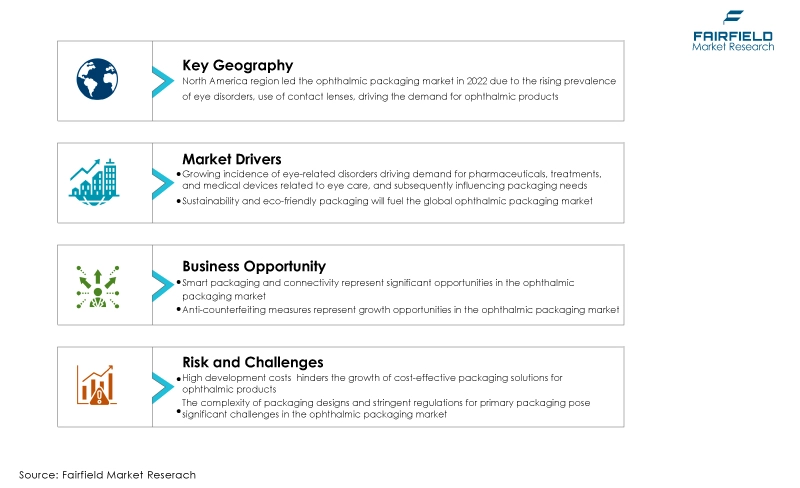
The expansion of the ophthalmic packaging market is propelled by a common drive rooted in the aging population and the surging incidence of eye disorders. As the global demographic shifts towards an increasingly aging population, the prevalence of age-related eye conditions rises significantly.
Eye disorders, including cataracts, glaucoma, and macular degeneration, require specialised eye care products such as prescription eyeglasses, contact lenses, and medications, all of which rely on effective packaging to maintain product integrity.
Simultaneously, the growing incidence of eye disorders, attributed to factors like lifestyle changes and prolonged screen time, amplifies the demand for innovative ophthalmic packaging solutions. Thus, these twin drivers, the ageing population, and the rising incidence of eye disorders, synergize to fuel the growth of the ophthalmic packaging market, as packaging becomes pivotal in preserving eye health and ensuring product safety for a broader and more diverse consumer base.
- Sustainability and Eco-friendly Packaging
Sustainability and the adoption of eco-friendly packaging have become powerful drivers in the ophthalmic packaging market. With growing environmental awareness among consumers and increased regulatory pressure for eco-conscious solutions, manufacturers are turning to sustainable materials and practices.
Embracing sustainability not only enhances brand reputation but also appeals to consumers seeking eco-friendly options. It can also lead to cost savings and drive innovation in packaging materials and design.
As a result, sustainability and eco-friendly packaging are transforming the ophthalmic packaging market, aligning it with the values and preferences of a more environmentally conscious consumer base.
Major Growth Barriers
The complexity of packaging designs can pose significant challenges in the ophthalmic packaging market. While innovative packaging can enhance brand recognition and consumer appeal, it also introduces several practical and regulatory considerations. Ensuring compliance with stringent regulations governing ophthalmic products can be a demanding and resource-intensive process when intricate packaging is involved.
Furthermore, complex designs may lead to consumer confusion, impacting product usability and potentially raising concerns about product safety. The manufacturing of such intricate packaging often requires specialised processes and materials, resulting in higher production costs and potential supply chain complexities.
Environmental sustainability is also a concern, as complex designs may generate more waste and be less eco-friendly. Additionally, retailers may face difficulties in displaying and storing products with intricate packaging. Striking the right balance between attractive, informative packaging and practicality while adhering to regulatory standards is essential in navigating the challenges posed by packaging complexity in the ophthalmic industry.
- High Development Costs
High development costs are a notable restraint in the ophthalmic packaging market. Meeting stringent regulatory requirements, developing innovative packaging materials and designs, customisation efforts, sustainability initiatives, and ongoing quality assurance all contribute to substantial expenses. These costs, while essential for ensuring product safety and efficacy, can strain budgets and hinder the development of cost-effective packaging solutions for ophthalmic products. Businesses must carefully manage their resources to navigate this challenge effectively and remain competitive in the market.
Key Trends and Opportunities to Look at
Smart packaging and connectivity represent significant opportunities within the ophthalmic packaging market. Connectivity through QR codes or RFID tags can provide consumers with valuable information and enable them to access product details, usage instructions, and even reorder options, fostering customer engagement and loyalty.
These technological advancements not only differentiate products in a competitive market but also align with the increasing demand for convenient and user-friendly packaging solutions, presenting a promising avenue for innovation and growth.
- Anti-counterfeiting, and Enhanced Product Security
Anti-counterfeiting measures and enhanced product security offer significant opportunities in the ophthalmic packaging market.
As the demand for authenticity and product safety grows, integrating features like holograms, serial numbers, or RFID tags can help verify the legitimacy of eye care products, ensuring that consumers receive genuine and safe items. These security measures not only protect consumers from counterfeit products but also safeguard brand reputation.
Moreover, they can be a valuable marketing tool, as consumers increasingly prioritise product security. Embracing anti-counterfeiting solutions not only fosters trust but also unlocks new avenues for brand differentiation and market growth in the ophthalmic packaging industry.
How Does the Regulatory Scenario Shape this Industry?
The regulatory landscape plays a pivotal role in shaping the ophthalmic packaging industry, dictating stringent standards for product safety, efficacy, and consumer protection. Compliance with these regulations is essential for ensuring that eye care products, including prescription eyeglasses, contact lenses, and medications, maintain their integrity and sterility.
Manufacturers must incorporate features such as tamper-evident packaging, adhere to quality control and validation processes, and provide clear labelling with essential information. Key regulatory compliances involve adhering to Good Manufacturing Practices (GMP), ISO standards for quality management and packaging, FDA regulations (in the United States), European Union Medical Device Regulation (MDR), and compliance with pharmacopoeial standards.
Serialisation and traceability measures, environmental regulations, customs and import rules, and stringent labeling requirements are also integral parts of the regulatory landscape. Companies operating in this market must navigate these complex regulations diligently to meet safety standards, gain market access, and maintain consumer confidence.
Environmental regulations and sustainability concerns are also gaining prominence, pushing the industry toward eco-friendly packaging materials. Navigating this regulatory framework is crucial for market access and consumer trust, making compliance a top priority for packaging manufacturers and eye care product companies.
Fairfield’s Ranking Board
Top Segments
Plastic’s Dominance Prevails
The plastic segment remains a dominant force within the material type segment of the ophthalmic packaging market. Plastic materials, such as polyethylene, polypropylene, and PVC, continue to be favoured for their versatility, cost-effectiveness, and excellent barrier properties that protect eye care products from light, moisture, and contamination.
Additionally, plastics offer flexibility in design and customisation, enabling the creation of user-friendly and tamper-evident packaging, essential for eye care products. With sustainability concerns driving innovations in biodegradable plastics, this segment is poised to maintain its dominance while addressing environmental considerations, further solidifying its position in the ophthalmic packaging market.
OTC Medications to Lead
OTC medications are anticipated to take the lead as the leading application segment in the ophthalmic packaging market. This growth is attributed to several factors, including increased self-care and awareness of eye health, making OTC eye drops, lubricants, and treatments more accessible and popular.
OTC medications offer consumers convenience in managing common eye conditions, such as dry eyes and allergies, without the need for a prescription. Consequently, packaging for these products plays a pivotal role in ensuring product safety, proper dosing, and sterility, thereby boosting its significance in the ophthalmic packaging market.
As consumers continue to seek self-administered eye care solutions, the demand for secure and user-friendly packaging for OTC medications is expected to drive this segment's growth in the industry.
Regional Frontrunners
North America Spearheads with Rising Prevalence of Eye Diseases
In the packaging industries, Ophthalmic Packaging adoption is anticipated to dominate in the North America region. North America is undergoing a demographic shift with an increasingly aging population, making individuals more susceptible to age-related eye conditions.
Consequently, there is a growing need for ophthalmic products such as prescription eyeglasses, contact lenses, and eye medications, all of which necessitate specialised packaging to ensure their integrity and sterility. The rise in prevalence of the eye diseases helped drive market expansion in the area.
Additionally, heightened awareness of eye health and improved access to healthcare services encourage individuals in North America to seek eye care treatments and correction options more proactively. This increased engagement with eyecare professionals has led to higher prescription rates for eyeglasses and contact lenses, subsequently driving the need for specialised packaging.
Technological advancements in the field of eye care have given rise to innovative treatments, ocular medications, and surgical procedures. These advanced products often require specialised packaging to maintain their efficacy, sterility, and safety.
Asia Pacific Set to Gain from Specialised Ophthalmic Products
The Asia Pacific region is anticipated to witness significant sales expansion in the ophthalmic packaging market, fuelled by a confluence of factors, including the rising prevalence of eye diseases and the increased screen time experienced by individuals across the region. These intertwined factors are contributing to a growing demand for specialised ophthalmic products and their corresponding packaging solutions.
The escalation in screen time, driven by the proliferation of digital devices and the adoption of online activities, has led to a surge in digital eye strain and other vision-related issues.
Prolonged screen exposure is associated with discomfort and fatigue, prompting individuals to seek relief through eye care products such as lubricating eye drops, artificial tears, and specialised eyeglasses. This surge in demand for eye care products directly translates into a need for ophthalmic packaging that ensures product integrity and sterility.
Fairfield’s Competitive Landscape Analysis
The global ophthalmic packaging market is a consolidated market with fewer major players present across the globe. The key players are introducing new products as well as working on the distribution channels to enhance their worldwide presence. Moreover, Fairfield Market Research is expecting the market to witness more consolidation over the coming years.
Who are the Leaders in the Global Ophthalmic Packaging Market Space?
Global Ophthalmic Packaging Market is Segmented as Below:
Product Type:
- Bottles and closures
- Eye dropper
- Lens solution
- Dispensers
- Vials and Ampoules
- Ointment and gel Squeeze Packs
- Blister Packs
- Miscellaneous
Material Type:
- Plastic
- Glass
- Metal
- Miscellaneous
Application:
- Prescribed Medicines
- Over-the-counter (OTC)
- Contact Lenses and Solutions
- Diagnostic Kits and Devices
- Miscellaneous
By Geographic Coverage:
- North America
- Europe
- Asia Pacific
- Latin America
- Middle East & Africa
- Executive Summary
- Global Ophthalmic Packaging Market Snapshot
- Future Projections
- Key Market Trends
- Regional Snapshot, by Value, 2026
- Analyst Recommendations
- Market Overview
- Market Definitions and Segmentations
- Market Dynamics
- Drivers
- Restraints
- Market Opportunities
- Value Chain Analysis
- COVID-19 Impact Analysis
- Porter's Five Forces Analysis
- Impact of Russia-Ukraine Conflict
- PESTLE Analysis
- Regulatory Analysis
- Price Trend Analysis
- Current Prices and Future Projections, 2025-2033
- Price Impact Factors
- Global Ophthalmic Packaging Market Outlook, 2020 - 2033
- Global Ophthalmic Packaging Market Outlook, by Product Type, Value (US$ Mn), 2020-2033
- Bottles and closures
- Eye dropper
- Lens solution
- Dispensers
- Vials and Ampoules
- Ointment and gel Squeeze Packs
- Blister Packs
- Miscellaneous
- Bottles and closures
- Global Ophthalmic Packaging Market Outlook, by Material Type, Value (US$ Mn), 2020-2033
- Plastic
- Glass
- Metal
- Miscellaneous
- Global Ophthalmic Packaging Market Outlook, by Application, Value (US$ Mn), 2020-2033
- Prescribed Medicines
- Over-the-counter (OTC)
- Contact Lenses and Solutions
- Diagnostic Kits and Devices
- Miscellaneous
- Global Ophthalmic Packaging Market Outlook, by Region, Value (US$ Mn), 2020-2033
- North America
- Europe
- Asia Pacific
- Latin America
- Middle East & Africa
- Global Ophthalmic Packaging Market Outlook, by Product Type, Value (US$ Mn), 2020-2033
- North America Ophthalmic Packaging Market Outlook, 2020 - 2033
- North America Ophthalmic Packaging Market Outlook, by Product Type, Value (US$ Mn), 2020-2033
- Bottles and closures
- Eye dropper
- Lens solution
- Dispensers
- Vials and Ampoules
- Ointment and gel Squeeze Packs
- Blister Packs
- Miscellaneous
- Bottles and closures
- North America Ophthalmic Packaging Market Outlook, by Material Type, Value (US$ Mn), 2020-2033
- Plastic
- Glass
- Metal
- Miscellaneous
- North America Ophthalmic Packaging Market Outlook, by Application, Value (US$ Mn), 2020-2033
- Prescribed Medicines
- Over-the-counter (OTC)
- Contact Lenses and Solutions
- Diagnostic Kits and Devices
- Miscellaneous
- North America Ophthalmic Packaging Market Outlook, by Country, Value (US$ Mn), 2020-2033
- U.S. Ophthalmic Packaging Market Outlook, by Product Type, 2020-2033
- U.S. Ophthalmic Packaging Market Outlook, by Material Type, 2020-2033
- U.S. Ophthalmic Packaging Market Outlook, by Application, 2020-2033
- Canada Ophthalmic Packaging Market Outlook, by Product Type, 2020-2033
- Canada Ophthalmic Packaging Market Outlook, by Material Type, 2020-2033
- Canada Ophthalmic Packaging Market Outlook, by Application, 2020-2033
- BPS Analysis/Market Attractiveness Analysis
- North America Ophthalmic Packaging Market Outlook, by Product Type, Value (US$ Mn), 2020-2033
- Europe Ophthalmic Packaging Market Outlook, 2020 - 2033
- Europe Ophthalmic Packaging Market Outlook, by Product Type, Value (US$ Mn), 2020-2033
- Bottles and closures
- Eye dropper
- Lens solution
- Dispensers
- Vials and Ampoules
- Ointment and gel Squeeze Packs
- Blister Packs
- Miscellaneous
- Bottles and closures
- Europe Ophthalmic Packaging Market Outlook, by Material Type, Value (US$ Mn), 2020-2033
- Plastic
- Glass
- Metal
- Miscellaneous
- Europe Ophthalmic Packaging Market Outlook, by Application, Value (US$ Mn), 2020-2033
- Prescribed Medicines
- Over-the-counter (OTC)
- Contact Lenses and Solutions
- Diagnostic Kits and Devices
- Miscellaneous
- Europe Ophthalmic Packaging Market Outlook, by Country, Value (US$ Mn), 2020-2033
- Germany Ophthalmic Packaging Market Outlook, by Product Type, 2020-2033
- Germany Ophthalmic Packaging Market Outlook, by Material Type, 2020-2033
- Germany Ophthalmic Packaging Market Outlook, by Application, 2020-2033
- Italy Ophthalmic Packaging Market Outlook, by Product Type, 2020-2033
- Italy Ophthalmic Packaging Market Outlook, by Material Type, 2020-2033
- Italy Ophthalmic Packaging Market Outlook, by Application, 2020-2033
- France Ophthalmic Packaging Market Outlook, by Product Type, 2020-2033
- France Ophthalmic Packaging Market Outlook, by Material Type, 2020-2033
- France Ophthalmic Packaging Market Outlook, by Application, 2020-2033
- U.K. Ophthalmic Packaging Market Outlook, by Product Type, 2020-2033
- U.K. Ophthalmic Packaging Market Outlook, by Material Type, 2020-2033
- U.K. Ophthalmic Packaging Market Outlook, by Application, 2020-2033
- Spain Ophthalmic Packaging Market Outlook, by Product Type, 2020-2033
- Spain Ophthalmic Packaging Market Outlook, by Material Type, 2020-2033
- Spain Ophthalmic Packaging Market Outlook, by Application, 2020-2033
- Russia Ophthalmic Packaging Market Outlook, by Product Type, 2020-2033
- Russia Ophthalmic Packaging Market Outlook, by Material Type, 2020-2033
- Russia Ophthalmic Packaging Market Outlook, by Application, 2020-2033
- Rest of Europe Ophthalmic Packaging Market Outlook, by Product Type, 2020-2033
- Rest of Europe Ophthalmic Packaging Market Outlook, by Material Type, 2020-2033
- Rest of Europe Ophthalmic Packaging Market Outlook, by Application, 2020-2033
- BPS Analysis/Market Attractiveness Analysis
- Europe Ophthalmic Packaging Market Outlook, by Product Type, Value (US$ Mn), 2020-2033
- Asia Pacific Ophthalmic Packaging Market Outlook, 2020 - 2033
- Asia Pacific Ophthalmic Packaging Market Outlook, by Product Type, Value (US$ Mn), 2020-2033
- Bottles and closures
- Eye dropper
- Lens solution
- Dispensers
- Vials and Ampoules
- Ointment and gel Squeeze Packs
- Blister Packs
- Miscellaneous
- Bottles and closures
- Asia Pacific Ophthalmic Packaging Market Outlook, by Material Type, Value (US$ Mn), 2020-2033
- Plastic
- Glass
- Metal
- Miscellaneous
- Asia Pacific Ophthalmic Packaging Market Outlook, by Application, Value (US$ Mn), 2020-2033
- Prescribed Medicines
- Over-the-counter (OTC)
- Contact Lenses and Solutions
- Diagnostic Kits and Devices
- Miscellaneous
- Asia Pacific Ophthalmic Packaging Market Outlook, by Country, Value (US$ Mn), 2020-2033
- China Ophthalmic Packaging Market Outlook, by Product Type, 2020-2033
- China Ophthalmic Packaging Market Outlook, by Material Type, 2020-2033
- China Ophthalmic Packaging Market Outlook, by Application, 2020-2033
- Japan Ophthalmic Packaging Market Outlook, by Product Type, 2020-2033
- Japan Ophthalmic Packaging Market Outlook, by Material Type, 2020-2033
- Japan Ophthalmic Packaging Market Outlook, by Application, 2020-2033
- South Korea Ophthalmic Packaging Market Outlook, by Product Type, 2020-2033
- South Korea Ophthalmic Packaging Market Outlook, by Material Type, 2020-2033
- South Korea Ophthalmic Packaging Market Outlook, by Application, 2020-2033
- India Ophthalmic Packaging Market Outlook, by Product Type, 2020-2033
- India Ophthalmic Packaging Market Outlook, by Material Type, 2020-2033
- India Ophthalmic Packaging Market Outlook, by Application, 2020-2033
- Southeast Asia Ophthalmic Packaging Market Outlook, by Product Type, 2020-2033
- Southeast Asia Ophthalmic Packaging Market Outlook, by Material Type, 2020-2033
- Southeast Asia Ophthalmic Packaging Market Outlook, by Application, 2020-2033
- Rest of SAO Ophthalmic Packaging Market Outlook, by Product Type, 2020-2033
- Rest of SAO Ophthalmic Packaging Market Outlook, by Material Type, 2020-2033
- Rest of SAO Ophthalmic Packaging Market Outlook, by Application, 2020-2033
- BPS Analysis/Market Attractiveness Analysis
- Asia Pacific Ophthalmic Packaging Market Outlook, by Product Type, Value (US$ Mn), 2020-2033
- Latin America Ophthalmic Packaging Market Outlook, 2020 - 2033
- Latin America Ophthalmic Packaging Market Outlook, by Product Type, Value (US$ Mn), 2020-2033
- Bottles and closures
- Eye dropper
- Lens solution
- Dispensers
- Vials and Ampoules
- Ointment and gel Squeeze Packs
- Blister Packs
- Miscellaneous
- Bottles and closures
- Latin America Ophthalmic Packaging Market Outlook, by Material Type, Value (US$ Mn), 2020-2033
- Plastic
- Glass
- Metal
- Miscellaneous
- Latin America Ophthalmic Packaging Market Outlook, by Application, Value (US$ Mn), 2020-2033
- Prescribed Medicines
- Over-the-counter (OTC)
- Contact Lenses and Solutions
- Diagnostic Kits and Devices
- Miscellaneous
- Latin America Ophthalmic Packaging Market Outlook, by Country, Value (US$ Mn), 2020-2033
- Brazil Ophthalmic Packaging Market Outlook, by Product Type, 2020-2033
- Brazil Ophthalmic Packaging Market Outlook, by Material Type, 2020-2033
- Brazil Ophthalmic Packaging Market Outlook, by Application, 2020-2033
- Mexico Ophthalmic Packaging Market Outlook, by Product Type, 2020-2033
- Mexico Ophthalmic Packaging Market Outlook, by Material Type, 2020-2033
- Mexico Ophthalmic Packaging Market Outlook, by Application, 2020-2033
- Argentina Ophthalmic Packaging Market Outlook, by Product Type, 2020-2033
- Argentina Ophthalmic Packaging Market Outlook, by Material Type, 2020-2033
- Argentina Ophthalmic Packaging Market Outlook, by Application, 2020-2033
- Rest of LATAM Ophthalmic Packaging Market Outlook, by Product Type, 2020-2033
- Rest of LATAM Ophthalmic Packaging Market Outlook, by Material Type, 2020-2033
- Rest of LATAM Ophthalmic Packaging Market Outlook, by Application, 2020-2033
- BPS Analysis/Market Attractiveness Analysis
- Latin America Ophthalmic Packaging Market Outlook, by Product Type, Value (US$ Mn), 2020-2033
- Middle East & Africa Ophthalmic Packaging Market Outlook, 2020 - 2033
- Middle East & Africa Ophthalmic Packaging Market Outlook, by Product Type, Value (US$ Mn), 2020-2033
- Bottles and closures
- Eye dropper
- Lens solution
- Dispensers
- Vials and Ampoules
- Ointment and gel Squeeze Packs
- Blister Packs
- Miscellaneous
- Bottles and closures
- Middle East & Africa Ophthalmic Packaging Market Outlook, by Material Type, Value (US$ Mn), 2020-2033
- Plastic
- Glass
- Metal
- Miscellaneous
- Middle East & Africa Ophthalmic Packaging Market Outlook, by Application, Value (US$ Mn), 2020-2033
- Prescribed Medicines
- Over-the-counter (OTC)
- Contact Lenses and Solutions
- Diagnostic Kits and Devices
- Miscellaneous
- Middle East & Africa Ophthalmic Packaging Market Outlook, by Country, Value (US$ Mn), 2020-2033
- GCC Ophthalmic Packaging Market Outlook, by Product Type, 2020-2033
- GCC Ophthalmic Packaging Market Outlook, by Material Type, 2020-2033
- GCC Ophthalmic Packaging Market Outlook, by Application, 2020-2033
- South Africa Ophthalmic Packaging Market Outlook, by Product Type, 2020-2033
- South Africa Ophthalmic Packaging Market Outlook, by Material Type, 2020-2033
- South Africa Ophthalmic Packaging Market Outlook, by Application, 2020-2033
- Egypt Ophthalmic Packaging Market Outlook, by Product Type, 2020-2033
- Egypt Ophthalmic Packaging Market Outlook, by Material Type, 2020-2033
- Egypt Ophthalmic Packaging Market Outlook, by Application, 2020-2033
- Nigeria Ophthalmic Packaging Market Outlook, by Product Type, 2020-2033
- Nigeria Ophthalmic Packaging Market Outlook, by Material Type, 2020-2033
- Nigeria Ophthalmic Packaging Market Outlook, by Application, 2020-2033
- Rest of Middle East Ophthalmic Packaging Market Outlook, by Product Type, 2020-2033
- Rest of Middle East Ophthalmic Packaging Market Outlook, by Material Type, 2020-2033
- Rest of Middle East Ophthalmic Packaging Market Outlook, by Application, 2020-2033
- BPS Analysis/Market Attractiveness Analysis
- Middle East & Africa Ophthalmic Packaging Market Outlook, by Product Type, Value (US$ Mn), 2020-2033
- Competitive Landscape
- Company Vs Segment Heatmap
- Company Market Share Analysis, 2025
- Competitive Dashboard
- Company Profiles
- Amcor Ltd.
- Company Overview
- Product Portfolio
- Financial Overview
- Business Strategies and Developments
- Gerresheimer AG
- West Pharmaceutical Service Inc.
- Becton, Dickinson and Company
- Nolato AB
- Bormioli Pharma S.p.a
- AptarGroup
- Advance Packaging
- Berry Global Inc.
- Miller packaging
- Amcor Ltd.
- Appendix
- Research Methodology
- Report Assumptions
- Acronyms and Abbreviations
|
BASE YEAR |
HISTORICAL DATA |
FORECAST PERIOD |
UNITS |
|||
 |
2025 |
 |
2019 - 2024 |
 |
2026 - 2033 |
Value: US$ Billion |
|
REPORT FEATURES |
DETAILS |
|
Product Type Coverage |
|
|
Material Type Coverage |
|
|
Application Coverage |
|
|
Geographical Coverage |
|
|
Leading Companies |
|
|
Report Highlights |
Key Market Indicators, Macro-micro economic impact analysis, Technological Roadmap, Key Trends, Driver, Restraints, and Future Opportunities & Revenue Pockets, Porter’s 5 Forces Analysis, Historical Trend (2019-2021), Market Estimates and Forecast, Market Dynamics, Industry Trends, Competition Landscape, Category, Region, Country-wise Trends & Analysis, COVID-19 Impact Analysis (Demand and Supply Chain) |
Our Research Methodology
Considering the volatility of business today, traditional approaches to strategizing a game plan can be unfruitful if not detrimental. True ambiguity is no way to determine a forecast. A myriad of predetermined factors must be accounted for such as the degree of risk involved, the magnitude of circumstances, as well as conditions or consequences that are not known or unpredictable. To circumvent binary views that cast uncertainty, the application of market research intelligence to strategically posture, move, and enable actionable outcomes is necessary.
View Methodology
Quality Assured
Rigorous Validation Process

Confidentiality Assured
End-to-end Data Security

Custom Research Services
Tailored To Your Objectives
FAQs
The ophthalmic packaging market size is USD 9.1 Bn in 2026.
The ophthalmic packaging market is projected to grow at a CAGR of 8% by 2033.
The ophthalmic packaging market growth drivers include rising geriatric population, increasing prevalence of eye disorders, and growing demand for sustainable packaging.
North America is a dominating region for the ophthalmic packaging market.
Amcor Ltd., Gerresheimer AG, West Pharmaceutical Services Inc., Becton, Dickinson and Company, and AptarGroup are some leading industry players in the ophthalmic packaging market.
Related Reports
Hydrogen Cyanide Market
Hydrogen Cyanide Market reaches USD 3.98 Billion by 2033 from USD 2.85 Billion in 2026, growing at 4.9% CAGR, with Chemicals & Plastics leading at 57%.
Seed Treatment Fungicides Market Insights, Competitive Landscape, and Market Forecast 2033
Seed Treatment Fungicides Market to reach USD 5.74 Bn by 2033, growing at 6.9% CAGR, driven by crop protection, disease control, and sustainable farming.
SDHI Fungicide Market Insights, Competitive Landscape, and Market Forecast 2033
SDHI Fungicide Market to reach USD 3.89 Bn by 2033, growing at 7.8% CAGR, driven by crop protection, disease control, and resistance management.
Lithium Manganese Iron Phosphate (LMFP) Battery Market Forecast - 2033
The global lithium manganese iron phosphate (LMFP) battery market is set to reach US$ 7.24 billion by 2033, growing at a 22.0% CAGR from 2026-2033
Ball Clay Market Insights, Competitive Landscape, and Market Forecast - 2033
Ball clay market is valued at USD 1.65 Billion in 2026 and projected to reach USD 2.26 Billion by 2033, expanding at a CAGR of 4.6%.
N-Vinylformamide Market Insights, Competitive Landscape, and Market Forecast - 2033
N-vinylformamide market is valued at USD 420.00 Million in 2026 and projected to reach USD 683.30 Million by 2033, expanding at a CAGR of 7.2%.