



Aquafaba Market
Aquafaba Market Insights, Competitive Landscape, and Market Forecast - 2033
Global Aquafaba Market Forecast
The Aquafaba Market is valued at USD 22.8 Mn in 2026 and is projected to reach USD 37.5 Mn, growing at a CAGR of 6% by 2033.
Aquafaba Market Insights
Key Growth Determinants
- Aquafaba’s Role in Meeting the Surge in Gluten-Free and Allergen-Friendly Demand
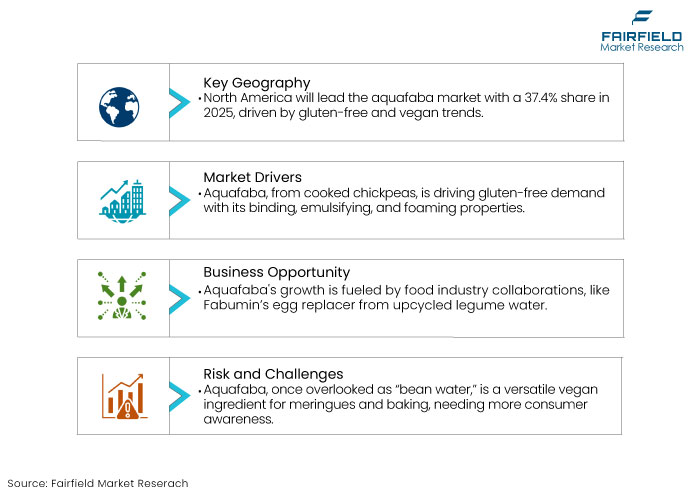
A key component of the rising demand for gluten-free and allergen-friendly food items brought on by heightened knowledge of dietary sensitivities and food allergies is aquafaba, which is made from cooked chickpeas and has the ability to bind, emulsify, and foam.
In gluten-free baking, aquafaba is a sustainable and natural ingredient that adds structure, moisture, and leavening without causing allergies. Cookies, cakes, muffins, sauces, drinks, and plant-based mayonnaise all include it. Innovation in the food and beverage sector is fueled by its capacity to satisfy gluten-free and allergy-friendly requirements, guaranteeing clean-label solutions and transparency.
- According to data from Beyond Celiac, Globally, about 1.4% of the population is affected by celiac disease, with significant regional differences. In the U.S., 1 in 133 people are affected, though up to 83% remain undiagnosed.
- Finland and Italy have higher prevalence rates, with 1.99% of Finland’s population and 1.6% of children in Italy affected. North Africa reports some of the highest global rates. Alongside celiac disease, millions suffer from non-celiac gluten sensitivity, increasing demand for gluten-free options.
- Rising Demand for Vegan Products Boost Utilization of Aquafaba
The unique qualities of aquafaba, a plant-based ingredient, such as emulsification, foaming, and binding, which replicate the functions of eggs, are making it more and more popular. This promotes sustainability and appeals to consumers who are sensitive to allergies and health issues.
Vegan mayonnaise has been developed by companies like Hellmann's and Follow Your Heart, while egg-free cakes and sweets have been introduced by Oggs. Additionally, businesses such as Vor Foods and Chickplease provide vegan macarons and meringues. Furthermore, aquafaba is used to create foam in drinks like whiskey sours. Its sustainability is further reinforced by its use in the manufacturing of pre-packaged goods and gluten-free bread.
Key Growth Barriers
- Limited Awareness Stalls Mainstream Adoption of Aquafaba
As the demand for plant-based and vegan cuisine expands, aquafaba is a little-known but incredibly valuable product. Often dismissed as unpleasant "bean water," this liquid from canned or cooked chickpeas has amazing uses, including making airy meringues and serving as a binding agent in baking. Aquafaba must educate customers about these advantages if it hopes to become popular among homes and businesses looking for environmentally friendly substitutes.
Misconceptions regarding its health and safety further impede acceptance. Concerns about BPA, excessive salt, and stomach discomfort can be addressed via education. The awareness gap is maintained because home chefs frequently avoid aquafaba in favor of more recognizable alternatives like flaxseed or applesauce. Clear usage rules and focused instructional programs are crucial to achieving aquafaba's full potential. Raising awareness will enable researchers to transform aquafaba from a specialized product into a commonly used mainstay in contemporary cookery.
- Aquafaba Market Trends and Opportunities
Collaborative Efforts Propel Aquafaba's Growth in the Food Industry
Strategic collaborations with food manufacturers are driving the rapid growth of aquafaba as a transformative ingredient in the food industry. An example is Fabumin, an Israeli startup that has developed a powdered egg replacer from upcycled legume water waste. This innovation has garnered interest from major food brands due to its functional properties and sustainability.
Fabumin’s powdered format offers greater stability and ease of handling than traditional liquid aquafaba, making it suitable for large-scale production. The drying process also recycles up to 80% of the water waste from legume processing, supporting sustainability goals. Fabumin’s partnerships enable aquafaba to replace eggs in items like cakes and sauces, providing a cost-effective, eco-friendly alternative.
Beyond food, aquafaba has potential applications in cosmetics, cultivated meat, and microbiome solutions. With increasing production, aquafaba is set to replace millions of eggs globally, conserving resources and meeting consumer demand for ethical, plant-based options. This collaborative approach underscores aquafaba’s role in sustainable innovation.
Segments Covered in the Report
- Liquid form holds the maximum share of the Aquafaba market
Liquid form is anticipated to dominate the global market with a CAGR of 11.8% from 2025 to 2032. The liquid form of aquafaba leads the market due to its convenience and versatility. Sourced from canned or cooked chickpeas, it’s ready to use without extra processing and mimics egg whites in texture, allowing for easy recipe substitutions.
Valued for its functional properties like emulsification, foaming, and binding, liquid aquafaba is ideal for baking, confectionery, and sauces. It is whipped into meringues, mousses, and macarons, achieving the airy quality of eggs, and is also a popular ingredient for vegan mayonnaise and salad dressings.
Brands like Haden’s Aquafaba and SOS Chefs offer pre-packaged options, making it accessible for both home cooks and food service industries. Its convenience, cost-effectiveness, and sustainability have solidified liquid aquafaba's dominant position across various food categories.
- Among End Use categories, baking and confectionery lead the aquafaba market.
The baking and confectionery industry dominates the aquafaba market because of its useful qualities, which enable goods that are free of dairy, eggs, and allergies. For cakes, cookies, macarons, meringues, and brownies, aquafaba is crucial because it offers structural integrity, moisture retention, and leavening properties. It whips into firm peaks in confections, giving vegan marshmallows, mousses, and meringues their airy textures.
Aquafaba is used by companies like Oggs and Vor Foods to simulate egg-based goods, making them acceptable to vegetarians and anyone with dietary restrictions. Further solidifying its place in the industry is the increasing demand for baked goods that are free of gluten and other allergens.
Regional Analysis
- North America Caters the Demand for Healthy Dietary Preferences
The aquafaba market in North America is set to dominate globally, holding a 37.4% market share in 2025, driven by the rising prevalence of celiac disease, gluten allergies, and vegan dietary preferences.
The Celiac Disease Foundation estimates that 1 in 133 Americans suffer from celiac disease, while 6% of the U.S. population has gluten sensitivity, increasing demand for plant-based and allergen-free alternatives. The region’s food innovation ecosystem, supported by major companies like Ingredion and The EVERY Company, facilitates the commercialization of aquafaba-based egg replacements.
The U.S. vegan population grew by 600% between 2014 and 2021, further fueling aquafaba’s popularity. Expanding retail and e-commerce channels, including Whole Foods and Amazon, make aquafaba more accessible to consumers. Additionally, sustainability concerns surrounding egg production and food waste reduction efforts have positioned aquafaba as an eco-friendly alternative. These factors contribute to North America’s leadership in the global aquafaba industry, promoting continued market expansion.
- Europe Presents Lucrative Avenues for Plant-Based Food Items
As the need for plant-based and allergy-free food options grows, the European aquafaba market is anticipated to maintain a sizable position in 2025. Since 9% of Europeans identify as vegetarians or vegans, there is a growing need for egg alternatives like aquafaba. Companies like Nestlé and Oggs are helping countries like Germany, the UK, and France lead the way in plant-based innovation.
Adoption is also being fueled by the EU's strict food sustainability laws as well as rising worries about carbon emissions and animal welfare. Europe is firmly establishing itself as a major market for aquafaba-based goods owing to its growing retail and food service applications, which include bread and confectionery.
Fairfield’s Competitive Landscape Analysis
The global aquafaba market is growing rapidly as demand for plant-based, allergen-free, and sustainable ingredients increases. Key players are innovating to develop new products that utilize aquafaba's versatility as an egg substitute in various food categories, including baking, sauces, and beverages.
Companies like Hellmann's and Follow Your Heart have created vegan mayonnaise using aquafaba, while Oggs has introduced cakes and cookies made entirely with it. Vor Foods and Chickplease have produced vegan meringues and macarons, capitalizing on aquafaba's foaming properties.
Additionally, Haden’s Aquafaba and SOS Chefs offer convenient pre-packaged aquafaba solutions for consumers. As more companies enter the market, competition is expected to intensify, driven by the need to meet the rising demand for plant-based food ingredients.
Key Market Companies
- OGGS
- Happy Dance
- Haden's Aquafaba
- Ingredion Incorporated
- Dasca Group
- The Very Food Co.
- Casa Amella Bio Food SLU
- EURO S.P.I.D. srl
- Symrise
- SOS Chefs
- Chickplease
- Saheli
Global Aquafaba Market is Segmented as -
By Form
- Powder
- Liquid
- Flakes
By End Use
- Sauces and Dressing
- Cocktails
- Baking and Confectionary
- Cakes and Pastries
- Cookies and Biscuits
- Breads and Muffins
- Others
By Distribution Channel
- B2B
- B2C
- Hypermarket/Supermarket
- Convenience Store
- Online Retail
- Other
By Region
- North America
- Europe
- Asia Pacific
- Latin America
- The Middle East & Africa
- Executive Summary
- Global Aquafaba Market Snapshot
- Future Projections
- Key Market Trends
- Regional Snapshot, by Value, 2026
- Analyst Recommendations
- Market Overview
- Market Definitions and Segmentations
- Market Dynamics
- Drivers
- Restraints
- Market Opportunities
- Value Chain Analysis
- COVID-19 Impact Analysis
- Porter's Five Forces Analysis
- Impact of Russia-Ukraine Conflict
- PESTLE Analysis
- Regulatory Analysis
- Price Trend Analysis
- Current Prices and Future Projections, 2025-2033
- Price Impact Factors
- Global Aquafaba Market Outlook, 2020 - 2033
- Global Aquafaba Market Outlook, by Form, Value (US$ Mn), 2020-2033
- Powder
- Liquid
- Flakes
- Global Aquafaba Market Outlook, by End Use, Value (US$ Mn), 2020-2033
- Sauces and Dressing
- Cocktails
- Baking and Confectionary
- Cakes and Pastries
- Cookies and Biscuits
- Breads and Muffins
- Others
- Global Aquafaba Market Outlook, by Distribution Channel, Value (US$ Mn), 2020-2033
- B2B
- B2C
- Global Aquafaba Market Outlook, by Region, Value (US$ Mn), 2020-2033
- North America
- Europe
- Asia Pacific
- Latin America
- Middle East & Africa
- Global Aquafaba Market Outlook, by Form, Value (US$ Mn), 2020-2033
- North America Aquafaba Market Outlook, 2020 - 2033
- North America Aquafaba Market Outlook, by Form, Value (US$ Mn), 2020-2033
- Powder
- Liquid
- Flakes
- North America Aquafaba Market Outlook, by End Use, Value (US$ Mn), 2020-2033
- Sauces and Dressing
- Cocktails
- Baking and Confectionary
- Cakes and Pastries
- Cookies and Biscuits
- Breads and Muffins
- Others
- North America Aquafaba Market Outlook, by Distribution Channel, Value (US$ Mn), 2020-2033
- B2B
- B2C
- North America Aquafaba Market Outlook, by Country, Value (US$ Mn), 2020-2033
- U.S. Aquafaba Market Outlook, by Form, 2020-2033
- U.S. Aquafaba Market Outlook, by End Use, 2020-2033
- U.S. Aquafaba Market Outlook, by Distribution Channel, 2020-2033
- Canada Aquafaba Market Outlook, by Form, 2020-2033
- Canada Aquafaba Market Outlook, by End Use, 2020-2033
- Canada Aquafaba Market Outlook, by Distribution Channel, 2020-2033
- BPS Analysis/Market Attractiveness Analysis
- North America Aquafaba Market Outlook, by Form, Value (US$ Mn), 2020-2033
- Europe Aquafaba Market Outlook, 2020 - 2033
- Europe Aquafaba Market Outlook, by Form, Value (US$ Mn), 2020-2033
- Powder
- Liquid
- Flakes
- Europe Aquafaba Market Outlook, by End Use, Value (US$ Mn), 2020-2033
- Sauces and Dressing
- Cocktails
- Baking and Confectionary
- Cakes and Pastries
- Cookies and Biscuits
- Breads and Muffins
- Others
- Europe Aquafaba Market Outlook, by Distribution Channel, Value (US$ Mn), 2020-2033
- B2B
- B2C
- Europe Aquafaba Market Outlook, by Country, Value (US$ Mn), 2020-2033
- Germany Aquafaba Market Outlook, by Form, 2020-2033
- Germany Aquafaba Market Outlook, by End Use, 2020-2033
- Germany Aquafaba Market Outlook, by Distribution Channel, 2020-2033
- Italy Aquafaba Market Outlook, by Form, 2020-2033
- Italy Aquafaba Market Outlook, by End Use, 2020-2033
- Italy Aquafaba Market Outlook, by Distribution Channel, 2020-2033
- France Aquafaba Market Outlook, by Form, 2020-2033
- France Aquafaba Market Outlook, by End Use, 2020-2033
- France Aquafaba Market Outlook, by Distribution Channel, 2020-2033
- U.K. Aquafaba Market Outlook, by Form, 2020-2033
- U.K. Aquafaba Market Outlook, by End Use, 2020-2033
- U.K. Aquafaba Market Outlook, by Distribution Channel, 2020-2033
- Spain Aquafaba Market Outlook, by Form, 2020-2033
- Spain Aquafaba Market Outlook, by End Use, 2020-2033
- Spain Aquafaba Market Outlook, by Distribution Channel, 2020-2033
- Russia Aquafaba Market Outlook, by Form, 2020-2033
- Russia Aquafaba Market Outlook, by End Use, 2020-2033
- Russia Aquafaba Market Outlook, by Distribution Channel, 2020-2033
- Rest of Europe Aquafaba Market Outlook, by Form, 2020-2033
- Rest of Europe Aquafaba Market Outlook, by End Use, 2020-2033
- Rest of Europe Aquafaba Market Outlook, by Distribution Channel, 2020-2033
- BPS Analysis/Market Attractiveness Analysis
- Europe Aquafaba Market Outlook, by Form, Value (US$ Mn), 2020-2033
- Asia Pacific Aquafaba Market Outlook, 2020 - 2033
- Asia Pacific Aquafaba Market Outlook, by Form, Value (US$ Mn), 2020-2033
- Powder
- Liquid
- Flakes
- Asia Pacific Aquafaba Market Outlook, by End Use, Value (US$ Mn), 2020-2033
- Sauces and Dressing
- Cocktails
- Baking and Confectionary
- Cakes and Pastries
- Cookies and Biscuits
- Breads and Muffins
- Others
- Asia Pacific Aquafaba Market Outlook, by Distribution Channel, Value (US$ Mn), 2020-2033
- B2B
- B2C
- Asia Pacific Aquafaba Market Outlook, by Country, Value (US$ Mn), 2020-2033
- China Aquafaba Market Outlook, by Form, 2020-2033
- China Aquafaba Market Outlook, by End Use, 2020-2033
- China Aquafaba Market Outlook, by Distribution Channel, 2020-2033
- Japan Aquafaba Market Outlook, by Form, 2020-2033
- Japan Aquafaba Market Outlook, by End Use, 2020-2033
- Japan Aquafaba Market Outlook, by Distribution Channel, 2020-2033
- South Korea Aquafaba Market Outlook, by Form, 2020-2033
- South Korea Aquafaba Market Outlook, by End Use, 2020-2033
- South Korea Aquafaba Market Outlook, by Distribution Channel, 2020-2033
- India Aquafaba Market Outlook, by Form, 2020-2033
- India Aquafaba Market Outlook, by End Use, 2020-2033
- India Aquafaba Market Outlook, by Distribution Channel, 2020-2033
- Southeast Asia Aquafaba Market Outlook, by Form, 2020-2033
- Southeast Asia Aquafaba Market Outlook, by End Use, 2020-2033
- Southeast Asia Aquafaba Market Outlook, by Distribution Channel, 2020-2033
- Rest of SAO Aquafaba Market Outlook, by Form, 2020-2033
- Rest of SAO Aquafaba Market Outlook, by End Use, 2020-2033
- Rest of SAO Aquafaba Market Outlook, by Distribution Channel, 2020-2033
- BPS Analysis/Market Attractiveness Analysis
- Asia Pacific Aquafaba Market Outlook, by Form, Value (US$ Mn), 2020-2033
- Latin America Aquafaba Market Outlook, 2020 - 2033
- Latin America Aquafaba Market Outlook, by Form, Value (US$ Mn), 2020-2033
- Powder
- Liquid
- Flakes
- Latin America Aquafaba Market Outlook, by End Use, Value (US$ Mn), 2020-2033
- Sauces and Dressing
- Cocktails
- Baking and Confectionary
- Cakes and Pastries
- Cookies and Biscuits
- Breads and Muffins
- Others
- Latin America Aquafaba Market Outlook, by Distribution Channel, Value (US$ Mn), 2020-2033
- B2B
- B2C
- Latin America Aquafaba Market Outlook, by Country, Value (US$ Mn), 2020-2033
- Brazil Aquafaba Market Outlook, by Form, 2020-2033
- Brazil Aquafaba Market Outlook, by End Use, 2020-2033
- Brazil Aquafaba Market Outlook, by Distribution Channel, 2020-2033
- Mexico Aquafaba Market Outlook, by Form, 2020-2033
- Mexico Aquafaba Market Outlook, by End Use, 2020-2033
- Mexico Aquafaba Market Outlook, by Distribution Channel, 2020-2033
- Argentina Aquafaba Market Outlook, by Form, 2020-2033
- Argentina Aquafaba Market Outlook, by End Use, 2020-2033
- Argentina Aquafaba Market Outlook, by Distribution Channel, 2020-2033
- Rest of LATAM Aquafaba Market Outlook, by Form, 2020-2033
- Rest of LATAM Aquafaba Market Outlook, by End Use, 2020-2033
- Rest of LATAM Aquafaba Market Outlook, by Distribution Channel, 2020-2033
- BPS Analysis/Market Attractiveness Analysis
- Latin America Aquafaba Market Outlook, by Form, Value (US$ Mn), 2020-2033
- Middle East & Africa Aquafaba Market Outlook, 2020 - 2033
- Middle East & Africa Aquafaba Market Outlook, by Form, Value (US$ Mn), 2020-2033
- Powder
- Liquid
- Flakes
- Middle East & Africa Aquafaba Market Outlook, by End Use, Value (US$ Mn), 2020-2033
- Sauces and Dressing
- Cocktails
- Baking and Confectionary
- Cakes and Pastries
- Cookies and Biscuits
- Breads and Muffins
- Others
- Middle East & Africa Aquafaba Market Outlook, by Distribution Channel, Value (US$ Mn), 2020-2033
- B2B
- B2C
- Middle East & Africa Aquafaba Market Outlook, by Country, Value (US$ Mn), 2020-2033
- GCC Aquafaba Market Outlook, by Form, 2020-2033
- GCC Aquafaba Market Outlook, by End Use, 2020-2033
- GCC Aquafaba Market Outlook, by Distribution Channel, 2020-2033
- South Africa Aquafaba Market Outlook, by Form, 2020-2033
- South Africa Aquafaba Market Outlook, by End Use, 2020-2033
- South Africa Aquafaba Market Outlook, by Distribution Channel, 2020-2033
- Egypt Aquafaba Market Outlook, by Form, 2020-2033
- Egypt Aquafaba Market Outlook, by End Use, 2020-2033
- Egypt Aquafaba Market Outlook, by Distribution Channel, 2020-2033
- Nigeria Aquafaba Market Outlook, by Form, 2020-2033
- Nigeria Aquafaba Market Outlook, by End Use, 2020-2033
- Nigeria Aquafaba Market Outlook, by Distribution Channel, 2020-2033
- Rest of Middle East Aquafaba Market Outlook, by Form, 2020-2033
- Rest of Middle East Aquafaba Market Outlook, by End Use, 2020-2033
- Rest of Middle East Aquafaba Market Outlook, by Distribution Channel, 2020-2033
- BPS Analysis/Market Attractiveness Analysis
- Middle East & Africa Aquafaba Market Outlook, by Form, Value (US$ Mn), 2020-2033
- Competitive Landscape
- Company Vs Segment Heatmap
- Company Market Share Analysis, 2025
- Competitive Dashboard
- Company Profiles
- OGGS
- Company Overview
- Product Portfolio
- Financial Overview
- Business Strategies and Developments
- Happy Dance
- Haden's Aquafaba
- Ingredion Incorporated
- Dasca Group
- The Very Food Co.
- Casa Amella Bio Food SLU
- EURO S.P.I.D. srl
- Symrise
- SOS Chefs
- OGGS
- Appendix
- Research Methodology
- Report Assumptions
- Acronyms and Abbreviations
|
BASE YEAR |
HISTORICAL DATA |
FORECAST PERIOD |
UNITS |
|||
 |
2025 |
 |
2019 - 2025 |
 |
2026 - 2033 |
Value: US$ Million |
|
REPORT FEATURES |
DETAILS |
|
Form |
|
|
End Use |
|
|
Distribution Channel |
|
|
Geographical Coverage |
|
|
Leading Companies |
|
|
Report Highlights |
Key Market Indicators, Macro-micro economic impact analysis, Technological Roadmap, Key Trends, Driver, Restraints, and Future Opportunities & Revenue Pockets, Porter’s 5 Forces Analysis, Historical Trend (2019-2024), Market Estimates and Forecast, Market Dynamics, Industry Trends, Competition Landscape, Category, Region, Country-wise Trends & Analysis, COVID-19 Impact Analysis (Demand and Supply Chain) |
Our Research Methodology
Considering the volatility of business today, traditional approaches to strategizing a game plan can be unfruitful if not detrimental. True ambiguity is no way to determine a forecast. A myriad of predetermined factors must be accounted for such as the degree of risk involved, the magnitude of circumstances, as well as conditions or consequences that are not known or unpredictable. To circumvent binary views that cast uncertainty, the application of market research intelligence to strategically posture, move, and enable actionable outcomes is necessary.
View Methodology
Quality Assured
Rigorous Validation Process

Confidentiality Assured
End-to-end Data Security

Custom Research Services
Tailored To Your Objectives
FAQs
Global Aquafaba Market is anticipated to reach USD 22.8 Mn in 2026.
Global market is anticipated to witness a CAGR of 6% during the forecast period 2026 to 2033.
North America leads the Global Aquafaba Market in terms of value.
Liquid form is anticipated to dominate the Global Aquafaba Market with a CAGR of 11.8% during 2026-2033.
Some of the key players in the market are Ingredion Incorporated, Dasca Group, Symrise, and OGGS.
Related Reports
Brewery Equipment Market Insights, Competitive Landscape, and Market Forecast 2033
Brewery Equipment Market to reach US$33.61 Bn by 2033, growing at 5.9% CAGR, driven by craft brewing, automation, and sustainable production.
Macadamia Nut Market Insights, Competitive Landscape, and Market Forecast 2026–2033
Macadamia Nut Market to reach US$4.69 Bn by 2033, growing at 9.4% CAGR, driven by wellness trends, organic demand, and plant-based applications.
Dietary Supplements Market Insights, Competitive Landscape, and Market Forecast 2026–2033
Dietary Supplements Market to reach US$435.78 billion by 2033, growing at 9.6% CAGR, driven by health awareness, and personalized nutrition.
Decaffeinated Coffee Market Insights, Competitive Landscape, and Market Forecast 2033
Decaffeinated Coffee Market is projected to reach US$5.20 billion by 2033, driven by health trends, premiumization, specialty retail, and better technology.
Coffee Substitute Market Insights, Competitive Landscape, and Market Forecast 2026–2033
The coffee substitute market is expected to grow from US$18.20 billion in 2026 to US$23.95 billion by 2033 at a 4.0% CAGR, driven by beverage innovation.
Protein Crisps Market Insights, Competitive Landscape, and Market Forecast 2033
The protein crisps market will grow from US$9.0 Bn in 2026 to US$15.83 Bn by 2033 at an 8.4% CAGR, driven by sports nutrition and healthy snacking trends.