



Construction Plastics Market
Construction Plastics Market Insights, Competitive Landscape, and Market Forecast - 2033
The Construction Plastics Market is valued at USD 10.2 Bn in 2026 and is projected to reach USD 16.2 Bn, growing at a CAGR of 7% by 2033.
Quick Report Digest
A Look Back and a Look Forward - Comparative Analysis
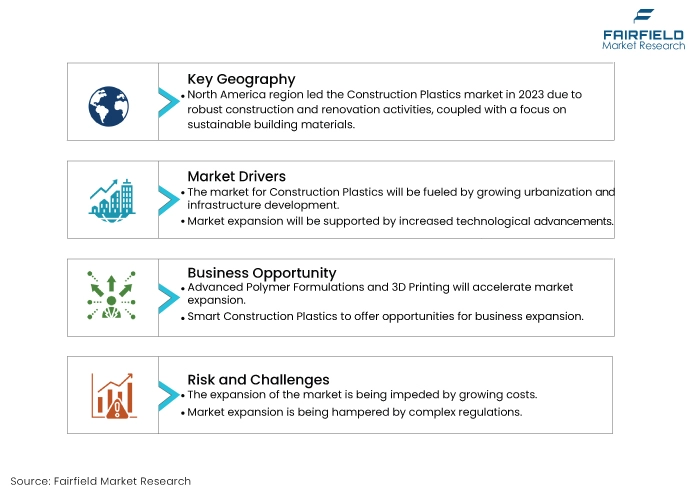
The construction plastics market is growing due to escalating global construction activities driven by urbanisation, and infrastructure development. Construction plastics offer versatility, durability, and cost-effectiveness, making them vital for various applications in modern construction. The industry's focus on sustainable and energy-efficient building materials further amplifies the demand for construction plastics. Technological innovations, lightweight properties, and the need for recyclable materials contribute to their widespread adoption, fuelling the overall growth of the construction plastics market.
The market witnessed staggered growth during the historical period 2019 – 2024. This is due to the substantial growth of major applications such as roofing, insulation, and pipes & ducts industries. However, in some applications, the demand for construction plastic has increased, including in the wall coverings industry.
The future of the construction plastics market looks promising, with sustained urbanisation, increasing infrastructure projects, and a growing emphasis on sustainable construction. Technological innovations will drive the development of advanced plastic materials, meeting evolving industry needs. The market is poised to expand as construction practices prioritise energy efficiency and environmentally friendly solutions. Construction plastics are expected to play a crucial role in shaping the future of the construction industry worldwide.
Key Growth Determinants
- Exploding Pace of Infrastructural Developments amid Urbanisation
The growing pace of urbanisation and infrastructure development is the key driver of the construction plastics market. As urban areas expand globally, there is a rising demand for construction materials that are versatile, durable, and cost-effective.
Construction plastics, known for their lightweight properties and adaptability, have become essential components in modern construction projects. They are widely utilised in applications such as pipes, roofing, insulation, and more. The construction boom in urban centres necessitates efficient and sustainable building solutions, propelling the use of construction plastics. This trend is expected to persist as urbanisation continues, driving sustained growth in the construction plastics market.
- Increased Technological Advancements
Increased technological advancements are a driving force in the construction plastics market as innovations continually enhance the performance and properties of construction plastic materials. Advanced formulations and manufacturing processes result in plastics with improved durability, strength, and sustainability. Additionally, technological progress enables the development of novel plastic products tailored for specific construction applications.
The integration of smart technologies, such as sensors for monitoring structural integrity, further expands the capabilities of construction plastics. As the industry embraces cutting-edge solutions, these technological advancements contribute to the market's growth by providing construction professionals with a diverse range of high-performance plastic materials that meet evolving construction needs and standards.
- Growing Focus on Sustainability
The growing focus on sustainability is a driving force in the construction plastics market as environmentally conscious practices gain prominence in construction. Construction plastics offer eco-friendly alternatives with recyclability and energy efficiency. The emphasis on reducing carbon footprints and minimising environmental impact aligns with the use of sustainable construction materials, contributing to the widespread adoption of construction plastics.
Moreover, the development of bio-based and biodegradable plastics reflects the industry's commitment to greener solutions. As construction stakeholders prioritise sustainable building practices, the demand for construction plastics is propelled, shaping a market where ecological considerations play a pivotal role in material selection and construction processes.
Major Growth Barriers
- Cost Constraints
Growing cost constraints pose a challenge to the construction plastics market by limiting the adoption of plastic materials in construction projects. Increased production costs and the need for compliance with environmental regulations can make plastics less competitive compared to traditional building materials.
As cost pressures intensify, stakeholders may need help in achieving price competitiveness without compromising quality, hindering the widespread acceptance and utilisation of construction plastics in the industry.
- Complex Regulations
Complex regulations pose a challenge to the construction plastics market by creating hurdles in compliance and operational processes. Stringent environmental standards and waste management regulations increase the complexity of using plastics in construction.
Manufacturers and users need help navigating and adhering to diverse regulatory frameworks. This complexity may impede the development, production, and adoption of construction plastics, impacting the industry's growth. The need for legal clarity, and streamlined regulations is crucial to foster innovation, sustainability, and consistent compliance in the construction plastics market.
Key Trends and Opportunities to Look at
Ongoing research and development focuses on creating advanced polymer formulations with enhanced properties, durability, and sustainability for diverse construction applications.
- 3D Printing
- Smart Construction Plastics
The integration of 3D printing technology for constructing plastic components allows for intricate and customised designs, optimising material usage and reducing waste.
Incorporation of smart technologies, such as sensors and monitoring systems, into construction plastics for real-time structural health monitoring and performance optimisation.
How Does the Regulatory Scenario Shape this Industry?
The regulatory framework for the construction plastics market varies by region and is influenced by standards, acts, and guidelines. In the United States, the American Society for Testing and Materials (ASTM) sets standards for plastic construction materials. Europe adheres to European Committee for Standardization (CEN) standards, ensuring product conformity. China follows standards established by the China National Standardization Management Committee (SAC).
Environmentally, regulations such as REACH in Europe govern chemical use. Region-specific changes, like the E.U.'s Single-Use Plastics Directive, impact plastic use. In India, the Bureau of Indian Standards (BIS) regulates product quality. Compliance with these standards is crucial for market entry, impacting material formulation, testing, and sustainability, reflecting the industry's commitment to quality and environmental considerations.
Fairfield’s Ranking Board
Top Segments
Polyvinyl chloride (PVC) has captured the largest market share in the construction plastics market due to its versatile properties. PVC is widely used in construction for applications such as pipes, roofing materials, windows, and profiles. It offers a combination of durability, chemical resistance, fire retardancy, and cost-effectiveness. The material's adaptability to various construction needs, coupled with its ease of processing, has made PVC a preferred choice. Additionally, PVC's recyclability and potential for energy-efficient applications contribute to its dominant position in the construction plastics market.
Polyethylene is gaining traction for its versatility, and adaptability. Polyethylene is used in a range of construction applications, including pipes, insulation, and packaging materials. Its lightweight nature, durability, and resistance to chemicals contribute to its popularity. Additionally, advancements in polyethylene formulations, such as high-density polyethylene (HDPE), and low-density polyethylene (LDPE), have expanded their applications, driving their growth at a rapid pace within the dynamic and evolving construction plastics industry.
- Roofing Application Continues to Surge Ahead
Roofing applications have captured the largest market share in the construction plastics market due to the widespread adoption of plastic roofing materials. Construction plastics offer lightweight, durable, and cost-effective solutions for roofing, contributing to their popularity. Plastic roofing materials, including PVC and polycarbonate sheets, provide excellent weather resistance and versatility in design.
As the construction industry places a premium on energy-efficient and sustainable building solutions, the demand for plastic roofing in residential, commercial, and industrial constructions has surged, making roofing applications a dominant segment in the construction plastics market.
Insulation applications will be growing at the highest CAGR in the construction plastics market due to the increasing emphasis on energy efficiency and sustainability in construction. Construction plastics, especially materials like expanded polystyrene (EPS) and extruded polystyrene (XPS), offer excellent thermal insulation properties.
As regulations and consumer preferences drive the demand for energy-efficient buildings, the use of construction plastics in insulation applications is expanding rapidly. The superior insulation capabilities, lightweight nature, and versatility of plastic materials contribute to their accelerated growth in this key segment of the construction plastics market.
Regional Frontrunners
North America’s Primacy Remains Intact
North America captured the largest market share in the construction plastics market due to several factors. The region benefits from a robust construction industry and a high demand for modern, sustainable building materials. Additionally, stringent building codes and environmental regulations have accelerated the adoption of construction plastics known for their energy efficiency and durability.
The region's focus on infrastructure development, technological advancements, and a growing preference for lightweight materials in construction further contribute to the dominance of construction plastics. Moreover, increased awareness of environmental issues has driven a shift towards eco-friendly construction practices, where plastics play a role in providing innovative and efficient solutions, reinforcing North America's leading position in the construction plastics market.
Asia Pacific Gains from Growing Investments in Sustainability Initiatives
The Asia Pacific region dominates the construction plastics market primarily due to rapid urbanisation, and extensive infrastructure development. Countries like China, and India are experiencing substantial construction activities driven by their large populations and robust economic growth.
Government initiatives, increased investments in sustainable construction practices, and a rising demand for modern building materials contribute to the region's prominence. Additionally, a growing awareness of environmental concerns favours the adoption of construction plastics. These factors collectively position the Asia Pacific region at the forefront of the construction plastics market, capturing the largest market share.
Fairfield’s Competitive Landscape Analysis
The competitive landscape of the construction plastics market is characterised by key players such as DowDuPont, BASF SE, SABIC, Solvay S.A., and Arkema. These companies focus on innovation, product development, and strategic collaborations to strengthen their market presence.
Emphasis on sustainable solutions, technological advancements, and meeting stringent regulatory standards shapes the competitive dynamics. Market players engage in mergers, acquisitions, and partnerships to expand their product portfolios and enhance their competitive positioning in the evolving construction plastics market.
Who are the Leaders in the Global Construction Plastics Space?
- BASF SE
- SABIC
- Dow Inc.
- LyondellBasell Industries N.V.
- Exxon Mobil Corporation
- Arkema S.A.
- Covestro AG
- Borealis AG
- INEOS Group Holdings S.A.
- Formosa Plastics Corporation
- Sumitomo Chemical Co., Ltd.
- Teijin Limited
- TotalEnergies SE
- Westlake Chemical Corporation
- Lotte Chemical Corporation
An Expert’s Eye
Demand and Future Growth
An increase in consumer demand for roofing industries is driving the market. The construction plastics market is propelled by escalating market demand fuelled by the global construction boom. Growing urbanisation, infrastructure projects, and a shift towards sustainable building practices drive increased adoption.
Future growth is anticipated as construction trends favour lightweight, durable, and environmentally friendly materials. Innovation in plastic technologies, coupled with stringent regulations promoting eco-friendly solutions, positions the construction plastics market for sustained expansion, meeting the evolving needs of the construction industry and contributing to the market's continual growth trajectory.
Supply Side of the Market
The demand-supply dynamics in the construction plastics market are influenced by the global construction boom, with rising demand for lightweight, durable, and sustainable materials. Current pricing structures reflect the balance between material costs, production efficiency, and environmental considerations.
Pricing will play a pivotal role in long-term growth as market players strive to maintain competitiveness while adhering to evolving regulatory standards. Major trends driving competition include technological innovations, eco-friendly solutions, and a focus on circular economy principles.
Supply chain analysis reveals the importance of efficient logistics and sourcing strategies in overcoming potential disruptions. Collaborations across the supply chain, emphasis on recycling initiatives, and strategic partnerships will likely shape the industry's future, ensuring resilience and sustainable growth.
Global Construction Plastics Market is Segmented as Below:
By Product Type:
- Polyvinyl Chloride
- Polystyrene
- Polyethylene
- Polyurethanes
- Misc
By Application:
- Roofing
- Insulation
- Pipes & Ducts
- Wall Coverings
- Windows
- Misc
By Geographic Coverage:
- North America
- Europe
- Asia Pacific
- Latin America
- Middle East & Africa
- Executive Summary
- Global Construction Plastics Market Snapshot
- Future Projections
- Key Market Trends
- Regional Snapshot, by Value, 2026
- Analyst Recommendations
- Market Overview
- Market Definitions and Segmentations
- Market Dynamics
- Drivers
- Restraints
- Market Opportunities
- Value Chain Analysis
- COVID-19 Impact Analysis
- Porter's Five Forces Analysis
- Impact of Russia-Ukraine Conflict
- PESTLE Analysis
- Regulatory Analysis
- Price Trend Analysis
- Current Prices and Future Projections, 2025-2033
- Price Impact Factors
- Global Construction Plastics Market Outlook, 2020 - 2033
- Global Construction Plastics Market Outlook, by Product Type, Value (US$ Mn), 2020-2033
- Polyvinyl Chloride
- Polystyrene
- Polyethylene
- Polyurethanes
- Misc
- Global Construction Plastics Market Outlook, by Application, Value (US$ Mn), 2020-2033
- Roofing
- Insulation
- Pipes & Ducts
- Wall Coverings
- Windows
- Misc
- Global Construction Plastics Market Outlook, by Region, Value (US$ Mn), 2020-2033
- North America
- Europe
- Asia Pacific
- Latin America
- Middle East & Africa
- Global Construction Plastics Market Outlook, by Product Type, Value (US$ Mn), 2020-2033
- North America Construction Plastics Market Outlook, 2020 - 2033
- North America Construction Plastics Market Outlook, by Product Type, Value (US$ Mn), 2020-2033
- Polyvinyl Chloride
- Polystyrene
- Polyethylene
- Polyurethanes
- Misc
- North America Construction Plastics Market Outlook, by Application, Value (US$ Mn), 2020-2033
- Roofing
- Insulation
- Pipes & Ducts
- Wall Coverings
- Windows
- Misc
- North America Construction Plastics Market Outlook, by Country, Value (US$ Mn), 2020-2033
- U.S. Construction Plastics Market Outlook, by Product Type, 2020-2033
- U.S. Construction Plastics Market Outlook, by Application, 2020-2033
- Canada Construction Plastics Market Outlook, by Product Type, 2020-2033
- Canada Construction Plastics Market Outlook, by Application, 2020-2033
- BPS Analysis/Market Attractiveness Analysis
- North America Construction Plastics Market Outlook, by Product Type, Value (US$ Mn), 2020-2033
- Europe Construction Plastics Market Outlook, 2020 - 2033
- Europe Construction Plastics Market Outlook, by Product Type, Value (US$ Mn), 2020-2033
- Polyvinyl Chloride
- Polystyrene
- Polyethylene
- Polyurethanes
- Misc
- Europe Construction Plastics Market Outlook, by Application, Value (US$ Mn), 2020-2033
- Roofing
- Insulation
- Pipes & Ducts
- Wall Coverings
- Windows
- Misc
- Europe Construction Plastics Market Outlook, by Country, Value (US$ Mn), 2020-2033
- Germany Construction Plastics Market Outlook, by Product Type, 2020-2033
- Germany Construction Plastics Market Outlook, by Application, 2020-2033
- Italy Construction Plastics Market Outlook, by Product Type, 2020-2033
- Italy Construction Plastics Market Outlook, by Application, 2020-2033
- France Construction Plastics Market Outlook, by Product Type, 2020-2033
- France Construction Plastics Market Outlook, by Application, 2020-2033
- U.K. Construction Plastics Market Outlook, by Product Type, 2020-2033
- U.K. Construction Plastics Market Outlook, by Application, 2020-2033
- Spain Construction Plastics Market Outlook, by Product Type, 2020-2033
- Spain Construction Plastics Market Outlook, by Application, 2020-2033
- Russia Construction Plastics Market Outlook, by Product Type, 2020-2033
- Russia Construction Plastics Market Outlook, by Application, 2020-2033
- Rest of Europe Construction Plastics Market Outlook, by Product Type, 2020-2033
- Rest of Europe Construction Plastics Market Outlook, by Application, 2020-2033
- BPS Analysis/Market Attractiveness Analysis
- Europe Construction Plastics Market Outlook, by Product Type, Value (US$ Mn), 2020-2033
- Asia Pacific Construction Plastics Market Outlook, 2020 - 2033
- Asia Pacific Construction Plastics Market Outlook, by Product Type, Value (US$ Mn), 2020-2033
- Polyvinyl Chloride
- Polystyrene
- Polyethylene
- Polyurethanes
- Misc
- Asia Pacific Construction Plastics Market Outlook, by Application, Value (US$ Mn), 2020-2033
- Roofing
- Insulation
- Pipes & Ducts
- Wall Coverings
- Windows
- Misc
- Asia Pacific Construction Plastics Market Outlook, by Country, Value (US$ Mn), 2020-2033
- China Construction Plastics Market Outlook, by Product Type, 2020-2033
- China Construction Plastics Market Outlook, by Application, 2020-2033
- Japan Construction Plastics Market Outlook, by Product Type, 2020-2033
- Japan Construction Plastics Market Outlook, by Application, 2020-2033
- South Korea Construction Plastics Market Outlook, by Product Type, 2020-2033
- South Korea Construction Plastics Market Outlook, by Application, 2020-2033
- India Construction Plastics Market Outlook, by Product Type, 2020-2033
- India Construction Plastics Market Outlook, by Application, 2020-2033
- Southeast Asia Construction Plastics Market Outlook, by Product Type, 2020-2033
- Southeast Asia Construction Plastics Market Outlook, by Application, 2020-2033
- Rest of SAO Construction Plastics Market Outlook, by Product Type, 2020-2033
- Rest of SAO Construction Plastics Market Outlook, by Application, 2020-2033
- BPS Analysis/Market Attractiveness Analysis
- Asia Pacific Construction Plastics Market Outlook, by Product Type, Value (US$ Mn), 2020-2033
- Latin America Construction Plastics Market Outlook, 2020 - 2033
- Latin America Construction Plastics Market Outlook, by Product Type, Value (US$ Mn), 2020-2033
- Polyvinyl Chloride
- Polystyrene
- Polyethylene
- Polyurethanes
- Misc
- Latin America Construction Plastics Market Outlook, by Application, Value (US$ Mn), 2020-2033
- Roofing
- Insulation
- Pipes & Ducts
- Wall Coverings
- Windows
- Misc
- Latin America Construction Plastics Market Outlook, by Country, Value (US$ Mn), 2020-2033
- Brazil Construction Plastics Market Outlook, by Product Type, 2020-2033
- Brazil Construction Plastics Market Outlook, by Application, 2020-2033
- Mexico Construction Plastics Market Outlook, by Product Type, 2020-2033
- Mexico Construction Plastics Market Outlook, by Application, 2020-2033
- Argentina Construction Plastics Market Outlook, by Product Type, 2020-2033
- Argentina Construction Plastics Market Outlook, by Application, 2020-2033
- Rest of LATAM Construction Plastics Market Outlook, by Product Type, 2020-2033
- Rest of LATAM Construction Plastics Market Outlook, by Application, 2020-2033
- BPS Analysis/Market Attractiveness Analysis
- Latin America Construction Plastics Market Outlook, by Product Type, Value (US$ Mn), 2020-2033
- Middle East & Africa Construction Plastics Market Outlook, 2020 - 2033
- Middle East & Africa Construction Plastics Market Outlook, by Product Type, Value (US$ Mn), 2020-2033
- Polyvinyl Chloride
- Polystyrene
- Polyethylene
- Polyurethanes
- Misc
- Middle East & Africa Construction Plastics Market Outlook, by Application, Value (US$ Mn), 2020-2033
- Roofing
- Insulation
- Pipes & Ducts
- Wall Coverings
- Windows
- Misc
- Middle East & Africa Construction Plastics Market Outlook, by Country, Value (US$ Mn), 2020-2033
- GCC Construction Plastics Market Outlook, by Product Type, 2020-2033
- GCC Construction Plastics Market Outlook, by Application, 2020-2033
- South Africa Construction Plastics Market Outlook, by Product Type, 2020-2033
- South Africa Construction Plastics Market Outlook, by Application, 2020-2033
- Egypt Construction Plastics Market Outlook, by Product Type, 2020-2033
- Egypt Construction Plastics Market Outlook, by Application, 2020-2033
- Nigeria Construction Plastics Market Outlook, by Product Type, 2020-2033
- Nigeria Construction Plastics Market Outlook, by Application, 2020-2033
- Rest of Middle East Construction Plastics Market Outlook, by Product Type, 2020-2033
- Rest of Middle East Construction Plastics Market Outlook, by Application, 2020-2033
- BPS Analysis/Market Attractiveness Analysis
- Middle East & Africa Construction Plastics Market Outlook, by Product Type, Value (US$ Mn), 2020-2033
- Competitive Landscape
- Company Vs Segment Heatmap
- Company Market Share Analysis, 2025
- Competitive Dashboard
- Company Profiles
- BASF SE
- Company Overview
- Product Portfolio
- Financial Overview
- Business Strategies and Developments
- SABIC
- Dow Inc.
- LyondellBasell Industries N.V.
- Exxon Mobil Corporation
- Arkema S.A.
- Covestro AG
- Borealis AG
- INEOS Group Holdings S.A.
- Teijin Limited
- BASF SE
- Appendix
- Research Methodology
- Report Assumptions
- Acronyms and Abbreviations
|
BASE YEAR |
HISTORICAL DATA |
FORECAST PERIOD |
UNITS |
|||
 |
2025 |
 |
2019 - 2024 |
 |
2026 - 2033 |
Value: US$ Billion |
|
REPORT FEATURES |
DETAILS |
|
Product Type Coverage |
|
|
Application Coverage |
|
|
Geographical Coverage |
|
|
Leading Companies |
|
|
Report Highlights |
Key Market Indicators, Macro-micro economic impact analysis, Technological Roadmap, Key Trends, Driver, Restraints, and Future Opportunities & Revenue Pockets, Porter’s 5 Forces Analysis, Historical Trend (2019-2021), Market Estimates and Forecast, Market Dynamics, Industry Trends, Competition Landscape, Category, Region, Country-wise Trends & Analysis, COVID-19 Impact Analysis (Demand and Supply Chain) |
Our Research Methodology
Considering the volatility of business today, traditional approaches to strategizing a game plan can be unfruitful if not detrimental. True ambiguity is no way to determine a forecast. A myriad of predetermined factors must be accounted for such as the degree of risk involved, the magnitude of circumstances, as well as conditions or consequences that are not known or unpredictable. To circumvent binary views that cast uncertainty, the application of market research intelligence to strategically posture, move, and enable actionable outcomes is necessary.
View Methodology
Quality Assured
Rigorous Validation Process

Confidentiality Assured
End-to-end Data Security

Custom Research Services
Tailored To Your Objectives
FAQs
The global construction plastics market size was around USD 10.2 Bn in 2026.
North America holds the largest share of the global construction plastics market.
The primary factor projected to drive the Construction Plastics market expansion is due to growing urbanization and infrastructure development.
In 2025, the polyvinyl chloride category held a significant share of the global market.
The roofing segment constituted a major share of the global construction plastics market.
Related Reports
Hydrogen Cyanide Market
Hydrogen Cyanide Market reaches USD 3.98 Billion by 2033 from USD 2.85 Billion in 2026, growing at 4.9% CAGR, with Chemicals & Plastics leading at 57%.
Seed Treatment Fungicides Market Insights, Competitive Landscape, and Market Forecast 2033
Seed Treatment Fungicides Market to reach USD 5.74 Bn by 2033, growing at 6.9% CAGR, driven by crop protection, disease control, and sustainable farming.
SDHI Fungicide Market Insights, Competitive Landscape, and Market Forecast 2033
SDHI Fungicide Market to reach USD 3.89 Bn by 2033, growing at 7.8% CAGR, driven by crop protection, disease control, and resistance management.
Lithium Manganese Iron Phosphate (LMFP) Battery Market Forecast - 2033
The global lithium manganese iron phosphate (LMFP) battery market is set to reach US$ 7.24 billion by 2033, growing at a 22.0% CAGR from 2026-2033
Ball Clay Market Insights, Competitive Landscape, and Market Forecast - 2033
Ball clay market is valued at USD 1.65 Billion in 2026 and projected to reach USD 2.26 Billion by 2033, expanding at a CAGR of 4.6%.
N-Vinylformamide Market Insights, Competitive Landscape, and Market Forecast - 2033
N-vinylformamide market is valued at USD 420.00 Million in 2026 and projected to reach USD 683.30 Million by 2033, expanding at a CAGR of 7.2%.