



Functional Drinks Market
Functional Drinks Market Insights, Competitive Landscape, and Market Forecast - 2033
Functional Drinks Market Size, Share, and Growth Forecast 2026 - 2033
Key Market Highlights
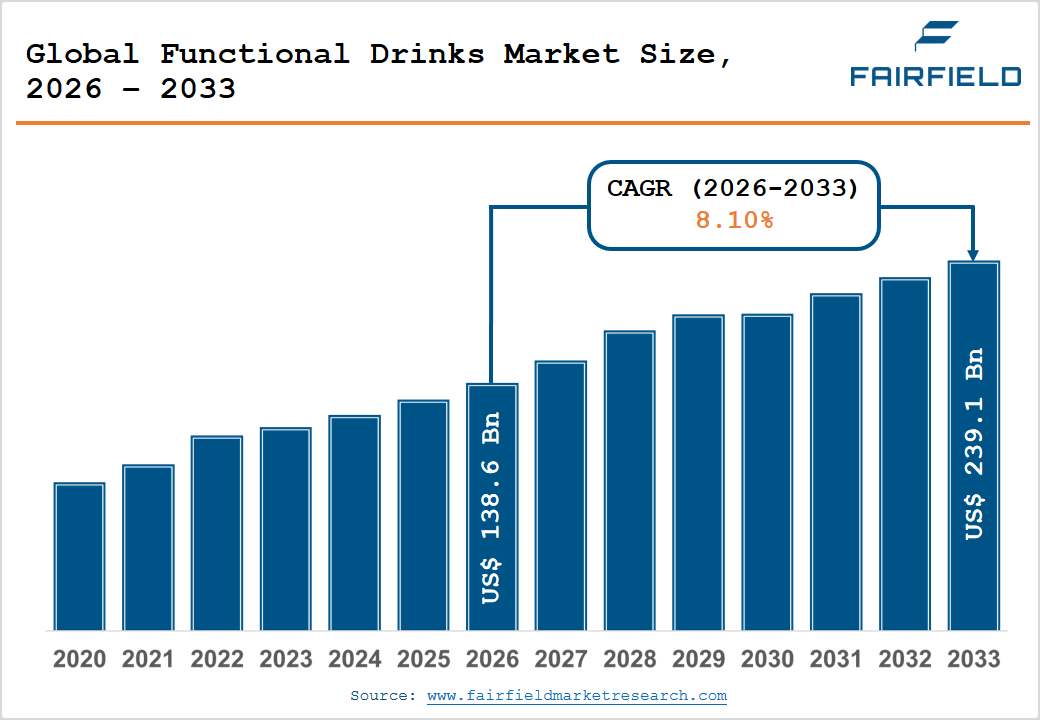
- The global Functional Drinks Market size is likely to be valued at USD 138.6 billion in 2026 and is expected to reach USD 239.1 billion by 2033, growing at a CAGR of 8.10% during the forecast period from 2026 to 2033.
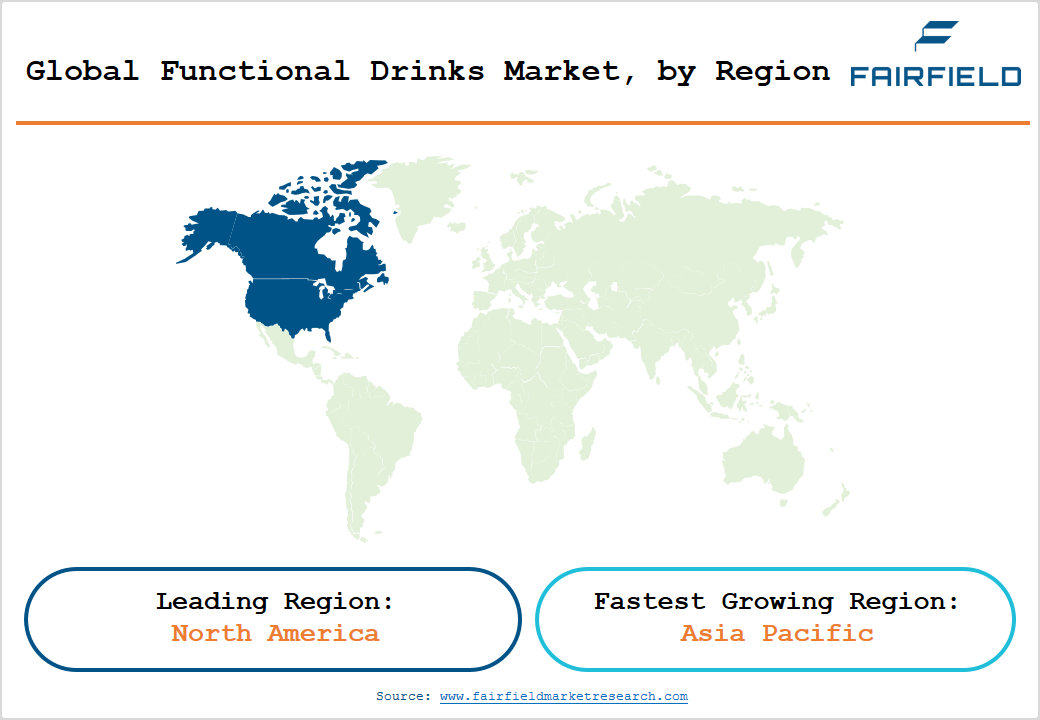
- North America leads the global functional drinks market, accounting for approximately 39% of global revenues, driven by the U.S.'s mature health-conscious consumer base, robust retail infrastructure, and active innovation by PepsiCo Inc. and The Coca-Cola Company.
- Asia Pacific is the fastest-growing regional market, propelled by rapid urbanization, rising disposable incomes, and cultural affinity for health-enhancing beverages in China, Japan, and India, along with expanding sports culture across ASEAN economies.
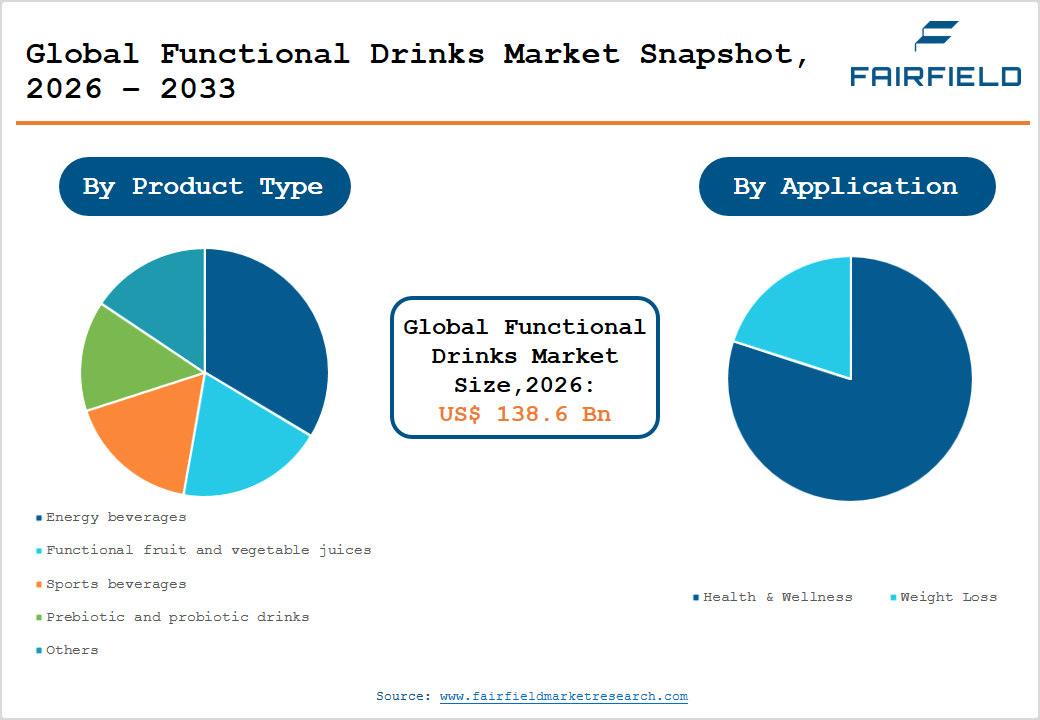
- Energy beverages dominate the functional drinks market by product type, holding approximately 35% market share, underpinned by widespread consumer adoption and brand loyalty toward Red Bull GmbH and Monster Beverage Corporation, and continuous product innovation.
- Prebiotic and probiotic drinks represent the fastest-growing product segment, driven by increasing microbiome science validation, rising consumer awareness of digestive wellness, and growing investments from players such as Danone S.A. and emerging DTC brands.
- Personalized nutrition through digital and e-commerce platforms represents a key market opportunity, as AI-driven customization and subscription-based wellness models enable brands like Nestlé S.A. to build scalable, recurring revenue streams globally.
Market Dynamics
Market Growth Drivers
- Rising Health Consciousness and Preventive Healthcare Trends
Consumer inclination toward preventive health has fundamentally reshaped demand across the functional drinks segment. According to the World Health Organization (WHO), non-communicable diseases account for 74% of all global deaths annually, compelling individuals to adopt nutritional interventions and lifestyle modifications. Functional beverages fortified with vitamins, minerals, herbal extracts, and probiotics are increasingly perceived as accessible tools for immune support, stress management, and metabolic health. A 2023 survey conducted by the International Food Information Council (IFIC) found that 52% of consumers actively seek food and beverages with functional health benefits. This behavioral shift is translating into sustained demand growth, particularly for probiotic drinks, nootropic beverages, and fortified juices, as consumers continue to prioritize long-term well-being over short-term indulgence.
- Expanding Sports and Fitness Culture Driving Sports Beverage Demand
The global proliferation of gym culture, organized sports, and amateur fitness participation is directly amplifying demand for sports beverages and electrolyte-enriched functional drinks. According to the International Health, Racquet & Sportsclub Association (IHRSA), the global fitness industry serves over 184 million gym members, with membership numbers continuing to grow year-on-year. This expanding fitness ecosystem is creating consistent demand for hydration solutions, protein-infused beverages, and recovery drinks. Brands such as Gatorade (PepsiCo Inc.) and BodyArmor (The Coca-Cola Company) have capitalized on this trend through targeted reformulations and high-profile athlete endorsement campaigns.
Market Restraints
- Regulatory Scrutiny and Labeling Complexities
The functional drinks industry faces escalating regulatory challenges across major markets, particularly regarding health claims, ingredient safety, and labeling requirements. The U.S. Food and Drug Administration (FDA) requires rigorous substantiation for any structure/function claims made on beverage packaging, while the European Food Safety Authority (EFSA) enforces an approved list of permissible health claims under Regulation (EC) No. 1924/2006, which has seen over 80% of submitted claims rejected. Compliance with these stringent standards significantly increases product development costs and timelines, often acting as a barrier to market entry for smaller manufacturers. Inconsistent regulatory frameworks across Asia-Pacific and Latin American markets further complicate cross-border expansion strategies for global functional beverage companies.
- High Product Development and Raw Material Costs
Formulating functional beverages with clinically validated bioactive ingredients such as adaptogens, plant-based proteins, and live probiotic cultures involves substantial investment in research, ingredient sourcing, and cold-chain logistics. Raw material costs for premium botanicals and certified probiotic strains have witnessed a significant increase, partly driven by supply chain disruptions experienced during and after the COVID-19 pandemic. According to the U.S. Bureau of Labor Statistics, food and beverage ingredient prices rose by approximately 11% between 2021 and 2023, directly compressing margins for manufacturers. These cost pressures can result in higher retail prices, limiting accessibility for price-sensitive consumers in emerging markets and tempering volume growth potential for the functional drinks market.
Market Opportunities
- Rapid Growth of Prebiotic and Probiotic Beverages
The prebiotic and probiotic drinks segment presents one of the most compelling growth opportunities in the functional drinks landscape, driven by increasing scientific validation of the gut-brain axis and mounting consumer awareness of digestive health. The National Institutes of Health (NIH) has actively funded research into microbiome science, with hundreds of published studies linking gut microbiota balance to immune function, mental health, and metabolic performance. A 2024 report from the American Gastroenterological Association indicated that over 40% of adults in the U.S. experience gut-related discomfort, creating a large addressable consumer base. Companies investing in novel fermentation technologies, synbiotic formulations, and clean-label probiotic drinks such as Danone S.A. with its Activia brand are well-positioned to capture this high-growth segment as consumer health sophistication continues to evolve in the coming years.
- Digital Commerce and Personalized Nutrition Platforms
The accelerating adoption of e-commerce and direct-to-consumer (DTC) channels offers functional drinks manufacturers an unprecedented opportunity to scale distribution, capture granular consumer data, and deliver personalized nutrition solutions at scale. AI-driven personalization platforms are enabling brands to tailor functional drink recommendations based on individual health goals, dietary preferences, and biomarker data. Companies such as Nestlé S.A. have begun exploring customized nutrition programs, while subscription-based wellness platforms represent a sustainable recurring revenue model. As digital health literacy improves globally, online retail is expected to emerge as a dominant functional beverage distribution channel.
Segmental Insights
- By Product Type Analysis
Energy beverages hold the dominant position within the functional drinks market by product type, accounting for approximately 35% of the total market share. This leadership is underpinned by broad consumer appeal, widespread retail availability, and aggressive brand marketing by major players such as Red Bull GmbH and Monster Beverage Corporation. According to the Beverage Marketing Corporation, energy drink volumes in the U.S. alone exceeded 3 billion units annually as of recent industry estimates. The segment benefits from a highly loyal young adult consumer base aged 18-34, with demand particularly strong across North America and Western Europe. Continuous product innovation including sugar-free variants, organic formulations, and nootropic-infused beverages is further expanding the addressable consumer market and reinforcing the energy beverages segment's sustained leadership position.
- By Application Analysis
The health and wellness application segment commands the leading share within the functional drinks market, representing approximately 68% of the total application market. This dominance reflects the broader macroeconomic and demographic forces propelling preventive health spending globally. According to the Global Wellness Institute, the global wellness economy was valued at over trillions in 2022 and continues to expand steadily. Consumers are increasingly incorporating functional beverages as part of their daily nutritional routines, with beverage sub-categories including immune-boosting drinks, vitamin-infused waters, and adaptogenic elixirs experiencing heightened demand. The post-pandemic emphasis on immunity, stress reduction, and metabolic health further cements the dominant role of the health and wellness application within the global functional drinks market ecosystem.
- By Distribution Channel Analysis
Supermarkets and hypermarkets represent the leading distribution channel for functional drinks, holding an estimated 38% market share. The dominance of this channel reflects consumers' preference for browsing a wide variety of functional beverage options, enabling them to compare nutritional labels, pricing, and brand offerings in a physical retail environment. Major retail chains such as Walmart, Kroger, and Tesco dedicate significant shelf space to functional beverages, providing high product visibility and impulse purchase opportunities. According to the Food Marketing Institute (FMI), grocery retail remains the primary touchpoint for health-conscious shoppers across North America and Europe. In-store promotions, product sampling initiatives, and loyalty programs further reinforce this channel's leadership position even as online retail captures a growing share of functional beverage sales.
Regional Insights
- North America Functional Drinks Market Trends
North America is the leading regional market for functional drinks, accounting for approximately 39% of global revenues, with U.S. serving as the primary growth engine. The U.S. market benefits from a mature health-conscious consumer base, robust retail infrastructure, and an active innovation ecosystem driven by established players such as PepsiCo Inc., The Coca-Cola Company, and Monster Beverage Corporation. The U.S. Food and Drug Administration (FDA)'s stringent regulatory framework for dietary supplement and functional food claims fosters consumer confidence in product safety and scientific efficacy.
Canada is also emerging as a meaningful contributor to North America's functional drinks market, driven by increasing awareness around gut health, clean-label beverages, and plant-based nutrition. The region's favorable demographics including a large millennial and Gen Z population with relatively high disposable incomes continue to sustain premium functional beverage demand, particularly in energy drinks, protein beverages, and probiotic-enriched drink categories.
- Europe Functional Drinks Market Trends
Europe represents a mature yet steadily expanding market for functional drinks, characterized by strong regulatory harmonization under European Food Safety Authority (EFSA) guidelines and growing consumer demand for scientifically substantiated health claims. Germany, the United Kingdom, and France are the leading markets within the region, with Germany's well-established sports nutrition culture and the UK's robust functional food retail sector driving sustained demand. The shift toward natural, plant-based, and organic functional beverages is particularly pronounced across European markets.
Spain and Italy are witnessing growing adoption of probiotic and prebiotic drinks as consumer awareness of digestive health gains traction. The European Commission's Farm to Fork Strategy, which promotes healthier and more sustainable food systems across member states, is creating a favorable policy backdrop for the functional drinks market. Consumers in Western Europe exhibit heightened sensitivity to artificial additives and sustainability practices, driving manufacturers toward cleaner ingredient portfolios and recyclable packaging solutions.
- Asia Pacific Functional Drinks Market Trends
Asia Pacific is the fastest-growing regional market for functional drinks, propelled by rapid urbanization, rising disposable incomes, and a deep-rooted cultural affinity for health-enhancing beverages in markets such as China, Japan, and India. Japan has a long tradition of functional food and beverage consumption, supported by the government's Foods for Specified Health Uses (FOSHU) regulatory framework, which certifies beverages with verified, evidence-backed health benefits. This regulatory rigor has cultivated a discerning, health-aware consumer base.
China represents the single largest growth opportunity in the region, with the functional beverage market expanding rapidly on the back of a burgeoning middle class and increasing awareness of lifestyle-related diseases. India is witnessing strong demand for ayurvedic-inspired functional drinks and probiotic beverages, supported by growing e-commerce penetration and government health initiatives. Southeast Asian markets including Indonesia, Vietnam, and Thailand are also experiencing robust momentum, driven by young demographics and increasing sports participation across ASEAN economies.
Competitive Landscape
The global functional drinks market exhibits a moderately consolidated structure, with a handful of multinational corporations including PepsiCo Inc., The Coca-Cola Company, Red Bull GmbH, Monster Beverage Corporation, and Nestlé S.A. commanding dominant market positions through extensive global distribution networks, aggressive marketing investments, and continuous product innovation. Simultaneously, the market accommodates a dynamic layer of emerging brands leveraging clean-label positioning, niche health claims, and DTC e-commerce strategies. Key competitive differentiators include ingredient transparency, functional efficacy substantiation, sustainable packaging, and celebrity or athlete endorsements. Strategic acquisitions such as The Coca-Cola Company's acquisition of BodyArmor highlight the industry's consolidation trend as major players expand their functional portfolio.
Key Developments
- In March 2025, PepsiCo Inc. acquired a minority stake in Celsius Holdings, reinforcing its commitment to expanding its portfolio within the high-growth functional energy beverage segment and strengthening its competitive position against Red Bull GmbH and Monster Beverage Corporation.
- In January 2025, Danone S.A. announced the reformulation of its Activia probiotic drink range with added prebiotic fibers, targeting the rapidly growing synbiotic beverage trend gaining traction among health-conscious consumers globally.
- In September 2024, Nestlé S.A. launched a new line of personalized functional hydration beverages under its Nestlé Health Science division, integrating electrolytes, B-vitamins, and adaptogens, catering to the performance nutrition segment.
Companies Covered in Functional Drinks Market
- PepsiCo Inc.
- The Coca-Cola Company
- Abbott Laboratories
- BodyArmor (The Coca-Cola Company)
- Danone S.A.
- Fonterra Co-operative Group Limited
- Glanbia Plc
- Keurig Dr Pepper Inc.
- Monster Beverage Corporation
- Nestlé S.A.
- Red Bull GmbH
- Suntory Holdings Ltd.
- The Hain Celestial Group
- The Kraft Heinz Company
- Vita Coco Company
- Celsius Holdings
- GlaxoSmithKline plc (Lucozade Sport)
- Otsuka Pharmaceutical Co., Ltd. (Pocari Sweat)
- Harmless Harvest
- Cawston Press
Market Segmentation
By Product Type
- Energy Beverages
- Functional Fruit and Vegetable Juices
- Sports Beverages
- Prebiotic and Probiotic Drinks
- Others
By Application
- Health and Wellness
- Weight Loss
By Distribution Channel
- Supermarkets & Hypermarkets
- Convenience Stores
- Online Retail
- Gyms & Fitness Centers
- Food Service
By Region
- North America
- Europe
- Asia Pacific
- Latin America
- Middle East & Africa
- Executive Summary
- Global Functional Drinks Market Snapshot
- Future Projections
- Key Market Trends
- Regional Snapshot, by Value, 2026
- Analyst Recommendations
- Market Overview
- Market Definitions and Segmentations
- Market Dynamics
- Drivers
- Restraints
- Market Opportunities
- Value Chain Analysis
- COVID-19 Impact Analysis
- Porter's Five Forces Analysis
- Impact of Russia-Ukraine Conflict
- PESTLE Analysis
- Regulatory Analysis
- Price Trend Analysis
- Current Prices and Future Projections, 2025-2033
- Price Impact Factors
- Global Functional Drinks Market Outlook, 2020 - 2033
- Global Functional Drinks Market Outlook, by Product Type, Value (US$ Bn), 2020-2033
- Energy beverages
- Functional fruit and vegetable juices
- Sports beverages
- Prebiotic and probiotic drinks
- Others
- Global Functional Drinks Market Outlook, by Application, Value (US$ Bn), 2020-2033
- Health and wellness
- Weight loss
- Global Functional Drinks Market Outlook, by Distribution Channel, Value (US$ Bn), 2020-2033
- Supermarkets & Hypermarkets
- Convenience Stores
- Online Retail
- Gyms & Fitness Centers
- Food Service
- Global Functional Drinks Market Outlook, by Region, Value (US$ Bn), 2020-2033
- North America
- Europe
- Asia Pacific
- Latin America
- Middle East & Africa
- Global Functional Drinks Market Outlook, by Product Type, Value (US$ Bn), 2020-2033
- North America Functional Drinks Market Outlook, 2020 - 2033
- North America Functional Drinks Market Outlook, by Product Type, Value (US$ Bn), 2020-2033
- Energy beverages
- Functional fruit and vegetable juices
- Sports beverages
- Prebiotic and probiotic drinks
- Others
- North America Functional Drinks Market Outlook, by Application, Value (US$ Bn), 2020-2033
- Health and wellness
- Weight loss
- North America Functional Drinks Market Outlook, by Distribution Channel, Value (US$ Bn), 2020-2033
- Supermarkets & Hypermarkets
- Convenience Stores
- Online Retail
- Gyms & Fitness Centers
- Food Service
- North America Functional Drinks Market Outlook, by Country, Value (US$ Bn), 2020-2033
- U.S. Functional Drinks Market Outlook, by Product Type, 2020-2033
- U.S. Functional Drinks Market Outlook, by Application, 2020-2033
- U.S. Functional Drinks Market Outlook, by Distribution Channel, 2020-2033
- Canada Functional Drinks Market Outlook, by Product Type, 2020-2033
- Canada Functional Drinks Market Outlook, by Application, 2020-2033
- Canada Functional Drinks Market Outlook, by Distribution Channel, 2020-2033
- BPS Analysis/Market Attractiveness Analysis
- North America Functional Drinks Market Outlook, by Product Type, Value (US$ Bn), 2020-2033
- Europe Functional Drinks Market Outlook, 2020 - 2033
- Europe Functional Drinks Market Outlook, by Product Type, Value (US$ Bn), 2020-2033
- Energy beverages
- Functional fruit and vegetable juices
- Sports beverages
- Prebiotic and probiotic drinks
- Others
- Europe Functional Drinks Market Outlook, by Application, Value (US$ Bn), 2020-2033
- Health and wellness
- Weight loss
- Europe Functional Drinks Market Outlook, by Distribution Channel, Value (US$ Bn), 2020-2033
- Supermarkets & Hypermarkets
- Convenience Stores
- Online Retail
- Gyms & Fitness Centers
- Food Service
- Europe Functional Drinks Market Outlook, by Country, Value (US$ Bn), 2020-2033
- Germany Functional Drinks Market Outlook, by Product Type, 2020-2033
- Germany Functional Drinks Market Outlook, by Application, 2020-2033
- Germany Functional Drinks Market Outlook, by Distribution Channel, 2020-2033
- Italy Functional Drinks Market Outlook, by Product Type, 2020-2033
- Italy Functional Drinks Market Outlook, by Application, 2020-2033
- Italy Functional Drinks Market Outlook, by Distribution Channel, 2020-2033
- France Functional Drinks Market Outlook, by Product Type, 2020-2033
- France Functional Drinks Market Outlook, by Application, 2020-2033
- France Functional Drinks Market Outlook, by Distribution Channel, 2020-2033
- U.K. Functional Drinks Market Outlook, by Product Type, 2020-2033
- U.K. Functional Drinks Market Outlook, by Application, 2020-2033
- U.K. Functional Drinks Market Outlook, by Distribution Channel, 2020-2033
- Spain Functional Drinks Market Outlook, by Product Type, 2020-2033
- Spain Functional Drinks Market Outlook, by Application, 2020-2033
- Spain Functional Drinks Market Outlook, by Distribution Channel, 2020-2033
- Russia Functional Drinks Market Outlook, by Product Type, 2020-2033
- Russia Functional Drinks Market Outlook, by Application, 2020-2033
- Russia Functional Drinks Market Outlook, by Distribution Channel, 2020-2033
- Rest of Europe Functional Drinks Market Outlook, by Product Type, 2020-2033
- Rest of Europe Functional Drinks Market Outlook, by Application, 2020-2033
- Rest of Europe Functional Drinks Market Outlook, by Distribution Channel, 2020-2033
- BPS Analysis/Market Attractiveness Analysis
- Europe Functional Drinks Market Outlook, by Product Type, Value (US$ Bn), 2020-2033
- Asia Pacific Functional Drinks Market Outlook, 2020 - 2033
- Asia Pacific Functional Drinks Market Outlook, by Product Type, Value (US$ Bn), 2020-2033
- Energy beverages
- Functional fruit and vegetable juices
- Sports beverages
- Prebiotic and probiotic drinks
- Others
- Asia Pacific Functional Drinks Market Outlook, by Application, Value (US$ Bn), 2020-2033
- Health and wellness
- Weight loss
- Asia Pacific Functional Drinks Market Outlook, by Distribution Channel, Value (US$ Bn), 2020-2033
- Supermarkets & Hypermarkets
- Convenience Stores
- Online Retail
- Gyms & Fitness Centers
- Food Service
- Asia Pacific Functional Drinks Market Outlook, by Country, Value (US$ Bn), 2020-2033
- China Functional Drinks Market Outlook, by Product Type, 2020-2033
- China Functional Drinks Market Outlook, by Application, 2020-2033
- China Functional Drinks Market Outlook, by Distribution Channel, 2020-2033
- Japan Functional Drinks Market Outlook, by Product Type, 2020-2033
- Japan Functional Drinks Market Outlook, by Application, 2020-2033
- Japan Functional Drinks Market Outlook, by Distribution Channel, 2020-2033
- South Korea Functional Drinks Market Outlook, by Product Type, 2020-2033
- South Korea Functional Drinks Market Outlook, by Application, 2020-2033
- South Korea Functional Drinks Market Outlook, by Distribution Channel, 2020-2033
- India Functional Drinks Market Outlook, by Product Type, 2020-2033
- India Functional Drinks Market Outlook, by Application, 2020-2033
- India Functional Drinks Market Outlook, by Distribution Channel, 2020-2033
- Southeast Asia Functional Drinks Market Outlook, by Product Type, 2020-2033
- Southeast Asia Functional Drinks Market Outlook, by Application, 2020-2033
- Southeast Asia Functional Drinks Market Outlook, by Distribution Channel, 2020-2033
- Rest of SAO Functional Drinks Market Outlook, by Product Type, 2020-2033
- Rest of SAO Functional Drinks Market Outlook, by Application, 2020-2033
- Rest of SAO Functional Drinks Market Outlook, by Distribution Channel, 2020-2033
- BPS Analysis/Market Attractiveness Analysis
- Asia Pacific Functional Drinks Market Outlook, by Product Type, Value (US$ Bn), 2020-2033
- Latin America Functional Drinks Market Outlook, 2020 - 2033
- Latin America Functional Drinks Market Outlook, by Product Type, Value (US$ Bn), 2020-2033
- Energy beverages
- Functional fruit and vegetable juices
- Sports beverages
- Prebiotic and probiotic drinks
- Others
- Latin America Functional Drinks Market Outlook, by Application, Value (US$ Bn), 2020-2033
- Health and wellness
- Weight loss
- Latin America Functional Drinks Market Outlook, by Distribution Channel, Value (US$ Bn), 2020-2033
- Supermarkets & Hypermarkets
- Convenience Stores
- Online Retail
- Gyms & Fitness Centers
- Food Service
- Latin America Functional Drinks Market Outlook, by Country, Value (US$ Bn), 2020-2033
- Brazil Functional Drinks Market Outlook, by Product Type, 2020-2033
- Brazil Functional Drinks Market Outlook, by Application, 2020-2033
- Brazil Functional Drinks Market Outlook, by Distribution Channel, 2020-2033
- Mexico Functional Drinks Market Outlook, by Product Type, 2020-2033
- Mexico Functional Drinks Market Outlook, by Application, 2020-2033
- Mexico Functional Drinks Market Outlook, by Distribution Channel, 2020-2033
- Argentina Functional Drinks Market Outlook, by Product Type, 2020-2033
- Argentina Functional Drinks Market Outlook, by Application, 2020-2033
- Argentina Functional Drinks Market Outlook, by Distribution Channel, 2020-2033
- Rest of LATAM Functional Drinks Market Outlook, by Product Type, 2020-2033
- Rest of LATAM Functional Drinks Market Outlook, by Application, 2020-2033
- Rest of LATAM Functional Drinks Market Outlook, by Distribution Channel, 2020-2033
- BPS Analysis/Market Attractiveness Analysis
- Latin America Functional Drinks Market Outlook, by Product Type, Value (US$ Bn), 2020-2033
- Middle East & Africa Functional Drinks Market Outlook, 2020 - 2033
- Middle East & Africa Functional Drinks Market Outlook, by Product Type, Value (US$ Bn), 2020-2033
- Energy beverages
- Functional fruit and vegetable juices
- Sports beverages
- Prebiotic and probiotic drinks
- Others
- Middle East & Africa Functional Drinks Market Outlook, by Application, Value (US$ Bn), 2020-2033
- Health and wellness
- Weight loss
- Middle East & Africa Functional Drinks Market Outlook, by Distribution Channel, Value (US$ Bn), 2020-2033
- Supermarkets & Hypermarkets
- Convenience Stores
- Online Retail
- Gyms & Fitness Centers
- Food Service
- Middle East & Africa Functional Drinks Market Outlook, by Country, Value (US$ Bn), 2020-2033
- GCC Functional Drinks Market Outlook, by Product Type, 2020-2033
- GCC Functional Drinks Market Outlook, by Application, 2020-2033
- GCC Functional Drinks Market Outlook, by Distribution Channel, 2020-2033
- South Africa Functional Drinks Market Outlook, by Product Type, 2020-2033
- South Africa Functional Drinks Market Outlook, by Application, 2020-2033
- South Africa Functional Drinks Market Outlook, by Distribution Channel, 2020-2033
- Egypt Functional Drinks Market Outlook, by Product Type, 2020-2033
- Egypt Functional Drinks Market Outlook, by Application, 2020-2033
- Egypt Functional Drinks Market Outlook, by Distribution Channel, 2020-2033
- Nigeria Functional Drinks Market Outlook, by Product Type, 2020-2033
- Nigeria Functional Drinks Market Outlook, by Application, 2020-2033
- Nigeria Functional Drinks Market Outlook, by Distribution Channel, 2020-2033
- Rest of Middle East Functional Drinks Market Outlook, by Product Type, 2020-2033
- Rest of Middle East Functional Drinks Market Outlook, by Application, 2020-2033
- Rest of Middle East Functional Drinks Market Outlook, by Distribution Channel, 2020-2033
- BPS Analysis/Market Attractiveness Analysis
- Middle East & Africa Functional Drinks Market Outlook, by Product Type, Value (US$ Bn), 2020-2033
- Competitive Landscape
- Company Vs Segment Heatmap
- Company Market Share Analysis, 2025
- Competitive Dashboard
- Company Profiles
- PepsiCo Inc.
- Company Overview
- Product Portfolio
- Financial Overview
- Business Strategies and Developments
- The Coca-Cola Company
- Abbott Laboratories
- BodyArmor (The Coca-Cola Company)
- Danone S.A.
- Fonterra Co-operative Group Limited
- Glanbia Plc
- Keurig Dr Pepper Inc.
- Monster Beverage Corporation
- Nestlé S.A.
- Red Bull GmbH
- Suntory Holdings Ltd.
- The Hain Celestial Group
- The Kraft Heinz Company
- Vita Coco Company
- PepsiCo Inc.
- Appendix
- Research Methodology
- Report Assumptions
- Acronyms and Abbreviations
|
BASE YEAR |
HISTORICAL DATA |
FORECAST PERIOD |
UNITS |
|||
 |
2025 |
 |
2019 - 2024 |
 |
2026 - 2033 |
Value: US$ Million |
|
REPORT FEATURES |
DETAILS |
|
By Product Type Coverage |
|
|
By Application Coverage |
|
|
Geographical Coverage |
|
|
Leading Companies |
|
|
Report Highlights |
Key Market Indicators, Macro-micro economic impact analysis, Technological Roadmap, Key Trends, Driver, Restraints, and Future Opportunities & Revenue Pockets, Porter’s 5 Forces Analysis, Historical Trend (2019-2024), Market Estimates and Forecast, Market Dynamics, Industry Trends, Competition Landscape, Category, Region, Country-wise Trends & Analysis, COVID-19 Impact Analysis (Demand and Supply Chain) |
Our Research Methodology
Considering the volatility of business today, traditional approaches to strategizing a game plan can be unfruitful if not detrimental. True ambiguity is no way to determine a forecast. A myriad of predetermined factors must be accounted for such as the degree of risk involved, the magnitude of circumstances, as well as conditions or consequences that are not known or unpredictable. To circumvent binary views that cast uncertainty, the application of market research intelligence to strategically posture, move, and enable actionable outcomes is necessary.
View Methodology
Quality Assured
Rigorous Validation Process

Confidentiality Assured
End-to-end Data Security

Custom Research Services
Tailored To Your Objectives
FAQs
The Functional Drinks market size is US$138.6 billion in 2026.
The Functional Drinks market is projected at 8.10% CAGR through 2033.
The Functional Drinks market growth drivers include health consciousness expansion, fitness/active lifestyles, and urbanization/convenience trends.
North America is the dominating region for Functional Drinks market.
PepsiCo, Coca-Cola Company, Nestlé, Red Bull, and Monster Beverage are some leading industry players in the Functional Drinks market.
Related Reports
Beef Cattle Feed Market Insights, Competitive Landscape, and Market Forecast - 2033
The global beef cattle feed market is projected to grow from USD 48.50 billion in 2026 to USD 65.13 billion by 2033, at a 4.3% CAGR
Grain-Free Pet Food Market Insights, Competitive Landscape, and Market Forecast - 2033
The global grain-free pet food market is valued at USD 12.80 billion in 2026 and is projected to reach USD 20.42 billion by 2033, growing at 6.9% CAGR
Grape Seed Extract In Pet Food Application Market Insights, Competitive Landscape, and Market Forecast - 2033
Grape seed extract in pet food application market is valued at USD 180.00 Million in 2026 and projected to reach USD 337.58 Million by 2033 at 9.4% CAGR.
Pet Veterinary Diet Market Insights, Competitive Landscape, and Market Forecast 2033
Pet Veterinary Diet Market to reach USD 10.73 Bn by 2033, growing at 7.9% CAGR, driven by pet humanization, chronic diseases, and weight management.
Feed Binders Market Insights, Competitive Landscape, and Market Forecast 2033
Feed Binders Market to reach USD 3.47 Bn by 2033, growing at 5.4% CAGR, driven by aquaculture, poultry feed, pellet quality, and feed waste reduction.
Feed Acidifiers Market Insights, Competitive Landscape, and Market Forecast 2033
Feed Acidifiers Market to reach USD 6.06 Bn by 2033, growing at 6.5% CAGR, driven by antibiotic-free production, gut health, and aquaculture demand.