



Metaverse Market
Metaverse Market Insights, Competitive Landscape, and Market Forecast - 2033
Global Metaverse Market Forecast
The Metaverse Market is expected to grow from USD 128.3 billion in 2026 to USD 1545.9 billion by 2033, reflecting strong industry expansion and registering a CAGR of 42.7% during the forecast period from 2026 to 2033.
Quick Report Digest
A Look Back and a Look Forward - Comparative Analysis
The market for Metaverse has grown in popularity as a result of factors such as immersive digital experiences fueled by advancements in virtual reality, augmented reality, and blockchain technologies. Companies are investing heavily in creating interconnected virtual worlds, offering opportunities for gaming, social interaction, commerce, and more.
The market witnessed staggered growth during the historical period 2018 - 2022. It is due to the substantial growth of technological advancements, increased internet connectivity, and the growing demand for immersive digital experiences. The growth was fueled by a rising user base, gaming industry investments, and the adoption of blockchain and NFTs.
The increased adoption of AR and VR technologies and the growing demand for immersive digital experiences. As these trends continue to evolve, the Metaverse is expected to become a multi-trillion-dollar industry, encompassing gaming, social interaction, education, commerce, and more.
In the future, we can anticipate a highly interconnected and immersive digital world where individuals and businesses engage in diverse activities, leading to substantial economic growth and transformative changes across various sectors.
Key Growth Determinants
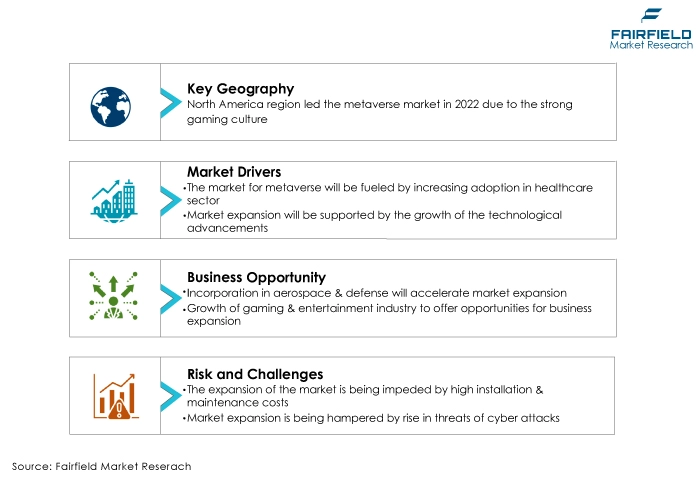
- Increasing Adoption in Healthcare Sector
Metaverse offers innovative solutions for medical training and education, allowing healthcare professionals to simulate complex surgical procedures, train in realistic virtual environments, and enhance their skills without real-world risks. Additionally, the metaverse supports data visualisation and analysis, aiding researchers and medical practitioners in understanding complex medical data and accelerating drug discovery processes.
Virtual support groups, and therapeutic environments in the metaverse are providing mental health benefits, offering a safe space for individuals to seek support and treatment for various mental health conditions. These factors collectively contribute to the metaverse's growing importance in the healthcare sector.
- Rapid Technological Advancements
AR and VR technologies provide immersive and interactive experiences, enabling users to engage with digital environments in a highly realistic manner. Blockchain plays a pivotal role in securing digital assets, establishing ownership, and enabling transactions within the Metaverse.
Moreover, AI-driven algorithms enhance user experiences by enabling natural language processing, facial recognition, and personalised content recommendations. These technologies create a more dynamic and responsive metaverse catering to individual preferences and behaviors. Overall, technological advancements drive innovation and expand the possibilities of the Metaverse, making it a compelling and increasingly integral part of our digital lives.
- Revolutionising Remote Work and Collaboration
As businesses increasingly adopt virtual work environments, the metaverse offers a compelling solution. It provides a seamless, immersive digital realm where individuals can work, interact, and collaborate regardless of physical location.
The metaverse not only enhances productivity but also fosters creativity and innovation by breaking down geographical barriers. As organisations continue to embrace remote work as a long-term strategy, the metaverse's role in transforming the way we work and collaborate is set to expand further.
Major Growth Barriers
- High Installation and Maintenance Costs of Components
Building and maintaining the infrastructure required for a metaverse, including servers, VR/AR devices, and advanced networking equipment, demands substantial financial resources. These costs can be a barrier for both businesses and individuals looking to participate in the Metaverse, limiting its widespread adoption and growth potential.
- Rising Threats of Cyber Attacks
As the metaverse ecosystem evolves, it incorporates numerous interconnected components and platforms, making it an attractive target for malicious actors. These cyber-attacks can lead to data breaches, identity theft, and financial losses for users and businesses within the metaverse.
The need for cybersecurity measures to protect against these threats adds complexity and cost to metaverse development, potentially slowing down its growth and adoption. Addressing these security concerns is crucial for ensuring the long-term viability of the metaverse.
Key Trends and Opportunities to Look at
Metaverse was increasingly incorporated into aerospace & defence. It enables immersive, realistic scenarios for training pilots and soldiers, enhancing preparedness and reducing costs. Additionally, metaverse applications can enhance situational awareness and coordination during missions, contributing to improved operational effectiveness in these critical sectors.
- Growth of Gaming & Entertainment Industry
- Rising Opportunities for Digital Businesses
The increasing demand for immersive and interactive digital experiences is creating a strong market for virtual worlds, virtual reality, and augmented reality technologies. As consumers seek more engaging forms of entertainment, the Metaverse offers a compelling solution, driving innovation and investment in this burgeoning sector.
As the virtual landscape expands, businesses can tap into new revenue streams by creating and selling virtual goods and services, advertising within virtual spaces, and offering immersive customer experiences. This growth is fueled by the growing user base and the demand for novel digital experiences, presenting businesses with unprecedented opportunities to thrive in this emerging digital frontier.
How Does the Regulatory Scenario Shape this Industry?
Over the past years, as technology rapidly evolves, governments worldwide are grappling with the need to make a balance between encouraging innovation and safeguarding public interests. These platforms collect vast amounts of personal data, raising concerns about data security and potential misuse. Governments are implementing or revising data privacy laws to ensure that metaverse companies adhere to strict data handling and protection standards.
Regulatory bodies are working on frameworks to address these concerns and protect the intellectual property of creators and developers within the metaverse. Additionally, virtual economies and currencies within the metaverse have caught the attention of financial regulators. The need for transparency, taxation, and prevention of illicit activities has led to discussions on regulating virtual assets and cryptocurrencies used within the metaverse.
Striking the right balance between innovation and protection is essential to foster a thriving and secure metaverse ecosystem. As the industry continues to evolve, collaboration between governments, industry stakeholders, and users will be vital in shaping its future.
Fairfield’s Ranking Board
Top Segments
The hardware segment dominated the market in 2022. These components are the physical infrastructure that enables users to access and connect with the metaverse. It includes powerful computers, augmented and virtual reality headsets, haptic feedback devices, and high-speed internet connections. The demand for advanced hardware is expected to surge as the metaverse evolves, as users seek higher-quality graphics and seamless connectivity.
Furthermore, the software category is projected to experience the fastest market growth. It includes 3D modeling software, game engines, virtual world creation tools, and social networking platforms that facilitate user interaction within the metaverse. As the metaverse expands, the software segment will witness continuous innovation driven by the need for realistic simulations, AI-driven experiences, and social interactions.
- AR/VR to Surge Ahead Through 2030
- The Gaming Segment Takes the Charge
- Media & Entertainment Category Leads the Way
In 2022, the virtual reality and augmented reality category dominated the industry. VR offers opportunities for social interactions, gaming, education, and virtual workplaces within the metaverse, enabling users to engage in experiences that transcend physical boundaries. AR enables users to access digital content while remaining connected to the physical world, making it valuable for education, retail, and entertainment applications within the metaverse.
The mixed reality category is anticipated to grow substantially throughout the projected period. It combines elements of both VR and AR, blending the digital and physical worlds seamlessly. MR is poised to provide a transformative metaverse experience, offering applications in gaming, remote collaboration, training, and more, where digital and physical elements coexist.
The gaming segment dominated the market in 2022. Gamers can explore vast digital landscapes, engage in competitive gameplay, and create their in-game assets, contributing to the growing virtual economy. In the metaverse, game developers have the opportunity to create innovative, cross-platform experiences that transcend traditional boundaries, attracting a diverse and global player base.
The content creation and social media category is expected to experience the fastest growth within the forecast time frame. Users can build and customise their virtual spaces, host events, and engage with others through avatars, fostering a sense of community. Social media platforms integrated into the metaverse enable users to connect, share content, and communicate in novel ways.
In 2022, the media & entertainment category led the market growth. Content creation and distribution within the metaverse have opened new revenue streams, such as virtual real estate, digital fashion, and NFT-based art. Companies in this sector are heavily investing in metaverse technologies to redefine how consumers consume and engage with the content.
Moreover, the BFSI category is expected to grow fastest in the metaverse market during the forecast period. Virtual banks, financial advisors, and insurance companies are using the metaverse to offer personalised services, conduct virtual meetings, and simulate real-life financial scenarios. Furthermore, the metaverse can be a valuable tool for training employees in financial institutions, creating realistic simulations of financial markets and customer interactions.
Regional Frontrunners
North America at the Forefront in Global Market
In the communication industries, metaverse adoption is anticipated to dominate in the North American region. The advanced technology adoption and strong gaming culture helped drive market expansion in the area. North America's diverse user base, encompassing both gamers and non-gamers, offers a vast audience for metaverse experiences, from social interactions to virtual commerce.
Regulatory frameworks and privacy concerns also play a significant role in shaping the market landscape as discussions around data ownership and user protection continue. Overall, North America remains a key driver of the global metaverse market, influencing its trajectory and setting the stage for future developments.
China, and South Korea Spearheas Asia Pacific’s Growing Attractiveness
The technologically adept population and rapidly growing internet penetration are driving expansion in the Asia Pacific metaverse market. China, in particular, boasts a robust metaverse ecosystem driven by major tech giants. The Chinese government's supportive policies and investments in VR technologies further fuel this growth.
South Korea, with its advanced gaming industry and tech-savvy populace, is also a significant contributor. The Asia Pacific region's dynamic digital landscape and innovative tech culture position it as a critical hub for metaverse evolution, presenting ample opportunities for businesses and investors alike.
Fairfield’s Competitive Landscape Analysis
The global metaverse market is a consolidated market with different major players present across the globe. The companies are investing heavily in metaverse development, virtual reality, and augmented reality technologies. They are competing to create immersive digital environments, social experiences, and digital economies. Additionally, companies are driving innovation and fostering a dynamic competitive landscape.
Key Market Companies
• Alibaba Group Holding Limited
• ByteDance Ltd
• Facebook, Inc.
• Huawei Technologies Co. Ltd.
• Nextech AR Solutions Inc.
• NVIDIA Corporation
• Roblox Corporation
• Shenzhen Zqgame Co., Ltd
• Tencent
• Unity Technologies
Market Segmentation
By Component:
- Hardware
- Software
- Service
By Technology:
- Blockchain
- Virtual Reality and Augmented Reality
- Mixed Reality
- Others
By Application:
- Gaming
- Online Shopping
- Content Creation and Social Media
- Events and Conference
- Digital Marketing
- Testing and Inspection
- Others
By Industry Vertical:
- BFSI
- Retail
- Media and Entertainment
- Education
- Aerospace and Defence
- Automotive
- Others
By Region
- North America
- Europe
- Asia-Pacific
- Latin America
- Middle East & Africa
- Executive Summary
- Global Metaverse Market Snapshot
- Future Projections
- Key Market Trends
- Regional Snapshot, by Value, 2026
- Analyst Recommendations
- Market Overview
- Market Definitions and Segmentations
- Market Dynamics
- Drivers
- Restraints
- Market Opportunities
- Value Chain Analysis
- COVID-19 Impact Analysis
- Porter's Five Forces Analysis
- Impact of Russia-Ukraine Conflict
- PESTLE Analysis
- Regulatory Analysis
- Price Trend Analysis
- Current Prices and Future Projections, 2025-2033
- Price Impact Factors
- Global Metaverse Market Outlook, 2020 - 2033
- Global Metaverse Market Outlook, by Component, Value (US$ Bn), 2020-2033
- Hardware
- Software
- Service
- Global Metaverse Market Outlook, by Technology, Value (US$ Bn), 2020-2033
- Blockchain
- Virtual Reality and Augmented Reality
- Mixed Reality
- Global Metaverse Market Outlook, by Application, Value (US$ Bn), 2020-2033
- Gaming
- Online Shopping
- Content Creation and Social Media
- Events and Conference
- Digital Marketing
- Testing and Inspection
- Others
- Global Metaverse Market Outlook, by Industry Vertical, Value (US$ Bn), 2020-2033
- BFSI
- Retail
- Media and Entertainment
- Education
- Aerospace and Defence
- Automotive
- Others
- Global Metaverse Market Outlook, by Region, Value (US$ Bn), 2020-2033
- North America
- Europe
- Asia Pacific
- Latin America
- Middle East & Africa
- Global Metaverse Market Outlook, by Component, Value (US$ Bn), 2020-2033
- North America Metaverse Market Outlook, 2020 - 2033
- North America Metaverse Market Outlook, by Component, Value (US$ Bn), 2020-2033
- Hardware
- Software
- Service
- North America Metaverse Market Outlook, by Technology, Value (US$ Bn), 2020-2033
- Blockchain
- Virtual Reality and Augmented Reality
- Mixed Reality
- North America Metaverse Market Outlook, by Application, Value (US$ Bn), 2020-2033
- Gaming
- Online Shopping
- Content Creation and Social Media
- Events and Conference
- Digital Marketing
- Testing and Inspection
- Others
- North America Metaverse Market Outlook, by Industry Vertical, Value (US$ Bn), 2020-2033
- BFSI
- Retail
- Media and Entertainment
- Education
- Aerospace and Defence
- Automotive
- Others
- North America Metaverse Market Outlook, by Country, Value (US$ Bn), 2020-2033
- U.S. Metaverse Market Outlook, by Component, 2020-2033
- U.S. Metaverse Market Outlook, by Technology, 2020-2033
- U.S. Metaverse Market Outlook, by Application, 2020-2033
- U.S. Metaverse Market Outlook, by Industry Vertical, 2020-2033
- Canada Metaverse Market Outlook, by Component, 2020-2033
- Canada Metaverse Market Outlook, by Technology, 2020-2033
- Canada Metaverse Market Outlook, by Application, 2020-2033
- Canada Metaverse Market Outlook, by Industry Vertical, 2020-2033
- BPS Analysis/Market Attractiveness Analysis
- North America Metaverse Market Outlook, by Component, Value (US$ Bn), 2020-2033
- Europe Metaverse Market Outlook, 2020 - 2033
- Europe Metaverse Market Outlook, by Component, Value (US$ Bn), 2020-2033
- Hardware
- Software
- Service
- Europe Metaverse Market Outlook, by Technology, Value (US$ Bn), 2020-2033
- Blockchain
- Virtual Reality and Augmented Reality
- Mixed Reality
- Europe Metaverse Market Outlook, by Application, Value (US$ Bn), 2020-2033
- Gaming
- Online Shopping
- Content Creation and Social Media
- Events and Conference
- Digital Marketing
- Testing and Inspection
- Others
- Europe Metaverse Market Outlook, by Industry Vertical, Value (US$ Bn), 2020-2033
- BFSI
- Retail
- Media and Entertainment
- Education
- Aerospace and Defence
- Automotive
- Others
- Europe Metaverse Market Outlook, by Country, Value (US$ Bn), 2020-2033
- Germany Metaverse Market Outlook, by Component, 2020-2033
- Germany Metaverse Market Outlook, by Technology, 2020-2033
- Germany Metaverse Market Outlook, by Application, 2020-2033
- Germany Metaverse Market Outlook, by Industry Vertical, 2020-2033
- Italy Metaverse Market Outlook, by Component, 2020-2033
- Italy Metaverse Market Outlook, by Technology, 2020-2033
- Italy Metaverse Market Outlook, by Application, 2020-2033
- Italy Metaverse Market Outlook, by Industry Vertical, 2020-2033
- France Metaverse Market Outlook, by Component, 2020-2033
- France Metaverse Market Outlook, by Technology, 2020-2033
- France Metaverse Market Outlook, by Application, 2020-2033
- France Metaverse Market Outlook, by Industry Vertical, 2020-2033
- U.K. Metaverse Market Outlook, by Component, 2020-2033
- U.K. Metaverse Market Outlook, by Technology, 2020-2033
- U.K. Metaverse Market Outlook, by Application, 2020-2033
- U.K. Metaverse Market Outlook, by Industry Vertical, 2020-2033
- Spain Metaverse Market Outlook, by Component, 2020-2033
- Spain Metaverse Market Outlook, by Technology, 2020-2033
- Spain Metaverse Market Outlook, by Application, 2020-2033
- Spain Metaverse Market Outlook, by Industry Vertical, 2020-2033
- Russia Metaverse Market Outlook, by Component, 2020-2033
- Russia Metaverse Market Outlook, by Technology, 2020-2033
- Russia Metaverse Market Outlook, by Application, 2020-2033
- Russia Metaverse Market Outlook, by Industry Vertical, 2020-2033
- Rest of Europe Metaverse Market Outlook, by Component, 2020-2033
- Rest of Europe Metaverse Market Outlook, by Technology, 2020-2033
- Rest of Europe Metaverse Market Outlook, by Application, 2020-2033
- Rest of Europe Metaverse Market Outlook, by Industry Vertical, 2020-2033
- BPS Analysis/Market Attractiveness Analysis
- Europe Metaverse Market Outlook, by Component, Value (US$ Bn), 2020-2033
- Asia Pacific Metaverse Market Outlook, 2020 - 2033
- Asia Pacific Metaverse Market Outlook, by Component, Value (US$ Bn), 2020-2033
- Hardware
- Software
- Service
- Asia Pacific Metaverse Market Outlook, by Technology, Value (US$ Bn), 2020-2033
- Blockchain
- Virtual Reality and Augmented Reality
- Mixed Reality
- Asia Pacific Metaverse Market Outlook, by Application, Value (US$ Bn), 2020-2033
- Gaming
- Online Shopping
- Content Creation and Social Media
- Events and Conference
- Digital Marketing
- Testing and Inspection
- Others
- Asia Pacific Metaverse Market Outlook, by Industry Vertical, Value (US$ Bn), 2020-2033
- BFSI
- Retail
- Media and Entertainment
- Education
- Aerospace and Defence
- Automotive
- Others
- Asia Pacific Metaverse Market Outlook, by Country, Value (US$ Bn), 2020-2033
- China Metaverse Market Outlook, by Component, 2020-2033
- China Metaverse Market Outlook, by Technology, 2020-2033
- China Metaverse Market Outlook, by Application, 2020-2033
- China Metaverse Market Outlook, by Industry Vertical, 2020-2033
- Japan Metaverse Market Outlook, by Component, 2020-2033
- Japan Metaverse Market Outlook, by Technology, 2020-2033
- Japan Metaverse Market Outlook, by Application, 2020-2033
- Japan Metaverse Market Outlook, by Industry Vertical, 2020-2033
- South Korea Metaverse Market Outlook, by Component, 2020-2033
- South Korea Metaverse Market Outlook, by Technology, 2020-2033
- South Korea Metaverse Market Outlook, by Application, 2020-2033
- South Korea Metaverse Market Outlook, by Industry Vertical, 2020-2033
- India Metaverse Market Outlook, by Component, 2020-2033
- India Metaverse Market Outlook, by Technology, 2020-2033
- India Metaverse Market Outlook, by Application, 2020-2033
- India Metaverse Market Outlook, by Industry Vertical, 2020-2033
- Southeast Asia Metaverse Market Outlook, by Component, 2020-2033
- Southeast Asia Metaverse Market Outlook, by Technology, 2020-2033
- Southeast Asia Metaverse Market Outlook, by Application, 2020-2033
- Southeast Asia Metaverse Market Outlook, by Industry Vertical, 2020-2033
- Rest of SAO Metaverse Market Outlook, by Component, 2020-2033
- Rest of SAO Metaverse Market Outlook, by Technology, 2020-2033
- Rest of SAO Metaverse Market Outlook, by Application, 2020-2033
- Rest of SAO Metaverse Market Outlook, by Industry Vertical, 2020-2033
- BPS Analysis/Market Attractiveness Analysis
- Asia Pacific Metaverse Market Outlook, by Component, Value (US$ Bn), 2020-2033
- Latin America Metaverse Market Outlook, 2020 - 2033
- Latin America Metaverse Market Outlook, by Component, Value (US$ Bn), 2020-2033
- Hardware
- Software
- Service
- Latin America Metaverse Market Outlook, by Technology, Value (US$ Bn), 2020-2033
- Blockchain
- Virtual Reality and Augmented Reality
- Mixed Reality
- Latin America Metaverse Market Outlook, by Application, Value (US$ Bn), 2020-2033
- Gaming
- Online Shopping
- Content Creation and Social Media
- Events and Conference
- Digital Marketing
- Testing and Inspection
- Others
- Latin America Metaverse Market Outlook, by Industry Vertical, Value (US$ Bn), 2020-2033
- BFSI
- Retail
- Media and Entertainment
- Education
- Aerospace and Defence
- Automotive
- Others
- Latin America Metaverse Market Outlook, by Country, Value (US$ Bn), 2020-2033
- Brazil Metaverse Market Outlook, by Component, 2020-2033
- Brazil Metaverse Market Outlook, by Technology, 2020-2033
- Brazil Metaverse Market Outlook, by Application, 2020-2033
- Brazil Metaverse Market Outlook, by Industry Vertical, 2020-2033
- Mexico Metaverse Market Outlook, by Component, 2020-2033
- Mexico Metaverse Market Outlook, by Technology, 2020-2033
- Mexico Metaverse Market Outlook, by Application, 2020-2033
- Mexico Metaverse Market Outlook, by Industry Vertical, 2020-2033
- Argentina Metaverse Market Outlook, by Component, 2020-2033
- Argentina Metaverse Market Outlook, by Technology, 2020-2033
- Argentina Metaverse Market Outlook, by Application, 2020-2033
- Argentina Metaverse Market Outlook, by Industry Vertical, 2020-2033
- Rest of LATAM Metaverse Market Outlook, by Component, 2020-2033
- Rest of LATAM Metaverse Market Outlook, by Technology, 2020-2033
- Rest of LATAM Metaverse Market Outlook, by Application, 2020-2033
- Rest of LATAM Metaverse Market Outlook, by Industry Vertical, 2020-2033
- BPS Analysis/Market Attractiveness Analysis
- Latin America Metaverse Market Outlook, by Component, Value (US$ Bn), 2020-2033
- Middle East & Africa Metaverse Market Outlook, 2020 - 2033
- Middle East & Africa Metaverse Market Outlook, by Component, Value (US$ Bn), 2020-2033
- Hardware
- Software
- Service
- Middle East & Africa Metaverse Market Outlook, by Technology, Value (US$ Bn), 2020-2033
- Blockchain
- Virtual Reality and Augmented Reality
- Mixed Reality
- Middle East & Africa Metaverse Market Outlook, by Application, Value (US$ Bn), 2020-2033
- Gaming
- Online Shopping
- Content Creation and Social Media
- Events and Conference
- Digital Marketing
- Testing and Inspection
- Others
- Middle East & Africa Metaverse Market Outlook, by Industry Vertical, Value (US$ Bn), 2020-2033
- BFSI
- Retail
- Media and Entertainment
- Education
- Aerospace and Defence
- Automotive
- Others
- Middle East & Africa Metaverse Market Outlook, by Country, Value (US$ Bn), 2020-2033
- GCC Metaverse Market Outlook, by Component, 2020-2033
- GCC Metaverse Market Outlook, by Technology, 2020-2033
- GCC Metaverse Market Outlook, by Application, 2020-2033
- GCC Metaverse Market Outlook, by Industry Vertical, 2020-2033
- South Africa Metaverse Market Outlook, by Component, 2020-2033
- South Africa Metaverse Market Outlook, by Technology, 2020-2033
- South Africa Metaverse Market Outlook, by Application, 2020-2033
- South Africa Metaverse Market Outlook, by Industry Vertical, 2020-2033
- Egypt Metaverse Market Outlook, by Component, 2020-2033
- Egypt Metaverse Market Outlook, by Technology, 2020-2033
- Egypt Metaverse Market Outlook, by Application, 2020-2033
- Egypt Metaverse Market Outlook, by Industry Vertical, 2020-2033
- Nigeria Metaverse Market Outlook, by Component, 2020-2033
- Nigeria Metaverse Market Outlook, by Technology, 2020-2033
- Nigeria Metaverse Market Outlook, by Application, 2020-2033
- Nigeria Metaverse Market Outlook, by Industry Vertical, 2020-2033
- Rest of Middle East Metaverse Market Outlook, by Component, 2020-2033
- Rest of Middle East Metaverse Market Outlook, by Technology, 2020-2033
- Rest of Middle East Metaverse Market Outlook, by Application, 2020-2033
- Rest of Middle East Metaverse Market Outlook, by Industry Vertical, 2020-2033
- BPS Analysis/Market Attractiveness Analysis
- Middle East & Africa Metaverse Market Outlook, by Component, Value (US$ Bn), 2020-2033
- Competitive Landscape
- Company Vs Segment Heatmap
- Company Market Share Analysis, 2025
- Competitive Dashboard
- Company Profiles
- Alibaba Group Holding Limited
- Company Overview
- Product Portfolio
- Financial Overview
- Business Strategies and Developments
- ByteDance Ltd
- Facebook, Inc.
- Huawei Technologies Co. Ltd.
- Nextech AR Solutions Inc.
- NVIDIA Corporation
- Roblox Corporation
- Shenzhen Zqgame Co., Ltd
- Tencent
- Unity Technologies
- Alibaba Group Holding Limited
- Appendix
- Research Methodology
- Report Assumptions
- Acronyms and Abbreviations
|
BASE YEAR |
HISTORICAL DATA |
FORECAST PERIOD |
UNITS |
|||
 |
2025 |
 |
2020 - 2025 |
 |
2026 - 2033 |
Value: US$ Million |
Our Research Methodology
Considering the volatility of business today, traditional approaches to strategizing a game plan can be unfruitful if not detrimental. True ambiguity is no way to determine a forecast. A myriad of predetermined factors must be accounted for such as the degree of risk involved, the magnitude of circumstances, as well as conditions or consequences that are not known or unpredictable. To circumvent binary views that cast uncertainty, the application of market research intelligence to strategically posture, move, and enable actionable outcomes is necessary.
View Methodology
Quality Assured
Rigorous Validation Process

Confidentiality Assured
End-to-end Data Security

Custom Research Services
Tailored To Your Objectives
FAQs
The Metaverse Market is expected to be valued at USD 128.3 Billion in 2026.
The market is projected to reach USD 1545.9 Billion by 2033, expanding at a strong CAGR of 42.7% during the forecast period (2026–2033).
Growth is fueled by rising adoption of immersive digital experiences, increasing investments in virtual and augmented reality technologies, expansion of digital economies, growing use of metaverse platforms in gaming, retail, and enterprise collaboration, and advancements in AI and blockchain integration.
North America is expected to dominate the market due to strong technological infrastructure, early adoption of immersive technologies, and heavy investments from leading tech companies in metaverse ecosystems.
Key players include major technology companies and platform developers such as Meta Platforms, Microsoft, NVIDIA, Roblox Corporation, and other global AR/VR and immersive technology providers.
Related Reports
Open Network Testing and Certification Market
Open Network Testing and Certification Market reaches USD 1,787.05 Million by 2033, growing at 14.8% CAGR from USD 680 Million in 2026.
Graphene Infrared Imaging Sensors Market
Graphene Infrared Imaging Sensors Market is valued at USD 320.00 million in 2026 and projected to reach USD 1,050.35 million by 2033, at 18.5% CAGR.
DevSecOps Orchestration Market
DevSecOps Orchestration Market is valued at USD 2.10 Billion in 2026 and projected to reach USD 7.52 Billion by 2033, growing at a 20.0% CAGR.
CI/CD Pipeline Security Market
CI/CD Pipeline Security Market is valued at USD 1.45 Billion in 2026 and projected to reach USD 5.14 Billion by 2033, growing at a 19.8% CAGR.
Power Quality Meter Insights, Competitive Landscape, and Market Forecast - 2033
Power Quality Meter Market is valued at USD 1.45 Billion in 2026 and projected to reach USD 2.39 Billion by 2033, growing at a 7.4% CAGR.
Rich Communication Services Market Insights, Competitive Landscape, and Market Forecast - 2033
Rich Communication Services (RCS) Market to reach USD 36.19 Bn by 2033, growing at 19.5% CAGR from USD 10.40 Bn in 2026 as adoption rises rapidly worldwide