



Punnet Packaging Market
Global Punnet Packaging Industry Analysis, Size, Share, Growth, Trends, and Forecast 2026-2033 – (By Category, By Product Material, By Product, By Geographic Coverage and By Company)
Global Punnet Packaging Market: Strategic Analysis 2026-2033
Executive Summary & Key Highlights
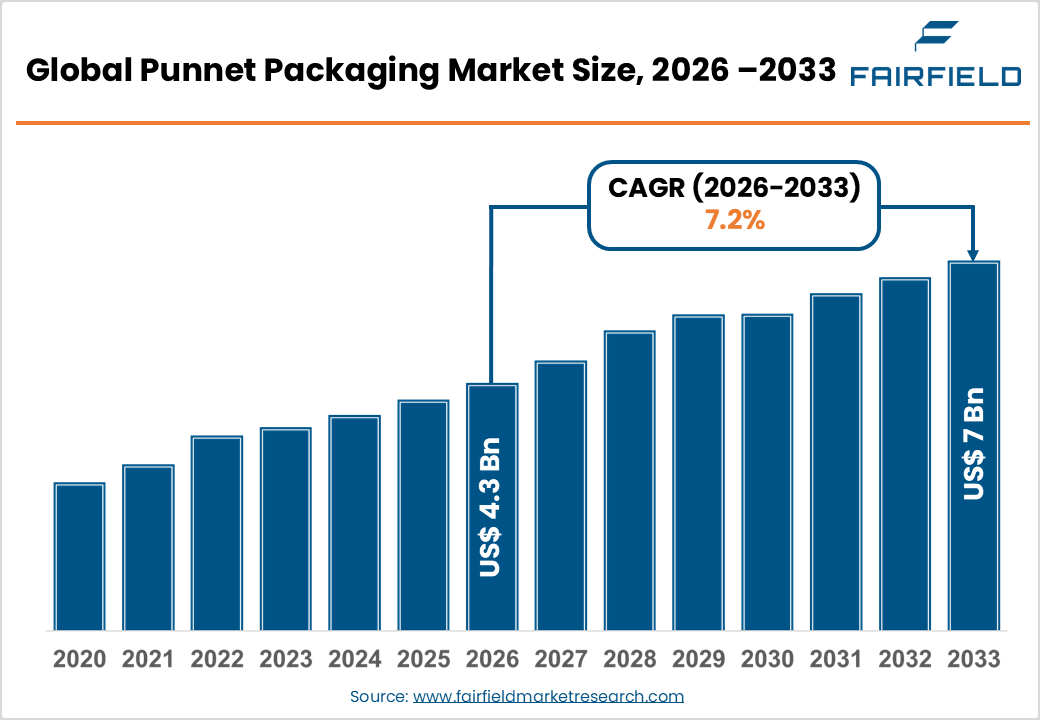
- The global Punnet Packaging Market reached approximately US$4.3 billion in 2026 and is projected to US$7 billion by 2033 at a 7.2% CAGR, signaling sustained demand from fresh produce sectors amid sustainability pressures.
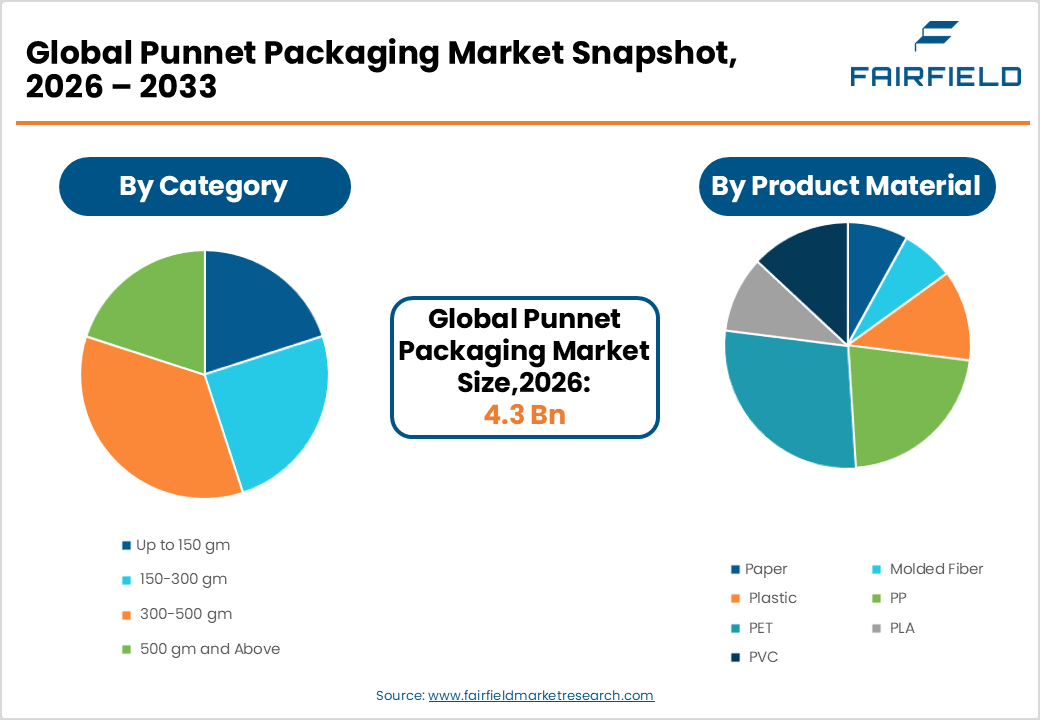
- By capacity, the 300-500 gm segment leads with 32% share, valued at ~US$1.38 billion in 2026, while 150-300 gm emerges as the fastest-growing due to retail multipack trends.
- Plastic materials dominate at 58% market share driven by cost efficiency; molded fiber gains traction as the fastest-growing alternative amid eco-regulations.
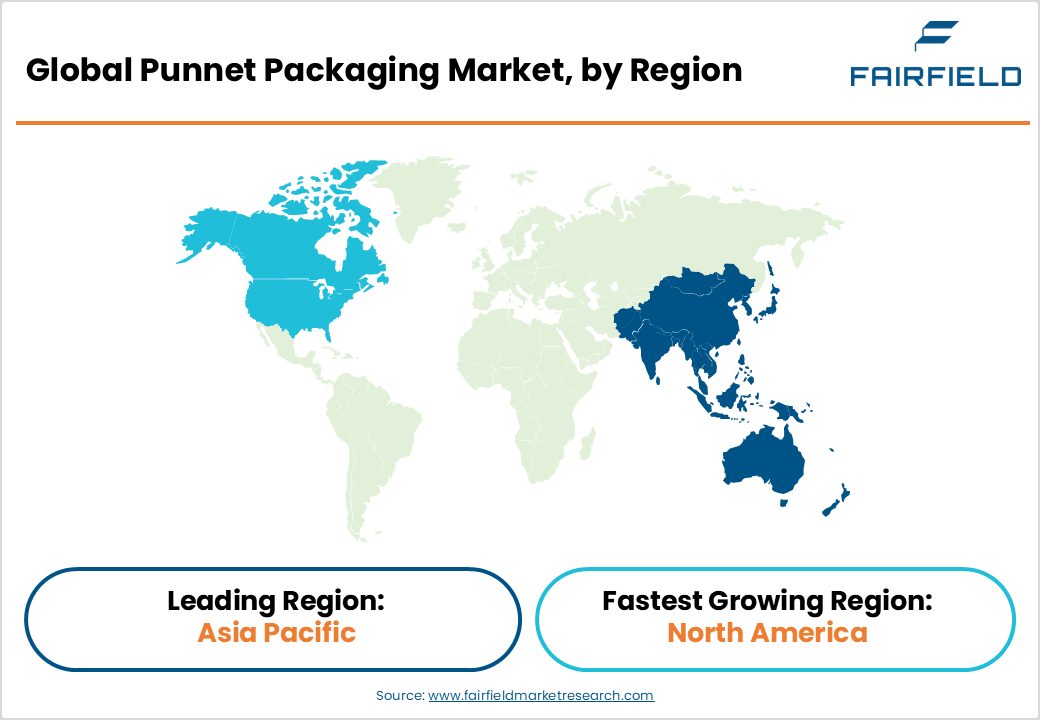
- Asia-Pacific commands ~40% global share by 2033 ,led by China's demand dominance and India's rapid urbanization; North America holds maturity at ~17%.
- Regulatory pushes for recyclables, like EU single-use plastic directives, shape 20%+ of growth, alongside e-commerce produce packaging needs.
- Key risks include plastic bans suppressing 10-15% potential expansion; opportunities in biodegradable shifts offer 5-7% CAGR uplift for agile players.
Market Dynamics
Market Drivers
- Rising Fresh Produce Demand
Rising Fresh Produce Demand drives punnet adoption as global fruit and vegetable consumption grew 4.5% yearly , necessitating protective packaging during transport. This fuels expansion through ventilated designs optimized for berries and tomatoes, contributing 25% to segment growth through 2033. The dynamic particularly impacts 300-500 gm capacities favored by retailers for shelf stacking. Organizations leveraging supply chain efficiencies achieve 10-15% margin gains, positioning them ahead in high-volume produce channels. However, sustainability dependencies tied to resin shortages require ongoing monitoring, as material constraints could moderate growth trajectory by 2-3 percentage points in scenario models. This driver underscores strategic focus on scalable ventilation technologies aligned with trade volume increases.
- E-commerce and Retail Expansion
E-commerce and Retail Expansion accelerates punnet demand, with online grocery sales surging 18% in 2025 and driving lightweight designs suited for last-mile delivery. This mechanism boosts volumes in 150-500 gm capacities by 6-8%, particularly in Asia-Pacific where urban retail dominates, adding 15 percentage points to regional CAGR . Stackable formats enable efficient store logistics, securing competitive edges for early adopters. Sustainability Regulations complement this through policies like EU Directive 2019/904, which cut single-use plastics and spur molded fiber uptake at 9% CAGR, linking to a 20% market shift. Compliant players gain differentiation via paper/plastic hybrids in Europe, though enforcement risks and logistics costs warrant balanced investment strategies.
Market Restraints
- Plastic Regulation Constraints
Plastic bans, particularly under EU frameworks, constrain traditional punnet designs by curbing virgin plastic availability, directly suppressing 10-12% of projected growth across plastic-heavy segments like 300-500 gm capacities. Compliance costs have risen 15% as reported in EU regulatory data (2025), forcing manufacturers to re-engineer ventilation systems critical for produce shelf life. While R&D investments deliver 5% gains in alternative material adoption rates, full-scale transitions remain hindered by molding technology limitations and supply chain reconfiguration needs. Market participants must balance regulatory adherence with performance requirements, as non-compliant designs risk 20-25% revenue exposure in Europe. Strategic mitigation centers on hybrid materials, though execution timelines extend 18-24 months.
- Raw Material Volatility
Raw material volatility compounds restraints, with resin prices fluctuating 12% in 2025, elevating production costs by 8-10% specifically for plastic punnets reliant on PS, PP, and PET. Supply chain disruptions impacted 20% of global producers, particularly those dependent on Asia-sourced feedstocks, compressing margins in high-volume categories. Hedging strategies and localization efforts mitigate ~40% of price swings for larger players, but small-to-mid-sized firms remain vulnerable, facing 15% higher input costs without scale advantages. This dynamic disproportionately affects price-sensitive retail channels, where punnet pricing tolerance sits at 5-7% variance. Firms prioritizing dual-sourcing and forward contracts achieve greater stability, though broader petrochemical market dependencies persist through 2028 projections.
Market Opportunities
- Biodegradable Material Shift
The molded fiber opportunity materializes through an addressable market valued at US$1 billion by 2033, directly appealing to eco-retailers amid tightening plastic regulations. Surveys document 25% preference for biodegradable packaging, particularly influencing premium fresh produce channels where environmental credentials command 5-10% price premiums. Europe and Asia demonstrate strongest uptake potential at 7% CAGR, aligned with policy incentives for pulp-based alternatives, though achieving cost parity with incumbent plastics remains the critical execution threshold current differentials persist at 15-20%. Market participants with established pulp supply chains and molding expertise position advantageously, while technology laggards risk commoditization exposure. Strategic validation through retailer pilots validates scalability before capital commitments.
- Emerging Market Urbanization
India's structural urbanization propels punnet demand at 10% annual growth through, generating acute undersupply within 150-300 gm capacities optimized for e-commerce platforms and urban convenience retail. FSSAI food safety standards provide regulatory clarity for ventilated designs accommodating tropical produce, lowering compliance barriers relative to mature markets. However, pervasive market fragmentation characterized by 200+ regional converters privileges multinational entrants possessing localized sourcing networks and scale economies, enabling 12-15% faster capacity deployment. Local partnerships mitigate distribution bottlenecks while customized molds address climate-specific ventilation requirements for grapes and salads. Organizations targeting India must balance regulatory alignment advantages against competitive intensity, prioritizing supply chain localization to capture structural consumption shifts projected to add US$150-200 million in addressable volume by 2030. Execution success correlates with pre-existing APAC footprints.
Regional Market Assessment: Strategic Geography
- North America Regional Market Assessment
The North American market exhibits structural maturity led by the U.S., valued at approximately US$0.73 billion in 2026 representing ~17% of global consumption, with sustained 5% CAGR trajectory through 2033 driven by premium produce packaging. U.S. market leadership at 90% regional share stems from advanced retail infrastructure (Walmart, Kroger), where FDA food contact standards anchor compliance requirements alongside 2028 recyclables mandates. California’s innovation ecosystem accelerates molded fiber technologies, supporting 10% organic produce growth, though elevated labor costs constrain export competitiveness against Asia pricing. Canada contributes balanced 4% growth through Loblaws/Sobeys expansion. Multinationals command 70% market positioning via scale advantages, with recent M&A activity in eco-materials signaling sustained investment attractiveness despite import pressures. Strategic participants balance premium pricing power against consolidation dynamics requiring differentiated sustainability credentials for shelf differentiation.
- Europe Regional Market Assessment
The European market demonstrates significant geographic differentiation, projecting over US$0.9 billion by 2033 representing approximately 13% of global consumption, with Germany commanding 20-25% regional value at 6% CAGR and the UK securing 15-20% at 5% sustained growth. EU Packaging and Packaging Waste Regulation mandates 30% recyclables content, fundamentally reshaping competitive dynamics through molded fiber proliferation and driving 15% adoption rates across compliant produce channels. Sustainability imperatives concentrate investments in circular economy frameworks supported by EU Horizon funding (2025), while Spain registers 7% accelerated growth from citrus export packaging. Competitive fragmentation privileges local converters in paper-based solutions, though multinationals maintain dominance in plastic categories through scale advantages. Annual M&A activity consolidates approximately 10% market share yearly, signaling structural maturation. Strategic expansion necessitates granular country-level regulatory and competitive positioning analysis to navigate divergent national implementation trajectories.
- Asia-Pacific Regional Market Assessment
The Asia-Pacific region commands dominant positioning, projecting over US$1.2 billion by 2033 representing approximately 40% of global consumption while sustaining 8% CAGR through structural demand expansion. China contributes 35-45% of regional value through established manufacturing scale, contrasted by India's 10% accelerated growth trajectory driven by rapid urbanization affecting 15% of consumption increases. Japan maintains mature 4% expansion, while ASEAN markets contribute through integrated supply chain positioning. Regulatory frameworks including FSSAI standards in India and CIQ certifications in China facilitate compliant scale-up, though fragmented competitive structures persist with local firms controlling 60% market presence. Global multinationals pursue entry primarily through joint ventures, supported by infrastructure developments such as India's cold chain investments which elevate M&A activity by 20% annually. E-commerce penetration at 12% in China and urbanization dynamics in India constitute primary growth catalysts, necessitating localized strategic adaptation across sub-regional profiles.
Segmentation Analysis
- Capacity Segmentation
The 300-500 gm category maintains 32% global market share valued at approximately US$1.38 billion in 2026, anchored by retailer demand for bulk promotional configurations optimized for high-volume produce displays. This leadership reflects 5% sustained volume growth across major chains, superior scale economies, and margin advantages favoring reinforced, stackable designs with ventilation systems extending berry and tomato shelf life by 2-3 days. Leading converters prioritize transport-efficient durability for supermarket channels. Conversely, the 150-300 gm segment holds ~25% share but expands at >8% CAGR, outpacing market growth through e-commerce multipacks and urban convenience trends . Firms targeting this high-growth area must assess molding technology barriers and supply chain costs, as first-mover advantages favor established material specialists with existing capabilities.
- Product Material Segmentation
Plastic dominates the material segment at 58% market share, valued at approximately US$2.49 billion in 2026, with polypropylene (PP) and polyethylene terephthalate (PET) leading due to superior cost structures and barrier properties delivering 4-6% gains in produce protection efficiency . Multinational converters leverage vertical integration for supply chain control, prioritizing moisture-resistant formulations optimized for high-volume berry and salad applications across global retail channels. While, molded fiber captures approximately 15% share but demonstrates superior growth at 9% CAGR, materially outpacing plastic incumbents through regulatory alignment and 20% consumer recyclability preference . This trajectory positions fiber alternatives advantageously within eco-conscious segments, though market participants must carefully evaluate pulp sourcing cost volatility and production scale limitations. Strategic repositioning toward sustainable materials requires balancing regulatory compliance advantages against execution risks in moisture management performance.
Competitive Landscape
The global Punnet Packaging market demonstrates moderate consolidation characterized by the top 5 competitors collectively controlling approximately 40% market share, reflecting structural maturation within a fragmented converter landscape. Competitive differentiation manifests across cost-optimized plastic segments favoring polypropylene (PP) and polyethylene terephthalate (PET) formulations versus premium molded fiber innovation targeting regulatory compliance. Significant entry barriers persist through capital expenditure requirements ranging from US$50-100 million for advanced molding lines and EU regulatory compliance frameworks including REACH and PPWR recyclables mandates. Mergers and acquisitions activity accelerated 15% following 2023, primarily driven by sustainability platform consolidation as industry leaders acquire pulp processing capabilities and recycling technologies to meet 30% post-consumer recycled content targets. This strategic realignment privileges incumbents with established material science expertise and geographic footprints, while smaller regional players face margin compression from escalating compliance costs and technology access constraints. Market participants must balance scale economies against innovation investments to maintain competitive positioning through the 2033 forecast horizon.
Key Players
- Smurfit Kappa Group Plc
- Coveris Holdings SA
- LC Packaging International BV
- Groupe Guillin SA
- Paccor Netherlands B.V.
- Leeways Packaging Services Ltd
- Tacca Industries Pty Ltd
- INFIA S.r.l.
- Raptis Pax Pty Ltd
- Alta Global
- Mondi Group
- Amcor plc
- Berry Global Inc.
- LINPAC Packaging Limited
- DS Smith Plc
Key Industry Developments
- In November 2025, LC Packaging introduced PET/PLA hybrids in Europe, achieving full PPWR compliance through strategic technology joint venture.
- In July 2025, Coveris acquired Tacca Industries to accelerate Asia-Pacific market penetration, adding specialized 500gm+ bulk capacity production.
- In March 2025, Smurfit Kappa introduced molded fiber punnet platform, securing retailer partnerships for 20% post-consumer recyclable content lines.
Market Segmentation
By Category
- Up to 150 gm
- 150-300 gm
- 300-500 gm
- 500 gm and Above
By Product Material
- Paper
- Molded Fiber
- Plastic
- PS
- PP
- PET
- PLA
- PVC
By Product
- With Lid
- Without Lid
By Region
- North America
- Europe
- Asia Pacific
- Latin America
- Middle East and Africa
- Executive Summary
- Global Punnet Packaging Market Snapshot
- Future Projections
- Key Market Trends
- Regional Snapshot, by Value, 2026
- Analyst Recommendations
- Market Overview
- Market Definitions and Segmentations
- Market Dynamics
- Drivers
- Restraints
- Market Opportunities
- Value Chain Analysis
- COVID-19 Impact Analysis
- Porter's Five Forces Analysis
- Impact of Russia-Ukraine Conflict
- PESTLE Analysis
- Regulatory Analysis
- Price Trend Analysis
- Current Prices and Future Projections, 2025-2033
- Price Impact Factors
- Global Punnet Packaging Market Outlook, 2020 - 2033
- Global Punnet Packaging Market Outlook, by Category, Value (US$ Bn), 2020-2033
- Up to 150 gm
- 150-300 gm
- 300-500 gm
- 500 gm and Above
- Global Punnet Packaging Market Outlook, by Product Material, Value (US$ Bn), 2020-2033
- Paper
- Molded Fiber
- Plastic
- PS
- PP
- PET
- PLA
- PVC
- Global Punnet Packaging Market Outlook, by Product, Value (US$ Bn), 2020-2033
- With Lid
- Without Lid
- Global Punnet Packaging Market Outlook, by Region, Value (US$ Bn), 2020-2033
- North America
- Europe
- Asia Pacific
- Latin America
- Middle East & Africa
- Global Punnet Packaging Market Outlook, by Category, Value (US$ Bn), 2020-2033
- North America Punnet Packaging Market Outlook, 2020 - 2033
- North America Punnet Packaging Market Outlook, by Category, Value (US$ Bn), 2020-2033
- Up to 150 gm
- 150-300 gm
- 300-500 gm
- 500 gm and Above
- North America Punnet Packaging Market Outlook, by Product Material, Value (US$ Bn), 2020-2033
- Paper
- Molded Fiber
- Plastic
- PS
- PP
- PET
- PLA
- PVC
- North America Punnet Packaging Market Outlook, by Product, Value (US$ Bn), 2020-2033
- With Lid
- Without Lid
- North America Punnet Packaging Market Outlook, by Country, Value (US$ Bn), 2020-2033
- U.S. Punnet Packaging Market Outlook, by Category, 2020-2033
- U.S. Punnet Packaging Market Outlook, by Product Material, 2020-2033
- U.S. Punnet Packaging Market Outlook, by Product, 2020-2033
- Canada Punnet Packaging Market Outlook, by Category, 2020-2033
- Canada Punnet Packaging Market Outlook, by Product Material, 2020-2033
- Canada Punnet Packaging Market Outlook, by Product, 2020-2033
- BPS Analysis/Market Attractiveness Analysis
- North America Punnet Packaging Market Outlook, by Category, Value (US$ Bn), 2020-2033
- Europe Punnet Packaging Market Outlook, 2020 - 2033
- Europe Punnet Packaging Market Outlook, by Category, Value (US$ Bn), 2020-2033
- Up to 150 gm
- 150-300 gm
- 300-500 gm
- 500 gm and Above
- Europe Punnet Packaging Market Outlook, by Product Material, Value (US$ Bn), 2020-2033
- Paper
- Molded Fiber
- Plastic
- PS
- PP
- PET
- PLA
- PVC
- Europe Punnet Packaging Market Outlook, by Product, Value (US$ Bn), 2020-2033
- With Lid
- Without Lid
- Europe Punnet Packaging Market Outlook, by Country, Value (US$ Bn), 2020-2033
- Germany Punnet Packaging Market Outlook, by Category, 2020-2033
- Germany Punnet Packaging Market Outlook, by Product Material, 2020-2033
- Germany Punnet Packaging Market Outlook, by Product, 2020-2033
- Italy Punnet Packaging Market Outlook, by Category, 2020-2033
- Italy Punnet Packaging Market Outlook, by Product Material, 2020-2033
- Italy Punnet Packaging Market Outlook, by Product, 2020-2033
- France Punnet Packaging Market Outlook, by Category, 2020-2033
- France Punnet Packaging Market Outlook, by Product Material, 2020-2033
- France Punnet Packaging Market Outlook, by Product, 2020-2033
- U.K. Punnet Packaging Market Outlook, by Category, 2020-2033
- U.K. Punnet Packaging Market Outlook, by Product Material, 2020-2033
- U.K. Punnet Packaging Market Outlook, by Product, 2020-2033
- Spain Punnet Packaging Market Outlook, by Category, 2020-2033
- Spain Punnet Packaging Market Outlook, by Product Material, 2020-2033
- Spain Punnet Packaging Market Outlook, by Product, 2020-2033
- Russia Punnet Packaging Market Outlook, by Category, 2020-2033
- Russia Punnet Packaging Market Outlook, by Product Material, 2020-2033
- Russia Punnet Packaging Market Outlook, by Product, 2020-2033
- Rest of Europe Punnet Packaging Market Outlook, by Category, 2020-2033
- Rest of Europe Punnet Packaging Market Outlook, by Product Material, 2020-2033
- Rest of Europe Punnet Packaging Market Outlook, by Product, 2020-2033
- BPS Analysis/Market Attractiveness Analysis
- Europe Punnet Packaging Market Outlook, by Category, Value (US$ Bn), 2020-2033
- Asia Pacific Punnet Packaging Market Outlook, 2020 - 2033
- Asia Pacific Punnet Packaging Market Outlook, by Category, Value (US$ Bn), 2020-2033
- Up to 150 gm
- 150-300 gm
- 300-500 gm
- 500 gm and Above
- Asia Pacific Punnet Packaging Market Outlook, by Product Material, Value (US$ Bn), 2020-2033
- Paper
- Molded Fiber
- Plastic
- PS
- PP
- PET
- PLA
- PVC
- Asia Pacific Punnet Packaging Market Outlook, by Product, Value (US$ Bn), 2020-2033
- With Lid
- Without Lid
- Asia Pacific Punnet Packaging Market Outlook, by Country, Value (US$ Bn), 2020-2033
- China Punnet Packaging Market Outlook, by Category, 2020-2033
- China Punnet Packaging Market Outlook, by Product Material, 2020-2033
- China Punnet Packaging Market Outlook, by Product, 2020-2033
- Japan Punnet Packaging Market Outlook, by Category, 2020-2033
- Japan Punnet Packaging Market Outlook, by Product Material, 2020-2033
- Japan Punnet Packaging Market Outlook, by Product, 2020-2033
- South Korea Punnet Packaging Market Outlook, by Category, 2020-2033
- South Korea Punnet Packaging Market Outlook, by Product Material, 2020-2033
- South Korea Punnet Packaging Market Outlook, by Product, 2020-2033
- India Punnet Packaging Market Outlook, by Category, 2020-2033
- India Punnet Packaging Market Outlook, by Product Material, 2020-2033
- India Punnet Packaging Market Outlook, by Product, 2020-2033
- Southeast Asia Punnet Packaging Market Outlook, by Category, 2020-2033
- Southeast Asia Punnet Packaging Market Outlook, by Product Material, 2020-2033
- Southeast Asia Punnet Packaging Market Outlook, by Product, 2020-2033
- Rest of SAO Punnet Packaging Market Outlook, by Category, 2020-2033
- Rest of SAO Punnet Packaging Market Outlook, by Product Material, 2020-2033
- Rest of SAO Punnet Packaging Market Outlook, by Product, 2020-2033
- BPS Analysis/Market Attractiveness Analysis
- Asia Pacific Punnet Packaging Market Outlook, by Category, Value (US$ Bn), 2020-2033
- Latin America Punnet Packaging Market Outlook, 2020 - 2033
- Latin America Punnet Packaging Market Outlook, by Category, Value (US$ Bn), 2020-2033
- Up to 150 gm
- 150-300 gm
- 300-500 gm
- 500 gm and Above
- Latin America Punnet Packaging Market Outlook, by Product Material, Value (US$ Bn), 2020-2033
- Paper
- Molded Fiber
- Plastic
- PS
- PP
- PET
- PLA
- PVC
- Latin America Punnet Packaging Market Outlook, by Product, Value (US$ Bn), 2020-2033
- With Lid
- Without Lid
- Latin America Punnet Packaging Market Outlook, by Country, Value (US$ Bn), 2020-2033
- Brazil Punnet Packaging Market Outlook, by Category, 2020-2033
- Brazil Punnet Packaging Market Outlook, by Product Material, 2020-2033
- Brazil Punnet Packaging Market Outlook, by Product, 2020-2033
- Mexico Punnet Packaging Market Outlook, by Category, 2020-2033
- Mexico Punnet Packaging Market Outlook, by Product Material, 2020-2033
- Mexico Punnet Packaging Market Outlook, by Product, 2020-2033
- Argentina Punnet Packaging Market Outlook, by Category, 2020-2033
- Argentina Punnet Packaging Market Outlook, by Product Material, 2020-2033
- Argentina Punnet Packaging Market Outlook, by Product, 2020-2033
- Rest of LATAM Punnet Packaging Market Outlook, by Category, 2020-2033
- Rest of LATAM Punnet Packaging Market Outlook, by Product Material, 2020-2033
- Rest of LATAM Punnet Packaging Market Outlook, by Product, 2020-2033
- BPS Analysis/Market Attractiveness Analysis
- Latin America Punnet Packaging Market Outlook, by Category, Value (US$ Bn), 2020-2033
- Middle East & Africa Punnet Packaging Market Outlook, 2020 - 2033
- Middle East & Africa Punnet Packaging Market Outlook, by Category, Value (US$ Bn), 2020-2033
- Up to 150 gm
- 150-300 gm
- 300-500 gm
- 500 gm and Above
- Middle East & Africa Punnet Packaging Market Outlook, by Product Material, Value (US$ Bn), 2020-2033
- Paper
- Molded Fiber
- Plastic
- PS
- PP
- PET
- PLA
- PVC
- Middle East & Africa Punnet Packaging Market Outlook, by Product, Value (US$ Bn), 2020-2033
- With Lid
- Without Lid
- Middle East & Africa Punnet Packaging Market Outlook, by Country, Value (US$ Bn), 2020-2033
- GCC Punnet Packaging Market Outlook, by Category, 2020-2033
- GCC Punnet Packaging Market Outlook, by Product Material, 2020-2033
- GCC Punnet Packaging Market Outlook, by Product, 2020-2033
- South Africa Punnet Packaging Market Outlook, by Category, 2020-2033
- South Africa Punnet Packaging Market Outlook, by Product Material, 2020-2033
- South Africa Punnet Packaging Market Outlook, by Product, 2020-2033
- Egypt Punnet Packaging Market Outlook, by Category, 2020-2033
- Egypt Punnet Packaging Market Outlook, by Product Material, 2020-2033
- Egypt Punnet Packaging Market Outlook, by Product, 2020-2033
- Nigeria Punnet Packaging Market Outlook, by Category, 2020-2033
- Nigeria Punnet Packaging Market Outlook, by Product Material, 2020-2033
- Nigeria Punnet Packaging Market Outlook, by Product, 2020-2033
- Rest of Middle East Punnet Packaging Market Outlook, by Category, 2020-2033
- Rest of Middle East Punnet Packaging Market Outlook, by Product Material, 2020-2033
- Rest of Middle East Punnet Packaging Market Outlook, by Product, 2020-2033
- BPS Analysis/Market Attractiveness Analysis
- Middle East & Africa Punnet Packaging Market Outlook, by Category, Value (US$ Bn), 2020-2033
- Competitive Landscape
- Company Vs Segment Heatmap
- Company Market Share Analysis, 2025
- Competitive Dashboard
- Company Profiles
- Smurfit Kappa Group Plc
- Company Overview
- Product Portfolio
- Financial Overview
- Business Strategies and Developments
- Coveris Holdings SA
- LC Packaging International BV
- Groupe Guillin SA
- Paccor Netherlands B.V.
- Leeways Packaging Services Ltd
- Tacca Industries Pty Ltd
- INFIA S.r.l.
- Raptis Pax Pty Ltd
- Alta Global
- Mondi Group
- Amcor plc
- Berry Global Inc.
- LINPAC Packaging Limited
- DS Smith Plc
- Smurfit Kappa Group Plc
- Appendix
- Research Methodology
- Report Assumptions
- Acronyms and Abbreviations
|
BASE YEAR |
HISTORICAL DATA |
FORECAST PERIOD |
UNITS |
|||
 |
2025 |
 |
2019 - 2024 |
 |
2026 - 2033 |
Value: US$ Billion |
|
REPORT FEATURES |
DETAILS |
|
By Category Coverage |
|
|
By Product Material Coverage |
|
|
Geographical Coverage |
|
|
Leading Companies |
|
|
Report Highlights |
Key Market Indicators, Macro-micro economic impact analysis, Technological Roadmap, Key Trends, Driver, Restraints, and Future Opportunities & Revenue Pockets, Porter’s 5 Forces Analysis, Historical Trend (2019-2024), Market Estimates and Forecast, Market Dynamics, Industry Trends, Competition Landscape, Category, Region, Country-wise Trends & Analysis, COVID-19 Impact Analysis (Demand and Supply Chain) |
Our Research Methodology
Considering the volatility of business today, traditional approaches to strategizing a game plan can be unfruitful if not detrimental. True ambiguity is no way to determine a forecast. A myriad of predetermined factors must be accounted for such as the degree of risk involved, the magnitude of circumstances, as well as conditions or consequences that are not known or unpredictable. To circumvent binary views that cast uncertainty, the application of market research intelligence to strategically posture, move, and enable actionable outcomes is necessary.
View Methodology
Quality Assured
Rigorous Validation Process

Confidentiality Assured
End-to-end Data Security

Custom Research Services
Tailored To Your Objectives
FAQs
The Punnet Packaging Market size is USD 4.3 billion in 2026.
The Punnet Packaging Market is projected 7.2% CAGR by 2033.
The Punnet Packaging Market growth drivers include rising fresh produce demand, e-commerce expansion, and sustainability regulations.
Asia Pacific is a dominating region for Punnet Packaging Market.
Amcor, Smurfit Kappa, LC Packaging, Coveris, and Berry Global are some leading industry players in the Punnet Packaging Market.
Related Reports
Baby Food Packaging Market Size, Share, Insights, Competitive Landscape, and Forecast 2026 to 2033
Baby food packaging market to reach US$ 13.53 billion by 2033 at 5.4% CAGR. Explore materials, pack formats, closures and regional growth trends.
Aluminium Foil Packaging Market Size, Share, Insights, Competitive Landscape, and Forecast 2026 to 2033
Aluminium foil packaging market to reach US$ 60.96 billion by 2033 at 4.9% CAGR. Explore product, end-use, regional trends and leading companies.
Malonic Acid Market Size, Share, Insights, Competitive Landscape, and Forecast 2026 to 2033
Explore the malonic acid market, reaching US$ 0.3 billion by 2033 at 6.0% CAGR, with product, process, application and regional insights.
Road Marking Paint Market Size, Share, Insights, Competitive Landscape, and Forecast 2026 to 2033
Explore the road marking paint market, reaching US$ 9.7 billion by 2033 at 5.0% CAGR, with product, application and regional insights.
Protective Fabrics Market Size, Share, Insights, Competitive Landscape, and Forecast 2026 to 2033
Explore the protective fabrics market, reaching US$ 7.8 billion by 2033 at 5.1% CAGR, with fiber, protection type and regional insights.
Organic Fertilizers Market Size, Share, Insights, Competitive Landscape, and Forecast 2026 to 2033
Explore the organic fertilizers market, reaching US$ 14.5 billion by 2033 at 5.8% CAGR, with source, crop, distribution and regional insights.