



Server Operating System Market
Server Operating System Market Insights, Competitive Landscape, and Market Forecast - 2033
Global market for Server Operating System Forecast
The Server Operating System Market is expected to grow from USD 14.5 Billion in 2026 to USD 29 Billion by 2033, reflecting strong industry expansion and registering a CAGR of 10.4% during the forecast period from 2026 to 2033.
Market Size and Trend Analysis
A Look Back and a Look Forward – Comparative Analysis
The market for Server Operating System is currently characterised by robust growth, driven by the global digital transformation wave. Businesses are increasingly relying on advanced server operating systems to cater to the rising demand for data processing, storage, and seamless connectivity. Cloud computing and IoT integration have become integral components of modern enterprises, and as a result, server operating systems optimised for these environments are in high demand. Major players in the industry are continually innovating to provide solutions that enhance scalability, security, and efficiency in data management.
The market witnessed staggered growth during the historical period 2018 – 2022. This period witnessed a surge in digital transformation initiatives across various industries, spurring the demand for advanced server operating systems. Key trends during this period included the widespread adoption of cloud-based services, the integration of IoT devices, and the rise of edge computing. Operating systems tailored for virtualivirtualization and security enhancements gained prominence.
The future of the market for Server Operating System looks promising, with sustained growth anticipated. As businesses continue to invest in digital technologies, the demand for server operating systems will persist. Future developments are expected to focus on enhanced security features to combat evolving cybersecurity threats, further improvements in cloud integration, and the optimivirtualization of server operating systems for edge computing applications. The market is likely to witness increased competition, leading to continuous innovations and customivirtualization to meet the specific requirements of different industries.
Key Growth Determinants
- Rising Cloud Computing Revolution
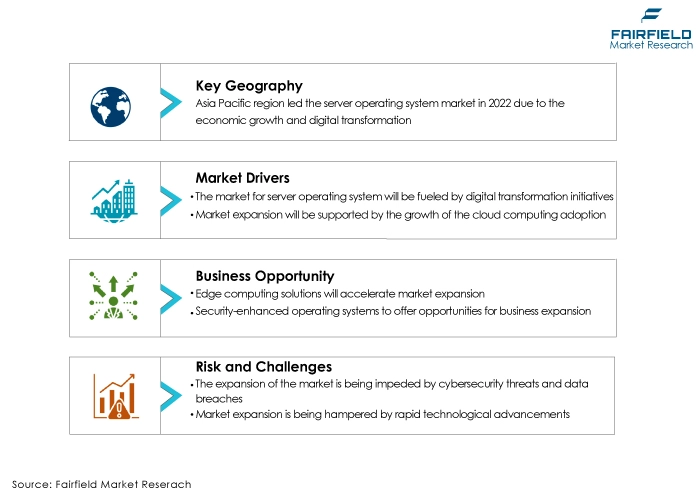
The cloud computing revolution significantly propels the server operating system market. With businesses rapidly migrating their operations to cloud-based platforms, there is a soaring demand for server operating systems optimised for cloud environments. These systems provide seamless integration, scalability, and robust data management, allowing enterprises to efficiently store, process, and retrieve data.
The flexibility offered by cloud-based server operating systems is particularly appealing to businesses, enabling them to adapt swiftly to changing workloads and demands. As cloud adoption continues to rise globally, the demand for server operating systems tailored for cloud infrastructures is a driving force behind the market's growth.
- Proliferation of IoT-Enabled Devices
The proliferation of IoT devices is another key driver shaping the market for Server Operating System. As IoT technology permeates various sectors such as manufacturing, healthcare, and smart cities, the need for server operating systems capable of handling vast amounts of data generated by these devices is paramount. These operating systems facilitate real-time data processing, analysis, and secure communication between IoT devices and centralised servers. Businesses leverage IoT-enabled applications for enhanced productivity, predictive maintenance, and data-driven decision-making.
- Security and Compliance Requirements
Security concerns and stringent regulatory compliance standards are compelling businesses to invest in advanced server operating systems. Data breaches and cyber threats have intensified the focus on robust security features within operating systems. Server operating systems equipped with cutting-edge security protocols, encryption, and authentication mechanisms are essential for safeguarding sensitive information.
Moreover, industries such as finance, healthcare, and government entities must adhere to strict regulatory guidelines regarding data privacy and confidentiality. Server operating systems that ensure compliance with these regulations are invaluable to businesses operating in regulated environments.
Major Growth Barriers
- Security Concerns, and Cyber Threats
The server operating system market is the increasing prevalence of security concerns and cyber threats. As technology advances, so do the sophistication and frequency of cyber-attacks. Businesses face challenges in ensuring the integrity and confidentiality of their data due to the evolving nature of cyber threats. This constant battle against hackers and malicious software restrains market growth, necessitating continuous investments in cybersecurity measures.
- High Initial Investments, and Integration Challenges
A significant restraint for businesses considering new server operating systems is the high initial investment required for implementation and integration. Upgrading or transitioning to advanced server operating systems often involves substantial costs, not only in terms of licensing but also in hardware upgrades and employee training.
Additionally, integrating these systems seamlessly into existing IT infrastructures poses challenges. Compatibility issues and the need for extensive system testing can lead to delays and disruptions, hindering the swift adoption of new server operating systems.
Key Trends and Opportunities to Look at
The rise of cloud-native operating systems is transforming the market for Server Operating System. These systems, optimised for cloud environments, offer seamless scalability and flexibility. Their popularity is soaring globally, with North America leading the adoption.
Key players like Microsoft, and Amazon are investing in cloud-native solutions, leveraging microservices architecture and containerivirtualization for enhanced performance and efficiency.
- Focus on Security and Compliance
- Edge Computing Optimised Systems
Security-centric server operating systems are a prevailing trend, especially in regulated industries. Regions like Europe are embracing this trend due to stringent data protection laws.
Companies like IBM, and Red Hat are leading developments, integrating advanced security protocols. Brands are leveraging this trend by offering solutions to ensure compliance with diverse regulations, fostering trust among enterprises.
Edge computing-optimised operating systems are gaining prominence due to the surge in IoT devices. Asia Pacific leads in this trend, driven by smart city projects.
Companies like Huawei, and Intel are at the forefront, developing operating systems tailored for edge environments. Brands are capitalising on this trend by creating solutions that facilitate real-time data processing at the edge, enhancing efficiency in IoT applications.
How Does the Regulatory Scenario Shape this Industry?
The server operating system market is profoundly influenced by a complex web of regulations and standards, shaping the industry landscape globally. In the United States, regulatory entities such as the National Institute of Standards and Technology (NIST) set guidelines through documents like NIST Special Publication 800-53, emphasizing cybersecurity protocols.
In the European Union, the General Data Protection Regulation (GDPR) mandates stringent data protection measures, compelling server operating system providers to enhance security features to comply with these laws.
Furthermore, region-specific changes impact market dynamics. For instance, China's Cybersecurity Law requires localised data storage, prompting companies like Microsoft and IBM to adapt their server operating systems to comply with this regulation.
Additionally, India's Data Protection Bill outlines stringent data storage norms, influencing server operating system adoption strategies for companies operating within the country. In recent years, these regulations have led to key industry shifts.
Server operating system providers are investing heavily in encryption technologies and data localivirtualization features to align with regional laws, ensuring compliance for businesses. These regulatory mandates have become pivotal factors shaping product development, market strategies, and cross-border data handling practices, defining the server operating system's trajectory.
Fairfield’s Ranking Board
Top Segments
Windows operating systems will dominate the server operating system market in 2022, holding a substantial market share of approximately 65%. Its widespread adoption is primarily due to its user-friendly interface, extensive compatibility with various applications, and robust security features. Windows-based servers are prevalent across diverse sectors, including corporate enterprises, government organivirtualizations, and educational institutions.
Furthermore, Linux-based server operating systems have emerged as the fastest-growing category in the server operating system market. Currently holding a market share of approximately 20%, Linux experiences a remarkable annual growth rate of around 10%. The open-source nature of Linux, coupled with its robust security, scalability, and flexibility, has fueled its popularity, especially in cloud computing environments and data centres.
- Virtualivirtualization will Surge Ahead Through 2030
- On-premises Deployments Remain Favoured
In 2022, Virtual Machines (VMs) stood as the dominant force in the market for server operating system's virtualivirtualization segment, capturing a significant market share of approximately 75%. VMs enable efficient resource utilivirtualization, reducing hardware costs and enhancing scalability. They are widely adopted across various industries due to their versatility and compatibility with different operating systems.
Physical servers, although traditionally the foundation of server environments, are experiencing a resurgence in demand, showcasing a robust annual growth rate of approximately 15%. This growth is fueled by specific industries and applications requiring dedicated physical resources due to stringent security, compliance, or performance requirements. Sectors such as finance, healthcare, and government agencies often prefer physical servers for specific workloads.
On-premise deployments remain the dominant force in the market for Server Operating System, holding a substantial market share of approximately 60%. Many large enterprises and industries with specific security and compliance requirements prefer on-premise solutions due to the control they offer over their data and applications.
Cloud-based deployments are the fastest-growing category in the market for Server Operating System, showcasing an impressive annual growth rate of approximately 25%. The flexibility, scalability, and cost-effectiveness of cloud solutions have made them increasingly popular among businesses of all sizes. Start-ups, SMEs, and even large enterprises are migrating to the cloud to optimise their IT infrastructure costs and enhance agility.
Regional Frontrunners
Asia Pacific Responsbile for Nearly 36% of Global Market Size
Asia Pacific continues to be the largest revenue-contributing around 36% to the global market for Server Operating System, due to several key factors. The region's economic growth, rapid industrialivirtualization, and increasing adoption of digital technologies drive the demand for advanced server operating systems.
Countries like China, India, Japan, and South Korea are witnessing significant investments in IT infrastructure and data centres, leading to a surge in demand for server operating systems. Additionally, the rise of eCommerce, the proliferation of smartphones, and the increasing number of internet users in the Asia Pacific region are fueling the need for robust server solutions to handle vast amounts of online transactions and data.
North America’s Booming Cloud Adoption Sets Stage for Fastest Market Expansion
North America is anticipated to witness significant growth in sales during the forecast period in the market for Server Operating System due to several compelling reasons. The region is home to a multitude of tech giants, innovative start-ups, and established enterprises that are continually investing in advanced technologies. This robust technological ecosystem fosters a high demand for cutting-edge server operating systems, boosting sales, and thereby market growth.
Additionally, North America leads in cloud computing adoption, with businesses increasingly migrating their operations to cloud-based platforms. Cloud service providers, and enterprises alike require powerful and secure server operating systems to manage their cloud infrastructure efficiently. This trend significantly drives the market in the region.
Fairfield’s Competitive Landscape Analysis
In the competitive landscape, differentiation will be the key. Server operating system providers are expected to focus on enhancing security features, optimising for specific workloads like AI and IoT, and improving energy efficiency to align with sustainability goals.
Cloud-native architectures and containerivirtualization technologies will shape the landscape, offering flexible deployment options. Supply chain resilience will become a focal point, ensuring a steady flow of components amid global uncertainties. Collaboration between software providers and hardware manufacturers will streamline offerings, enhancing user experiences.
Who are the Leaders in the Global Server Operating System Space?
Significant Company Developments
New Product Launch
- November 2022:Microsoft Corporation introduced SQL server 2022 platform for on-premises and cloud services. Through this launch, enterprises using on-premises deployment models can access cloud solutions and then easily move to the cloud when required.
- January 2022: Amazon Web Services Inc. launched a speed optimivirtualization solution for Microsoft Windows Server on Amazon EC2. Microsoft Windows Server claims to provide 65% faster speed on Amazon's Elastic Computing Cloud (EC2).
- September 2021: Fujitsu Limited server PRIMERGY was certified for server operating systems Windows Server 2022. The server provided secured remote working through multi-layer security along with a flexible platform for IT migration.
Distribution Agreement
- May 2022: Red Hat, Inc. announced a collaboration with Samsung Electronics Co., Ltd. to work on next-generation memory software that helps the software and hardware perform better across a diverse server environment.
- February 2020 Hat, Inc. announced its strategic partnership with General Motors to help with its Red Hat In-Vehicle Operating System. General Motors' Ultifi software platform requires robust cybersecurity protection, and for this, RedHat is providing its certified Linux-based system.
An Expert’s Eye
Demand and Future Growth
The server operating system market is set to be driven by the ever-expanding digital landscape. As businesses worldwide embrace digital transformation, the demand for advanced server operating systems will continue to surge. With the rise of IoT, cloud computing, and big data analytics, the need for efficient data processing and management solutions is paramount.
Additionally, the increasing reliance on AI and machine learning applications demands powerful server operating systems to handle complex computations. As a result, the market is expected to experience sustained growth, driven by these technological advancements and the continuous integration of digital technologies across various sectors.
Supply Side of the Market
According to our analysis, the challenge lies in keeping pace with the rapidly evolving technological landscape. Server operating system providers face the daunting task of continuous innovation to meet the demands of increasingly complex applications and diverse user needs. The rapid advancements in hardware technologies, such as faster processors and enhanced storage solutions, necessitate server operating systems that can fully leverage these capabilities.
Additionally, ensuring seamless integration with emerging technologies like edge computing and quantum computing presents a considerable challenge. Meeting these demands requires a proactive approach to research and development, strategic collaborations, and a deep understanding of evolving market requirements.
Furthermore, server operating systems must also prioritize security measures to protect against evolving cyber threats and ensure data integrity. This includes implementing robust encryption protocols and regularly updating security patches to address vulnerabilities.
Global Server Operating System Market is Segmented as Below:
By Operating System:
- Windows
- Linux
- Unix
- Others
By Virtualivirtualization:
- Virtual Machines
- Physical
By Deployment:
- On-premises
- Cloud
By Geographic Coverage:
- North America
- Europe
- Asia Pacific
- Latin America
- Middle East & Africa
- Executive Summary
- Global Server Operating System Market Snapshot
- Future Projections
- Key Market Trends
- Regional Snapshot, by Value, 2026
- Analyst Recommendations
- Market Overview
- Market Definitions and Segmentations
- Market Dynamics
- Drivers
- Restraints
- Market Opportunities
- Value Chain Analysis
- COVID-19 Impact Analysis
- Porter's Five Forces Analysis
- Impact of Russia-Ukraine Conflict
- PESTLE Analysis
- Regulatory Analysis
- Price Trend Analysis
- Current Prices and Future Projections, 2025-2033
- Price Impact Factors
- Global Server Operating System Market Outlook, 2020 - 2033
- Global Server Operating System Market Outlook, by Operating System, Value (US$ Mn), 2020-2033
- Windows
- Linux
- Unix
- Others
- Global Server Operating System Market Outlook, by Virtualization, Value (US$ Mn), 2020-2033
- Virtual Machines
- Physical
- Global Server Operating System Market Outlook, by Deployment, Value (US$ Mn), 2020-2033
- On-premises
- Cloud
- Global Server Operating System Market Outlook, by Region, Value (US$ Mn), 2020-2033
- North America
- Europe
- Asia Pacific
- Latin America
- Middle East & Africa
- Global Server Operating System Market Outlook, by Operating System, Value (US$ Mn), 2020-2033
- North America Server Operating System Market Outlook, 2020 - 2033
- North America Server Operating System Market Outlook, by Operating System, Value (US$ Mn), 2020-2033
- Windows
- Linux
- Unix
- Others
- North America Server Operating System Market Outlook, by Virtualization, Value (US$ Mn), 2020-2033
- Virtual Machines
- Physical
- North America Server Operating System Market Outlook, by Deployment, Value (US$ Mn), 2020-2033
- On-premises
- Cloud
- North America Server Operating System Market Outlook, by Country, Value (US$ Mn), 2020-2033
- U.S. Server Operating System Market Outlook, by Operating System, 2020-2033
- U.S. Server Operating System Market Outlook, by Virtualization, 2020-2033
- U.S. Server Operating System Market Outlook, by Deployment, 2020-2033
- Canada Server Operating System Market Outlook, by Operating System, 2020-2033
- Canada Server Operating System Market Outlook, by Virtualization, 2020-2033
- Canada Server Operating System Market Outlook, by Deployment, 2020-2033
- BPS Analysis/Market Attractiveness Analysis
- North America Server Operating System Market Outlook, by Operating System, Value (US$ Mn), 2020-2033
- Europe Server Operating System Market Outlook, 2020 - 2033
- Europe Server Operating System Market Outlook, by Operating System, Value (US$ Mn), 2020-2033
- Windows
- Linux
- Unix
- Others
- Europe Server Operating System Market Outlook, by Virtualization, Value (US$ Mn), 2020-2033
- Virtual Machines
- Physical
- Europe Server Operating System Market Outlook, by Deployment, Value (US$ Mn), 2020-2033
- On-premises
- Cloud
- Europe Server Operating System Market Outlook, by Country, Value (US$ Mn), 2020-2033
- Germany Server Operating System Market Outlook, by Operating System, 2020-2033
- Germany Server Operating System Market Outlook, by Virtualization, 2020-2033
- Germany Server Operating System Market Outlook, by Deployment, 2020-2033
- Italy Server Operating System Market Outlook, by Operating System, 2020-2033
- Italy Server Operating System Market Outlook, by Virtualization, 2020-2033
- Italy Server Operating System Market Outlook, by Deployment, 2020-2033
- France Server Operating System Market Outlook, by Operating System, 2020-2033
- France Server Operating System Market Outlook, by Virtualization, 2020-2033
- France Server Operating System Market Outlook, by Deployment, 2020-2033
- U.K. Server Operating System Market Outlook, by Operating System, 2020-2033
- U.K. Server Operating System Market Outlook, by Virtualization, 2020-2033
- U.K. Server Operating System Market Outlook, by Deployment, 2020-2033
- Spain Server Operating System Market Outlook, by Operating System, 2020-2033
- Spain Server Operating System Market Outlook, by Virtualization, 2020-2033
- Spain Server Operating System Market Outlook, by Deployment, 2020-2033
- Russia Server Operating System Market Outlook, by Operating System, 2020-2033
- Russia Server Operating System Market Outlook, by Virtualization, 2020-2033
- Russia Server Operating System Market Outlook, by Deployment, 2020-2033
- Rest of Europe Server Operating System Market Outlook, by Operating System, 2020-2033
- Rest of Europe Server Operating System Market Outlook, by Virtualization, 2020-2033
- Rest of Europe Server Operating System Market Outlook, by Deployment, 2020-2033
- BPS Analysis/Market Attractiveness Analysis
- Europe Server Operating System Market Outlook, by Operating System, Value (US$ Mn), 2020-2033
- Asia Pacific Server Operating System Market Outlook, 2020 - 2033
- Asia Pacific Server Operating System Market Outlook, by Operating System, Value (US$ Mn), 2020-2033
- Windows
- Linux
- Unix
- Others
- Asia Pacific Server Operating System Market Outlook, by Virtualization, Value (US$ Mn), 2020-2033
- Virtual Machines
- Physical
- Asia Pacific Server Operating System Market Outlook, by Deployment, Value (US$ Mn), 2020-2033
- On-premises
- Cloud
- Asia Pacific Server Operating System Market Outlook, by Country, Value (US$ Mn), 2020-2033
- China Server Operating System Market Outlook, by Operating System, 2020-2033
- China Server Operating System Market Outlook, by Virtualization, 2020-2033
- China Server Operating System Market Outlook, by Deployment, 2020-2033
- Japan Server Operating System Market Outlook, by Operating System, 2020-2033
- Japan Server Operating System Market Outlook, by Virtualization, 2020-2033
- Japan Server Operating System Market Outlook, by Deployment, 2020-2033
- South Korea Server Operating System Market Outlook, by Operating System, 2020-2033
- South Korea Server Operating System Market Outlook, by Virtualization, 2020-2033
- South Korea Server Operating System Market Outlook, by Deployment, 2020-2033
- India Server Operating System Market Outlook, by Operating System, 2020-2033
- India Server Operating System Market Outlook, by Virtualization, 2020-2033
- India Server Operating System Market Outlook, by Deployment, 2020-2033
- Southeast Asia Server Operating System Market Outlook, by Operating System, 2020-2033
- Southeast Asia Server Operating System Market Outlook, by Virtualization, 2020-2033
- Southeast Asia Server Operating System Market Outlook, by Deployment, 2020-2033
- Rest of SAO Server Operating System Market Outlook, by Operating System, 2020-2033
- Rest of SAO Server Operating System Market Outlook, by Virtualization, 2020-2033
- Rest of SAO Server Operating System Market Outlook, by Deployment, 2020-2033
- BPS Analysis/Market Attractiveness Analysis
- Asia Pacific Server Operating System Market Outlook, by Operating System, Value (US$ Mn), 2020-2033
- Latin America Server Operating System Market Outlook, 2020 - 2033
- Latin America Server Operating System Market Outlook, by Operating System, Value (US$ Mn), 2020-2033
- Windows
- Linux
- Unix
- Others
- Latin America Server Operating System Market Outlook, by Virtualization, Value (US$ Mn), 2020-2033
- Virtual Machines
- Physical
- Latin America Server Operating System Market Outlook, by Deployment, Value (US$ Mn), 2020-2033
- On-premises
- Cloud
- Latin America Server Operating System Market Outlook, by Country, Value (US$ Mn), 2020-2033
- Brazil Server Operating System Market Outlook, by Operating System, 2020-2033
- Brazil Server Operating System Market Outlook, by Virtualization, 2020-2033
- Brazil Server Operating System Market Outlook, by Deployment, 2020-2033
- Mexico Server Operating System Market Outlook, by Operating System, 2020-2033
- Mexico Server Operating System Market Outlook, by Virtualization, 2020-2033
- Mexico Server Operating System Market Outlook, by Deployment, 2020-2033
- Argentina Server Operating System Market Outlook, by Operating System, 2020-2033
- Argentina Server Operating System Market Outlook, by Virtualization, 2020-2033
- Argentina Server Operating System Market Outlook, by Deployment, 2020-2033
- Rest of LATAM Server Operating System Market Outlook, by Operating System, 2020-2033
- Rest of LATAM Server Operating System Market Outlook, by Virtualization, 2020-2033
- Rest of LATAM Server Operating System Market Outlook, by Deployment, 2020-2033
- BPS Analysis/Market Attractiveness Analysis
- Latin America Server Operating System Market Outlook, by Operating System, Value (US$ Mn), 2020-2033
- Middle East & Africa Server Operating System Market Outlook, 2020 - 2033
- Middle East & Africa Server Operating System Market Outlook, by Operating System, Value (US$ Mn), 2020-2033
- Windows
- Linux
- Unix
- Others
- Middle East & Africa Server Operating System Market Outlook, by Virtualization, Value (US$ Mn), 2020-2033
- Virtual Machines
- Physical
- Middle East & Africa Server Operating System Market Outlook, by Deployment, Value (US$ Mn), 2020-2033
- On-premises
- Cloud
- Middle East & Africa Server Operating System Market Outlook, by Country, Value (US$ Mn), 2020-2033
- GCC Server Operating System Market Outlook, by Operating System, 2020-2033
- GCC Server Operating System Market Outlook, by Virtualization, 2020-2033
- GCC Server Operating System Market Outlook, by Deployment, 2020-2033
- South Africa Server Operating System Market Outlook, by Operating System, 2020-2033
- South Africa Server Operating System Market Outlook, by Virtualization, 2020-2033
- South Africa Server Operating System Market Outlook, by Deployment, 2020-2033
- Egypt Server Operating System Market Outlook, by Operating System, 2020-2033
- Egypt Server Operating System Market Outlook, by Virtualization, 2020-2033
- Egypt Server Operating System Market Outlook, by Deployment, 2020-2033
- Nigeria Server Operating System Market Outlook, by Operating System, 2020-2033
- Nigeria Server Operating System Market Outlook, by Virtualization, 2020-2033
- Nigeria Server Operating System Market Outlook, by Deployment, 2020-2033
- Rest of Middle East Server Operating System Market Outlook, by Operating System, 2020-2033
- Rest of Middle East Server Operating System Market Outlook, by Virtualization, 2020-2033
- Rest of Middle East Server Operating System Market Outlook, by Deployment, 2020-2033
- BPS Analysis/Market Attractiveness Analysis
- Middle East & Africa Server Operating System Market Outlook, by Operating System, Value (US$ Mn), 2020-2033
- Competitive Landscape
- Company Vs Segment Heatmap
- Company Market Share Analysis, 2025
- Competitive Dashboard
- Company Profiles
- Fujitsu Ltd.
- Company Overview
- Product Portfolio
- Financial Overview
- Business Strategies and Developments
- Amazon Web Services
- Apple Inc.
- Microsoft Corporation
- Hewlett Packard Enterprise
- Canonical Ltd
- Red Hat Inc.
- IBM Corporation
- SUSE
- LLC
- Fujitsu Ltd.
- Appendix
- Research Methodology
- Report Assumptions
- Acronyms and Abbreviations
|
BASE YEAR |
HISTORICAL DATA |
FORECAST PERIOD |
UNITS |
|||
 |
2025 |
 |
2019 - 2024 |
 |
2026 - 2033 |
Value: US$ Billion |
|
REPORT FEATURES |
DETAILS |
|
Operating System Coverage |
|
|
Virtualization Coverage |
|
|
Deployment Coverage |
|
|
Geographical Coverage |
|
|
Leading Companies |
|
|
Report Highlights |
Key Market Indicators, Macro-micro economic impact analysis, Technological Roadmap, Key Trends, Driver, Restraints, and Future Opportunities & Revenue Pockets, Porter’s 5 Forces Analysis, Historical Trend (2019-2021), Market Estimates and Forecast, Market Dynamics, Industry Trends, Competition Landscape, Category, Region, Country-wise Trends & Analysis, COVID-19 Impact Analysis (Demand and Supply Chain) |
Our Research Methodology
Considering the volatility of business today, traditional approaches to strategizing a game plan can be unfruitful if not detrimental. True ambiguity is no way to determine a forecast. A myriad of predetermined factors must be accounted for such as the degree of risk involved, the magnitude of circumstances, as well as conditions or consequences that are not known or unpredictable. To circumvent binary views that cast uncertainty, the application of market research intelligence to strategically posture, move, and enable actionable outcomes is necessary.
View Methodology
Quality Assured
Rigorous Validation Process

Confidentiality Assured
End-to-end Data Security

Custom Research Services
Tailored To Your Objectives
FAQs
The Server Operating System Market size is expected to reach USD 14.5 Billion in 2026.
The Server Operating System Market is projected to grow at a 10.4% CAGR through 2033
Asia Pacific currently holds the largest share of the server operating system market.
The primary factor projected to drive the Server Operating System market expansion is cloud-native operating systems and focus on security and compliance.
Microsoft Corporation, Amazon Web Services, IBM Corporation, Red Hat Inc., and Oracle are some leading industry players in the Server Operating System Market.
Related Reports
Open Network Testing and Certification Market
Open Network Testing and Certification Market reaches USD 1,787.05 Million by 2033, growing at 14.8% CAGR from USD 680 Million in 2026.
Graphene Infrared Imaging Sensors Market
Graphene Infrared Imaging Sensors Market is valued at USD 320.00 million in 2026 and projected to reach USD 1,050.35 million by 2033, at 18.5% CAGR.
DevSecOps Orchestration Market
DevSecOps Orchestration Market is valued at USD 2.10 Billion in 2026 and projected to reach USD 7.52 Billion by 2033, growing at a 20.0% CAGR.
CI/CD Pipeline Security Market
CI/CD Pipeline Security Market is valued at USD 1.45 Billion in 2026 and projected to reach USD 5.14 Billion by 2033, growing at a 19.8% CAGR.
Power Quality Meter Insights, Competitive Landscape, and Market Forecast - 2033
Power Quality Meter Market is valued at USD 1.45 Billion in 2026 and projected to reach USD 2.39 Billion by 2033, growing at a 7.4% CAGR.
Rich Communication Services Market Insights, Competitive Landscape, and Market Forecast - 2033
Rich Communication Services (RCS) Market to reach USD 36.19 Bn by 2033, growing at 19.5% CAGR from USD 10.40 Bn in 2026 as adoption rises rapidly worldwide