



Automatic Espresso Machine Market
Automatic Espresso Machine Market Insights, Competitive Landscape, and Market Forecast - 2033
The Automatic Espresso Machine Market is valued at USD 6.1 Bn in 2026 and is projected to reach USD 8.2 Bn, growing at a CAGR of 4% by 2033.
Quick Report Digest
A Look Back and a Look Forward - Comparative Analysis
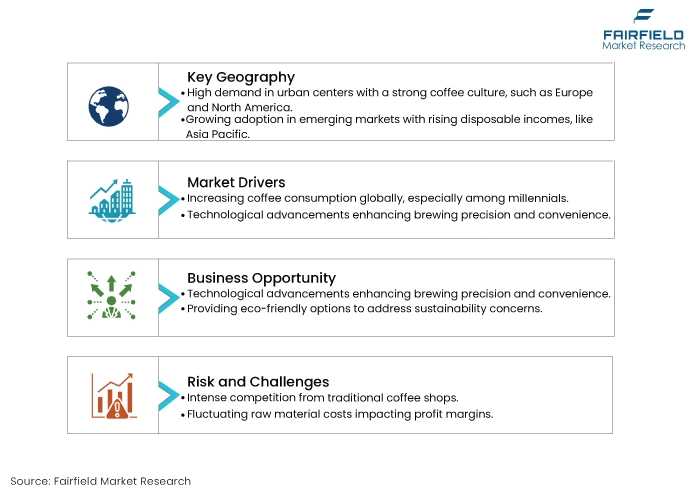
The automatic espresso machine market is experiencing robust growth, fueled by the increasing popularity of coffee culture and the rising demand for convenient at-home brewing solutions. Factors such as technological advancements, lifestyle changes, and growing consumer disposable income contribute to the market's expansion.
Historically, the automatic espresso machine market has witnessed significant growth and evolution. From traditional espresso machines to advanced automated models, the market has continuously innovated to meet changing consumer preferences and demand for high-quality coffee experiences.
The future of the automatic espresso machine market appears promising, with sustained growth expected. Anticipated advancements in technology, such as AI integration and IoT connectivity, along with a focus on sustainability and eco-friendly features, will drive market expansion. Additionally, the growing trend of premiumisation and customisation in coffee consumption will further propel market growth.
Key Growth Determinants
- Rising Café Culture
The proliferation of coffee culture globally is a significant driver of the automatic espresso machine market. With coffee becoming more than just a beverage but a lifestyle choice, consumers are increasingly seeking ways to replicate cafe-quality experiences at home. This cultural shift is fueled by the rise of specialty coffee trends, increased exposure to diverse coffee varieties, and a desire for personalised coffee beverages.
As a result, automatic espresso machines, with their ability to produce a wide range of espresso-based drinks with consistency and convenience, cater to the evolving preferences of coffee enthusiasts, contributing to market growth.
- Convenience, and Time-Saving Aspects
Convenience is paramount for consumers. Automatic espresso machines offer a hassle-free solution to brewing coffee, eliminating the need for manual grinding, tamping, and monitoring of extraction times. With just a press of a button, users can enjoy freshly brewed espresso, cappuccinos, lattes, and other specialty drinks within minutes.
This time-saving aspect appeals to busy individuals, professionals, and families who seek quality coffee without sacrificing precious time in their daily routines. The convenience factor positions automatic espresso machines as essential kitchen appliances, driving their adoption and market demand.
- Technological Advancements
Continuous innovation in technology plays a pivotal role in shaping the automatic espresso machine market. Manufacturers are constantly integrating advanced features and functionalities into their products to enhance user experience and differentiate their offerings. Smart features such as touchscreen displays, Wi-Fi connectivity, mobile app controls, and programmable settings allow users to customise their coffee preferences and brewing parameters with ease.
Additionally, advancements in brewing technologies, such as pressure profiling, temperature control, and automated milk frothing systems, ensure consistent and high-quality coffee extraction. These technological advancements not only improve the performance and functionality of automatic espresso machines but also contribute to their appeal among tech-savvy consumers, driving market growth.
Major Growth Barriers
- High Upfront Costs, and Limited Customisation Opportunity
The high upfront cost of automatic espresso machines can deter price-sensitive consumers from purchasing. Additionally, ongoing expenses related to maintenance, servicing, and the purchase of coffee beans can further contribute to the overall ownership cost, limiting market penetration.
Moreover, the automated nature of these machines may restrict customisation options, such as adjusting grind size, brew temperature, and extraction time, leading to dissatisfaction among coffee enthusiasts seeking more personalised brewing experiences.
- Maintenance Requirements
Automatic espresso machines require regular cleaning and maintenance to ensure optimal performance and longevity. Complex components such as brewing units, milk frothers, and internal mechanisms may require periodic servicing or replacement, adding to the overall cost and inconvenience for consumers. This maintenance burden can deter potential buyers, particularly those who prefer low-maintenance coffee solutions.
Key Trends and Opportunities to Look at
Automatic espresso machines with smart features such as touchscreen interfaces, Wi-Fi connectivity, and mobile app controls are gaining traction globally. Companies like Breville, and Nespresso are leading this trend, offering connected machines that allow users to remotely control brewing settings and receive maintenance alerts, enhancing user convenience.
- Focus on Sustainability
- Customisation and Personalisation Trends
There is growing emphasis on sustainability in the automatic espresso machine market, with consumers increasingly seeking eco-friendly options. Companies like De'Longhi, and Jura are responding by introducing machines with energy-saving features, recyclable components, and sustainable sourcing practices to appeal to environmentally-conscious consumers.
Consumers are increasingly demanding customised coffee experiences tailored to their preferences. Brands like Saeco, and Gaggia are responding by offering automatic espresso machines with adjustable settings for grind size, brew strength, and milk frothing, allowing users to create their perfect cup of coffee, reflecting the trend towards personalised brewing experiences.
How Does the Regulatory Scenario Shape this Industry?
The regulatory framework governing the automatic espresso machine market varies by region and includes regulations related to product safety, electrical standards, environmental compliance, and consumer protection. In the European Union, manufacturers must adhere to the CE marking requirements, ensuring that their products meet safety and health standards.
The European Union's Eco-design Directive sets energy efficiency requirements for household appliances, including espresso machines. In the US, the market is regulated by the Consumer Product Safety Commission (CPSC), which oversees product safety standards and recalls.
Additionally, compliance with electrical safety standards, such as UL certification, is essential for products sold in the US market. Region-specific regulatory changes, such as updates to energy efficiency standards or labeling requirements, can influence product design, manufacturing processes, and market access for automatic espresso machine manufacturers operating in these regions.
Fairfield’s Ranking Board
Top Segments
The commercial end-use segment has captured the largest market share in the automatic espresso machine market for several reasons. The widespread presence of cafes, restaurants, and hotels drives significant demand for commercial-grade espresso machines to meet the needs of customers.
Businesses in the hospitality industry prioritise efficiency, consistency, and speed, making automatic espresso machines an essential investment for delivering high-quality coffee beverages quickly and consistently. The growing trend of specialty coffee consumption and the rising number of coffee establishments further fuel demand for commercial espresso machines in the market.
On the other side, the increasing trend of home coffee brewing and the growing popularity of specialty coffee among consumers are driving demand for espresso machines for personal use.
Advancements in technology have led to the development of compact, user-friendly, and affordable automatic espresso machines suitable for residential settings. The rising disposable income and changing lifestyle preferences encourage consumers to invest in premium coffee equipment for creating cafe-quality beverages at home.
- Drip Coffee Maker Will Surge Ahead Throughout the Forecast Period
- US$2000 – US$4000 Preferred Price Range
- Direct Sales Contribute the Largest Market Share
The drip coffee maker holds the largest market share, attributing to widespread adoption, and versatility. Drip coffee makers are popular among consumers for their simplicity, ease of use, and ability to brew large quantities of coffee at once.
Additionally, they offer a more affordable alternative to automatic espresso machines, making them accessible to a broader consumer base. The familiarity and reliability of drip coffee makers have contributed to their dominance in the market, especially in households and office settings.
The thermal coffee maker is also gaining momentum in popularity as these machines offer enhanced insulation and temperature retention, ensuring that brewed coffee remains hot for an extended period, appealing to consumers who prioritise freshness and flavour. The growing demand for convenience, and on-the-go lifestyles has increased the popularity of thermal coffee makers, which often feature programmable settings and automatic shut-off functions.
Advancements in technology have led to the development of sleek and stylish thermal coffee makers with advanced features, attracting discerning consumers willing to invest in premium appliances for their coffee brewing needs.
The segment between US$2000 and US$4000 is experiencing the most significant growth. Consumers in this price range seek premium features, superior build quality, and advanced technology without excessively high costs. As a result, manufacturers are focusing on introducing mid-range models with innovative features and performance capabilities to capture this expanding market segment, driving growth in this price category.
The US$ 4000 - US$ 6000 price point is experiencing rapid growth in the Automatic Espresso Machine Market due to several reasons. This price segment caters to the premium and high-end market segment, which is increasingly seeking sophisticated and feature-rich espresso machines.
Advancements in technology and materials have allowed manufacturers to offer premium machines with superior performance and durability in this price range. Lastly, rising consumer disposable income and the growing trend of home coffee brewing contribute to the increased demand for luxury espresso machines in this segment.
Direct sales channels, particularly manufacturer-owned stores and websites, are emerging as the fastest-growing distribution channel. Direct sales offer brands greater control over pricing, customer experience, and brand image, leading to increased consumer trust, and loyalty. With the rise of e-commerce and digital marketing, manufacturers are leveraging direct channels to strengthen their brand presence and engage directly with customers, driving growth in this segment.
Indirect sales, such as retail stores and online marketplaces, offer a wide reach and accessibility to consumers. Partnerships with established retailers enhance brand visibility, and customer trust.
The rise of e-commerce platforms has expanded the reach of indirect sales channels, allowing manufacturers to tap into global markets more effectively. Indirect channels provide opportunities for manufacturers to leverage retail expertise and logistics capabilities, driving sales growth.
Regional Frontrunners
Europe Extends the Maximum Revenue Share
Europe stands as the largest regional market in the automatic espresso machine market, accounting for a significant share of global sales. This dominance is attributed to Europe's strong coffee culture, with countries like Italy, and France leading the demand.
Consumer preferences for high-quality coffee experiences, coupled with the proliferation of specialty coffee shops and the trend of home brewing, have contributed to Europe's market leadership. Key players such as De'Longhi, Breville, and Gaggia have a substantial presence in this region, further solidifying its market share contribution.
Asia Pacific Benefits from the Burgeoning Coffee Culture
The Asia Pacific emerges as the fastest-growing regional market in the automatic espresso machine market. Rapid urbanisation, changing lifestyles, and increasing disposable incomes are driving the demand for premium coffee experiences in countries like China, Japan, and South Korea.
The region's burgeoning coffee culture, coupled with the rising popularity of specialty coffee beverages, fuels market growth. Key players are expanding their presence in the Asia Pacific to capitalise on this growing market, contributing to its rapid expansion and market share growth.
Fairfield’s Competitive Landscape Analysis
The competitive landscape of the automatic espresso machine market is characterised by intense rivalry among prominent players such as Franke Holding AG, Breville Group, JURA Elektroapparate AG, and Gruppo Cimbali SpA. These companies are focusing on product innovation, customisation, and expanding their distribution networks to gain a competitive edge.
Moreover, strategic partnerships with coffee bean suppliers, cafes, and retailers are becoming increasingly common to enhance brand visibility and capture a larger market share.
Who are the Leaders in Global Automatic Espresso Machine Space?
An Expert’s Eye
Demand and Future Growth
The market demand for automatic espresso machines is anticipated to surge owing to increasing coffee consumption trends, lifestyle changes, and the growing preference for convenience. Additionally, technological advancements, such as IoT integration and smartphone connectivity, are expected to further boost demand.
The future growth trajectory is optimistic, driven by innovation in product features, expansion into emerging markets, and rising disposable incomes, especially in developing regions where coffee culture is evolving rapidly.
Supply Side of the Market
In the automatic espresso machine market, demand-supply dynamics are influenced by factors such as consumer preferences, economic conditions, and technological advancements. Currently, increasing demand for convenience and premium coffee experiences drives market growth, leading to a surge in supply from manufacturers.
The pricing structure reflects a balance between product features, brand reputation, and market competition. As pricing evolves, it will influence long-term growth by affecting consumer affordability and brand positioning. Major trends driving competition include innovation in technology, sustainability initiatives, and personalised consumer experiences.
Supply chain analysis reveals a complex network involving manufacturers, suppliers of components and materials, distribution channels, and retailers. Streamlining supply chains, optimizing logistics, and ensuring product quality are critical for meeting market demand and maintaining competitiveness.
Global Automatic Espresso Machine Market is Segmented as Below:
By End Use:
- Commercial
- Quick Service Restaurants
- Full-Service Restaurants
- Workplace
- Hospitals
- Transportation Facilities (Airports, Railway Stations, etc.)
- Residential
By Product Type:
- Drip Coffee Maker
- Espresso Coffee Maker
- Thermal Coffee Maker
- Others (Percolators, Pod-based Coffee Machines, etc.)
By Price Point:
- Less than US$ 2000
- US$ 2000- US$ 4000
- US$ 4000- US$ 6000
- More than US$6000
By Distribution Channel:
- Direct Sale
- Indirect Sale
By Geographic Coverage:
- North America
- Europe
- Asia Pacific
- Latin America
- Middle East & Africa
- Executive Summary
- Global Automatic Espresso Machine Market Snapshot
- Future Projections
- Key Market Trends
- Regional Snapshot, by Value, 2026
- Analyst Recommendations
- Market Overview
- Market Definitions and Segmentations
- Market Dynamics
- Drivers
- Restraints
- Market Opportunities
- Value Chain Analysis
- COVID-19 Impact Analysis
- Porter's Five Forces Analysis
- Impact of Russia-Ukraine Conflict
- PESTLE Analysis
- Regulatory Analysis
- Price Trend Analysis
- Current Prices and Future Projections, 2025-2033
- Price Impact Factors
- Global Automatic Espresso Machine Market Outlook, 2020 - 2033
- Global Automatic Espresso Machine Market Outlook, by End Use, Value (US$ Mn), 2020-2033
- Commercial
- Quick Service Restaurants
- Full-Service Restaurants
- Workplace
- Hospitals
- Transportation Facilities (Airports, Railway Stations, etc.)
- Residential
- Commercial
- Global Automatic Espresso Machine Market Outlook, by Product Type, Value (US$ Mn), 2020-2033
- Drip Coffee Maker
- Espresso Coffee Maker
- Thermal Coffee Maker
- Others (Percolators, Pod-based Coffee Machines, etc.)
- Global Automatic Espresso Machine Market Outlook, by Price Point, Value (US$ Mn), 2020-2033
- Less than US$ 2000
- US$ 2000- US$ 4000
- US$ 4000- US$ 6000
- More than US$6000
- Global Automatic Espresso Machine Market Outlook, by Distribution Channel, Value (US$ Mn), 2020-2033
- Direct Sale
- Indirect Sale
- Global Automatic Espresso Machine Market Outlook, by Region, Value (US$ Mn), 2020-2033
- North America
- Europe
- Asia Pacific
- Latin America
- Middle East & Africa
- Global Automatic Espresso Machine Market Outlook, by End Use, Value (US$ Mn), 2020-2033
- North America Automatic Espresso Machine Market Outlook, 2020 - 2033
- North America Automatic Espresso Machine Market Outlook, by End Use, Value (US$ Mn), 2020-2033
- Commercial
- Quick Service Restaurants
- Full-Service Restaurants
- Workplace
- Hospitals
- Transportation Facilities (Airports, Railway Stations, etc.)
- Residential
- Commercial
- North America Automatic Espresso Machine Market Outlook, by Product Type, Value (US$ Mn), 2020-2033
- Drip Coffee Maker
- Espresso Coffee Maker
- Thermal Coffee Maker
- Others (Percolators, Pod-based Coffee Machines, etc.)
- North America Automatic Espresso Machine Market Outlook, by Price Point, Value (US$ Mn), 2020-2033
- Less than US$ 2000
- US$ 2000- US$ 4000
- US$ 4000- US$ 6000
- More than US$6000
- North America Automatic Espresso Machine Market Outlook, by Distribution Channel, Value (US$ Mn), 2020-2033
- Direct Sale
- Indirect Sale
- North America Automatic Espresso Machine Market Outlook, by Country, Value (US$ Mn), 2020-2033
- U.S. Automatic Espresso Machine Market Outlook, by End Use, 2020-2033
- U.S. Automatic Espresso Machine Market Outlook, by Product Type, 2020-2033
- U.S. Automatic Espresso Machine Market Outlook, by Price Point, 2020-2033
- U.S. Automatic Espresso Machine Market Outlook, by Distribution Channel, 2020-2033
- Canada Automatic Espresso Machine Market Outlook, by End Use, 2020-2033
- Canada Automatic Espresso Machine Market Outlook, by Product Type, 2020-2033
- Canada Automatic Espresso Machine Market Outlook, by Price Point, 2020-2033
- Canada Automatic Espresso Machine Market Outlook, by Distribution Channel, 2020-2033
- BPS Analysis/Market Attractiveness Analysis
- North America Automatic Espresso Machine Market Outlook, by End Use, Value (US$ Mn), 2020-2033
- Europe Automatic Espresso Machine Market Outlook, 2020 - 2033
- Europe Automatic Espresso Machine Market Outlook, by End Use, Value (US$ Mn), 2020-2033
- Commercial
- Quick Service Restaurants
- Full-Service Restaurants
- Workplace
- Hospitals
- Transportation Facilities (Airports, Railway Stations, etc.)
- Residential
- Commercial
- Europe Automatic Espresso Machine Market Outlook, by Product Type, Value (US$ Mn), 2020-2033
- Drip Coffee Maker
- Espresso Coffee Maker
- Thermal Coffee Maker
- Others (Percolators, Pod-based Coffee Machines, etc.)
- Europe Automatic Espresso Machine Market Outlook, by Price Point, Value (US$ Mn), 2020-2033
- Less than US$ 2000
- US$ 2000- US$ 4000
- US$ 4000- US$ 6000
- More than US$6000
- Europe Automatic Espresso Machine Market Outlook, by Distribution Channel, Value (US$ Mn), 2020-2033
- Direct Sale
- Indirect Sale
- Europe Automatic Espresso Machine Market Outlook, by Country, Value (US$ Mn), 2020-2033
- Germany Automatic Espresso Machine Market Outlook, by End Use, 2020-2033
- Germany Automatic Espresso Machine Market Outlook, by Product Type, 2020-2033
- Germany Automatic Espresso Machine Market Outlook, by Price Point, 2020-2033
- Germany Automatic Espresso Machine Market Outlook, by Distribution Channel, 2020-2033
- Italy Automatic Espresso Machine Market Outlook, by End Use, 2020-2033
- Italy Automatic Espresso Machine Market Outlook, by Product Type, 2020-2033
- Italy Automatic Espresso Machine Market Outlook, by Price Point, 2020-2033
- Italy Automatic Espresso Machine Market Outlook, by Distribution Channel, 2020-2033
- France Automatic Espresso Machine Market Outlook, by End Use, 2020-2033
- France Automatic Espresso Machine Market Outlook, by Product Type, 2020-2033
- France Automatic Espresso Machine Market Outlook, by Price Point, 2020-2033
- France Automatic Espresso Machine Market Outlook, by Distribution Channel, 2020-2033
- U.K. Automatic Espresso Machine Market Outlook, by End Use, 2020-2033
- U.K. Automatic Espresso Machine Market Outlook, by Product Type, 2020-2033
- U.K. Automatic Espresso Machine Market Outlook, by Price Point, 2020-2033
- U.K. Automatic Espresso Machine Market Outlook, by Distribution Channel, 2020-2033
- Spain Automatic Espresso Machine Market Outlook, by End Use, 2020-2033
- Spain Automatic Espresso Machine Market Outlook, by Product Type, 2020-2033
- Spain Automatic Espresso Machine Market Outlook, by Price Point, 2020-2033
- Spain Automatic Espresso Machine Market Outlook, by Distribution Channel, 2020-2033
- Russia Automatic Espresso Machine Market Outlook, by End Use, 2020-2033
- Russia Automatic Espresso Machine Market Outlook, by Product Type, 2020-2033
- Russia Automatic Espresso Machine Market Outlook, by Price Point, 2020-2033
- Russia Automatic Espresso Machine Market Outlook, by Distribution Channel, 2020-2033
- Rest of Europe Automatic Espresso Machine Market Outlook, by End Use, 2020-2033
- Rest of Europe Automatic Espresso Machine Market Outlook, by Product Type, 2020-2033
- Rest of Europe Automatic Espresso Machine Market Outlook, by Price Point, 2020-2033
- Rest of Europe Automatic Espresso Machine Market Outlook, by Distribution Channel, 2020-2033
- BPS Analysis/Market Attractiveness Analysis
- Europe Automatic Espresso Machine Market Outlook, by End Use, Value (US$ Mn), 2020-2033
- Asia Pacific Automatic Espresso Machine Market Outlook, 2020 - 2033
- Asia Pacific Automatic Espresso Machine Market Outlook, by End Use, Value (US$ Mn), 2020-2033
- Commercial
- Quick Service Restaurants
- Full-Service Restaurants
- Workplace
- Hospitals
- Transportation Facilities (Airports, Railway Stations, etc.)
- Residential
- Commercial
- Asia Pacific Automatic Espresso Machine Market Outlook, by Product Type, Value (US$ Mn), 2020-2033
- Drip Coffee Maker
- Espresso Coffee Maker
- Thermal Coffee Maker
- Others (Percolators, Pod-based Coffee Machines, etc.)
- Asia Pacific Automatic Espresso Machine Market Outlook, by Price Point, Value (US$ Mn), 2020-2033
- Less than US$ 2000
- US$ 2000- US$ 4000
- US$ 4000- US$ 6000
- More than US$6000
- Asia Pacific Automatic Espresso Machine Market Outlook, by Distribution Channel, Value (US$ Mn), 2020-2033
- Direct Sale
- Indirect Sale
- Asia Pacific Automatic Espresso Machine Market Outlook, by Country, Value (US$ Mn), 2020-2033
- China Automatic Espresso Machine Market Outlook, by End Use, 2020-2033
- China Automatic Espresso Machine Market Outlook, by Product Type, 2020-2033
- China Automatic Espresso Machine Market Outlook, by Price Point, 2020-2033
- China Automatic Espresso Machine Market Outlook, by Distribution Channel, 2020-2033
- Japan Automatic Espresso Machine Market Outlook, by End Use, 2020-2033
- Japan Automatic Espresso Machine Market Outlook, by Product Type, 2020-2033
- Japan Automatic Espresso Machine Market Outlook, by Price Point, 2020-2033
- Japan Automatic Espresso Machine Market Outlook, by Distribution Channel, 2020-2033
- South Korea Automatic Espresso Machine Market Outlook, by End Use, 2020-2033
- South Korea Automatic Espresso Machine Market Outlook, by Product Type, 2020-2033
- South Korea Automatic Espresso Machine Market Outlook, by Price Point, 2020-2033
- South Korea Automatic Espresso Machine Market Outlook, by Distribution Channel, 2020-2033
- India Automatic Espresso Machine Market Outlook, by End Use, 2020-2033
- India Automatic Espresso Machine Market Outlook, by Product Type, 2020-2033
- India Automatic Espresso Machine Market Outlook, by Price Point, 2020-2033
- India Automatic Espresso Machine Market Outlook, by Distribution Channel, 2020-2033
- Southeast Asia Automatic Espresso Machine Market Outlook, by End Use, 2020-2033
- Southeast Asia Automatic Espresso Machine Market Outlook, by Product Type, 2020-2033
- Southeast Asia Automatic Espresso Machine Market Outlook, by Price Point, 2020-2033
- Southeast Asia Automatic Espresso Machine Market Outlook, by Distribution Channel, 2020-2033
- Rest of SAO Automatic Espresso Machine Market Outlook, by End Use, 2020-2033
- Rest of SAO Automatic Espresso Machine Market Outlook, by Product Type, 2020-2033
- Rest of SAO Automatic Espresso Machine Market Outlook, by Price Point, 2020-2033
- Rest of SAO Automatic Espresso Machine Market Outlook, by Distribution Channel, 2020-2033
- BPS Analysis/Market Attractiveness Analysis
- Asia Pacific Automatic Espresso Machine Market Outlook, by End Use, Value (US$ Mn), 2020-2033
- Latin America Automatic Espresso Machine Market Outlook, 2020 - 2033
- Latin America Automatic Espresso Machine Market Outlook, by End Use, Value (US$ Mn), 2020-2033
- Commercial
- Quick Service Restaurants
- Full-Service Restaurants
- Workplace
- Hospitals
- Transportation Facilities (Airports, Railway Stations, etc.)
- Residential
- Commercial
- Latin America Automatic Espresso Machine Market Outlook, by Product Type, Value (US$ Mn), 2020-2033
- Drip Coffee Maker
- Espresso Coffee Maker
- Thermal Coffee Maker
- Others (Percolators, Pod-based Coffee Machines, etc.)
- Latin America Automatic Espresso Machine Market Outlook, by Price Point, Value (US$ Mn), 2020-2033
- Less than US$ 2000
- US$ 2000- US$ 4000
- US$ 4000- US$ 6000
- More than US$6000
- Latin America Automatic Espresso Machine Market Outlook, by Distribution Channel, Value (US$ Mn), 2020-2033
- Direct Sale
- Indirect Sale
- Latin America Automatic Espresso Machine Market Outlook, by Country, Value (US$ Mn), 2020-2033
- Brazil Automatic Espresso Machine Market Outlook, by End Use, 2020-2033
- Brazil Automatic Espresso Machine Market Outlook, by Product Type, 2020-2033
- Brazil Automatic Espresso Machine Market Outlook, by Price Point, 2020-2033
- Brazil Automatic Espresso Machine Market Outlook, by Distribution Channel, 2020-2033
- Mexico Automatic Espresso Machine Market Outlook, by End Use, 2020-2033
- Mexico Automatic Espresso Machine Market Outlook, by Product Type, 2020-2033
- Mexico Automatic Espresso Machine Market Outlook, by Price Point, 2020-2033
- Mexico Automatic Espresso Machine Market Outlook, by Distribution Channel, 2020-2033
- Argentina Automatic Espresso Machine Market Outlook, by End Use, 2020-2033
- Argentina Automatic Espresso Machine Market Outlook, by Product Type, 2020-2033
- Argentina Automatic Espresso Machine Market Outlook, by Price Point, 2020-2033
- Argentina Automatic Espresso Machine Market Outlook, by Distribution Channel, 2020-2033
- Rest of LATAM Automatic Espresso Machine Market Outlook, by End Use, 2020-2033
- Rest of LATAM Automatic Espresso Machine Market Outlook, by Product Type, 2020-2033
- Rest of LATAM Automatic Espresso Machine Market Outlook, by Price Point, 2020-2033
- Rest of LATAM Automatic Espresso Machine Market Outlook, by Distribution Channel, 2020-2033
- BPS Analysis/Market Attractiveness Analysis
- Latin America Automatic Espresso Machine Market Outlook, by End Use, Value (US$ Mn), 2020-2033
- Middle East & Africa Automatic Espresso Machine Market Outlook, 2020 - 2033
- Middle East & Africa Automatic Espresso Machine Market Outlook, by End Use, Value (US$ Mn), 2020-2033
- Commercial
- Quick Service Restaurants
- Full-Service Restaurants
- Workplace
- Hospitals
- Transportation Facilities (Airports, Railway Stations, etc.)
- Residential
- Commercial
- Middle East & Africa Automatic Espresso Machine Market Outlook, by Product Type, Value (US$ Mn), 2020-2033
- Drip Coffee Maker
- Espresso Coffee Maker
- Thermal Coffee Maker
- Others (Percolators, Pod-based Coffee Machines, etc.)
- Middle East & Africa Automatic Espresso Machine Market Outlook, by Price Point, Value (US$ Mn), 2020-2033
- Less than US$ 2000
- US$ 2000- US$ 4000
- US$ 4000- US$ 6000
- More than US$6000
- Middle East & Africa Automatic Espresso Machine Market Outlook, by Distribution Channel, Value (US$ Mn), 2020-2033
- Direct Sale
- Indirect Sale
- Middle East & Africa Automatic Espresso Machine Market Outlook, by Country, Value (US$ Mn), 2020-2033
- GCC Automatic Espresso Machine Market Outlook, by End Use, 2020-2033
- GCC Automatic Espresso Machine Market Outlook, by Product Type, 2020-2033
- GCC Automatic Espresso Machine Market Outlook, by Price Point, 2020-2033
- GCC Automatic Espresso Machine Market Outlook, by Distribution Channel, 2020-2033
- South Africa Automatic Espresso Machine Market Outlook, by End Use, 2020-2033
- South Africa Automatic Espresso Machine Market Outlook, by Product Type, 2020-2033
- South Africa Automatic Espresso Machine Market Outlook, by Price Point, 2020-2033
- South Africa Automatic Espresso Machine Market Outlook, by Distribution Channel, 2020-2033
- Egypt Automatic Espresso Machine Market Outlook, by End Use, 2020-2033
- Egypt Automatic Espresso Machine Market Outlook, by Product Type, 2020-2033
- Egypt Automatic Espresso Machine Market Outlook, by Price Point, 2020-2033
- Egypt Automatic Espresso Machine Market Outlook, by Distribution Channel, 2020-2033
- Nigeria Automatic Espresso Machine Market Outlook, by End Use, 2020-2033
- Nigeria Automatic Espresso Machine Market Outlook, by Product Type, 2020-2033
- Nigeria Automatic Espresso Machine Market Outlook, by Price Point, 2020-2033
- Nigeria Automatic Espresso Machine Market Outlook, by Distribution Channel, 2020-2033
- Rest of Middle East Automatic Espresso Machine Market Outlook, by End Use, 2020-2033
- Rest of Middle East Automatic Espresso Machine Market Outlook, by Product Type, 2020-2033
- Rest of Middle East Automatic Espresso Machine Market Outlook, by Price Point, 2020-2033
- Rest of Middle East Automatic Espresso Machine Market Outlook, by Distribution Channel, 2020-2033
- BPS Analysis/Market Attractiveness Analysis
- Middle East & Africa Automatic Espresso Machine Market Outlook, by End Use, Value (US$ Mn), 2020-2033
- Competitive Landscape
- Company Vs Segment Heatmap
- Company Market Share Analysis, 2025
- Competitive Dashboard
- Company Profiles
- Bravilor Bonamat B.V
- Company Overview
- Product Portfolio
- Financial Overview
- Business Strategies and Developments
- Group SEB
- Franke Holding AG
- Wilbur Curtis Co
- Rex-Royal AG Eversys AG
- JURA Elektroapparate AG
- Rancilio Group S.p.A
- Gruppo Cimbali SpA
- Animo B.V
- De'Longhi S.p.A.
- Bravilor Bonamat B.V
- Appendix
- Research Methodology
- Report Assumptions
- Acronyms and Abbreviations
|
BASE YEAR |
HISTORICAL DATA |
FORECAST PERIOD |
UNITS |
|||
 |
2025 |
 |
2019 - 2024 |
 |
2026 - 2033 |
Value: US$ Million |
|
REPORT FEATURES |
DETAILS |
|
End Use Coverage |
|
|
Product Type Coverage |
|
|
Price Point Coverage |
|
|
Distribution Channel Coverage |
|
|
Geographical Coverage |
|
|
Leading Companies |
|
|
Report Highlights |
Key Market Indicators, Macro-micro economic impact analysis, Technological Roadmap, Key Trends, Driver, Restraints, and Future Opportunities & Revenue Pockets, Porter’s 5 Forces Analysis, Historical Trend (2019-2021), Market Estimates and Forecast, Market Dynamics, Industry Trends, Competition Landscape, Category, Region, Country-wise Trends & Analysis, COVID-19 Impact Analysis (Demand and Supply Chain) |
Our Research Methodology
Considering the volatility of business today, traditional approaches to strategizing a game plan can be unfruitful if not detrimental. True ambiguity is no way to determine a forecast. A myriad of predetermined factors must be accounted for such as the degree of risk involved, the magnitude of circumstances, as well as conditions or consequences that are not known or unpredictable. To circumvent binary views that cast uncertainty, the application of market research intelligence to strategically posture, move, and enable actionable outcomes is necessary.
View Methodology
Quality Assured
Rigorous Validation Process

Confidentiality Assured
End-to-end Data Security

Custom Research Services
Tailored To Your Objectives
FAQs
The global automatic espresso machine market size was around USD 6.1 Bn in 2026.
Europe holds the largest share in the global case packing machine market.
The primary factor projected to drive the automatic espresso machine market expansion is the growing culture of coffee and convenience and time saving nature of automatic machines.
In 2025, the commercial category held a significant share of the global market.
The drip coffee maker segment constitutes a major share of the global automatic espresso machine market.
Related Reports
Diabetic Footwear Market Insights, Competitive Landscape, and Market Forecast 2033
The diabetic footwear market will grow from USD 5.60 billion in 2026 to USD 9.85 billion by 2033, driven by rising diabetes prevalence and foot care awareness.
Assembly Line Solutions Market Insights, Competitive Landscape, and Market Forecast 2033
The assembly line solutions market is forecast to grow from USD 14.20 billion in 2026 to USD 22.51 billion by 2033, driven by manufacturing automation.
Kickboxing Equipment Market Insights, Competitive Landscape, and Market Forecast 2033
The kickboxing equipment market is expected to grow from USD 1.15 billion in 2026 to USD 1.82 billion by 2033, driven by fitness & combat sport participation.
Tungsten Market Insights, Competitive Landscape, and Market Forecast - 2033
Tungsten Market is valued at USD 4.60 Billion in 2026 and is projected to reach USD 6.69 Billion by 2033, growing at a CAGR of 5.5% during 2026-2033.
Bamboo Fiber Tableware & Kitchenware Market Insights, Competitive Landscape, and Market Forecast 2033
The bamboo fiber tableware and kitchenware market will grow from USD 0.62 Bn in 2026 to USD 1.19 Bn by 2033, driven by sustainable product demand.
Decorative Rugs Market Insights, Competitive Landscape, and Market Forecast - 2033
The decorative rugs market to reach USD 17.85 Bn by 2033, growing at 5.1% CAGR from USD 12.60 Bn in 2026, driven by rising home décor demand