



Fabric Softener Market
Fabric Softener Market Insights, Competitive Landscape, and Market Forecast - 2033
Global Fabric Softener Market Forecast
- Global market for fabric softeners worth USD 18.9 Bn in 2026 projected to reach USD 28 Bn by 2033
- Fabric softener market poised to exhibit a CAGR of 6% between 2026 and 2036
Quick Report Digest
A Look Back and a Look Forward - Comparative Analysis
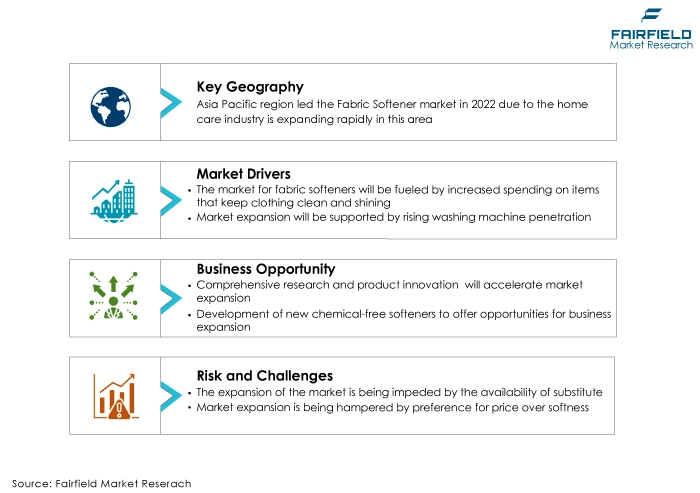
The market for fabric softeners has grown in popularity due to factors such as the growing need for biodegradable products due to worries about using chemicals, such as quaternary ammonium compounds, which can cause skin problems. Manufacturers are expected to be encouraged by this factor to spend on R&D and introduce novel products.
The market witnessed staggered growth during the historical period 2019 - 2024. This is because an increasing number of customers are using internet platforms to purchase goods. The high convenience factor of eCommerce channels is driving global sales and distribution of fabric softeners.
The growing emphasis on developing chemical-free softeners that pose no health hazards to humans creates opportunities for established and new market participants. To attract many consumers, fabric softener market participants adopt innovative package styles, contributing to market growth throughout the projection period.
Key Growth Determinants
- Increasing Consumer Preference for Soft, Aromatic, and Well-Kept Apparel
Consumers are becoming more aware of the advantages of fabric softeners, such as reduced fabric wear and tear, wrinkle prevention, and adding a nice aroma to clothing. There is an increasing demand for premium fabric softeners that provide extra benefits, such as being created with natural components, being hypoallergenic, or being developed for specific materials.
Furthermore, people are increasingly seeking products personalised to their specific requirements. This will lead to more personalised fabric softeners, such as those developed for certain materials or skin types.
- Growing Inclination Toward Urban Lifestyle
The use of laundry care products, such as fabric softeners and conditioners, has increased due to the expanding urban population and the increase in dual-income households. People who relocate to cities typically live in smaller apartments with less room for hanging things to dry. This results in a greater need for fabric softeners, which maintain clothes' softness and eliminate static electricity.
Urbanites also tend to frequently have less time to straighten their garments due to their hectic lifestyles. Time and effort can be saved by using fabric softeners to help make clothing wrinkle-free.
- Shifting Standards of Living, and a Growing Preference for Easy Fixes
The demand for washing machines has increased significantly in the global market due to shifting living standards and consumers' growing preference for simple solutions. Due to the expanding middle class, increased disposable incomes, and changing lifestyles, developing nations are especially noticing this trend.
For instance, after lockout limitations were lifted, washing machine sales in India saw a notable surge of more than 24% in units sold through retail stores and online channels. In the upcoming years, the demand for washing machines is anticipated to propel the consumption of related products, such as dryer sheets with fabric softener.
Major Growth Barriers
- Availability of Substitute Products for Fabric Care
The emergence of alternative fabric care products like wool dryer balls, aroma boosters, and dryer sheets reduces the market share of fabric softeners. These solutions frequently provide similar advantages, like softening fabrics and lowering static, but they do not require an extra laundry step.
Eco-friendly and mild substitutes for conventional fabric softeners are becoming increasingly popular among consumers. The market for fabric softeners is anticipated to continue declining as the market for alternative fabric care products grows.
- Sustained Preference for Price over Softness
Cost savings often take precedence over fabric conditioners' advantages in areas with high prices. In order to prolong the product's lifespan, they can decide not to buy these things or only use them occasionally. This limits the size and potential expansion of the market overall by causing low consumption and a slower adoption rate in certain areas.
Key Trends and Opportunities to Look at
New fabric conditioner producers can use several tactics to increase revenue and build a solid brand. By providing distinctive features or formulations that stand out in the market, new competitors might set themselves apart with their products. This could involve eco-friendly and hypoallergenic choices, creative packaging, or specialised fabric conditioners for particular fabrics. Developing a unique selling proposition (USP) can draw customers to search for improved, novel products.
- Development of New Chemical-free Softeners
- Growing Consumer Demand for Upscale and Luxury Fabric Softeners
Cationic surfactants, which coat fabric fibers to make them feel softer and less static clinging, are commonly found in traditional fabric softeners. But these substances may be bad for our health and the environment. They may even interfere with hormone function, irritate skin, and contaminate rivers. This is the reason why interest in natural alternatives is rising.
Mass-market fabric softeners are less beneficial than these and are usually created with higher-quality components. Top-tier fabric softeners are known for having several well-liked properties. These include Good-quality smells that linger for weeks and are frequently used in premium fabric softeners. These perfumes are commonly manufactured with natural ingredients like aloe vera, plant extracts, and essential oils.
How Does the Regulatory Scenario Shape this Industry?
Each country has a different set of regulations governing fabric softeners. The Food and Drug Administration (FDA) is in charge of regulating fabric softeners in the US. The FDA has limited the amounts of specific substances used in fabric softeners. Regulations about fabric softeners are also in place inside the European Union (EU).
The FDA has fewer rules than the EU. The use of some substances considered hazardous to the environment or human health, for instance, is prohibited by EU legislation. The Bureau of Indian Standards (BIS) regulates the regulatory environment for fabric softeners in India. The BIS has established guidelines for the quality and safety of fabric softeners, such as the BIS IS 10479:2013 specification for fabric softeners.
Fairfield’s Ranking Board
Top Segments
The organic segment dominated the market in 2025. Customers prefer eco-friendly and organic laundry care solutions since they have a lower environmental impact. Furthermore, numerous industry manufacturers focus more on organic ingredients in products such as coconut oil, olive oil, and others because they are efficient enough not to injure the washer's hands and do not bleach off colors from the cloth.
Furthermore, the conventional category is projected to experience the fastest market growth. These consist of artificial components like silicones and quaternary ammonium compounds. They may contain harsh chemicals that hurt the skin and harm the environment, but they are usually less expensive than organic softeners.
- Demand for Liquid Products Most Widespread
- Demand from Household Laundry Care Maximum
- Specialty Retail Stores Bring in the Highest Revenue
In 2025, the liquid category dominated the industry. Customers prefer softeners to prevent clothing fading, stretching, and gathering fuzz. Moreover, liquid conditioner increases garment durability by slowing down the yarn's strand mobility. Large detergent manufacturers have released machine-safe liquid fabric softeners. These goods are well-liked in the textile, hospitality, and residential sectors, as well as laundry services.
The sheets category is anticipated to grow substantially throughout the projected period. These products soften clothing, offer a calming scent, and help remove creases and static. Major companies in the market concentrate on developing new products to meet the growing demand. Henkel introduced dryer sheets in January 2016 under the New Snuggle Plus SuperFresh brand. The product's proprietary odor-eliminating technology ensures that garments stay soft and fresh for an extended period.
The household segment dominated the market in 2025. The demand for washing machines is greater in cities than in rural areas. Developing countries such as China, and India are expected to have a beneficial impact on market growth. From 2022 to 2029, total home washing machine sales in China are expected to rise 7%. Consumers' preference for fully automatic washing machines over semi-automatic goods increased demand for liquid softeners, and conditioners.
The hospitality industry category is expected to experience the fastest growth within the forecast time frame. This can be ascribed to the global expansion of cleaning services in the textile and hospitality industries. Towels, bed linen, and other supplies must be clean and stain-free in the hospitality sector. This element is expected to drive the industry's need for fabric softeners, and conditioners.
In 2025, the specialty retail stores category led the market growth. These stores specialise in certain goods, such as natural or organic products, or products for a specific consumer, such as babies or pets. They normally have a lesser product range than supermarkets, although they may provide more specialised or specialty items.
Moreover, the online category is expected to grow fastest in the fabric softener machine market during the forecast period. E-commerce has had a tremendous impact on the fabric softener and conditioner sector. Online platforms give consumers ease, a large product range, and the ability to compare costs, causing them to purchase online.
Regional Frontrunners
Asia Pacific Reigns Supreme, Growth of Hospitality Industry Crucial
Asia Pacific is likely to hold a dominant share in the fabric softener industry. Growing discretionary income, especially across the fast-developing nations like China, and India, is anticipated to be a positive aspect. The growing competition between regional and international firms also impacts the industry dynamics.
Strong local manufacturers like Karnataka Soaps & Detergents Ltd., and Jyothi Laboratories Ltd., among others, are expected to compete with Procter & Gamble and other major players in India. These manufacturers have entered the market through their extensive brand campaigns on social and e-media.
Sales Heighten in North America as Convenience Products Gain Momentum
The high percentage of the population in the working age group, and high disposable income is driving expansion in the North American fabric softener market. In the US, and Canada, a high concentration of working-age people, and discretionary money are anticipated to drive growth. Proctor & Gamble's two brands, Bounce, and Downy, allowed it to hold more than 50% of the American market share.
Furthermore, American consumers' fast-paced lifestyle is fueling the fabric conditioner market. Time-conscious American homes find these goods appealing since they reduce the time spent ironing, offering convenience.
Fairfield’s Competitive Landscape Analysis
The global fabric softener market is a consolidated market with fewer major players present globally. The key players are introducing new products and working on the distribution channels to enhance their worldwide presence. Moreover, Fairfield Market Research expects more consolidation over the coming years.
Who are the Leaders in the Global Fabric Softener Space?
An Expert’s Eye
Demand and Future Growth
Consumers' increased disposable income and willingness to spend on premium items in developing nations and urbanisation are driving the expansion of several product categories such as fabric, softener, and conditioner.
Because the product matches customer requirements well, developing economies confronting water quality issues are projected to be at the forefront of market growth over the forecast period. An increase in the number of working women, urbanisation, a busy lifestyle, and an increase in e-Commerce activity has also spurred the market's expansion.
In other areas, lifestyles have improved, resulting in stylish lifestyles with rising disposable incomes, a major factor driving the growth of the fabric softener and conditioner market. However, the fabric softener market is expected to face considerable challenges because of other alternatives present in the market.
Supply Side of the Market
According to our analysis, manufacturers in the fabric softener market are focusing on developing fabric softeners for household purposes. For instance, in July 2023, Presenting their newest goods, Fineline Concentrated Fabric Softener Premium Organic, and Fineline Concentrated Laundry Detergent Natural Origin 98%, is NEO Corporate Co., Ltd., a well-known Thai company known for its home and personal care products. These solutions are designed to provide a novel and soothing experience for fabric care by harnessing the power of natural substances.
Global Fabric Softener Market is Segmented as Below:
By Nature:
- Organic
- Conventional
By Product Type:
- Tablets
- Dryer Bars
- Liquid
- Sheets
- Sprays
By End User:
- Household
- Hospitality Industry
- Laundry Services
- Textile Industry
- Others
By Sales Channel:
- Specialty Retail Stores
- Online Sales
- Company Website
- 3rd Party Online Sales
- Independent Retailers
- Hypermarkets
- Multi Brand Stores
- Supermarkets
By Geographic Coverage:
- North America
- Europe
- Asia Pacific
- Latin America
- Middle East & Africa
- Executive Summary
- Global Fabric Softener Market Snapshot
- Future Projections
- Key Market Trends
- Regional Snapshot, by Value, 2026
- Analyst Recommendations
- Market Overview
- Market Definitions and Segmentations
- Market Dynamics
- Drivers
- Restraints
- Market Opportunities
- Value Chain Analysis
- COVID-19 Impact Analysis
- Porter's Five Forces Analysis
- Impact of Russia-Ukraine Conflict
- PESTLE Analysis
- Regulatory Analysis
- Price Trend Analysis
- Current Prices and Future Projections, 2025-2033
- Price Impact Factors
- Global Fabric Softener Market Outlook, 2020 - 2033
- Global Fabric Softener Market Outlook, by Nature, Value (US$ Mn), 2020-2033
- Organic
- Conventional
- Global Fabric Softener Market Outlook, by Product Type, Value (US$ Mn), 2020-2033
- Tablets
- Dryer Bars
- Liquid
- Sheets
- Sprays
- Global Fabric Softener Market Outlook, by End User, Value (US$ Mn), 2020-2033
- Household
- Hospitality Industry
- Laundry Services
- Textile Industry
- Others
- Global Fabric Softener Market Outlook, by Sales Channel, Value (US$ Mn), 2020-2033
- Specialty Retail Stores
- Online Sales
- Company Website
- 3rd Party Online Sales
- Independent Retailers
- Hypermarkets
- Multi Brand Stores
- Supermarkets
- Global Fabric Softener Market Outlook, by Region, Value (US$ Mn), 2020-2033
- North America
- Europe
- Asia Pacific
- Latin America
- Middle East & Africa
- Global Fabric Softener Market Outlook, by Nature, Value (US$ Mn), 2020-2033
- North America Fabric Softener Market Outlook, 2020 - 2033
- North America Fabric Softener Market Outlook, by Nature, Value (US$ Mn), 2020-2033
- Organic
- Conventional
- North America Fabric Softener Market Outlook, by Product Type, Value (US$ Mn), 2020-2033
- Tablets
- Dryer Bars
- Liquid
- Sheets
- Sprays
- North America Fabric Softener Market Outlook, by End User, Value (US$ Mn), 2020-2033
- Household
- Hospitality Industry
- Laundry Services
- Textile Industry
- Others
- North America Fabric Softener Market Outlook, by Sales Channel, Value (US$ Mn), 2020-2033
- Specialty Retail Stores
- Online Sales
- Company Website
- 3rd Party Online Sales
- Independent Retailers
- Hypermarkets
- Multi Brand Stores
- Supermarkets
- North America Fabric Softener Market Outlook, by Country, Value (US$ Mn), 2020-2033
- U.S. Fabric Softener Market Outlook, by Nature, 2020-2033
- U.S. Fabric Softener Market Outlook, by Product Type, 2020-2033
- U.S. Fabric Softener Market Outlook, by End User, 2020-2033
- U.S. Fabric Softener Market Outlook, by Sales Channel, 2020-2033
- Canada Fabric Softener Market Outlook, by Nature, 2020-2033
- Canada Fabric Softener Market Outlook, by Product Type, 2020-2033
- Canada Fabric Softener Market Outlook, by End User, 2020-2033
- Canada Fabric Softener Market Outlook, by Sales Channel, 2020-2033
- BPS Analysis/Market Attractiveness Analysis
- North America Fabric Softener Market Outlook, by Nature, Value (US$ Mn), 2020-2033
- Europe Fabric Softener Market Outlook, 2020 - 2033
- Europe Fabric Softener Market Outlook, by Nature, Value (US$ Mn), 2020-2033
- Organic
- Conventional
- Europe Fabric Softener Market Outlook, by Product Type, Value (US$ Mn), 2020-2033
- Tablets
- Dryer Bars
- Liquid
- Sheets
- Sprays
- Europe Fabric Softener Market Outlook, by End User, Value (US$ Mn), 2020-2033
- Household
- Hospitality Industry
- Laundry Services
- Textile Industry
- Others
- Europe Fabric Softener Market Outlook, by Sales Channel, Value (US$ Mn), 2020-2033
- Specialty Retail Stores
- Online Sales
- Company Website
- 3rd Party Online Sales
- Independent Retailers
- Hypermarkets
- Multi Brand Stores
- Supermarkets
- Europe Fabric Softener Market Outlook, by Country, Value (US$ Mn), 2020-2033
- Germany Fabric Softener Market Outlook, by Nature, 2020-2033
- Germany Fabric Softener Market Outlook, by Product Type, 2020-2033
- Germany Fabric Softener Market Outlook, by End User, 2020-2033
- Germany Fabric Softener Market Outlook, by Sales Channel, 2020-2033
- Italy Fabric Softener Market Outlook, by Nature, 2020-2033
- Italy Fabric Softener Market Outlook, by Product Type, 2020-2033
- Italy Fabric Softener Market Outlook, by End User, 2020-2033
- Italy Fabric Softener Market Outlook, by Sales Channel, 2020-2033
- France Fabric Softener Market Outlook, by Nature, 2020-2033
- France Fabric Softener Market Outlook, by Product Type, 2020-2033
- France Fabric Softener Market Outlook, by End User, 2020-2033
- France Fabric Softener Market Outlook, by Sales Channel, 2020-2033
- U.K. Fabric Softener Market Outlook, by Nature, 2020-2033
- U.K. Fabric Softener Market Outlook, by Product Type, 2020-2033
- U.K. Fabric Softener Market Outlook, by End User, 2020-2033
- U.K. Fabric Softener Market Outlook, by Sales Channel, 2020-2033
- Spain Fabric Softener Market Outlook, by Nature, 2020-2033
- Spain Fabric Softener Market Outlook, by Product Type, 2020-2033
- Spain Fabric Softener Market Outlook, by End User, 2020-2033
- Spain Fabric Softener Market Outlook, by Sales Channel, 2020-2033
- Russia Fabric Softener Market Outlook, by Nature, 2020-2033
- Russia Fabric Softener Market Outlook, by Product Type, 2020-2033
- Russia Fabric Softener Market Outlook, by End User, 2020-2033
- Russia Fabric Softener Market Outlook, by Sales Channel, 2020-2033
- Rest of Europe Fabric Softener Market Outlook, by Nature, 2020-2033
- Rest of Europe Fabric Softener Market Outlook, by Product Type, 2020-2033
- Rest of Europe Fabric Softener Market Outlook, by End User, 2020-2033
- Rest of Europe Fabric Softener Market Outlook, by Sales Channel, 2020-2033
- BPS Analysis/Market Attractiveness Analysis
- Europe Fabric Softener Market Outlook, by Nature, Value (US$ Mn), 2020-2033
- Asia Pacific Fabric Softener Market Outlook, 2020 - 2033
- Asia Pacific Fabric Softener Market Outlook, by Nature, Value (US$ Mn), 2020-2033
- Organic
- Conventional
- Asia Pacific Fabric Softener Market Outlook, by Product Type, Value (US$ Mn), 2020-2033
- Tablets
- Dryer Bars
- Liquid
- Sheets
- Sprays
- Asia Pacific Fabric Softener Market Outlook, by End User, Value (US$ Mn), 2020-2033
- Household
- Hospitality Industry
- Laundry Services
- Textile Industry
- Others
- Asia Pacific Fabric Softener Market Outlook, by Sales Channel, Value (US$ Mn), 2020-2033
- Specialty Retail Stores
- Online Sales
- Company Website
- 3rd Party Online Sales
- Independent Retailers
- Hypermarkets
- Multi Brand Stores
- Supermarkets
- Asia Pacific Fabric Softener Market Outlook, by Country, Value (US$ Mn), 2020-2033
- China Fabric Softener Market Outlook, by Nature, 2020-2033
- China Fabric Softener Market Outlook, by Product Type, 2020-2033
- China Fabric Softener Market Outlook, by End User, 2020-2033
- China Fabric Softener Market Outlook, by Sales Channel, 2020-2033
- Japan Fabric Softener Market Outlook, by Nature, 2020-2033
- Japan Fabric Softener Market Outlook, by Product Type, 2020-2033
- Japan Fabric Softener Market Outlook, by End User, 2020-2033
- Japan Fabric Softener Market Outlook, by Sales Channel, 2020-2033
- South Korea Fabric Softener Market Outlook, by Nature, 2020-2033
- South Korea Fabric Softener Market Outlook, by Product Type, 2020-2033
- South Korea Fabric Softener Market Outlook, by End User, 2020-2033
- South Korea Fabric Softener Market Outlook, by Sales Channel, 2020-2033
- India Fabric Softener Market Outlook, by Nature, 2020-2033
- India Fabric Softener Market Outlook, by Product Type, 2020-2033
- India Fabric Softener Market Outlook, by End User, 2020-2033
- India Fabric Softener Market Outlook, by Sales Channel, 2020-2033
- Southeast Asia Fabric Softener Market Outlook, by Nature, 2020-2033
- Southeast Asia Fabric Softener Market Outlook, by Product Type, 2020-2033
- Southeast Asia Fabric Softener Market Outlook, by End User, 2020-2033
- Southeast Asia Fabric Softener Market Outlook, by Sales Channel, 2020-2033
- Rest of SAO Fabric Softener Market Outlook, by Nature, 2020-2033
- Rest of SAO Fabric Softener Market Outlook, by Product Type, 2020-2033
- Rest of SAO Fabric Softener Market Outlook, by End User, 2020-2033
- Rest of SAO Fabric Softener Market Outlook, by Sales Channel, 2020-2033
- BPS Analysis/Market Attractiveness Analysis
- Asia Pacific Fabric Softener Market Outlook, by Nature, Value (US$ Mn), 2020-2033
- Latin America Fabric Softener Market Outlook, 2020 - 2033
- Latin America Fabric Softener Market Outlook, by Nature, Value (US$ Mn), 2020-2033
- Organic
- Conventional
- Latin America Fabric Softener Market Outlook, by Product Type, Value (US$ Mn), 2020-2033
- Tablets
- Dryer Bars
- Liquid
- Sheets
- Sprays
- Latin America Fabric Softener Market Outlook, by End User, Value (US$ Mn), 2020-2033
- Household
- Hospitality Industry
- Laundry Services
- Textile Industry
- Others
- Latin America Fabric Softener Market Outlook, by Sales Channel, Value (US$ Mn), 2020-2033
- Specialty Retail Stores
- Online Sales
- Company Website
- 3rd Party Online Sales
- Independent Retailers
- Hypermarkets
- Multi Brand Stores
- Supermarkets
- Latin America Fabric Softener Market Outlook, by Country, Value (US$ Mn), 2020-2033
- Brazil Fabric Softener Market Outlook, by Nature, 2020-2033
- Brazil Fabric Softener Market Outlook, by Product Type, 2020-2033
- Brazil Fabric Softener Market Outlook, by End User, 2020-2033
- Brazil Fabric Softener Market Outlook, by Sales Channel, 2020-2033
- Mexico Fabric Softener Market Outlook, by Nature, 2020-2033
- Mexico Fabric Softener Market Outlook, by Product Type, 2020-2033
- Mexico Fabric Softener Market Outlook, by End User, 2020-2033
- Mexico Fabric Softener Market Outlook, by Sales Channel, 2020-2033
- Argentina Fabric Softener Market Outlook, by Nature, 2020-2033
- Argentina Fabric Softener Market Outlook, by Product Type, 2020-2033
- Argentina Fabric Softener Market Outlook, by End User, 2020-2033
- Argentina Fabric Softener Market Outlook, by Sales Channel, 2020-2033
- Rest of LATAM Fabric Softener Market Outlook, by Nature, 2020-2033
- Rest of LATAM Fabric Softener Market Outlook, by Product Type, 2020-2033
- Rest of LATAM Fabric Softener Market Outlook, by End User, 2020-2033
- Rest of LATAM Fabric Softener Market Outlook, by Sales Channel, 2020-2033
- BPS Analysis/Market Attractiveness Analysis
- Latin America Fabric Softener Market Outlook, by Nature, Value (US$ Mn), 2020-2033
- Middle East & Africa Fabric Softener Market Outlook, 2020 - 2033
- Middle East & Africa Fabric Softener Market Outlook, by Nature, Value (US$ Mn), 2020-2033
- Organic
- Conventional
- Middle East & Africa Fabric Softener Market Outlook, by Product Type, Value (US$ Mn), 2020-2033
- Tablets
- Dryer Bars
- Liquid
- Sheets
- Sprays
- Middle East & Africa Fabric Softener Market Outlook, by End User, Value (US$ Mn), 2020-2033
- Household
- Hospitality Industry
- Laundry Services
- Textile Industry
- Others
- Middle East & Africa Fabric Softener Market Outlook, by Sales Channel, Value (US$ Mn), 2020-2033
- Specialty Retail Stores
- Online Sales
- Company Website
- 3rd Party Online Sales
- Independent Retailers
- Hypermarkets
- Multi Brand Stores
- Supermarkets
- Middle East & Africa Fabric Softener Market Outlook, by Country, Value (US$ Mn), 2020-2033
- GCC Fabric Softener Market Outlook, by Nature, 2020-2033
- GCC Fabric Softener Market Outlook, by Product Type, 2020-2033
- GCC Fabric Softener Market Outlook, by End User, 2020-2033
- GCC Fabric Softener Market Outlook, by Sales Channel, 2020-2033
- South Africa Fabric Softener Market Outlook, by Nature, 2020-2033
- South Africa Fabric Softener Market Outlook, by Product Type, 2020-2033
- South Africa Fabric Softener Market Outlook, by End User, 2020-2033
- South Africa Fabric Softener Market Outlook, by Sales Channel, 2020-2033
- Egypt Fabric Softener Market Outlook, by Nature, 2020-2033
- Egypt Fabric Softener Market Outlook, by Product Type, 2020-2033
- Egypt Fabric Softener Market Outlook, by End User, 2020-2033
- Egypt Fabric Softener Market Outlook, by Sales Channel, 2020-2033
- Nigeria Fabric Softener Market Outlook, by Nature, 2020-2033
- Nigeria Fabric Softener Market Outlook, by Product Type, 2020-2033
- Nigeria Fabric Softener Market Outlook, by End User, 2020-2033
- Nigeria Fabric Softener Market Outlook, by Sales Channel, 2020-2033
- Rest of Middle East Fabric Softener Market Outlook, by Nature, 2020-2033
- Rest of Middle East Fabric Softener Market Outlook, by Product Type, 2020-2033
- Rest of Middle East Fabric Softener Market Outlook, by End User, 2020-2033
- Rest of Middle East Fabric Softener Market Outlook, by Sales Channel, 2020-2033
- BPS Analysis/Market Attractiveness Analysis
- Middle East & Africa Fabric Softener Market Outlook, by Nature, Value (US$ Mn), 2020-2033
- Competitive Landscape
- Company Vs Segment Heatmap
- Company Market Share Analysis, 2025
- Competitive Dashboard
- Company Profiles
- Procter & Gamble (P&G)
- Company Overview
- Product Portfolio
- Financial Overview
- Business Strategies and Developments
- Unilever
- Henkel
- Reckitt Benckiser Group plc
- Johnson & Son, Inc.
- Church & Dwight Co., Inc
- Colgate-Palmolive Company
- Kao Corporation
- Lion Corporation
- The Clorox Company
- Procter & Gamble (P&G)
- Appendix
- Research Methodology
- Report Assumptions
- Acronyms and Abbreviations
|
BASE YEAR |
HISTORICAL DATA |
FORECAST PERIOD |
UNITS |
|||
 |
2025 |
 |
2019 - 2024 |
 |
2026 - 2033 |
Value: US$ Billion |
|
REPORT FEATURES |
DETAILS |
|
Nature Coverage |
|
|
Product Type Coverage |
|
|
End User Coverage |
|
|
Sales Channel Coverage |
|
|
Geographical Coverage |
|
|
Leading Companies |
|
|
Report Highlights |
Key Market Indicators, Macro-micro economic impact analysis, Technological Roadmap, Key Trends, Driver, Restraints, and Future Opportunities & Revenue Pockets, Porter’s 5 Forces Analysis, Historical Trend (2019-2021), Market Estimates and Forecast, Market Dynamics, Industry Trends, Competition Landscape, Category, Region, Country-wise Trends & Analysis, COVID-19 Impact Analysis (Demand and Supply Chain) |
Our Research Methodology
Considering the volatility of business today, traditional approaches to strategizing a game plan can be unfruitful if not detrimental. True ambiguity is no way to determine a forecast. A myriad of predetermined factors must be accounted for such as the degree of risk involved, the magnitude of circumstances, as well as conditions or consequences that are not known or unpredictable. To circumvent binary views that cast uncertainty, the application of market research intelligence to strategically posture, move, and enable actionable outcomes is necessary.
View Methodology
Quality Assured
Rigorous Validation Process

Confidentiality Assured
End-to-end Data Security

Custom Research Services
Tailored To Your Objectives
FAQs
Increasing consumer focus on fabric care, the rising demand for premium laundry products, and a growing awareness of sustainable and hypoallergenic formulations contribute to the expanding fabric softener market.
Evolving consumer lifestyles, such as time constraints and environmental consciousness, drive innovations like quick-dissolve formulas and eco-friendly packaging, influencing both product development and marketing approaches in the fabric softener industry.
The fabric softener market is adapting to the e-commerce boom, with manufacturers emphasizing online presence, convenient packaging for shipping, and exclusive online promotions to reach a broader consumer base and enhance sales.
Sustainability is a key focus, leading to the adoption of biodegradable ingredients, reduced packaging waste, and eco-friendly production processes, as fabric softener manufacturers strive to align with environmentally conscious consumer values.
Product differentiation is achieved through innovations such as long-lasting fragrances, fabric-specific formulations, and unique packaging designs, allowing companies to create a distinctive brand identity and cater to diverse consumer preferences.
Related Reports
Tinted Moisturizer Cream Market
The global tinted moisturizer cream market will reach US$ 3.79 Bn by 2033, growing at an 8.8% CAGR, driven by rising demand for multifunctional skincare
Corrugated Automotive Packaging Market
The global corrugated automotive packaging market will reach US$ 6.49 Bn by 2033, growing at 6.4% CAGR from 2026-2033, driven by automotive packaging demand
Beauty Subscription Market Insights, Competitive Landscape, and Market Forecast - 2033
The beauty subscription market reaches USD 7.25 Bn by 2033, up from USD 3.20 Bn in 2026, expanding at a 12.4% CAGR through 2033 as beauty demand grows
Pet Cosmetics Market Insights, Competitive Landscape, and Market Forecast 2033
Pet Cosmetics Market to reach USD 2.58 Bn by 2033, growing at 9.7% CAGR, driven by pet humanization, premium grooming, and product innovation trends.
Die Cast Toys Market Insights, Competitive Landscape, and Market Forecast - 2033
The global die cast toys market is valued at USD 3.60 Bn in 2026 and is projected to reach USD 5.31 Bn by 2033, growing at a CAGR of 5.7% during 2026-2033
High Abuse Shrink Bags Market Insights, Competitive Landscape, and Market Forecast - 2033
The high abuse shrink bags market reaches USD 2.47 Bn by 2033, growing at 6.4% CAGR from 2026, driven by demand for durable packaging solutions in industry