



Food Flavors Market
Global Food Flavors Industry Analysis, Size, Share, Growth, Trends, and Forecast 2026-2033 – (By Naturet, By Type, By Form, By Application, By Geographic Coverage and By Company)
Global Food Flavors Maret: Strategic Analysis 2026-2033
Executive Summary & Key Highlights
- The global Food Flavors market size is likely to be valued at USD15.5 billion in 2026 and is expected to reach USD 22.4 billion by 2033, growing at a CAGR of 5.40% during the forecast period from 2026 to 2033.
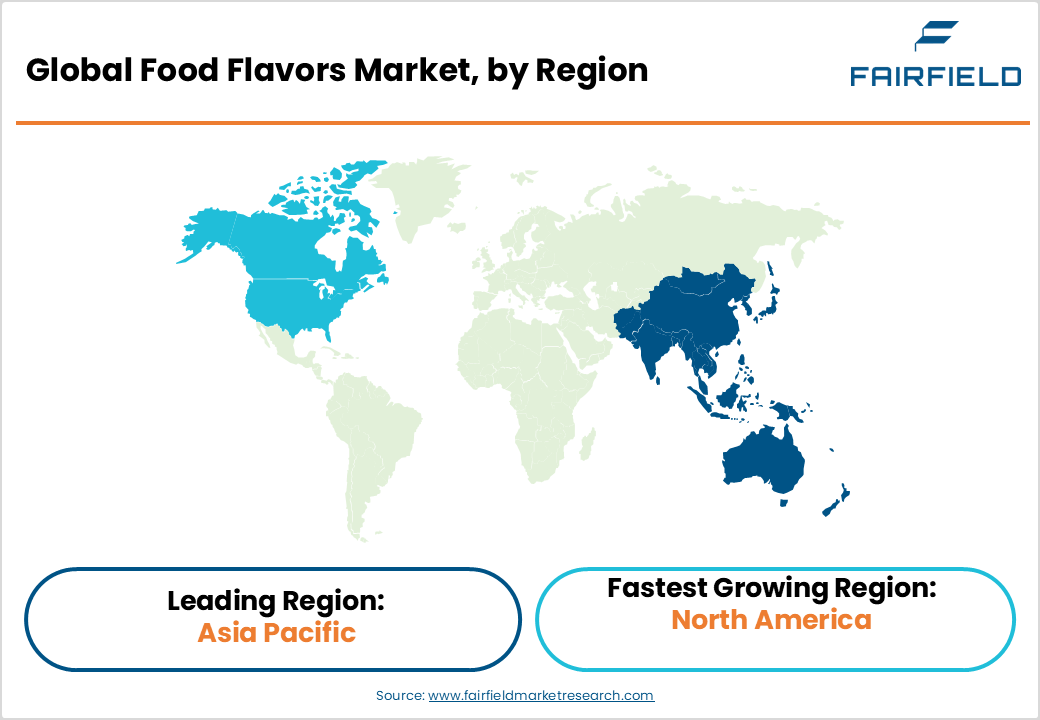
- Asia Pacific leads the global food flavors market with approximately 35% revenue share, driven by China's dominant food processing industry, Japan's premium flavor culture, India's expanding packaged food sector, and rapidly growing ASEAN food and beverage manufacturing ecosystems.
- North America is the fastest-growing food flavors market, fueled by a highly innovative functional beverage sector, strong consumer demand for premium natural flavor solutions, and the presence of globally leading flavor suppliers, including Kerry Group plc, IFF, and Sensient Technologies Corporation.
- Natural flavors dominate the nature segment with approximately 56% market share, driven by the global clean-label megatrend, tightening EU and FDA regulatory standards for synthetic flavoring substances, and major food manufacturers' active natural ingredient reformulation programs.
- Plant-based and fermentation-derived flavors represent the fastest-growing innovation segment, propelled by the global expansion of plant-based food retail sales reaching approximately US$ 8 billion and increasing R&D investment from Givaudan S.A., DSM-Firmenich, and IFF in biotransformation platforms.
- Flavor innovation for functional beverages and nutraceuticals, particularly bitter-masking and sensory modulation technologies, represents the defining market opportunity, as the global functional food and beverage sector continues its double-digit growth trajectory, generating sustained premium flavor demand across North America and the Asia Pacific.

Market Dynamics: Drivers, Restraints, and Opportunities Analysis
Market Growth Drivers
- Surging Consumer Preference for Natural and Clean-Label Flavors
Consumer demand for transparency in food formulation has fundamentally reshaped the food flavors industry. According to the International Food Information Council (IFIC) Foundation's 2023 Food and Health Survey, a significant majority of U.S. consumers actively seek food products with recognizable, simple ingredient lists, driving food manufacturers to reformulate with natural flavor solutions. The European Food Safety Authority (EFSA) has progressively tightened the evaluation framework for flavoring substances. This clean-label megatrend has compelled global food and beverage companies to increase their natural flavor procurement, directly expanding revenues for leading flavor houses including Givaudan S.A., IFF, and Symrise that have invested heavily in natural extraction and biotechnology-derived flavor platforms.
- Rapid Growth of Processed Food and Beverage Consumption in Emerging Markets
The expanding middle-class population and accelerating urbanization across Asia Pacific, Latin America, and Middle East & Africa are generating extraordinary growth in processed food and ready-to-drink beverage consumption the two primary end-use categories for food flavors. According to the Food and Agriculture Organization of the United Nations (FAO), global food processing and consumption volumes have grown significantly in developing regions, driven by rising per-capita incomes and evolving dietary patterns. The World Bank estimates that the global middle class will expand by approximately 1 billion people between 2020 and 2030, with a disproportionate share concentrated in Asia Pacific. As regional food manufacturers scale production and diversify product portfolios to address evolving consumer taste preferences, demand for flavor ingredients across bakery, snacks, dairy, and beverages categories is expanding consistently.
Market Restraints
- Volatility in Natural Raw Material Supply and Pricing
Natural food flavors are derived from agricultural commodities including vanilla beans, citrus fruits, cocoa, and various spices and botanicals whose supply is highly susceptible to climate variability, crop disease, and geopolitical disruptions. Madagascar, which produces approximately 80% of the world's natural vanilla, has experienced recurring cyclone-related crop damage that has caused dramatic vanilla price volatility, with prices reaching extreme highs of over US$ 600 per kilogram in recent years. According to the International Trade Centre (ITC), agricultural commodity price fluctuations impose significant cost instability on flavor manufacturers, compressing margins and complicating long-term customer pricing commitments, particularly for companies with high natural ingredient content in their product portfolios.
- Stringent Regulatory Requirements and Complex Approval Processes
Food flavor ingredients are subject to extensive regulatory oversight globally. In the European Union, flavoring substances must be evaluated and authorized under EC Regulation No. 1334/2008, with the European Food Safety Authority (EFSA) conducting detailed safety assessments that can take several years to complete. In the United States, the FDA's GRAS (Generally Recognized As Safe) notification system governs flavor ingredient use, with increasingly rigorous documentation requirements. Compliance with divergent national regulatory standards across Asia Pacific, Latin America, and Middle East & Africa markets adds significant complexity and cost to flavor product registration and market access, particularly for smaller flavor manufacturers seeking to expand into multiple geographies simultaneously.
Market Opportunities
- Innovation in Plant-Based and Fermentation-Derived Flavor Technologies
The rapid global expansion of the plant-based food and alternative protein sector is creating a transformational opportunity for food flavor innovation. Plant-based meat analogues, dairy alternatives, and functional beverages require sophisticated flavor masking and enhancement technologies to replicate the sensory experience of conventional animal-derived products. The Good Food Institute (GFI) reported that global plant-based food retail sales reached approximately billions in 2022, with continued investment flowing into next-generation product development. Concurrently, precision fermentation technology is enabling the bio-production of high-purity, nature-identical flavor compounds including vanillin, lactones, and pyrazines at commercially viable costs. Companies including dsm-firmenich, Givaudan S.A., and IFF are actively investing in fermentation-derived natural flavor platforms, positioning themselves to capture significant premium revenue from this emerging technology category.
- Expansion of Flavor Applications in Functional Beverages and Nutraceuticals
The global functional beverage and nutraceutical sector is experiencing accelerated growth, creating substantial incremental demand for food flavor solutions that can effectively mask the bitter or unpleasant taste profiles inherent in bioactive ingredients including vitamins, minerals, adaptogens, and botanical extracts. According to the Nutrition Business Journal, the global functional food and beverage market has grown consistently at double-digit rates in recent years, driven by post-pandemic health and wellness awareness. North America, the fastest growing regional market is a major hub of functional beverage innovation, with brands launching new formats in energy drinks, sports hydration, gut health beverages, and nootropic drinks at an unprecedented pace. Flavor companies that develop specialized bitter-masking, sensory modulation, and mouthfeel-enhancement technologies for functional applications are well-positioned to command premium pricing and long-term supply agreements with fast-growing functional food and beverage brands.
Segmentation Analysis: Category-Wise Strategic Assessment
- Nature Analysis
Natural flavors dominate the food flavors market by nature, accounting for approximately 56% of total market share. The sustained consumer-driven clean-label movement, combined with tightening regulatory frameworks governing synthetic flavoring substances across the European Union and North America, has accelerated the transition from synthetic to natural flavor ingredients across major food and beverage categories. Natural flavors derived from fruits, vegetables, botanicals, spices, and fermentation processes are increasingly specified by leading food manufacturers in their product reformulation programs. Major flavor companies including Kerry Group plc, Mane Group, and Takasago International Corporation have significantly expanded their natural flavor extraction and biotransformation capabilities. The IFIC Foundation consistently reports that "natural" labeling is among the most influential purchase drivers for U.S. food and beverage consumers, reinforcing natural flavors' dominant market position.
- Type Analysis
Fruit and Vegetables flavor type commands the leading position in the food flavors market by type, accounting for approximately 28% of total market share. Fruit-derived flavors spanning citrus, berry, tropical, and stone fruit profiles are among the most universally demanded flavor categories globally, applied extensively across beverages, confectionery, dairy, bakery, and snack products. The FAO reports consistent year-over-year growth in global fruit processing for flavor extraction, driven by expanding beverage industry demand. Citrus flavors in particular benefit from the booming functional and energy beverage sector. Vegetable-derived savory flavors are gaining significant momentum in the plant-based food segment. The versatility of fruit and vegetable flavor profiles across both food and beverage applications, combined with strong consumer familiarity and positive sensory associations, sustains this type segment's consistent market leadership globally.
- Form Analysis
Liquid flavors represent the leading form segment in the food flavors market, accounting for approximately 52% of total market share. Liquid flavor formats offer superior dispersibility, homogeneous incorporation into food and beverage matrices, and greater dosage flexibility compared to dry and gel alternatives. They are the preferred format for beverage manufacturers both alcoholic and non-alcoholic where uniform flavor distribution in aqueous systems is critical. The global beverage industry's scale, encompassing soft drinks, juices, functional beverages, dairy drinks, and alcoholic beverages, generates enormous and consistent demand for liquid flavor systems. Leading flavor suppliers including Givaudan S.A., IFF, Symrise, and Döhler GmbH have developed extensive portfolios of application-specific liquid flavor concentrates, emulsions, and flavor bases tailored for diverse beverage processing environments worldwide.
- Application Analysis
The Food application segment leads the food flavors market, accounting for approximately 62% of total market revenue. Within the food application, Bakery & Confectionery holds the largest sub-segment share, driven by the immense global scale of the baked goods and confectionery industry and the critical role that vanilla, cocoa, fruit, dairy, and spice flavors play in defining product identity and consumer preference. According to the American Bakers Association (ABA), the U.S. baking industry alone generates annual revenues exceeding US$ 100 billion, representing a substantial domestic flavor demand base. Globally, expanding bakery modernization across Asia Pacific with China, India, and Southeast Asia recording double-digit growth in premium packaged bakery consumption is further reinforcing the food application segment's market leadership within the food flavors industry.

Regional Market Assessment: Strategic Geography Analysis
- North America Food Flavors Market Trends
North America is the fastest growing regional market for food flavors, underpinned by a highly innovative food and beverage industry, strong consumer demand for premium and natural flavor solutions, and a robust regulatory framework. The U.S. Food and Drug Administration (FDA) governs food flavoring substances through the GRAS notification system, maintaining rigorous safety standards that support consumer confidence in commercially used flavor ingredients. The U.S. leads regional consumption, driven by an extraordinarily dynamic food innovation ecosystem that continuously generates new product categories demanding differentiated flavor profiles.
The functional beverage segment is a particularly strong growth driver in North America, with brands including energy drinks, sports nutrition drinks, gut health beverages, and adaptogen-infused drinks launching at scale and requiring sophisticated flavor masking and enhancement capabilities. Canada is recording increased demand for organic and certified natural flavors, aligned with the country's growing clean-label food movement. Leading flavor companies including Kerry Group plc, IFF, and Sensient Technologies Corporation maintain strong North American commercial operations, continuously launching application-specific flavor innovations for this high-growth regional market.
- Europe Food Flavors Market Trends
Europe is a significant and rigorously regulated food flavors market, shaped by the European Union's comprehensive flavoring substance legislative framework under EC Regulation No. 1334/2008 and ongoing EFSA safety evaluations. Germany, the United Kingdom, France, and Spain constitute the region's primary national markets, each characterized by sophisticated food processing industries and strong consumer orientation toward authentic, premium, and regionally distinctive flavor profiles. Germany maintains European leadership as both a major flavor production hub and consumer market, home to globally significant flavor and ingredient companies.
The European market is at the forefront of the natural and organic flavor transition, driven by the EU Farm to Fork Strategy a core pillar of the European Green Deal which is pushing the food supply chain toward reduced synthetic additive usage and greater adoption of natural, sustainably sourced ingredients. France's deeply embedded culinary heritage drives premium demand for wine, dairy, spice, and botanical flavor applications. Spain and Italy are strong markets for fruit and vegetable-derived flavor extracts. Companies including Givaudan S.A., Symrise, dsm-firmenich, and Döhler GmbH anchor Europe's highly competitive flavor supply landscape.
- Asia Pacific Food Flavors Market Trends
Asia Pacific is the leading regional food flavors market, accounting for approximately 35% of global revenue, driven by the region's dominant role in global food processing, an enormous and rapidly expanding consumer base, and accelerating westernization of dietary preferences across urban populations. China is the region's largest national market, with its massive food and beverage processing industry generating the highest regional flavor consumption volumes. The Chinese government's food safety regulations, including standards under the National Food Safety Standard, are progressively aligning with international best practices, stimulating demand for certified, safe flavor ingredients.
Japan's sophisticated flavor culture encompassing distinctive umami, matcha, yuzu, and miso-derived flavor applications sustains high per-capita flavor consumption and drives premium product innovation, with companies including T. Hasegawa Co., Ltd. and Takasago International Corporation playing pivotal roles. India is among the fastest growing national markets within Asia Pacific, fueled by rapid urbanization, expanding packaged food consumption, and a large domestic spice and botanical flavor production base. ASEAN markets particularly Indonesia, Thailand, and Vietnam are recording strong growth driven by their expanding processed food and beverage manufacturing sectors.
Competitive Landscape: Market Structure and Strategic Positioning
The global food flavors market is moderately consolidated at the top tier, with a small number of large multinational flavor houses Givaudan S.A., IFF, Symrise, dsm-firmenich, Kerry Group plc, and Mane Group collectively commanding a significant share of global revenue. These leaders compete through sustained R&D investment, proprietary natural extraction and biotransformation technologies, and deep customer co-creation partnerships with major food and beverage manufacturers. Key competitive differentiators include naturals capabilities, regulatory compliance expertise across multiple jurisdictions, regional manufacturing proximity, and emerging digital flavor development platforms. A fragmented mid-tier and regional supplier layer, including McCormick & Company, Inc., Sensient Technologies Corporation, and Döhler GmbH, competes on specialization and application expertise.
Key Players
- ADM
- Kerry Group plc.
- Givaudan S.A.
- IFF
- CP Ingredients
- Mane Group
- Symrise
- Takasago International Corporation
- McCormick & Company, Inc.
- dsm-firmenich
- The Edlong Corporation
- Döhler GmbH
- Sensient Technologies Corporation
- Corbion
- Hasegawa Co., Ltd.
- Ingredion
- Carbery Group
- Treatt Plc
- BASF
- Citromax Flavors
- Others
Key Industry Developments
- March, 2025: Givaudan S.A. expanded its natural flavor extraction facility in Singapore, strengthening production capacity for Asia Pacific markets and enhancing its ability to serve the region's rapidly growing processed food and beverage manufacturers with locally relevant natural flavor solutions.
- October, 2024: dsm-firmenich launched a new range of fermentation-derived natural flavor compounds targeting plant-based meat and dairy alternative applications globally, leveraging precision fermentation technology to deliver nature-identical taste profiles at commercially competitive pricing.
- January, 2023: IFF announced the divestiture of its Savory Solutions business to Givaudan S.A., streamlining its portfolio focus toward high-growth natural flavor, health and biosciences segments while strengthening Givaudan's position in savory and culinary flavor applications globally.
Global Food Flavors Market Segmentation
By Nature
- Natural
- Synthetic
By Type
- Vanilla
- Cocoa
- Tea, Coffee
- Spices, Herbs & Botanicals
- Fruit and Vegetables
- Dairy
- Wine & Spirits
- Others
By Form
- Dry
- Liquid
- Gel
By Application
- Food
- Bakery & Confectionery
- Dairy Products
- Meat Products
- Snacks & Savory
- Sauces & Dressings
- Others
- Beverages
- Alcoholic Beverages
- Non - Alcoholic Beverages
- Animal Nutrition
- Others
By Region
- North America
- Europe
- Asia Pacific
- Latin America
- Middle East &Africa
- Executive Summary
- Global Food Flavors Market Snapshot
- Future Projections
- Key Market Trends
- Regional Snapshot, by Value, 2026
- Analyst Recommendations
- Market Overview
- Market Definitions and Segmentations
- Market Dynamics
- Drivers
- Restraints
- Market Opportunities
- Value Chain Analysis
- COVID-19 Impact Analysis
- Porter's Five Forces Analysis
- Impact of Russia-Ukraine Conflict
- PESTLE Analysis
- Regulatory Analysis
- Price Trend Analysis
- Current Prices and Future Projections, 2025-2033
- Price Impact Factors
- Global Food Flavors Market Outlook, 2020 - 2033
- Global Food Flavors Market Outlook, by Product Type, Value (US$ Bn), 2020-2033
- Vanilla
- Cocoa
- Tea, Coffee
- Spices, Herbs & Botanicals
- Fruit and Vegetables
- Dairy
- Wine & Spirits
- Others
- Global Food Flavors Market Outlook, by Product Form, Value (US$ Bn), 2020-2033
- Dry
- Liquid
- Gel
- Global Food Flavors Market Outlook, by Nature, Value (US$ Bn), 2020-2033
- Natural
- Synthetic
- Global Food Flavors Market Outlook, by Application, Value (US$ Bn), 2020-2033
- food
- Beverages
- Global Food Flavors Market Outlook, by Region, Value (US$ Bn), 2020-2033
- North America
- Europe
- Asia Pacific
- Latin America
- Middle East & Africa
- Global Food Flavors Market Outlook, by Product Type, Value (US$ Bn), 2020-2033
- North America Food Flavors Market Outlook, 2020 - 2033
- North America Food Flavors Market Outlook, by Product Type, Value (US$ Bn), 2020-2033
- Vanilla
- Cocoa
- Tea, Coffee
- Spices, Herbs & Botanicals
- Fruit and Vegetables
- Dairy
- Wine & Spirits
- Others
- North America Food Flavors Market Outlook, by Product Form, Value (US$ Bn), 2020-2033
- Dry
- Liquid
- Gel
- North America Food Flavors Market Outlook, by Nature, Value (US$ Bn), 2020-2033
- Natural
- Synthetic
- North America Food Flavors Market Outlook, by Application, Value (US$ Bn), 2020-2033
- food
- Beverages
- North America Food Flavors Market Outlook, by Country, Value (US$ Bn), 2020-2033
- U.S. Food Flavors Market Outlook, by Product Type, 2020-2033
- U.S. Food Flavors Market Outlook, by Product Form, 2020-2033
- U.S. Food Flavors Market Outlook, by Nature, 2020-2033
- U.S. Food Flavors Market Outlook, by Application, 2020-2033
- Canada Food Flavors Market Outlook, by Product Type, 2020-2033
- Canada Food Flavors Market Outlook, by Product Form, 2020-2033
- Canada Food Flavors Market Outlook, by Nature, 2020-2033
- Canada Food Flavors Market Outlook, by Application, 2020-2033
- BPS Analysis/Market Attractiveness Analysis
- North America Food Flavors Market Outlook, by Product Type, Value (US$ Bn), 2020-2033
- Europe Food Flavors Market Outlook, 2020 - 2033
- Europe Food Flavors Market Outlook, by Product Type, Value (US$ Bn), 2020-2033
- Vanilla
- Cocoa
- Tea, Coffee
- Spices, Herbs & Botanicals
- Fruit and Vegetables
- Dairy
- Wine & Spirits
- Others
- Europe Food Flavors Market Outlook, by Product Form, Value (US$ Bn), 2020-2033
- Dry
- Liquid
- Gel
- Europe Food Flavors Market Outlook, by Nature, Value (US$ Bn), 2020-2033
- Natural
- Synthetic
- Europe Food Flavors Market Outlook, by Application, Value (US$ Bn), 2020-2033
- food
- Beverages
- Europe Food Flavors Market Outlook, by Country, Value (US$ Bn), 2020-2033
- Germany Food Flavors Market Outlook, by Product Type, 2020-2033
- Germany Food Flavors Market Outlook, by Product Form, 2020-2033
- Germany Food Flavors Market Outlook, by Nature, 2020-2033
- Germany Food Flavors Market Outlook, by Application, 2020-2033
- Italy Food Flavors Market Outlook, by Product Type, 2020-2033
- Italy Food Flavors Market Outlook, by Product Form, 2020-2033
- Italy Food Flavors Market Outlook, by Nature, 2020-2033
- Italy Food Flavors Market Outlook, by Application, 2020-2033
- France Food Flavors Market Outlook, by Product Type, 2020-2033
- France Food Flavors Market Outlook, by Product Form, 2020-2033
- France Food Flavors Market Outlook, by Nature, 2020-2033
- France Food Flavors Market Outlook, by Application, 2020-2033
- U.K. Food Flavors Market Outlook, by Product Type, 2020-2033
- U.K. Food Flavors Market Outlook, by Product Form, 2020-2033
- U.K. Food Flavors Market Outlook, by Nature, 2020-2033
- U.K. Food Flavors Market Outlook, by Application, 2020-2033
- Spain Food Flavors Market Outlook, by Product Type, 2020-2033
- Spain Food Flavors Market Outlook, by Product Form, 2020-2033
- Spain Food Flavors Market Outlook, by Nature, 2020-2033
- Spain Food Flavors Market Outlook, by Application, 2020-2033
- Russia Food Flavors Market Outlook, by Product Type, 2020-2033
- Russia Food Flavors Market Outlook, by Product Form, 2020-2033
- Russia Food Flavors Market Outlook, by Nature, 2020-2033
- Russia Food Flavors Market Outlook, by Application, 2020-2033
- Rest of Europe Food Flavors Market Outlook, by Product Type, 2020-2033
- Rest of Europe Food Flavors Market Outlook, by Product Form, 2020-2033
- Rest of Europe Food Flavors Market Outlook, by Nature, 2020-2033
- Rest of Europe Food Flavors Market Outlook, by Application, 2020-2033
- BPS Analysis/Market Attractiveness Analysis
- Europe Food Flavors Market Outlook, by Product Type, Value (US$ Bn), 2020-2033
- Asia Pacific Food Flavors Market Outlook, 2020 - 2033
- Asia Pacific Food Flavors Market Outlook, by Product Type, Value (US$ Bn), 2020-2033
- Vanilla
- Cocoa
- Tea, Coffee
- Spices, Herbs & Botanicals
- Fruit and Vegetables
- Dairy
- Wine & Spirits
- Others
- Asia Pacific Food Flavors Market Outlook, by Product Form, Value (US$ Bn), 2020-2033
- Dry
- Liquid
- Gel
- Asia Pacific Food Flavors Market Outlook, by Nature, Value (US$ Bn), 2020-2033
- Natural
- Synthetic
- Asia Pacific Food Flavors Market Outlook, by Application, Value (US$ Bn), 2020-2033
- food
- Beverages
- Asia Pacific Food Flavors Market Outlook, by Country, Value (US$ Bn), 2020-2033
- China Food Flavors Market Outlook, by Product Type, 2020-2033
- China Food Flavors Market Outlook, by Product Form, 2020-2033
- China Food Flavors Market Outlook, by Nature, 2020-2033
- China Food Flavors Market Outlook, by Application, 2020-2033
- Japan Food Flavors Market Outlook, by Product Type, 2020-2033
- Japan Food Flavors Market Outlook, by Product Form, 2020-2033
- Japan Food Flavors Market Outlook, by Nature, 2020-2033
- Japan Food Flavors Market Outlook, by Application, 2020-2033
- South Korea Food Flavors Market Outlook, by Product Type, 2020-2033
- South Korea Food Flavors Market Outlook, by Product Form, 2020-2033
- South Korea Food Flavors Market Outlook, by Nature, 2020-2033
- South Korea Food Flavors Market Outlook, by Application, 2020-2033
- India Food Flavors Market Outlook, by Product Type, 2020-2033
- India Food Flavors Market Outlook, by Product Form, 2020-2033
- India Food Flavors Market Outlook, by Nature, 2020-2033
- India Food Flavors Market Outlook, by Application, 2020-2033
- Southeast Asia Food Flavors Market Outlook, by Product Type, 2020-2033
- Southeast Asia Food Flavors Market Outlook, by Product Form, 2020-2033
- Southeast Asia Food Flavors Market Outlook, by Nature, 2020-2033
- Southeast Asia Food Flavors Market Outlook, by Application, 2020-2033
- Rest of SAO Food Flavors Market Outlook, by Product Type, 2020-2033
- Rest of SAO Food Flavors Market Outlook, by Product Form, 2020-2033
- Rest of SAO Food Flavors Market Outlook, by Nature, 2020-2033
- Rest of SAO Food Flavors Market Outlook, by Application, 2020-2033
- BPS Analysis/Market Attractiveness Analysis
- Asia Pacific Food Flavors Market Outlook, by Product Type, Value (US$ Bn), 2020-2033
- Latin America Food Flavors Market Outlook, 2020 - 2033
- Latin America Food Flavors Market Outlook, by Product Type, Value (US$ Bn), 2020-2033
- Vanilla
- Cocoa
- Tea, Coffee
- Spices, Herbs & Botanicals
- Fruit and Vegetables
- Dairy
- Wine & Spirits
- Others
- Latin America Food Flavors Market Outlook, by Product Form, Value (US$ Bn), 2020-2033
- Dry
- Liquid
- Gel
- Latin America Food Flavors Market Outlook, by Nature, Value (US$ Bn), 2020-2033
- Natural
- Synthetic
- Latin America Food Flavors Market Outlook, by Application, Value (US$ Bn), 2020-2033
- food
- Beverages
- Latin America Food Flavors Market Outlook, by Country, Value (US$ Bn), 2020-2033
- Brazil Food Flavors Market Outlook, by Product Type, 2020-2033
- Brazil Food Flavors Market Outlook, by Product Form, 2020-2033
- Brazil Food Flavors Market Outlook, by Nature, 2020-2033
- Brazil Food Flavors Market Outlook, by Application, 2020-2033
- Mexico Food Flavors Market Outlook, by Product Type, 2020-2033
- Mexico Food Flavors Market Outlook, by Product Form, 2020-2033
- Mexico Food Flavors Market Outlook, by Nature, 2020-2033
- Mexico Food Flavors Market Outlook, by Application, 2020-2033
- Argentina Food Flavors Market Outlook, by Product Type, 2020-2033
- Argentina Food Flavors Market Outlook, by Product Form, 2020-2033
- Argentina Food Flavors Market Outlook, by Nature, 2020-2033
- Argentina Food Flavors Market Outlook, by Application, 2020-2033
- Rest of LATAM Food Flavors Market Outlook, by Product Type, 2020-2033
- Rest of LATAM Food Flavors Market Outlook, by Product Form, 2020-2033
- Rest of LATAM Food Flavors Market Outlook, by Nature, 2020-2033
- Rest of LATAM Food Flavors Market Outlook, by Application, 2020-2033
- BPS Analysis/Market Attractiveness Analysis
- Latin America Food Flavors Market Outlook, by Product Type, Value (US$ Bn), 2020-2033
- Middle East & Africa Food Flavors Market Outlook, 2020 - 2033
- Middle East & Africa Food Flavors Market Outlook, by Product Type, Value (US$ Bn), 2020-2033
- Vanilla
- Cocoa
- Tea, Coffee
- Spices, Herbs & Botanicals
- Fruit and Vegetables
- Dairy
- Wine & Spirits
- Others
- Middle East & Africa Food Flavors Market Outlook, by Product Form, Value (US$ Bn), 2020-2033
- Dry
- Liquid
- Gel
- Middle East & Africa Food Flavors Market Outlook, by Nature, Value (US$ Bn), 2020-2033
- Natural
- Synthetic
- Middle East & Africa Food Flavors Market Outlook, by Application, Value (US$ Bn), 2020-2033
- food
- Beverages
- Middle East & Africa Food Flavors Market Outlook, by Country, Value (US$ Bn), 2020-2033
- GCC Food Flavors Market Outlook, by Product Type, 2020-2033
- GCC Food Flavors Market Outlook, by Product Form, 2020-2033
- GCC Food Flavors Market Outlook, by Nature, 2020-2033
- GCC Food Flavors Market Outlook, by Application, 2020-2033
- South Africa Food Flavors Market Outlook, by Product Type, 2020-2033
- South Africa Food Flavors Market Outlook, by Product Form, 2020-2033
- South Africa Food Flavors Market Outlook, by Nature, 2020-2033
- South Africa Food Flavors Market Outlook, by Application, 2020-2033
- Egypt Food Flavors Market Outlook, by Product Type, 2020-2033
- Egypt Food Flavors Market Outlook, by Product Form, 2020-2033
- Egypt Food Flavors Market Outlook, by Nature, 2020-2033
- Egypt Food Flavors Market Outlook, by Application, 2020-2033
- Nigeria Food Flavors Market Outlook, by Product Type, 2020-2033
- Nigeria Food Flavors Market Outlook, by Product Form, 2020-2033
- Nigeria Food Flavors Market Outlook, by Nature, 2020-2033
- Nigeria Food Flavors Market Outlook, by Application, 2020-2033
- Rest of Middle East Food Flavors Market Outlook, by Product Type, 2020-2033
- Rest of Middle East Food Flavors Market Outlook, by Product Form, 2020-2033
- Rest of Middle East Food Flavors Market Outlook, by Nature, 2020-2033
- Rest of Middle East Food Flavors Market Outlook, by Application, 2020-2033
- BPS Analysis/Market Attractiveness Analysis
- Middle East & Africa Food Flavors Market Outlook, by Product Type, Value (US$ Bn), 2020-2033
- Competitive Landscape
- Company Vs Segment Heatmap
- Company Market Share Analysis, 2025
- Competitive Dashboard
- Company Profiles
- ADM
- Company Overview
- Product Portfolio
- Financial Overview
- Business Strategies and Developments
- Kerry Group plc.
- Givaudan S.A.
- IFF
- CP Ingredients
- Mane Group
- Symrise
- Takasago International Corporation
- McCormick & Company, Inc.
- dsm-firmenich
- The Edlong Corporation
- Döhler GmbH
- Sensient Technologies Corporation
- Corbion
- Others
- ADM
- Appendix
- Research Methodology
- Report Assumptions
- Acronyms and Abbreviations
|
BASE YEAR |
HISTORICAL DATA |
FORECAST PERIOD |
UNITS |
|||
 |
2025 |
 |
2019 - 2025 |
 |
2026 - 2033 |
Value: US$ Billion |
|
REPORT FEATURES |
DETAILS |
|
By Product Type Coverage |
|
|
By Product Form Coverage |
|
|
Geographical Coverage |
|
|
Leading Companies |
|
|
Report Highlights |
Key Market Indicators, Macro-micro economic impact analysis, Technological Roadmap, Key Trends, Driver, Restraints, and Future Opportunities & Revenue Pockets, Porter’s 5 Forces Analysis, Historical Trend (2019-2024), Market Estimates and Forecast, Market Dynamics, Industry Trends, Competition Landscape, Category, Region, Country-wise Trends & Analysis, COVID-19 Impact Analysis (Demand and Supply Chain) |
Our Research Methodology
Considering the volatility of business today, traditional approaches to strategizing a game plan can be unfruitful if not detrimental. True ambiguity is no way to determine a forecast. A myriad of predetermined factors must be accounted for such as the degree of risk involved, the magnitude of circumstances, as well as conditions or consequences that are not known or unpredictable. To circumvent binary views that cast uncertainty, the application of market research intelligence to strategically posture, move, and enable actionable outcomes is necessary.
View Methodology
Quality Assured
Rigorous Validation Process

Confidentiality Assured
End-to-end Data Security

Custom Research Services
Tailored To Your Objectives
FAQs
The Food Flavors market size is USD 15.5 billion in 2026
The Food Flavors market is projected 5.40% CAGR by 2033.
The Food Flavors market growth drivers include processed food expansion, natural flavor shift, and beverage innovation.
Asia-Pacific is a dominating region for Food Flavors market.
Givaudan, IFF, Symrise, DSM, and Firmenich are some leading industry players in the Food Flavors market.
Related Reports
Beet Sugar Market Insights, Competitive Landscape, and Market Forecast 2026–2033
The beet sugar market is expected to grow from US$15.70 billion in 2026 to US$25.71 billion by 2033, registering a 7.3% CAGR over the forecast period.
Carbonated Soft Drink Market Insights, Competitive Landscape, and Market Forecast 2033
Carbonated Soft Drink Market is projected to reach US$349.36 billion by 2033, driven by zero-sugar demand, and expanding Asia Pacific consumption.
Alcoholic Drinks Market Insights, Competitive Landscape, and Market Forecast 2026–2033
The alcoholic drinks market is projected to rise from US$2.10 trillion in 2026 to US$3.74 trillion by 2033, expanding at an 8.6% CAGR over the forecast period.
Global Post-Harvest Treatment Market Insights, Competitive Landscape, and Market Forecast 2033
The post-harvest treatment market is forecast to reach US$2.71 billion by 2033 from US$1.70 billion in 2026, growing at a 6.9% CAGR over the forecast period.
Fruit Powder Market Insights, Competitive Landscape, and Market Forecast 2033
Fruit Powder Market to reach US$36.11 Bn by 2033, driven by clean-label demand, natural ingredients, functional foods, and cosmetic applications.
Vitamin Ingredients Market Insights, Competitive Landscape, and Market Forecast 2033
The vitamin ingredients market will grow from US$6.20 Bn in 2026 to US$9.26 Bn by 2033 at a 5.9% CAGR, driven by preventive healthcare & food fortification.