



Pharmaceutical Elixir Market
Pharmaceutical Elixir Market Insights, Competitive Landscape, and Market Forecast - 2033
The Pharmaceutical Elixir Market is valued at USD 3.8 Bn in 2026 and is projected to reach USD 6.2 Bn, growing at a CAGR of 6% by 2033.
Quick Report Digest
A Look Back and a Look Forward - Comparative Analysis
Pharmaceutical elixirs are experiencing significant growth due to several key factors. Firstly, consumers increasingly seek natural and holistic remedies, driving demand for liquid formulations. Secondly, hospitals are adopting elixirs for precise dosing and individualized treatments.
Regions like North America, and Asia are witnessing growth due to changing healthcare dynamics and consumer preferences. This combination of factors has expanded the pharmaceutical elixir market, offering versatile solutions for various healthcare needs.
The market witnessed staggered growth during the historical period 2019 - 2024. This is due to the substantial growth of the major end-use application sectors, such as hospital pharmacies, and retail pharmacies.
Online sales of pharmaceutical elixirs are surging due to the convenience of e-commerce, wider product availability, and increased consumer trust in online pharmacies, offering a hassle-free way to access these products.
The prospects of the pharmaceutical elixir market appear promising. The demand for natural and personalized healthcare solutions will continue driving growth.
Advancements in formulation technology and increased focus on research and development will likely result in innovative elixirs catering to diverse therapeutic needs. Additionally, expanding access to healthcare in emerging markets and e-commerce growth will contribute to sustained market expansion.
Key Growth Determinants
- Ascending Chronic Disease Prevalence
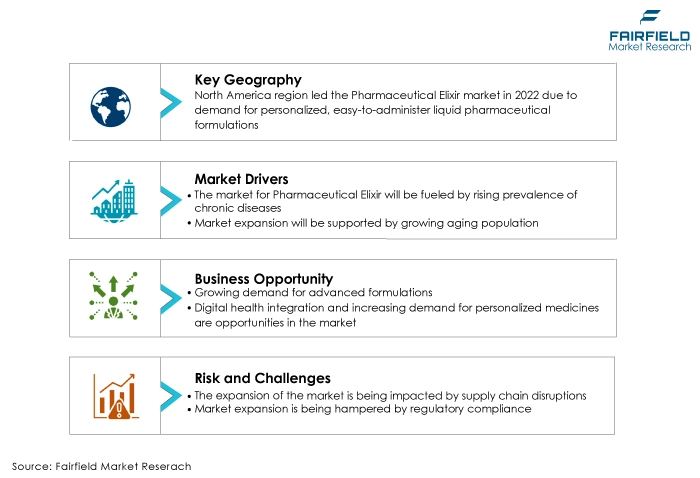
The prevalence of chronic diseases is a major driving force behind the pharmaceutical elixir market. Chronic conditions such as diabetes, cancer, cardiovascular diseases, and respiratory ailments affect a substantial portion of the global population. Managing these long-term health issues often requires continuous medication and therapeutic intervention.
Pharmaceutical elixirs offer an effective and convenient mode of drug administration, ensuring patient compliance and therapeutic success, especially among elderly and pediatric populations. The demand for pharmaceutical elixirs is steadily increasing with the aging population and lifestyle factors contributing to the rise in chronic diseases.
Additionally, ongoing R&D efforts focus on formulating elixirs that provide better disease management and improve patients' quality of life, further propelling market growth.
- Growing Ageing Population
The growing aging population is poised to drive the Pharmaceutical Elixir Market significantly. As individuals age, they often require more medications to manage chronic health conditions and age-related ailments.
Pharmaceutical elixirs provide a convenient and easily administered solution, improving patient compliance, especially among older adults.
With a rising elderly demographic worldwide, the demand for elixirs will increase, creating opportunities for pharmaceutical companies to cater to this demographic's healthcare needs and contributing to market growth.
- Growing Global Healthcare Expenditure
The increasing global healthcare expenditure is a significant driver for the pharmaceutical elixir market. As countries allocate more resources to healthcare, there is a greater capacity for individuals to access healthcare services and pharmaceuticals, including elixirs.
Rising healthcare spending by governments, insurance providers, and individuals amplifies the affordability and accessibility of pharmaceutical elixirs, leading to higher consumption.
This trend bolsters the market's growth as healthcare expenditure rises globally, particularly in response to the increasing cases of chronic diseases and the need for effective medication solutions.
Major Growth Barriers
- Supply Chain Disruptions
The pharmaceutical elixir market faces substantial hurdles as a result of supply chain interruptions. The manufacturing and transportation of vital pharmaceutical components and completed goods may be disrupted by these problems, which are frequently brought on by natural catastrophes, pandemics, or geopolitical problems.
Elixir supply and pricing may be impacted by these disturbances, which may result in shortages, delays, and higher manufacturing costs. It is a huge problem in the industry to maintain a robust and effective supply chain, which is necessary to guarantee a regular and dependable supply of pharmaceutical elixirs.
- Stringent Regulatory Environment
Stringent regulations present a significant challenge to the pharmaceutical elixir market. Regulatory bodies like the FDA impose rigorous safety, efficacy, and quality standards.
Compliance necessitates extensive testing, documentation, and adherence to evolving guidelines, increasing development costs and timelines. Variations in regulations across regions further complicate market entry and global expansion.
Navigating this complex regulatory landscape and securing necessary approvals are essential but challenging for companies operating in the pharmaceutical elixir market. Non-compliance can lead to delays, recalls, or market entry barriers, making regulatory adherence critical yet challenging.
Key Trends and Opportunities to Look at
Advanced formulations are a prominent technology trend in the pharmaceutical elixir market. This trend involves the development of innovative elixir formulations that improve drug solubility, bioavailability, and stability. Nanotechnology, liposomal delivery systems, and prodrug formulations are examples of advanced formulations.
Such advancements aim to enhance the therapeutic effectiveness of elixirs, reduce side effects, and offer patients more convenient and targeted treatment options, driving progress in pharmaceutical research and development.
- Digital Health Integration
- Personalized Medicine
Digital health integration is a significant technology trend in the pharmaceutical elixir market. Elixirs are increasingly integrated with digital health platforms, allowing patients and healthcare providers to monitor medication adherence and treatment outcomes.
Mobile apps, wearable devices, and smart packaging provide real-time data, enhancing patient engagement and treatment efficacy. This trend supports personalized medicine and facilitates data-driven healthcare decision-making, ultimately improving patient care and medication management.
Personalized medicine is a pivotal technology trend in the pharmaceutical elixir market. It involves tailoring elixir formulations to individual patient profiles, including genetic, physiological, and lifestyle factors. This approach enhances treatment efficacy, reduces adverse reactions, and improves patient outcomes.
Pharmacogenomics and precision medicine advancements are driving the adoption of personalized elixirs, transforming the way medications are prescribed and administered, and aligning treatment regimens with patients' unique characteristics.
How Does the Regulatory Scenario Shape this Industry?
The regulatory scenario plays a crucial role in shaping the Pharmaceutical Elixir Market, ensuring elixirs' safety, efficacy, and quality. Regulatory authorities such as the US FDA, the European Medicines Agency (EMA) in Europe, and similar agencies worldwide, establish guidelines and approval processes that elixir manufacturers must adhere to.
Elixir manufacturers must obtain regulatory approvals or clearances before marketing their products. This process involves rigorous testing and documentation to demonstrate safety and efficacy. Stringent quality control standards, including good manufacturing practices (GMP), are enforced to maintain consistent product quality.
Regulatory bodies require accurate labeling and packaging to ensure patients receive clear instructions and essential information. Continuous monitoring of adverse events and post-market surveillance is mandated to track elixir safety. Regulatory exclusivity and patent rights affect market competition and product lifecycles.
Pricing regulations and reimbursement policies impact market access and affordability for patients. Regulations govern data protection, especially in digital health integration and patient information. Efforts to harmonize international regulations aim to streamline market entry for manufacturers and ensure consistent standards.
Fairfield’s Ranking Board
Top Segments
Non-medicated elixirs, such as cough syrups or digestive aids, often capture the largest market share in the pharmaceutical elixir market for several reasons. These elixirs cater to a broader consumer base, including individuals seeking over-the-counter remedies for common ailments. They do not require a prescription, making them easily accessible to consumers.
Additionally, non-medicated elixirs are commonly used for preventive and symptomatic relief, driving consistent demand. Their versatility and suitability for various health and wellness needs contribute to their dominance in the market.
Medicated elixirs are experiencing the fastest CAGR in the pharmaceutical elixir market due to their expanding applications and the increasing prevalence of chronic diseases. Medicated elixirs often contain prescription medications addressing specific medical conditions like hypertension, diabetes, or pain management.
As the global burden of chronic diseases rises, the demand for these targeted therapeutic solutions is growing rapidly. Moreover, continuous advancements in pharmaceutical research and development led to the introduction of innovative medicated elixirs, further fueling their high CAGR in the market.
- Hospital Pharmacies Surge Ahead
- Hospitals at the Forefront of Adoption
Hospital pharmacies have secured the largest market share in the pharmaceutical elixir market due to several factors. Hospitals are primary healthcare settings where a wide range of elixirs are administered to inpatients and outpatients. These pharmacies are crucial in dispensing prescribed elixirs and ensuring patient compliance.
The high volume of patients, the need for specialized formulations, and the availability of healthcare professionals make hospital pharmacies dominant in distributing pharmaceutical elixirs, contributing to their largest market share.
Online sales of pharmaceutical elixirs are experiencing the fastest growth rate due to the increasing demand of e-commerce and the convenience it offers consumers. Online platforms provide a wide selection of elixirs, making it easy for customers to compare products and prices.
Additionally, the COVID-19 pandemic accelerated the shift towards online purchasing of healthcare products. The discreet purchase of sensitive medications and home delivery options further contribute to the rapid growth of online sales in the pharmaceutical elixir market.
Hospitals have secured the largest market share in the pharmaceutical elixir market due to their role as critical healthcare institutions. They serve a broad spectrum of patients, both inpatients and outpatients, who often require elixirs as part of their treatment regimens.
Hospitals maintain well-equipped pharmacies staffed by trained professionals to dispense these medications. The high volume of patients, specialized formulations, and the need for stringent quality control in hospital settings make them dominant in distributing pharmaceutical elixirs, contributing to their largest market share.
Clinics are likely to be experiencing in the pharmaceutical elixir market for several reasons. Clinics often cater to a diverse patient base seeking specialized healthcare services. They increasingly provide integrated care, including prescribing elixirs as part of treatment plans.
The convenience and accessibility of clinics and the growing trend of outpatient care drive the demand for pharmaceutical elixirs in these settings. Additionally, clinics often focus on specific medical specialties, creating opportunities for targeted elixir prescriptions and driving their high CAGR.
Regional Frontrunners
North America’s Market Gains from a Large, Elderly Population
For several reasons, North America has captured the largest market share in the pharmaceutical elixir market. Firstly, it boasts a highly developed healthcare infrastructure and pharmaceutical industry, fostering extensive research and development activities.
Moreover, North America's large ageing population and a high prevalence of chronic diseases drive the demand for pharmaceutical elixirs. Thirdly, robust regulatory frameworks, like the FDA in the United States, ensure stringent quality and safety standards.
A strong emphasis on healthcare and pharmaceutical innovation results in the introducing of new elixirs. A high disposable income and healthcare expenditure level further propels the market. These factors collectively contribute to North America's dominance, making it the largest market for pharmaceutical elixirs.
Asia Pacific Set for Remarkable Performance
Due to several key factors, Asia Pacific is the fastest-growing region in the pharmaceutical elixir market. The region's rapidly expanding population and rising income levels drive increased healthcare expenditure and demand for pharmaceutical elixirs.
Additionally, a growing awareness of health and wellness and the increasing prevalence of chronic diseases fuel market growth. Emerging economies in Asia Pacific offer significant growth opportunities, with pharmaceutical companies focusing on these markets.
Moreover, advancements in healthcare infrastructure, digitalization, and access to healthcare services contribute to the region's remarkable growth in the pharmaceutical elixir market.
Fairfield’s Competitive Landscape Analysis
The global global pharmaceutical elixir market comprises several players present globally. The key players are introducing new products and working on the distribution channels to enhance their worldwide presence. Moreover, Fairfield Market Research expects more consolidation over the coming years.
Who are the Leaders in the Global Pharmaceutical Elixir Market Space?
- Pfizer Inc.
- Novartis AG
- Roche Holding AG
- Johnson & Johnson
- Merck & Co
- Sanofi SA
- GlaxoSmithKline Plc
- AstraZeneca Plc
- Eli Lilly and Company
- Bristol-Myers Squibb Company
- Gilead Sciences, Inc.
- AbbVie Inc
- Bayer AG
- Biogen Inc.
- Moderna Inc.
An Expert’s Eye
Demand and Future Growth
As per Fairfield’s Analysis, growth in healthcare is driving the market. The market for pharmaceutical elixirs is anticipated to expand significantly due to rising chronic illness rates, ageing populations, and rising healthcare costs on a global scale.
Elixirs satisfy the growing demand for simple and efficient medication delivery systems. Additionally, continuing research and development projects seek to optimise elixir formulations to ensure better therapeutic results and patient compliance.
As healthcare continues to evolve, the Pharmaceutical Elixir Market is expected to witness sustained demand and future growth opportunities, particularly in emerging economies with expanding healthcare infrastructure.
Supply and Demand Side of the Market
The leading suppliers in the pharmaceutical elixir market can vary by region and country. In the United States, major pharmaceutical companies like Pfizer, Johnson & Johnson, and Eli Lilly are prominent players, offering a wide range of elixirs for various medical conditions.
In Europe, companies such as Novartis, Roche, and GlaxoSmithKline dominate the market with their pharmaceutical elixir offerings. In Asia, Takeda Pharmaceutical, Sun Pharmaceutical, and Cipla are key suppliers, providing elixirs tailored to regional healthcare needs.
These companies are recognized for their research, development, and production of pharmaceutical elixirs, contributing to the global pharmaceutical elixir market's growth and innovation.
The production of pharmaceutical elixirs typically requires various raw materials, including active pharmaceutical ingredients (APIs), excipients, solvents, sweeteners, and flavoring agents. API suppliers like Lonza, Pfizer, and Novartis provide crucial pharmaceutical ingredients. Excipients, solvents, and other additives are sourced from suppliers like Roquette, BASF, and Ashland.
Additionally, packaging materials such as bottles and labels are needed, with companies like Gerresheimer, and Avery Dennison offering these supplies. These raw material suppliers play a vital role in ensuring the safety, quality, and efficacy of pharmaceutical elixirs produced by pharmaceutical companies worldwide.
Global Global Pharmaceutical Elixir Market is Segmented as Below:
By Type:
- Non-medicated Elixirs
- Medicated Elixirs
By Distribution Channel:
- Hospital Pharmacies
- Retail Pharmacies
- Online Sales
By End User:
- Hospitals
- Clinics
- Others
By Geographic Coverage:
- North America
- Europe
- Asia Pacific
- Latin America
- Middle East & Africa
- Executive Summary
- Global Antimalarial Drugs Market Snapshot
- Future Projections
- Key Market Trends
- Regional Snapshot, by Value, 2026
- Analyst Recommendations
- Market Overview
- Market Definitions and Segmentations
- Market Dynamics
- Drivers
- Restraints
- Market Opportunities
- Value Chain Analysis
- COVID-19 Impact Analysis
- Porter's Five Forces Analysis
- Impact of Russia-Ukraine Conflict
- PESTLE Analysis
- Regulatory Analysis
- Price Trend Analysis
- Current Prices and Future Projections, 2025-2033
- Price Impact Factors
- Global Antimalarial Drugs Market Outlook, 2020 - 2033
- Global Antimalarial Drugs Market Outlook, by Drug Class, Value (US$ Mn), 2020-2033
- AminoquinolinesBy Drug Class:
- Aminoquinolines
- Quinoline-methanol (4-quinolinemethanols)
- Cinchona Alkaloids
- Biguanides
- Sulfonamides and Sulfones
- Artemisinin Derivatives
- Others
- Global Antimalarial Drugs Market Outlook, by Route of Administration, Value (US$ Mn), 2020-2033
- Oral
- Injectable
- Global Antimalarial Drugs Market Outlook, by Distribution Channel, Value (US$ Mn), 2020-2033
- Hospital Pharmacies
- Retail Pharmacies
- Online Pharmacies
- Other
- Global Antimalarial Drugs Market Outlook, by Region, Value (US$ Mn), 2020-2033
- North America
- Europe
- Asia Pacific
- Latin America
- Middle East & Africa
- Global Antimalarial Drugs Market Outlook, by Drug Class, Value (US$ Mn), 2020-2033
- North America Antimalarial Drugs Market Outlook, 2020 - 2033
- North America Antimalarial Drugs Market Outlook, by Drug Class, Value (US$ Mn), 2020-2033
- AminoquinolinesBy Drug Class:
- Aminoquinolines
- Quinoline-methanol (4-quinolinemethanols)
- Cinchona Alkaloids
- Biguanides
- Sulfonamides and Sulfones
- Artemisinin Derivatives
- Others
- North America Antimalarial Drugs Market Outlook, by Route of Administration, Value (US$ Mn), 2020-2033
- Oral
- Injectable
- North America Antimalarial Drugs Market Outlook, by Distribution Channel, Value (US$ Mn), 2020-2033
- Hospital Pharmacies
- Retail Pharmacies
- Online Pharmacies
- Other
- North America Antimalarial Drugs Market Outlook, by Country, Value (US$ Mn), 2020-2033
- U.S. Antimalarial Drugs Market Outlook, by Drug Class, 2020-2033
- U.S. Antimalarial Drugs Market Outlook, by Route of Administration, 2020-2033
- U.S. Antimalarial Drugs Market Outlook, by Distribution Channel, 2020-2033
- Canada Antimalarial Drugs Market Outlook, by Drug Class, 2020-2033
- Canada Antimalarial Drugs Market Outlook, by Route of Administration, 2020-2033
- Canada Antimalarial Drugs Market Outlook, by Distribution Channel, 2020-2033
- BPS Analysis/Market Attractiveness Analysis
- North America Antimalarial Drugs Market Outlook, by Drug Class, Value (US$ Mn), 2020-2033
- Europe Antimalarial Drugs Market Outlook, 2020 - 2033
- Europe Antimalarial Drugs Market Outlook, by Drug Class, Value (US$ Mn), 2020-2033
- AminoquinolinesBy Drug Class:
- Aminoquinolines
- Quinoline-methanol (4-quinolinemethanols)
- Cinchona Alkaloids
- Biguanides
- Sulfonamides and Sulfones
- Artemisinin Derivatives
- Others
- Europe Antimalarial Drugs Market Outlook, by Route of Administration, Value (US$ Mn), 2020-2033
- Oral
- Injectable
- Europe Antimalarial Drugs Market Outlook, by Distribution Channel, Value (US$ Mn), 2020-2033
- Hospital Pharmacies
- Retail Pharmacies
- Online Pharmacies
- Other
- Europe Antimalarial Drugs Market Outlook, by Country, Value (US$ Mn), 2020-2033
- Germany Antimalarial Drugs Market Outlook, by Drug Class, 2020-2033
- Germany Antimalarial Drugs Market Outlook, by Route of Administration, 2020-2033
- Germany Antimalarial Drugs Market Outlook, by Distribution Channel, 2020-2033
- Italy Antimalarial Drugs Market Outlook, by Drug Class, 2020-2033
- Italy Antimalarial Drugs Market Outlook, by Route of Administration, 2020-2033
- Italy Antimalarial Drugs Market Outlook, by Distribution Channel, 2020-2033
- France Antimalarial Drugs Market Outlook, by Drug Class, 2020-2033
- France Antimalarial Drugs Market Outlook, by Route of Administration, 2020-2033
- France Antimalarial Drugs Market Outlook, by Distribution Channel, 2020-2033
- U.K. Antimalarial Drugs Market Outlook, by Drug Class, 2020-2033
- U.K. Antimalarial Drugs Market Outlook, by Route of Administration, 2020-2033
- U.K. Antimalarial Drugs Market Outlook, by Distribution Channel, 2020-2033
- Spain Antimalarial Drugs Market Outlook, by Drug Class, 2020-2033
- Spain Antimalarial Drugs Market Outlook, by Route of Administration, 2020-2033
- Spain Antimalarial Drugs Market Outlook, by Distribution Channel, 2020-2033
- Russia Antimalarial Drugs Market Outlook, by Drug Class, 2020-2033
- Russia Antimalarial Drugs Market Outlook, by Route of Administration, 2020-2033
- Russia Antimalarial Drugs Market Outlook, by Distribution Channel, 2020-2033
- Rest of Europe Antimalarial Drugs Market Outlook, by Drug Class, 2020-2033
- Rest of Europe Antimalarial Drugs Market Outlook, by Route of Administration, 2020-2033
- Rest of Europe Antimalarial Drugs Market Outlook, by Distribution Channel, 2020-2033
- BPS Analysis/Market Attractiveness Analysis
- Europe Antimalarial Drugs Market Outlook, by Drug Class, Value (US$ Mn), 2020-2033
- Asia Pacific Antimalarial Drugs Market Outlook, 2020 - 2033
- Asia Pacific Antimalarial Drugs Market Outlook, by Drug Class, Value (US$ Mn), 2020-2033
- AminoquinolinesBy Drug Class:
- Aminoquinolines
- Quinoline-methanol (4-quinolinemethanols)
- Cinchona Alkaloids
- Biguanides
- Sulfonamides and Sulfones
- Artemisinin Derivatives
- Others
- Asia Pacific Antimalarial Drugs Market Outlook, by Route of Administration, Value (US$ Mn), 2020-2033
- Oral
- Injectable
- Asia Pacific Antimalarial Drugs Market Outlook, by Distribution Channel, Value (US$ Mn), 2020-2033
- Hospital Pharmacies
- Retail Pharmacies
- Online Pharmacies
- Other
- Asia Pacific Antimalarial Drugs Market Outlook, by Country, Value (US$ Mn), 2020-2033
- China Antimalarial Drugs Market Outlook, by Drug Class, 2020-2033
- China Antimalarial Drugs Market Outlook, by Route of Administration, 2020-2033
- China Antimalarial Drugs Market Outlook, by Distribution Channel, 2020-2033
- Japan Antimalarial Drugs Market Outlook, by Drug Class, 2020-2033
- Japan Antimalarial Drugs Market Outlook, by Route of Administration, 2020-2033
- Japan Antimalarial Drugs Market Outlook, by Distribution Channel, 2020-2033
- South Korea Antimalarial Drugs Market Outlook, by Drug Class, 2020-2033
- South Korea Antimalarial Drugs Market Outlook, by Route of Administration, 2020-2033
- South Korea Antimalarial Drugs Market Outlook, by Distribution Channel, 2020-2033
- India Antimalarial Drugs Market Outlook, by Drug Class, 2020-2033
- India Antimalarial Drugs Market Outlook, by Route of Administration, 2020-2033
- India Antimalarial Drugs Market Outlook, by Distribution Channel, 2020-2033
- Southeast Asia Antimalarial Drugs Market Outlook, by Drug Class, 2020-2033
- Southeast Asia Antimalarial Drugs Market Outlook, by Route of Administration, 2020-2033
- Southeast Asia Antimalarial Drugs Market Outlook, by Distribution Channel, 2020-2033
- Rest of SAO Antimalarial Drugs Market Outlook, by Drug Class, 2020-2033
- Rest of SAO Antimalarial Drugs Market Outlook, by Route of Administration, 2020-2033
- Rest of SAO Antimalarial Drugs Market Outlook, by Distribution Channel, 2020-2033
- BPS Analysis/Market Attractiveness Analysis
- Asia Pacific Antimalarial Drugs Market Outlook, by Drug Class, Value (US$ Mn), 2020-2033
- Latin America Antimalarial Drugs Market Outlook, 2020 - 2033
- Latin America Antimalarial Drugs Market Outlook, by Drug Class, Value (US$ Mn), 2020-2033
- AminoquinolinesBy Drug Class:
- Aminoquinolines
- Quinoline-methanol (4-quinolinemethanols)
- Cinchona Alkaloids
- Biguanides
- Sulfonamides and Sulfones
- Artemisinin Derivatives
- Others
- Latin America Antimalarial Drugs Market Outlook, by Route of Administration, Value (US$ Mn), 2020-2033
- Oral
- Injectable
- Latin America Antimalarial Drugs Market Outlook, by Distribution Channel, Value (US$ Mn), 2020-2033
- Hospital Pharmacies
- Retail Pharmacies
- Online Pharmacies
- Other
- Latin America Antimalarial Drugs Market Outlook, by Country, Value (US$ Mn), 2020-2033
- Brazil Antimalarial Drugs Market Outlook, by Drug Class, 2020-2033
- Brazil Antimalarial Drugs Market Outlook, by Route of Administration, 2020-2033
- Brazil Antimalarial Drugs Market Outlook, by Distribution Channel, 2020-2033
- Mexico Antimalarial Drugs Market Outlook, by Drug Class, 2020-2033
- Mexico Antimalarial Drugs Market Outlook, by Route of Administration, 2020-2033
- Mexico Antimalarial Drugs Market Outlook, by Distribution Channel, 2020-2033
- Argentina Antimalarial Drugs Market Outlook, by Drug Class, 2020-2033
- Argentina Antimalarial Drugs Market Outlook, by Route of Administration, 2020-2033
- Argentina Antimalarial Drugs Market Outlook, by Distribution Channel, 2020-2033
- Rest of LATAM Antimalarial Drugs Market Outlook, by Drug Class, 2020-2033
- Rest of LATAM Antimalarial Drugs Market Outlook, by Route of Administration, 2020-2033
- Rest of LATAM Antimalarial Drugs Market Outlook, by Distribution Channel, 2020-2033
- BPS Analysis/Market Attractiveness Analysis
- Latin America Antimalarial Drugs Market Outlook, by Drug Class, Value (US$ Mn), 2020-2033
- Middle East & Africa Antimalarial Drugs Market Outlook, 2020 - 2033
- Middle East & Africa Antimalarial Drugs Market Outlook, by Drug Class, Value (US$ Mn), 2020-2033
- AminoquinolinesBy Drug Class:
- Aminoquinolines
- Quinoline-methanol (4-quinolinemethanols)
- Cinchona Alkaloids
- Biguanides
- Sulfonamides and Sulfones
- Artemisinin Derivatives
- Others
- Middle East & Africa Antimalarial Drugs Market Outlook, by Route of Administration, Value (US$ Mn), 2020-2033
- Oral
- Injectable
- Middle East & Africa Antimalarial Drugs Market Outlook, by Distribution Channel, Value (US$ Mn), 2020-2033
- Hospital Pharmacies
- Retail Pharmacies
- Online Pharmacies
- Other
- Middle East & Africa Antimalarial Drugs Market Outlook, by Country, Value (US$ Mn), 2020-2033
- GCC Antimalarial Drugs Market Outlook, by Drug Class, 2020-2033
- GCC Antimalarial Drugs Market Outlook, by Route of Administration, 2020-2033
- GCC Antimalarial Drugs Market Outlook, by Distribution Channel, 2020-2033
- South Africa Antimalarial Drugs Market Outlook, by Drug Class, 2020-2033
- South Africa Antimalarial Drugs Market Outlook, by Route of Administration, 2020-2033
- South Africa Antimalarial Drugs Market Outlook, by Distribution Channel, 2020-2033
- Egypt Antimalarial Drugs Market Outlook, by Drug Class, 2020-2033
- Egypt Antimalarial Drugs Market Outlook, by Route of Administration, 2020-2033
- Egypt Antimalarial Drugs Market Outlook, by Distribution Channel, 2020-2033
- Nigeria Antimalarial Drugs Market Outlook, by Drug Class, 2020-2033
- Nigeria Antimalarial Drugs Market Outlook, by Route of Administration, 2020-2033
- Nigeria Antimalarial Drugs Market Outlook, by Distribution Channel, 2020-2033
- Rest of Middle East Antimalarial Drugs Market Outlook, by Drug Class, 2020-2033
- Rest of Middle East Antimalarial Drugs Market Outlook, by Route of Administration, 2020-2033
- Rest of Middle East Antimalarial Drugs Market Outlook, by Distribution Channel, 2020-2033
- BPS Analysis/Market Attractiveness Analysis
- Middle East & Africa Antimalarial Drugs Market Outlook, by Drug Class, Value (US$ Mn), 2020-2033
- Competitive Landscape
- Company Vs Segment Heatmap
- Company Market Share Analysis, 2025
- Competitive Dashboard
- Company Profiles
- Pfizer Inc.
- Company Overview
- Product Portfolio
- Financial Overview
- Business Strategies and Developments
- Novartis AG
- Roche Holding AG
- Alvizia Healthcare Pvt. Ltd.
- Merck & Co
- Sanofi SA
- GlaxoSmithKline Plc
- Viatris
- Guilin Pharmaceutical Co., Ltd.
- Ajanta Pharma Limited
- Pfizer Inc.
- Appendix
- Research Methodology
- Report Assumptions
- Acronyms and Abbreviations
|
BASE YEAR |
HISTORICAL DATA |
FORECAST PERIOD |
UNITS |
|||
 |
2024 |
 |
2019 - 2024 |
 |
2026 - 2033 |
Value: US$ Billion |
|
REPORT FEATURES |
DETAILS |
|
Type Coverage |
|
|
Distribution Channel Coverage |
|
|
End User Coverage |
|
|
Geographical Coverage |
|
|
Leading Companies |
|
|
Report Highlights |
Key Market Indicators, Macro-micro economic impact analysis, Technological Roadmap, Key Trends, Driver, Restraints, and Future Opportunities & Revenue Pockets, Porter’s 5 Forces Analysis, Historical Trend (2019-2021), Market Estimates and Forecast, Market Dynamics, Industry Trends, Competition Landscape, Category, Region, Country-wise Trends & Analysis, COVID-19 Impact Analysis (Demand and Supply Chain) |
Our Research Methodology
Considering the volatility of business today, traditional approaches to strategizing a game plan can be unfruitful if not detrimental. True ambiguity is no way to determine a forecast. A myriad of predetermined factors must be accounted for such as the degree of risk involved, the magnitude of circumstances, as well as conditions or consequences that are not known or unpredictable. To circumvent binary views that cast uncertainty, the application of market research intelligence to strategically posture, move, and enable actionable outcomes is necessary.
View Methodology
Quality Assured
Rigorous Validation Process

Confidentiality Assured
End-to-end Data Security

Custom Research Services
Tailored To Your Objectives
FAQs
The global pharmaceutical elixir market size is approximately USD 3.8 Bn in 2026
The global market for pharmaceutical elixir has been projected to exhibit a value CAGR of 6% between the forecast years, 2026 and 2033.
Currently, North America is the largest pharmaceutical elixir market in the world. Some of the largest industry players include Merck & Co, Sanofi SA, Pfizer Inc., Novartis AG, GlaxoSmithKline Plc, Bristol-Myers Squibb Company, Roche Holding AG, and Eli Lilly and Company.
The primary growth driving factors projected to drive the expansion of the pharmaceutical elixir market is the consistently growing expenditure in the healthcare industry, and dramatically rising prevalence of chronic diseases.
The non-medical elixir type segment presently leads the market for pharmaceutical elixirs, whereas hospital pharmacies continue to be the prime distribution channel for the market participants.
Related Reports
Enzymatic RNA Manufacturing Market Insights, Competitive Landscape, and Market Forecast - 2033
The enzymatic RNA manufacturing market, valued at USD 1.10 billion in 2026 and projected to reach USD 4.32 billion by 2033, at a 21.6% CAGR
Nephrology Drugs Market Insights, Competitive Landscape, and Market Forecast 2033
The nephrology drugs market is forecast to grow from USD 24.50 billion in 2026 to USD 40.39 billion by 2033, driven by novel disease-modifying treatments.
Active Pharmaceutical Ingredients Market Insights, Competitive Landscape, and Market Forecast 2033
Dementia Care Market Analysis Market Insights, Competitive Landscape, and Market Forecast 2033
Dementia Care Market to reach US$46.60 Mn by 2033, growing at 5.9% CAGR, driven by ageing populations, home care, and specialized dementia services.
Drug Repurposing Market Insights, Competitive Landscape, and Market Forecast 2026–2033
Drug Repurposing Market to reach US$47.75 billion by 2033, growing at 4.2% CAGR, driven by AI-assisted screening, R&D investment, and clinical trials.
Precision Medicine Market Insights, Competitive Landscape, and Market Forecast 2033
Precision Medicine Market is projected to reach US$405.17 billion by 2033, driven by genomics, companion diagnostics, oncology, and personalized therapies.