



Veterinary Intraocular Lenses Market
Veterinary Intraocular Lenses Market Insights, Competitive Landscape, and Market Forecast - 2033
Global Veterinary Intraocular Lenses Market Forecast
- Global veterinary intraocular lenses market size poised to reach USD 74.6 Million in 2033, up from USD 50.3 Million attained in 2026
- Market valuation slated for a healthy CAGR of 6% during 2026 - 2033
Quick Report Digest
A Look Back and a Look Forward - Comparative Analysis
The veterinary intraocular lenses (IOLs) market is a crucial segment within the broader realm of veterinary ophthalmology, aimed at addressing various ocular conditions affecting animals. Intraocular lenses are prosthetic devices implanted within the eye to restore vision or correct visual impairments, primarily in animals suffering from cataracts, lens luxation, or other ocular disorders.
This specialised market caters to the diverse needs of veterinary professionals, offering a range of innovative intraocular lens solutions tailored to different animal species and eye structures. Veterinary IOLs not only aim to improve visual acuity but also contribute significantly to enhancing the quality of life for animals by restoring their sight.
Advancements in veterinary medicine and the increasing demand for specialised care for companion animals, as well as livestock, have propelled the growth of the Veterinary Intraocular Lenses market. Technological innovations, such as the development of high-quality materials and improved surgical techniques, have further expanded the options available in this sector.
Moreover, as the awareness of pet healthcare continues to rise globally, there is a growing emphasis on providing comprehensive eye care for animals, fostering the market's expansion. The market's trajectory is also influenced by collaborations between veterinary ophthalmologists, researchers, and industry players to introduce more effective and safer intraocular lens solutions.
Key Growth Determinants
Growing Demand for Specialised Veterinary Care
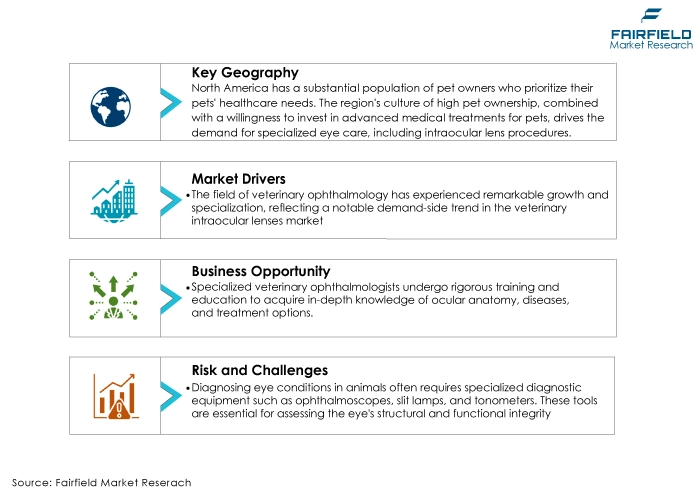
The field of veterinary ophthalmology has experienced remarkable growth and specialisation, reflecting a notable demand-side trend in the veterinary intraocular lenses market. This specialisation is characterised by the emergence of highly trained veterinary ophthalmologists who offer a wide range of advanced treatments, including intraocular lens implants.
Pet owners are increasingly recognising the importance of these specialists and are more likely to seek out their expertise, which in turn contributes to the growing demand for intraocular lenses in veterinary ophthalmology.
Veterinary ophthalmologists undergo rigorous training and education, like human ophthalmologists, to become experts in diagnosing and treating eye conditions in animals. They gain in-depth knowledge of ocular anatomy, ocular diseases, and the latest advancements in ophthalmic treatments. This specialisation has enabled them to offer a comprehensive and advanced approach to eye care for animals.
Also, animals can develop a wide range of ocular conditions, from cataracts to glaucoma and retinal diseases. These conditions can be complex and require specialised knowledge and skills to diagnose and treat effectively. Pet owners seek out veterinary ophthalmologists for their expertise in addressing these intricate issues.
Major Growth Barriers
Challenges in Diagnosis, and Referral in Animals
Diagnosing eye conditions in animals often requires specialised diagnostic equipment such as ophthalmoscopes, slit lamps, and tonometers. These tools are essential for assessing the eye's structural and functional integrity. Smaller or rural veterinary practices may not have access to these sophisticated instruments, making it challenging to conduct comprehensive eye examinations.
Veterinary professionals need specific training and expertise in ophthalmology to accurately diagnose and manage eye conditions. Smaller practices may have limited access to specialised training and continuing education in this field, which can hinder their ability to identify and understand complex ocular disorders.
Key Trends and Opportunities to Look at
Advancements in Veterinary Ophthalmology
Specialised veterinary ophthalmologists undergo rigorous training and education to acquire in-depth knowledge of ocular anatomy, diseases, and treatment options. This specialised expertise allows them to offer advanced ophthalmic care, including the use of intraocular lenses, which can address various eye conditions in a wide range of animal species.
Veterinary ophthalmologists are no longer limited to treating common pets like dogs and cats. They are increasingly extending their services to exotic animals, large animals, and birds. This diverse patient base necessitates a wide range of intraocular lens options tailored to the unique needs of different species.
The field benefits from the availability of advanced diagnostic tools and equipment, allowing for precise and comprehensive assessments of eye conditions in animals. These tools enable veterinary ophthalmologists to identify conditions that may benefit from intraocular lens implants, such as cataracts and lens luxations.
How Does the Regulatory Scenario Shape this Industry?
Veterinarian intraocular lenses must undergo regulatory approval procedures, much like human medical devices to guarantee their efficacy and safety before being sold. Different nations or areas, like the FDA in the US, the European Medicines Agency (EMA) in the EU, or other national regulatory organisations, may have different approval processes.
Adoption of the product and market entry can be greatly impacted by compliance with these standards. Strict safety and quality requirements are imposed by regulatory agencies on medical devices, including intraocular lenses. Maintaining consumer trust and gaining market access require adherence to these norms. Strict adherence to quality control procedures and production standards by manufacturers affects the price and time involved in creating these devices.
Distribution routes and market access are frequently determined by regulatory clearances. Companies can sell their products in certain areas or nations by obtaining the required certifications or permissions. Changes in distribution networks and marketing techniques may be necessary due to different regulatory restrictions in different locations.
Fairfield’s Ranking Board
Top Segments
Monofocal Lenses Most Prominent on Account of its Simplicity, Reliability and Cost-effective Attributes
Monofocal lenses offer a simple and reliable solution for correcting specific vision problems such as cataracts. They have a single focal point, providing clear vision at a fixed distance, which can suit the needs of many animals, especially those with uncomplicated vision impairments.
Monofocal lenses are often more cost-effective compared to other types of intraocular lenses. The affordability makes them a preferred choice for many veterinarians and pet owners, especially when dealing with conditions where a standard fixed focus is sufficient for the animal's vision correction.
Cataract Leads Owing to Positive Surgical Outcomes, and High Prevalence
Cataracts are a common ocular condition in animals, affecting various species across different age groups. They cause opacity in the eye's lens, leading to blurred vision or even complete blindness if left untreated. Given their prevalence and the significant impact on an animal's quality of life, cataracts prompt the need for intervention through surgical procedures such as cataract removal and intraocular lens implantation.
Unlike some other eye conditions that might be managed through medication or lifestyle changes, cataracts often require surgical intervention to restore vision. In cases where cataracts significantly impair an animal's vision or cause discomfort, veterinarians often recommend cataract surgery, creating a substantial demand for intraocular lenses.
Veterinary Hospitals Spearhead Demand Generation
Veterinary hospitals typically offer advanced medical equipment and facilities required for performing intricate procedures like cataract surgery and intraocular lens implantation. These hospitals often have specialised ophthalmology departments or access to veterinary ophthalmologists who can perform complex eye surgeries.
Pet owners seeking specialised care for their animals often prefer veterinary hospitals due to their reputation for specialised services, advanced facilities, and access to specialised veterinary ophthalmologists. As a result, these hospitals tend to perform a significant number of intraocular lens implantation surgeries.
Regional Frontrunners
North America’s Pre-eminence Intact, an Established Veterinary Industry Drives Dominance
North America has a substantial population of pet owners who prioritise their pets' healthcare needs. The region's culture of high pet ownership, combined with a willingness to invest in advanced medical treatments for pets, drives the demand for specialised eye care, including intraocular lens procedures.
North America is at the forefront of technological advancements in veterinary medicine. Innovations in intraocular lens technology, such as the development of new materials, improved designs, and surgical techniques, often originate or gain early adoption in North America, further driving market growth.
Growing Integration of Advanced Health Systems Bolsters Asia Pacific
The region has witnessed a significant increase in pet ownership, especially among the urban population. As more people in Asia Pacific embrace companion animals as part of their families, there's a growing demand for advanced veterinary care, including eye treatments like cataract surgeries and intraocular lens implants.
The market for veterinary ophthalmology in Asia Pacific is relatively untapped compared to more mature markets like North America and Europe. Manufacturers leverage an opportunity to penetrate this growing market by offering innovative and affordable intraocular lens solutions tailored to the specific needs of different animal species in the region.
Fairfield’s Competitive Landscape Analysis
The global veterinary intraocular lenses market is characterised by a concentrated landscape, with a select group of major players dominating the industry on a global scale. These leading companies are actively introducing innovative products and focusing on expanding their distribution channels to bolster their international presence. Fairfield Market Research predicts that further consolidation within the market is on the horizon.
Who Are the Leaders in The Global Veterinary Intraocular Lenses Market Space?
An Expert’s Eye
Demand and Future Growth
The veterinary intraocular lenses market is anticipated to undergo substantial expansion and change the global veterinary intraocular lenses market is experiencing a growing emphasis on several fronts due to various factors driving the demand and development of intraocular lenses for animals such as the trend of pet humanisation, where pets are increasingly considered as family members, has led to higher expectations for their healthcare.
Pet owners are more willing to invest in advanced treatments to ensure a higher quality of life for their animals, including addressing vision-related issues through intraocular lenses. Ongoing technological advancements have led to the development of better materials, designs, and surgical techniques for intraocular lenses. These innovations are aimed at improving the safety, efficacy, and longevity of intraocular lens implants in animals.
Supply Side of the Market
Advancements in materials and manufacturing techniques are at the forefront of innovation in the field of veterinary intraocular lenses. These developments are crucial for enhancing the quality, durability, and safety of these specialised medical devices. In recent years, there has been a significant shift toward the exploration of novel materials and cutting-edge manufacturing processes to meet the unique requirements of veterinary ophthalmology.
One of the key material-related trends in veterinary intraocular lenses is the exploration of biocompatible polymers. These polymers are chosen for their ability to minimise the risk of adverse reactions and inflammation when implanted in the eye. Biocompatible polymers offer excellent optical clarity and stability, which are vital for the success of intraocular lenses. Manufacturers are continuously researching and testing new polymer formulations to optimise their properties, making them more resilient, resistant to degradation, and safer for use in the delicate ocular environment of animals.
Customisation and personalisation are becoming increasingly important supply side trends in the veterinary intraocular lenses market. These trends reflect a growing recognition of the unique requirements of different animal species and the specific medical conditions that necessitate intraocular lens implantation. As a result, manufacturers are responding to the demand for tailored solutions by offering a broader range of customisation options, including shape, size, and optical properties.
Global Veterinary Intraocular Lenses Market Is Segmented as Below:
Lens Type:
- Monofocal
- Premium
- Multifocal
- Toric
- Others
Disease Indication:
- Cataract
- Vision Correction
- Lenses Luxation
- Others
End User:
- Veterinary Hospitals
- Veterinary Clinics
- Veterinary Outpatient Centres
By Geographic Coverage:
- North America
- Europe
- Asia Pacific
- Latin America
- Middle East & Africa
- Executive Summary
- Global Veterinary Intraocular Lenses Market Snapshot
- Future Projections
- Key Market Trends
- Regional Snapshot, by Value, 2026
- Analyst Recommendations
- Market Overview
- Market Definitions and Segmentations
- Market Dynamics
- Drivers
- Restraints
- Market Opportunities
- Value Chain Analysis
- COVID-19 Impact Analysis
- Porter's Five Forces Analysis
- Impact of Russia-Ukraine Conflict
- PESTLE Analysis
- Regulatory Analysis
- Price Trend Analysis
- Current Prices and Future Projections, 2025-2033
- Price Impact Factors
- Global Veterinary Intraocular Lenses Market Outlook, 2020 - 2033
- Global Veterinary Intraocular Lenses Market Outlook, by Lens Type, Value (US$ Mn), 2020-2033
- Monofocal
- Premium
- Multifocal
- Toric
- Others
- Global Veterinary Intraocular Lenses Market Outlook, by Disease Indication, Value (US$ Mn), 2020-2033
- Cataract
- Vision Correction
- Lenses Luxation
- Others
- Global Veterinary Intraocular Lenses Market Outlook, by End User, Value (US$ Mn), 2020-2033
- Veterinary Hospitals
- Veterinary Clinics
- Veterinary Outpatient Centres
- Global Veterinary Intraocular Lenses Market Outlook, by Region, Value (US$ Mn), 2020-2033
- North America
- Europe
- Asia Pacific
- Latin America
- Middle East & Africa
- Global Veterinary Intraocular Lenses Market Outlook, by Lens Type, Value (US$ Mn), 2020-2033
- North America Veterinary Intraocular Lenses Market Outlook, 2020 - 2033
- North America Veterinary Intraocular Lenses Market Outlook, by Lens Type, Value (US$ Mn), 2020-2033
- Monofocal
- Premium
- Multifocal
- Toric
- Others
- North America Veterinary Intraocular Lenses Market Outlook, by Disease Indication, Value (US$ Mn), 2020-2033
- Cataract
- Vision Correction
- Lenses Luxation
- Others
- North America Veterinary Intraocular Lenses Market Outlook, by End User, Value (US$ Mn), 2020-2033
- Veterinary Hospitals
- Veterinary Clinics
- Veterinary Outpatient Centres
- North America Veterinary Intraocular Lenses Market Outlook, by Country, Value (US$ Mn), 2020-2033
- U.S. Veterinary Intraocular Lenses Market Outlook, by Lens Type, 2020-2033
- U.S. Veterinary Intraocular Lenses Market Outlook, by Disease Indication, 2020-2033
- U.S. Veterinary Intraocular Lenses Market Outlook, by End User, 2020-2033
- Canada Veterinary Intraocular Lenses Market Outlook, by Lens Type, 2020-2033
- Canada Veterinary Intraocular Lenses Market Outlook, by Disease Indication, 2020-2033
- Canada Veterinary Intraocular Lenses Market Outlook, by End User, 2020-2033
- BPS Analysis/Market Attractiveness Analysis
- North America Veterinary Intraocular Lenses Market Outlook, by Lens Type, Value (US$ Mn), 2020-2033
- Europe Veterinary Intraocular Lenses Market Outlook, 2020 - 2033
- Europe Veterinary Intraocular Lenses Market Outlook, by Lens Type, Value (US$ Mn), 2020-2033
- Monofocal
- Premium
- Multifocal
- Toric
- Others
- Europe Veterinary Intraocular Lenses Market Outlook, by Disease Indication, Value (US$ Mn), 2020-2033
- Cataract
- Vision Correction
- Lenses Luxation
- Others
- Europe Veterinary Intraocular Lenses Market Outlook, by End User, Value (US$ Mn), 2020-2033
- Veterinary Hospitals
- Veterinary Clinics
- Veterinary Outpatient Centres
- Europe Veterinary Intraocular Lenses Market Outlook, by Country, Value (US$ Mn), 2020-2033
- Germany Veterinary Intraocular Lenses Market Outlook, by Lens Type, 2020-2033
- Germany Veterinary Intraocular Lenses Market Outlook, by Disease Indication, 2020-2033
- Germany Veterinary Intraocular Lenses Market Outlook, by End User, 2020-2033
- Italy Veterinary Intraocular Lenses Market Outlook, by Lens Type, 2020-2033
- Italy Veterinary Intraocular Lenses Market Outlook, by Disease Indication, 2020-2033
- Italy Veterinary Intraocular Lenses Market Outlook, by End User, 2020-2033
- France Veterinary Intraocular Lenses Market Outlook, by Lens Type, 2020-2033
- France Veterinary Intraocular Lenses Market Outlook, by Disease Indication, 2020-2033
- France Veterinary Intraocular Lenses Market Outlook, by End User, 2020-2033
- U.K. Veterinary Intraocular Lenses Market Outlook, by Lens Type, 2020-2033
- U.K. Veterinary Intraocular Lenses Market Outlook, by Disease Indication, 2020-2033
- U.K. Veterinary Intraocular Lenses Market Outlook, by End User, 2020-2033
- Spain Veterinary Intraocular Lenses Market Outlook, by Lens Type, 2020-2033
- Spain Veterinary Intraocular Lenses Market Outlook, by Disease Indication, 2020-2033
- Spain Veterinary Intraocular Lenses Market Outlook, by End User, 2020-2033
- Russia Veterinary Intraocular Lenses Market Outlook, by Lens Type, 2020-2033
- Russia Veterinary Intraocular Lenses Market Outlook, by Disease Indication, 2020-2033
- Russia Veterinary Intraocular Lenses Market Outlook, by End User, 2020-2033
- Rest of Europe Veterinary Intraocular Lenses Market Outlook, by Lens Type, 2020-2033
- Rest of Europe Veterinary Intraocular Lenses Market Outlook, by Disease Indication, 2020-2033
- Rest of Europe Veterinary Intraocular Lenses Market Outlook, by End User, 2020-2033
- BPS Analysis/Market Attractiveness Analysis
- Europe Veterinary Intraocular Lenses Market Outlook, by Lens Type, Value (US$ Mn), 2020-2033
- Asia Pacific Veterinary Intraocular Lenses Market Outlook, 2020 - 2033
- Asia Pacific Veterinary Intraocular Lenses Market Outlook, by Lens Type, Value (US$ Mn), 2020-2033
- Monofocal
- Premium
- Multifocal
- Toric
- Others
- Asia Pacific Veterinary Intraocular Lenses Market Outlook, by Disease Indication, Value (US$ Mn), 2020-2033
- Cataract
- Vision Correction
- Lenses Luxation
- Others
- Asia Pacific Veterinary Intraocular Lenses Market Outlook, by End User, Value (US$ Mn), 2020-2033
- Veterinary Hospitals
- Veterinary Clinics
- Veterinary Outpatient Centres
- Asia Pacific Veterinary Intraocular Lenses Market Outlook, by Country, Value (US$ Mn), 2020-2033
- China Veterinary Intraocular Lenses Market Outlook, by Lens Type, 2020-2033
- China Veterinary Intraocular Lenses Market Outlook, by Disease Indication, 2020-2033
- China Veterinary Intraocular Lenses Market Outlook, by End User, 2020-2033
- Japan Veterinary Intraocular Lenses Market Outlook, by Lens Type, 2020-2033
- Japan Veterinary Intraocular Lenses Market Outlook, by Disease Indication, 2020-2033
- Japan Veterinary Intraocular Lenses Market Outlook, by End User, 2020-2033
- South Korea Veterinary Intraocular Lenses Market Outlook, by Lens Type, 2020-2033
- South Korea Veterinary Intraocular Lenses Market Outlook, by Disease Indication, 2020-2033
- South Korea Veterinary Intraocular Lenses Market Outlook, by End User, 2020-2033
- India Veterinary Intraocular Lenses Market Outlook, by Lens Type, 2020-2033
- India Veterinary Intraocular Lenses Market Outlook, by Disease Indication, 2020-2033
- India Veterinary Intraocular Lenses Market Outlook, by End User, 2020-2033
- Southeast Asia Veterinary Intraocular Lenses Market Outlook, by Lens Type, 2020-2033
- Southeast Asia Veterinary Intraocular Lenses Market Outlook, by Disease Indication, 2020-2033
- Southeast Asia Veterinary Intraocular Lenses Market Outlook, by End User, 2020-2033
- Rest of SAO Veterinary Intraocular Lenses Market Outlook, by Lens Type, 2020-2033
- Rest of SAO Veterinary Intraocular Lenses Market Outlook, by Disease Indication, 2020-2033
- Rest of SAO Veterinary Intraocular Lenses Market Outlook, by End User, 2020-2033
- BPS Analysis/Market Attractiveness Analysis
- Asia Pacific Veterinary Intraocular Lenses Market Outlook, by Lens Type, Value (US$ Mn), 2020-2033
- Latin America Veterinary Intraocular Lenses Market Outlook, 2020 - 2033
- Latin America Veterinary Intraocular Lenses Market Outlook, by Lens Type, Value (US$ Mn), 2020-2033
- Monofocal
- Premium
- Multifocal
- Toric
- Others
- Latin America Veterinary Intraocular Lenses Market Outlook, by Disease Indication, Value (US$ Mn), 2020-2033
- Cataract
- Vision Correction
- Lenses Luxation
- Others
- Latin America Veterinary Intraocular Lenses Market Outlook, by End User, Value (US$ Mn), 2020-2033
- Veterinary Hospitals
- Veterinary Clinics
- Veterinary Outpatient Centres
- Latin America Veterinary Intraocular Lenses Market Outlook, by Country, Value (US$ Mn), 2020-2033
- Brazil Veterinary Intraocular Lenses Market Outlook, by Lens Type, 2020-2033
- Brazil Veterinary Intraocular Lenses Market Outlook, by Disease Indication, 2020-2033
- Brazil Veterinary Intraocular Lenses Market Outlook, by End User, 2020-2033
- Mexico Veterinary Intraocular Lenses Market Outlook, by Lens Type, 2020-2033
- Mexico Veterinary Intraocular Lenses Market Outlook, by Disease Indication, 2020-2033
- Mexico Veterinary Intraocular Lenses Market Outlook, by End User, 2020-2033
- Argentina Veterinary Intraocular Lenses Market Outlook, by Lens Type, 2020-2033
- Argentina Veterinary Intraocular Lenses Market Outlook, by Disease Indication, 2020-2033
- Argentina Veterinary Intraocular Lenses Market Outlook, by End User, 2020-2033
- Rest of LATAM Veterinary Intraocular Lenses Market Outlook, by Lens Type, 2020-2033
- Rest of LATAM Veterinary Intraocular Lenses Market Outlook, by Disease Indication, 2020-2033
- Rest of LATAM Veterinary Intraocular Lenses Market Outlook, by End User, 2020-2033
- BPS Analysis/Market Attractiveness Analysis
- Latin America Veterinary Intraocular Lenses Market Outlook, by Lens Type, Value (US$ Mn), 2020-2033
- Middle East & Africa Veterinary Intraocular Lenses Market Outlook, 2020 - 2033
- Middle East & Africa Veterinary Intraocular Lenses Market Outlook, by Lens Type, Value (US$ Mn), 2020-2033
- Monofocal
- Premium
- Multifocal
- Toric
- Others
- Middle East & Africa Veterinary Intraocular Lenses Market Outlook, by Disease Indication, Value (US$ Mn), 2020-2033
- Cataract
- Vision Correction
- Lenses Luxation
- Others
- Middle East & Africa Veterinary Intraocular Lenses Market Outlook, by End User, Value (US$ Mn), 2020-2033
- Veterinary Hospitals
- Veterinary Clinics
- Veterinary Outpatient Centres
- Middle East & Africa Veterinary Intraocular Lenses Market Outlook, by Country, Value (US$ Mn), 2020-2033
- GCC Veterinary Intraocular Lenses Market Outlook, by Lens Type, 2020-2033
- GCC Veterinary Intraocular Lenses Market Outlook, by Disease Indication, 2020-2033
- GCC Veterinary Intraocular Lenses Market Outlook, by End User, 2020-2033
- South Africa Veterinary Intraocular Lenses Market Outlook, by Lens Type, 2020-2033
- South Africa Veterinary Intraocular Lenses Market Outlook, by Disease Indication, 2020-2033
- South Africa Veterinary Intraocular Lenses Market Outlook, by End User, 2020-2033
- Egypt Veterinary Intraocular Lenses Market Outlook, by Lens Type, 2020-2033
- Egypt Veterinary Intraocular Lenses Market Outlook, by Disease Indication, 2020-2033
- Egypt Veterinary Intraocular Lenses Market Outlook, by End User, 2020-2033
- Nigeria Veterinary Intraocular Lenses Market Outlook, by Lens Type, 2020-2033
- Nigeria Veterinary Intraocular Lenses Market Outlook, by Disease Indication, 2020-2033
- Nigeria Veterinary Intraocular Lenses Market Outlook, by End User, 2020-2033
- Rest of Middle East Veterinary Intraocular Lenses Market Outlook, by Lens Type, 2020-2033
- Rest of Middle East Veterinary Intraocular Lenses Market Outlook, by Disease Indication, 2020-2033
- Rest of Middle East Veterinary Intraocular Lenses Market Outlook, by End User, 2020-2033
- BPS Analysis/Market Attractiveness Analysis
- Middle East & Africa Veterinary Intraocular Lenses Market Outlook, by Lens Type, Value (US$ Mn), 2020-2033
- Competitive Landscape
- Company Vs Segment Heatmap
- Company Market Share Analysis, 2025
- Competitive Dashboard
- Company Profiles
- Ocularvision Inc.
- Company Overview
- Product Portfolio
- Financial Overview
- Business Strategies and Developments
- AJL Ophthalmic S.A.
- I-Med Animal Health
- Bausch & Lomb Incorporated
- Excellent Hi-Care Pvt Ltd
- Global Ophthalmic Private Limited
- An-Vision
- FREEDOM OPHTHALMIC PVT LTD
- Ocularvision Inc.
- Appendix
- Research Methodology
- Report Assumptions
- Acronyms and Abbreviations
|
BASE YEAR |
HISTORICAL DATA |
FORECAST PERIOD |
UNITS |
|||
 |
2025 |
 |
2019 - 2025 |
 |
2026 - 2033 |
Value: US$ Million |
|
REPORT FEATURES |
DETAILS |
|
By Lens Type |
|
|
By Disease Indication |
|
|
By End User |
|
|
Geographic Coverage |
|
|
Leading Companies |
|
|
Report Highlights |
Key Market Indicators, Market Estimates and Forecast (Value), Market Dynamics, Regulatory Guidelines, Technological Advancements, COVID-19 Impact Analysis, Lens Type Insights, Disease Indication Insights, End User Insights, Regional and Country Insights, Competitive Landscape, Company Profiles |
Our Research Methodology
Considering the volatility of business today, traditional approaches to strategizing a game plan can be unfruitful if not detrimental. True ambiguity is no way to determine a forecast. A myriad of predetermined factors must be accounted for such as the degree of risk involved, the magnitude of circumstances, as well as conditions or consequences that are not known or unpredictable. To circumvent binary views that cast uncertainty, the application of market research intelligence to strategically posture, move, and enable actionable outcomes is necessary.
View Methodology
Quality Assured
Rigorous Validation Process

Confidentiality Assured
End-to-end Data Security

Custom Research Services
Tailored To Your Objectives
FAQs
Global veterinary intraocular lenses market is anticipated to reach UUSD 74.6 Million in 2033.
Global veterinary intraocular lenses market is anticipated to witness CAGR of 6% during the forecast period 2026-2033 with a value of USD 50.3 Million in 2026
North America leads the global veterinary intraocular lens market in terms of value. The region will continue to lead its way through the forecast period to reach a value of US$21.07 Mn by 2030. The presence of veterinary facilities in the region will contribute to the largest revenue share of the region.
Monofocal lens type is anticipated to dominate the global veterinary intraocular lenses market with a contribution of around 67%, while multifocal would grow at a faster CAGR of around 6.2% during 2026-2036.
Veterinary hospitals hold the largest share with a value expected to reach more than US$28.67 Mn, while the veterinary outpatient centres segment is anticipated to grow at a faster CAGR of 6.5% during 2026-2033.
Related Reports
Foot And Ankle Devices Market Insights, Competitive Landscape, and Market Forecast 2033
The foot and ankle devices market will grow from USD 6.40 Bn in 2026 to USD 10.14 Bn by 2033 at a CAGR of 6.8%, driven by rising trauma & sports injuries.
Digital Therapeutics Delivery Devices Market Insights, Competitive Landscape, and Market Forecast 2033
The digital therapeutics delivery devices market will expand at a 15.5% CAGR from USD 2.10 Bn in 2026 to USD 5.76 Bn by 2033, led by wearable devices.
Global Infant Incubator Insights, Competitive Landscape, and Market Forecast 2033
Infant Incubator Market to reach US$1,306.72 Mn by 2033, growing at 5.3% CAGR, driven by preterm births, NICU expansion and transport incubators care.
Pulse Electromagnetic Field Therapy Devices Market Insights, Competitive Landscape, and Market Forecast 2026–2033
Pulse Electromagnetic Field Therapy Devices Market to reach US$930.86 Mn by 2033, driven by pain management and wearable devices.
Vaginal Rejuvenation Market Insights, Competitive Landscape, and Market Forecast 2026–2033
Vaginal Rejuvenation Market to Reach US$26.75 Billion by 2033, Driven by Rising Demand for Minimally Invasive Women's Health Solutions.
Red Light Therapy Market Insights, Competitive Landscape, and Market Forecast 2033
The red light therapy market will grow from US$587.50 Mn in 2026 to US$1,130.38 Mn by 2033 at a 9.8% CAGR, driven by clinical adoption & FDA clearances.