



Rail Glazing Market
Rail Glazing Market Size, Share, Insights, Competitive Landscape, and Forecast 2026 to 2033
How Fast Is the Rail Glazing Market Growing?
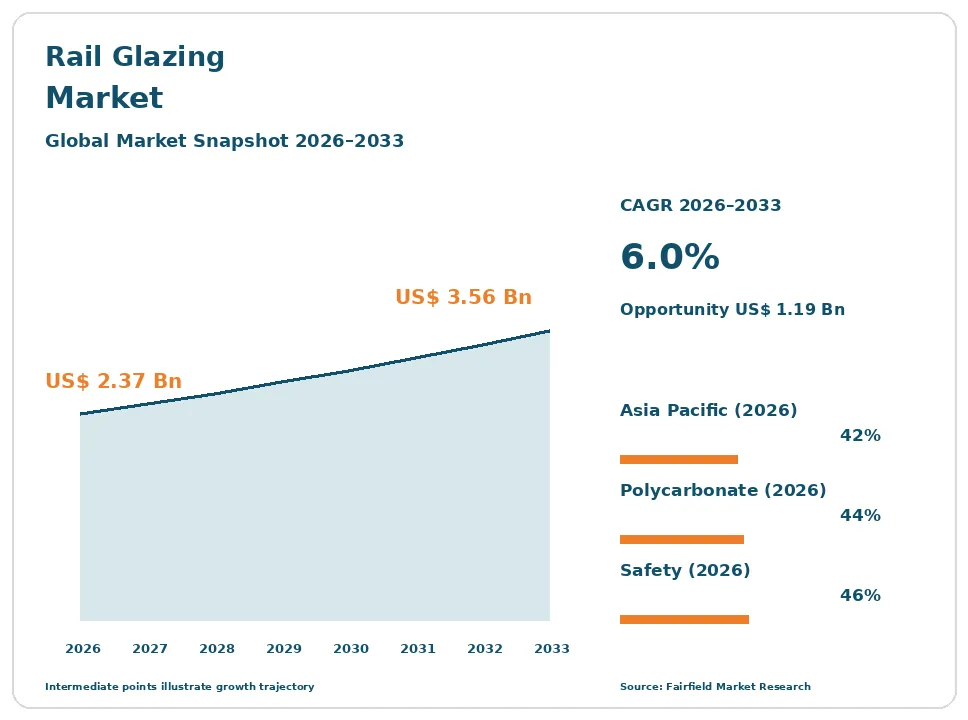
The global rail glazing market size is expected to be valued at US$ 2.37 billion in 2026 and projected to reach US$ 3.56 billion by 2033, growing at a CAGR of 6.0% between 2026 and 2033.
Between 2020 and 2025, the market grew at a CAGR of about 5.2%, slowing during the pandemic when train orders were delayed, then recovering as governments funded high-speed rail, metro lines, and fleet renewal to cut transport emissions. Rail glazing covers the windscreens, cab side windows, passenger side windows, door windows, partitions, and roof panels used in trains, metros, trams, and locomotives. Products include laminated and tempered train window glass, insulated double glazing, and lightweight polycarbonate panels. Glazing must resist impacts from stones and birds at high speed, withstand pressure changes in tunnels, block noise and heat, and meet strict fire and safety standards such as EN 15152 for windscreens. Growth comes from new rolling stock orders, refurbishment of older fleets, and demand for passenger comfort and energy efficiency. The market is shifting toward lightweight, heated, and smart glazing. In January 2026, Great Western Railway awarded a contract to replace 39 windscreens on its Class 175 trains.
Key Report Takeaways
- By Material Type: Polycarbonate held 44.0% share in 2026, while Tempered Glass is projected to expand at a 6.6% CAGR through 2033, driven by high-speed and metro projects that require scratch-resistant, durable, and fire-safe side windows and partitions.
- By Functionality: Safety held 46.0% share in 2026, while Thermal Insulation is projected to expand at a 6.9% CAGR through 2033, driven by energy efficiency targets, air-conditioning loads, and passenger comfort in hot and cold climates.
- By Application: High-Speed Trains held 38.0% share in 2026, while Passenger Coaches are projected to expand at a 6.7% CAGR through 2033, driven by fleet renewal of intercity and regional coaches and refurbishment programs worldwide.
- By Region: Asia Pacific held 42.0% share in 2026, while North America is projected to expand at a 6.8% CAGR through 2033, driven by passenger rail funding, new intercity and commuter fleets, and transit modernization in the United States.
Global Rail Glazing Market Trends and Insights
Drivers Impact Analysis
Two drivers carry the strongest influence on rail glazing demand during the forecast period.
Rail Network Expansion Is Driving the Rail Glazing Market
Rail network expansion and rolling stock orders are the strongest driver of the rail glazing market. Every new train needs dozens of windows.
The mechanism is large public investment in rail as a low-carbon transport option. China continues to extend the world’s largest high-speed network, India is producing Vande Bharat trains and building metro lines in many cities, and Saudi Arabia, Egypt, and other countries are building new railways. In Europe, climate policy and night train revivals support orders for new trains, while in the United States federal funding supports new intercity and commuter fleets. A single train can contain hundreds of glass panels, including windscreens, side windows, and door glazing. Rolling stock makers such as CRRC, Alstom, Siemens Mobility, Hitachi Rail, and Stadler buy glazing from specialist suppliers. These trends create a steady pipeline for railway glass suppliers.
Comfort and Safety Standards Are Expanding the Rail Glazing Market
Passenger comfort, safety, and energy efficiency standards are expanding the rail glazing market. Train windows must do more than let in light.
The cause is rising expectations from passengers and regulators. Windscreens must meet impact tests that simulate objects hitting trains at high speed, and side windows must resist vandalism and allow emergency escape. Fire safety rules such as EN 45545 limit smoke and toxicity. Passengers want quiet, comfortable cabins with large panoramic windows, which requires acoustic laminated glass and better insulation. Low-emissivity and solar control coatings reduce air-conditioning loads, saving energy. Great Western Railway replaced older windscreens to meet the EN 15152 standard. Train builders also want larger windows to make trains attractive, which increases the glass area per car. Wheelchair-accessible and family areas often use glass partitions. These requirements raise value per window and favor experienced suppliers.
| Driver | Impact on CAGR Forecast | Geographic Relevance | Impact Timeline |
| Rail network expansion and rolling stock orders | High | Global | Long term (≥4 years) |
| Passenger comfort, safety, and energy efficiency standards | Medium | Europe, North America, Asia Pacific | Medium term (2-4 years) |
Restraints Impact Analysis
Two restraints limit how quickly the rail glazing market grows.
Long Procurement Cycles Slow the Rail Glazing Market
Long procurement cycles and project delays slow the rail glazing market. Rail projects take years to move from plan to delivery.
The specific causes are public funding processes and complex engineering. Rail projects depend on government budgets, which can be cut or delayed after elections or economic slowdowns. Rolling stock tenders take years, and train delivery can slip due to design changes, testing, and certification problems. Glazing suppliers must wait for orders that may arrive later than expected, which makes planning production capacity difficult. Price pressure from train builders reduces margins. Large Chinese suppliers compete aggressively on price in international tenders. Supply chain problems after the pandemic also delayed some train deliveries, pushing glazing orders back. Train builders sometimes ask suppliers to hold prices for years despite rising costs. These factors create uneven demand and slow growth in some years.
Certification Costs Restrict the Rail Glazing Market
High certification costs and raw material price swings restrict the rail glazing market. Rail glass is a specialized, heavily tested product.
The underlying causes are strict standards and volatile inputs. Each new windscreen or window design must pass impact, fire, pressure, optical distortion, and durability tests before it can be fitted to trains, which takes months and costs significant money. Many designs are made in small batches for specific train models, so testing costs are spread over few units. Different countries apply different standards, forcing suppliers to repeat some tests. Energy costs for glass melting, tempering, and lamination are high, especially in Europe after 2022, and polycarbonate prices follow oil and chemical markets. Skilled workers for specialized lamination and bending are scarce. These factors raise costs for suppliers, squeeze margins, and make it harder for smaller firms to compete for large rolling stock contracts.
| Restraint | Impact on CAGR Forecast | Geographic Relevance | Impact Timeline |
| Long procurement cycles and project delays | High | Global | Long term (≥4 years) |
| High certification costs and raw material price swings | Medium | Global | Medium term (2-4 years) |
Market Opportunities
Lightweight and Smart Glazing Opens a Fast-Growth Revenue Pool
Lightweight and smart glazing opens a fast-growth revenue pool in the rail glazing market. Train makers want lighter, more functional windows.
Glazing suppliers can capture this opportunity. Thinner laminated glass, chemically strengthened glass, and coated polycarbonate panels reduce train weight, which saves energy, reduces track wear, and allows more passengers per train. Heated windscreens prevent fogging and icing in cold climates, improving driver visibility and safety. Switchable smart glass can darken windows on demand, reducing glare and the need for blinds. Frequency-selective coatings let mobile phone and Wi-Fi signals pass through windows, improving onboard connectivity, which passengers now expect. Display glass can show route information and advertising directly on windows. Companies that develop and certify these advanced products can win premium contracts from train builders competing on passenger experience.
Refurbishment and Replacement Create a Steady Revenue Pool
Refurbishment and replacement create a steady revenue pool in the rail glazing market. Older trains need new glass throughout their lives.
Suppliers and maintenance firms can capture this opportunity. Trains often stay in service for thirty to forty years, and windscreens and windows are regularly damaged by stones, birds, vandalism, and graffiti, requiring quick replacement to keep trains running. Mid-life refurbishment programs, usually carried out after fifteen to twenty years, update glazing to meet new safety standards, improve insulation, and refresh interiors. Operators such as Great Western Railway replace older windscreens with compliant designs. Fast delivery matters because a train with a damaged windscreen often cannot run in passenger service. Companies with local stock, fast service, and long-term maintenance agreements with operators can earn steady revenue that balances the cyclical nature of new train orders.
Segment Analysis
By Material Type: Polycarbonate Leads While Tempered Glass Grows Fastest
Polycarbonate held 44.0% share in 2026. Polycarbonate panels are lightweight and shatter-resistant, which makes them popular for side windows, partitions, and interior panels in metros, trams, and regional trains, especially where vandalism is common. Coated grades from Covestro and SABIC improve scratch resistance and weathering. Lower weight helps train makers meet energy targets.
Tempered Glass is the fastest-growing material, expanding at a 6.6% CAGR through 2033. Tempered glass is stronger than ordinary glass, resists scratches better than polycarbonate, and breaks into small pieces, making it suitable for side windows and doors on high-speed and intercity trains. Laminated glass dominates windscreens because it stays in place when cracked. For the market, tempered glass growth reflects durability and fire safety needs.
By Functionality: Safety Leads While Thermal Insulation Grows Fastest
Safety held 46.0% share in 2026. Impact-resistant windscreens, anti-vandal side windows, emergency exit windows, and fire-rated glazing protect drivers and passengers and are required by railway standards. Every train needs safety glazing at the front and sides.
Thermal Insulation is the fastest-growing functionality, expanding at a 6.9% CAGR through 2033. Double and triple glazing with low-emissivity coatings reduces heat loss in winter and heat gain in summer, cutting air-conditioning energy and improving comfort. Operators in hot climates such as India, Middle East & Africa, and Australia value solar control. Acoustic insulation, which reduces noise from wheels, tracks, and tunnels, and solar control form other functions. For the market, thermal growth reflects energy efficiency goals.
By Application: High-Speed Trains Lead While Passenger Coaches Grow Fastest
High-Speed Trains held 38.0% share in 2026. High-speed trains need the most advanced glazing, including pressure-sealed windows for tunnels and impact-resistant windscreens rated for speeds above 300 km per hour. China, Europe, and Japan operate large fleets, and new lines in India, Saudi Arabia, and Egypt add demand.
Passenger Coaches are the fastest-growing application, expanding at a 6.7% CAGR through 2033. Intercity, regional, and sleeper coaches are being renewed in India, Europe, and North America, and refurbishment programs replace older windows. Metros, light rail, trams, and locomotives form other applications, with metros growing quickly in Asia Pacific and Latin America. For the market, coach growth reflects broad fleet renewal.
Geography Analysis
Which Region Is Growing Fastest in the Rail Glazing Market?
North America is growing fastest in the rail glazing market at a 6.8% CAGR through 2033. The United States is investing record federal funds in passenger rail, including new Amtrak intercity trains, high-speed rail projects, and commuter and transit fleets in New York, Chicago, Los Angeles, and other cities. Siemens Mobility, Alstom, and Stadler build trains in the region, buying glazing from local and global suppliers. Buy-America rules encourage local production. Canada is renewing VIA Rail fleets and building light rail lines. Key barriers include project delays and funding uncertainty. One change shaping the region is the arrival of new high-speed and intercity trains.
Europe Advances the Rail Glazing Market Through Fleet Renewal
Europe is a major rail glazing market. Germany, France, the United Kingdom, Italy, and Spain operate dense rail networks and are renewing fleets to meet climate goals, and night train services are expanding across borders. Saint-Gobain, AGC, Nippon Sheet Glass through Pilkington, Dellner Glass Solutions, and Isoclima are key suppliers, and Alstom, Siemens Mobility, and Stadler are leading train builders. Strict fire and safety standards drive premium products. Rail operators in the region also order large numbers of regional trains to replace diesel units. Key barriers include high energy costs. One opportunity is refurbishment of older fleets.
Which Region Is Leading the Rail Glazing Market?
Asia Pacific is leading the rail glazing market with a 42.0% share in 2026. China has the world’s largest high-speed rail network and the largest train maker, CRRC, which buys large volumes of glazing from domestic suppliers. India is producing Vande Bharat trains, new coaches, and metro trains for many cities, while Japan and South Korea operate advanced high-speed fleets. Metro construction in Indonesia, Vietnam, the Philippines, and Australia adds demand. Key barriers include strong price competition from local suppliers. One change shaping the region is the rapid expansion of urban metro systems.
Latin America Grows the Rail Glazing Market Through Urban Transit
Latin America is a growing rail glazing market. Brazil, Mexico, Chile, and Colombia are building and extending metro, commuter, and light rail lines in large cities, including São Paulo, Mexico City, Santiago, and Bogotá. Mexico has also built new intercity and tourist rail lines. Most trains are imported from builders in China, Europe, and other parts of Asia Pacific, with some local assembly in Brazil and Mexico. Replacement glazing for existing fleets is often sourced locally to reduce downtime. Key barriers include budget limits and project delays. One opportunity is metro fleet expansion.
Middle East & Africa Develops the Rail Glazing Market Through New Railways
Middle East & Africa is a developing rail glazing market. Saudi Arabia is expanding passenger rail, including the Haramain high-speed line and the Dream of the Desert luxury train, while the United Arab Emirates is building Etihad Rail passenger services. Egypt is building high-speed rail, and Morocco operates the region’s first high-speed line. Hot climates and sandstorms demand strong solar control and abrasion-resistant glazing. South Africa and Nigeria are renewing commuter fleets, and new lines in Kenya and Tanzania add demand. Key barriers include financing. One change shaping the region is the construction of new national rail networks.
Competitive Landscape
The rail glazing market is moderately fragmented. AGC, Saint-Gobain, Nippon Sheet Glass, Guardian Glass, and Dellner Glass Solutions are leading players, while Schott, Corning, Isoclima, Sika, Covestro, SABIC, and Taiwan Glass compete in glass, polycarbonate, and bonding materials. Chinese glass makers supply much of the domestic market.
Companies compete on certification to rail standards, impact and fire performance, weight, optical quality, delivery speed, price, and after-sales service. Specialist rail glazing firms process raw glass from large glass makers into finished windscreens and windows. Close relationships with train builders and operators help win both new train and replacement orders. Local production matters because of transport costs and local content rules. Some suppliers are part of larger rail component groups, such as Dellner, which lets them offer glazing together with couplers, doors, and interiors. Chinese suppliers are increasingly winning orders outside China.
Strategic moves show how competition is changing. In January 2025, Saudi Railways unveiled designs for a luxury train with panoramic windows. In February 2025, Serbia allocated €90 million to railway development. In January 2026, Great Western Railway awarded a windscreen replacement contract to PSV Glass & Glazing. These moves show competition shifting toward premium, compliant, and replacement glazing for both new and existing fleets.
Three themes shape vendor strategy. First, companies are developing lightweight and smart glazing. Second, they are expanding replacement and service offerings. Third, they are building local capacity near major rail markets.
Rail Glazing Market Industry Leaders
- AGC
- Saint-Gobain
- Nippon Sheet Glass
- Guardian Glass
- Dellner Glass Solutions
Recent Industry Developments
- January 2026: Great Western Railway awarded PSV Glass & Glazing a £515,000 contract to remove and refit 39 Class 175 windscreens to meet the EN 15152 standard - shows replacement demand for train window glass.
- February 2025: Serbia allocated €90 million to railway development - supports rolling stock and infrastructure demand that drives rail glazing.
- January 2025: Saudi Railways and Arsenale unveiled designs for the Dream of the Desert luxury train with large panoramic windows - highlights premium railway glass in new trains.
Companies Covered in the Report
- AGC
- Saint-Gobain
- Nippon Sheet Glass
- Guardian Glass
- Dellner Glass Solutions
- Schott
- Corning
- Isoclima
- Sika
- Covestro
- SABIC
- Taiwan Glass
Rail Glazing Market Report Scope
This report covers rail glazing, including polycarbonate, tempered glass, laminated glass, and other materials, providing safety, thermal insulation, acoustic insulation, and solar control functions, for high-speed trains, passenger coaches, metros and light rail, freight locomotives, and other rail vehicles. The base year is 2025, and the forecast period runs from 2026 to 2033. All values are expressed in US$ Billion.
Material Type
- Polycarbonate
- Tempered Glass
- Laminated Glass
- Others
Functionality
- Safety
- Thermal Insulation
- Acoustic Insulation
- Solar Control
Application
- High-Speed Trains
- Passenger Coaches
- Metros & Light Rail
- Locomotives & Others
Regions
- North America
- Europe
- Asia Pacific
- Latin America
- Middle East & Africa
- 1. Executive Summary
- 1.1. Global Rail Glazing Market Snapshot
- 1.2. Future Projections, 2026-2033
- 1.3. Key Market Trends
- 1.4. Regional Snapshot
- 2. Market Overview
- 2.1. Market Definition and Report Scope
- 2.2. Historical Market Trends, 2020-2025
- 2.3. Market Dynamics
- 2.3.1. Drivers Impact Analysis
- 2.3.1.1. Rail Network Expansion Is Driving the Rail Glazing Market
- 2.3.1.2. Comfort and Safety Standards Are Expanding the Rail Glazing Market
- 2.3.2. Restraints Impact Analysis
- 2.3.2.1. Long Procurement Cycles Slow the Rail Glazing Market
- 2.3.2.2. Certification Costs Restrict the Rail Glazing Market
- 2.3.3. Market Opportunities
- 2.3.3.1. Lightweight and Smart Glazing Opens a Fast-Growth Revenue Pool
- 2.3.3.2. Refurbishment and Replacement Create a Steady Revenue Pool
- 2.3.1. Drivers Impact Analysis
- 3. Global Rail Glazing Market Outlook, 2020-2033
- 3.1. Global Rail Glazing Market Outlook, by Material Type, Value (US$ Billion), 2020-2033
- 3.1.1. Polycarbonate
- 3.1.2. Tempered Glass
- 3.1.3. Laminated Glass
- 3.1.4. Others
- 3.2. Global Rail Glazing Market Outlook, by Functionality, Value (US$ Billion), 2020-2033
- 3.2.1. Safety
- 3.2.2. Thermal Insulation
- 3.2.3. Acoustic Insulation
- 3.2.4. Solar Control
- 3.3. Global Rail Glazing Market Outlook, by Application, Value (US$ Billion), 2020-2033
- 3.3.1. High-Speed Trains
- 3.3.2. Passenger Coaches
- 3.3.3. Metros & Light Rail
- 3.3.4. Locomotives & Others
- 3.4. Global Rail Glazing Market Outlook, by Region, Value (US$ Billion), 2020-2033
- 3.4.1. North America
- 3.4.2. Europe
- 3.4.3. Asia Pacific
- 3.4.4. Latin America
- 3.4.5. Middle East & Africa
- 3.1. Global Rail Glazing Market Outlook, by Material Type, Value (US$ Billion), 2020-2033
- 4. North America Rail Glazing Market Outlook, 2020-2033
- 4.1. North America Rail Glazing Market Outlook, by Material Type, Value (US$ Billion), 2020-2033
- 4.1.1. Polycarbonate
- 4.1.2. Tempered Glass
- 4.1.3. Laminated Glass
- 4.1.4. Others
- 4.2. North America Rail Glazing Market Outlook, by Functionality, Value (US$ Billion), 2020-2033
- 4.2.1. Safety
- 4.2.2. Thermal Insulation
- 4.2.3. Acoustic Insulation
- 4.2.4. Solar Control
- 4.3. North America Rail Glazing Market Outlook, by Application, Value (US$ Billion), 2020-2033
- 4.3.1. High-Speed Trains
- 4.3.2. Passenger Coaches
- 4.3.3. Metros & Light Rail
- 4.3.4. Locomotives & Others
- 4.4. North America Rail Glazing Market Outlook, by Country, Value (US$ Billion), 2020-2033
- 4.4.1. United States Rail Glazing Market Outlook, by Material Type, 2020-2033
- 4.4.2. United States Rail Glazing Market Outlook, by Functionality, 2020-2033
- 4.4.3. United States Rail Glazing Market Outlook, by Application, 2020-2033
- 4.4.4. Canada Rail Glazing Market Outlook, by Material Type, 2020-2033
- 4.4.5. Canada Rail Glazing Market Outlook, by Functionality, 2020-2033
- 4.4.6. Canada Rail Glazing Market Outlook, by Application, 2020-2033
- 4.1. North America Rail Glazing Market Outlook, by Material Type, Value (US$ Billion), 2020-2033
- 5. Europe Rail Glazing Market Outlook, 2020-2033
- 5.1. Europe Rail Glazing Market Outlook, by Material Type, Value (US$ Billion), 2020-2033
- 5.1.1. Polycarbonate
- 5.1.2. Tempered Glass
- 5.1.3. Laminated Glass
- 5.1.4. Others
- 5.2. Europe Rail Glazing Market Outlook, by Functionality, Value (US$ Billion), 2020-2033
- 5.2.1. Safety
- 5.2.2. Thermal Insulation
- 5.2.3. Acoustic Insulation
- 5.2.4. Solar Control
- 5.3. Europe Rail Glazing Market Outlook, by Application, Value (US$ Billion), 2020-2033
- 5.3.1. High-Speed Trains
- 5.3.2. Passenger Coaches
- 5.3.3. Metros & Light Rail
- 5.3.4. Locomotives & Others
- 5.4. Europe Rail Glazing Market Outlook, by Country, Value (US$ Billion), 2020-2033
- 5.4.1. Germany Rail Glazing Market Outlook, by Material Type, 2020-2033
- 5.4.2. Germany Rail Glazing Market Outlook, by Functionality, 2020-2033
- 5.4.3. Germany Rail Glazing Market Outlook, by Application, 2020-2033
- 5.4.4. France Rail Glazing Market Outlook, by Material Type, 2020-2033
- 5.4.5. France Rail Glazing Market Outlook, by Functionality, 2020-2033
- 5.4.6. France Rail Glazing Market Outlook, by Application, 2020-2033
- 5.4.7. United Kingdom Rail Glazing Market Outlook, by Material Type, 2020-2033
- 5.4.8. United Kingdom Rail Glazing Market Outlook, by Functionality, 2020-2033
- 5.4.9. United Kingdom Rail Glazing Market Outlook, by Application, 2020-2033
- 5.4.10. Italy Rail Glazing Market Outlook, by Material Type, 2020-2033
- 5.4.11. Italy Rail Glazing Market Outlook, by Functionality, 2020-2033
- 5.4.12. Italy Rail Glazing Market Outlook, by Application, 2020-2033
- 5.4.13. Spain Rail Glazing Market Outlook, by Material Type, 2020-2033
- 5.4.14. Spain Rail Glazing Market Outlook, by Functionality, 2020-2033
- 5.4.15. Spain Rail Glazing Market Outlook, by Application, 2020-2033
- 5.1. Europe Rail Glazing Market Outlook, by Material Type, Value (US$ Billion), 2020-2033
- 6. Asia Pacific Rail Glazing Market Outlook, 2020-2033
- 6.1. Asia Pacific Rail Glazing Market Outlook, by Material Type, Value (US$ Billion), 2020-2033
- 6.1.1. Polycarbonate
- 6.1.2. Tempered Glass
- 6.1.3. Laminated Glass
- 6.1.4. Others
- 6.2. Asia Pacific Rail Glazing Market Outlook, by Functionality, Value (US$ Billion), 2020-2033
- 6.2.1. Safety
- 6.2.2. Thermal Insulation
- 6.2.3. Acoustic Insulation
- 6.2.4. Solar Control
- 6.3. Asia Pacific Rail Glazing Market Outlook, by Application, Value (US$ Billion), 2020-2033
- 6.3.1. High-Speed Trains
- 6.3.2. Passenger Coaches
- 6.3.3. Metros & Light Rail
- 6.3.4. Locomotives & Others
- 6.4. Asia Pacific Rail Glazing Market Outlook, by Country, Value (US$ Billion), 2020-2033
- 6.4.1. China Rail Glazing Market Outlook, by Material Type, 2020-2033
- 6.4.2. China Rail Glazing Market Outlook, by Functionality, 2020-2033
- 6.4.3. China Rail Glazing Market Outlook, by Application, 2020-2033
- 6.4.4. India Rail Glazing Market Outlook, by Material Type, 2020-2033
- 6.4.5. India Rail Glazing Market Outlook, by Functionality, 2020-2033
- 6.4.6. India Rail Glazing Market Outlook, by Application, 2020-2033
- 6.4.7. Japan Rail Glazing Market Outlook, by Material Type, 2020-2033
- 6.4.8. Japan Rail Glazing Market Outlook, by Functionality, 2020-2033
- 6.4.9. Japan Rail Glazing Market Outlook, by Application, 2020-2033
- 6.4.10. South Korea Rail Glazing Market Outlook, by Material Type, 2020-2033
- 6.4.11. South Korea Rail Glazing Market Outlook, by Functionality, 2020-2033
- 6.4.12. South Korea Rail Glazing Market Outlook, by Application, 2020-2033
- 6.4.13. Indonesia Rail Glazing Market Outlook, by Material Type, 2020-2033
- 6.4.14. Indonesia Rail Glazing Market Outlook, by Functionality, 2020-2033
- 6.4.15. Indonesia Rail Glazing Market Outlook, by Application, 2020-2033
- 6.4.16. Vietnam Rail Glazing Market Outlook, by Material Type, 2020-2033
- 6.4.17. Vietnam Rail Glazing Market Outlook, by Functionality, 2020-2033
- 6.4.18. Vietnam Rail Glazing Market Outlook, by Application, 2020-2033
- 6.4.19. Philippines Rail Glazing Market Outlook, by Material Type, 2020-2033
- 6.4.20. Philippines Rail Glazing Market Outlook, by Functionality, 2020-2033
- 6.4.21. Philippines Rail Glazing Market Outlook, by Application, 2020-2033
- 6.4.22. Australia Rail Glazing Market Outlook, by Material Type, 2020-2033
- 6.4.23. Australia Rail Glazing Market Outlook, by Functionality, 2020-2033
- 6.4.24. Australia Rail Glazing Market Outlook, by Application, 2020-2033
- 6.1. Asia Pacific Rail Glazing Market Outlook, by Material Type, Value (US$ Billion), 2020-2033
- 7. Latin America Rail Glazing Market Outlook, 2020-2033
- 7.1. Latin America Rail Glazing Market Outlook, by Material Type, Value (US$ Billion), 2020-2033
- 7.1.1. Polycarbonate
- 7.1.2. Tempered Glass
- 7.1.3. Laminated Glass
- 7.1.4. Others
- 7.2. Latin America Rail Glazing Market Outlook, by Functionality, Value (US$ Billion), 2020-2033
- 7.2.1. Safety
- 7.2.2. Thermal Insulation
- 7.2.3. Acoustic Insulation
- 7.2.4. Solar Control
- 7.3. Latin America Rail Glazing Market Outlook, by Application, Value (US$ Billion), 2020-2033
- 7.3.1. High-Speed Trains
- 7.3.2. Passenger Coaches
- 7.3.3. Metros & Light Rail
- 7.3.4. Locomotives & Others
- 7.4. Latin America Rail Glazing Market Outlook, by Country, Value (US$ Billion), 2020-2033
- 7.4.1. Brazil Rail Glazing Market Outlook, by Material Type, 2020-2033
- 7.4.2. Brazil Rail Glazing Market Outlook, by Functionality, 2020-2033
- 7.4.3. Brazil Rail Glazing Market Outlook, by Application, 2020-2033
- 7.4.4. Mexico Rail Glazing Market Outlook, by Material Type, 2020-2033
- 7.4.5. Mexico Rail Glazing Market Outlook, by Functionality, 2020-2033
- 7.4.6. Mexico Rail Glazing Market Outlook, by Application, 2020-2033
- 7.4.7. Chile Rail Glazing Market Outlook, by Material Type, 2020-2033
- 7.4.8. Chile Rail Glazing Market Outlook, by Functionality, 2020-2033
- 7.4.9. Chile Rail Glazing Market Outlook, by Application, 2020-2033
- 7.4.10. Colombia Rail Glazing Market Outlook, by Material Type, 2020-2033
- 7.4.11. Colombia Rail Glazing Market Outlook, by Functionality, 2020-2033
- 7.4.12. Colombia Rail Glazing Market Outlook, by Application, 2020-2033
- 7.1. Latin America Rail Glazing Market Outlook, by Material Type, Value (US$ Billion), 2020-2033
- 8. Middle East & Africa Rail Glazing Market Outlook, 2020-2033
- 8.1. Middle East & Africa Rail Glazing Market Outlook, by Material Type, Value (US$ Billion), 2020-2033
- 8.1.1. Polycarbonate
- 8.1.2. Tempered Glass
- 8.1.3. Laminated Glass
- 8.1.4. Others
- 8.2. Middle East & Africa Rail Glazing Market Outlook, by Functionality, Value (US$ Billion), 2020-2033
- 8.2.1. Safety
- 8.2.2. Thermal Insulation
- 8.2.3. Acoustic Insulation
- 8.2.4. Solar Control
- 8.3. Middle East & Africa Rail Glazing Market Outlook, by Application, Value (US$ Billion), 2020-2033
- 8.3.1. High-Speed Trains
- 8.3.2. Passenger Coaches
- 8.3.3. Metros & Light Rail
- 8.3.4. Locomotives & Others
- 8.4. Middle East & Africa Rail Glazing Market Outlook, by Country, Value (US$ Billion), 2020-2033
- 8.4.1. Saudi Arabia Rail Glazing Market Outlook, by Material Type, 2020-2033
- 8.4.2. Saudi Arabia Rail Glazing Market Outlook, by Functionality, 2020-2033
- 8.4.3. Saudi Arabia Rail Glazing Market Outlook, by Application, 2020-2033
- 8.4.4. United Arab Emirates Rail Glazing Market Outlook, by Material Type, 2020-2033
- 8.4.5. United Arab Emirates Rail Glazing Market Outlook, by Functionality, 2020-2033
- 8.4.6. United Arab Emirates Rail Glazing Market Outlook, by Application, 2020-2033
- 8.4.7. Egypt Rail Glazing Market Outlook, by Material Type, 2020-2033
- 8.4.8. Egypt Rail Glazing Market Outlook, by Functionality, 2020-2033
- 8.4.9. Egypt Rail Glazing Market Outlook, by Application, 2020-2033
- 8.4.10. Morocco Rail Glazing Market Outlook, by Material Type, 2020-2033
- 8.4.11. Morocco Rail Glazing Market Outlook, by Functionality, 2020-2033
- 8.4.12. Morocco Rail Glazing Market Outlook, by Application, 2020-2033
- 8.4.13. South Africa Rail Glazing Market Outlook, by Material Type, 2020-2033
- 8.4.14. South Africa Rail Glazing Market Outlook, by Functionality, 2020-2033
- 8.4.15. South Africa Rail Glazing Market Outlook, by Application, 2020-2033
- 8.4.16. Nigeria Rail Glazing Market Outlook, by Material Type, 2020-2033
- 8.4.17. Nigeria Rail Glazing Market Outlook, by Functionality, 2020-2033
- 8.4.18. Nigeria Rail Glazing Market Outlook, by Application, 2020-2033
- 8.4.19. Kenya Rail Glazing Market Outlook, by Material Type, 2020-2033
- 8.4.20. Kenya Rail Glazing Market Outlook, by Functionality, 2020-2033
- 8.4.21. Kenya Rail Glazing Market Outlook, by Application, 2020-2033
- 8.4.22. Tanzania Rail Glazing Market Outlook, by Material Type, 2020-2033
- 8.4.23. Tanzania Rail Glazing Market Outlook, by Functionality, 2020-2033
- 8.4.24. Tanzania Rail Glazing Market Outlook, by Application, 2020-2033
- 8.1. Middle East & Africa Rail Glazing Market Outlook, by Material Type, Value (US$ Billion), 2020-2033
- 9. Competitive Landscape
- 9.1. Market Concentration and Industry Leaders
- 9.2. Competitive Differentiation
- 9.3. Strategic Initiatives
- 9.4. Recent Industry Developments
- 9.5. Company Profiles
- 9.5.1. AGC
- 9.5.2. Saint-Gobain
- 9.5.3. Nippon Sheet Glass
- 9.5.4. Guardian Glass
- 9.5.5. Dellner Glass Solutions
- 9.5.6. Schott
- 9.5.7. Corning
- 9.5.8. Isoclima
- 9.5.9. Sika
- 9.5.10. Covestro
- 9.5.11. SABIC
- 9.5.12. Taiwan Glass
- 10. Appendix
- 10.1. Research Methodology
- 10.2. Report Assumptions
- 10.3. Acronyms and Abbreviations
| Material Type | Polycarbonate, Tempered Glass, Laminated Glass, Others |
| Functionality | Safety, Thermal Insulation, Acoustic Insulation, Solar Control |
| Application | High-Speed Trains, Passenger Coaches, Metros & Light Rail, Locomotives & Others |
| Regions | North America, Europe, Asia Pacific, Latin America, Middle East & Africa |
Our Research Methodology
Considering the volatility of business today, traditional approaches to strategizing a game plan can be unfruitful if not detrimental. True ambiguity is no way to determine a forecast. A myriad of predetermined factors must be accounted for such as the degree of risk involved, the magnitude of circumstances, as well as conditions or consequences that are not known or unpredictable. To circumvent binary views that cast uncertainty, the application of market research intelligence to strategically posture, move, and enable actionable outcomes is necessary.
View Methodology
Quality Assured
Rigorous Validation Process

Confidentiality Assured
End-to-end Data Security

Custom Research Services
Tailored To Your Objectives
FAQs
The rail glazing market is valued at US$ 2.37 billion in 2026, led by polycarbonate glazing and Asia Pacific.
The market is projected to reach US$ 3.56 billion by 2033, growing at a 6.0% CAGR and adding US$ 1.19 billion.
Thermal insulation is growing fastest at a 6.9% CAGR through 2033, driven by energy efficiency targets and passenger comfort needs.
North America is growing fastest at a 6.8% CAGR through 2033, driven by passenger rail funding and new intercity and commuter fleets.
Asia Pacific holds the largest share at 42.0% in 2026, supported by high-speed rail and metro expansion in China and India.
Related Reports
Smart Oil Dipstick Market Size, Share, Insights, Competitive Landscape, and Forecast 2026 to 2033
Smart Oil Dipstick Market is projected to rise from US$ 4.03 billion in 2026 to US$ 13.02 billion by 2033 at an 18.2% CAGR. Explore key uses and trends.
Passenger Vehicle ADAS Market Size, Share, Insights, Competitive Landscape, and Forecast 2026 to 2033
Passenger Vehicle ADAS Market is set to grow from US$ 36.7 billion in 2026 to US$ 115.5 billion by 2033 at a 17.8% CAGR. Explore sensors and trends.
Container Fleet Market Size, Share, Insights, Competitive Landscape, and Forecast 2026 to 2033
Explore the container fleet market, projected to reach US$ 26.8 billion by 2033 at a 5.4% CAGR, with container types, ownership and regional insights.
Micro-mobility Charging Infrastructure Market Size, Share, Insights, Competitive Landscape, and Forecast 2026 to 2033
The global micro-mobility charging infrastructure market is valued at US$9.06 billion in 2026, reaching US$34.02 billion by 2033, growing at a 20.8% CAGR
eCTOL Aircraft Market Size, Share, Insights, Competitive Landscape, and Forecast 2026 to 2033
Explore the eCTOL aircraft market, projected to reach US$ 11.14 billion by 2033 at a 10.6% CAGR, with propulsion, application and regional insights.
Smart EV Charging Networks Market Size, Share, Insights, Competitive Landscape, and Forecast 2026 to 2033
The global smart EV charging networks market is valued at US$9.43 billion in 2026, reaching US$37.07 billion by 2033, growing at a 21.6% CAGR